

♥ Wishlist
Compare 9 Corded Mitre Saw for Precise Cutting in Australia products in Australia. Reviews, ratings, pros, cons and buying advice updated for October 2026.


An advanced corded mitre saw is best selected by matching the saw's cutting capacity, adjustment system, motor characteristics, blade configuration, dust management and workshop requirements to the work you actually perform. For Australian buyers, the decision also needs to account for 240V mains compatibility, available workspace, material dimensions and the type of timber, sheet material or trim being cut.
The phrase "advanced" does not necessarily mean the largest or most powerful saw. A professional user may value a precise bevel mechanism and repeatable mitre stops more than maximum blade diameter, while a renovation user may benefit more from a sliding mechanism and manageable footprint. Comparing the complete specification rather than focusing on motor wattage or brand name alone is therefore essential.
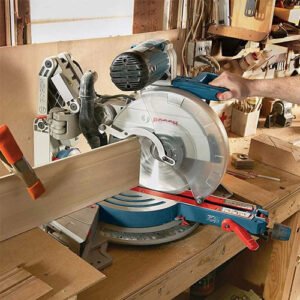
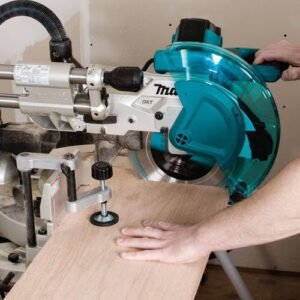
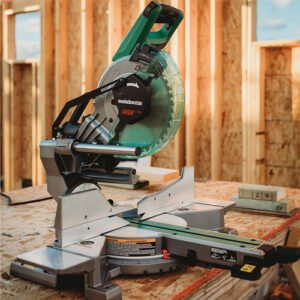
Advanced corded mitre saws generally combine several features intended to improve cutting accuracy, capacity, repeatability and workflow efficiency. Depending on the model, these can include sliding rails, compound bevel adjustment, positive mitre detents, adjustable stops, workpiece supports, laser or shadow-style cut indicators, spindle locks, electric braking and improved dust extraction provisions.
Brands such as Makita, DeWalt, Bosch, Metabo HPT, Milwaukee, Evolution and Ryobi offer mitre saws across different performance categories. However, brand familiarity should not replace specification checking. A well-suited mid-range saw can be a better purchase than a more expensive professional model if its cutting capacity and adjustment range are a closer match for the intended work.
A sliding compound mitre saw uses a rail mechanism to move the blade assembly through wider workpieces. This can substantially increase cross-cut capacity compared with a conventional fixed-head mitre saw using the same general blade class.
A non-sliding saw can be attractive where portability, simplicity and bench space are priorities. It may also have fewer moving components to keep clean and correctly adjusted. For skirting boards, architraves, smaller framing components and general trim work, maximum sliding capacity may not be necessary.
When comparing sliding models, inspect the stated maximum cross-cut dimensions at relevant angles rather than relying only on blade diameter. Cutting capacity can change considerably when the head is tilted or the mitre angle is changed.
A single-bevel saw tilts in one direction, while a dual-bevel model can tilt in both directions. Dual-bevel operation can make repeated compound cuts more convenient because the workpiece does not always need to be repositioned or flipped to obtain the required opposite bevel.
For installation work involving large numbers of angled components, dual-bevel adjustment can save handling time. For occasional straight cross-cuts and basic mitre joints, the additional adjustment capability may not justify a higher purchase cost.
Blade diameter is an important specification, but it should be considered together with the saw's published cutting capacity. Common mitre saw categories include smaller compact saws and larger models designed for deeper or wider workpieces.
A larger blade can provide greater theoretical cutting depth, but the overall machine can also require more bench space and may be heavier. Before buying, compare the maximum cross-cut, maximum vertical cut, bevel capacity and available cutting dimensions at commonly used angles.
Motor input is often one of the first specifications shoppers compare, but it should not be treated as a standalone performance rating. A mitre saw converts electrical input into blade rotation and cutting work through its motor, transmission and blade system. The practical result depends on the complete design.
For demanding work, pay attention to whether the saw is intended for intermittent DIY use, regular renovation work or professional workshop applications. A saw that maintains predictable operation under normal loads and provides suitable control can be more useful than a model selected solely because it has a larger advertised wattage.
Australian users should also confirm that the specific model is intended for the local electrical supply and comes with the appropriate Australian-market electrical configuration. Do not assume that an overseas model with a similar product name is interchangeable with the Australian version.
The supplied blade is only one part of the cutting system. Tooth count, tooth geometry, kerf, blade diameter and material compatibility can all influence the quality of the finished cut.
A blade selected for fast construction cuts may behave differently from a fine-finish blade designed for trim. If the primary objective is clean joinery, the appropriate fine-tooth blade can be more relevant than simply choosing the saw with the highest motor specification.
For general timber cutting, a versatile carbide-tipped blade can be useful. For finish carpentry, a higher tooth count may provide a cleaner edge, although cutting speed and material thickness also need to be considered.
For structural timber or rapid rough cutting, a blade with a configuration intended for that type of work may be preferable. Always check the blade manufacturer's stated applications and the saw manufacturer's permitted blade specifications.
Laminated panels, coated boards and other manufactured materials can place different demands on a blade. A suitable fine-finish blade may reduce chipping compared with a general-purpose coarse blade, but technique and workpiece support remain important.
When appearance matters, make a test cut on an offcut before processing expensive material. Check the manufacturer's guidance for the specific material and blade combination rather than assuming that one blade is suitable for every board product.
For many buyers, accuracy is more important than headline power. A mitre saw needs to hold its selected angle consistently and allow the operator to position the workpiece against a stable reference surface.
Positive detents make frequently used angles quicker to set. They are particularly valuable for production-style cutting where the same angle is repeated many times.
Useful detents should be easy to identify and should engage positively without requiring excessive force. However, a detent mechanism does not remove the need to check actual cuts when extremely precise joinery is required.
A bevel system should allow controlled movement and secure locking. If compound cuts are part of your regular work, consider how easily the bevel can be released, adjusted, returned to a known position and locked without disturbing the setup.
The fence establishes a major reference point for the workpiece. An adjustable fence can be helpful when the blade or cutting arrangement requires additional clearance at particular angles.
Before purchasing, consider the height and configuration of the fence, how easily it can be adjusted and whether the design provides suitable support for the dimensions of material you commonly use.
Mitre saws generate a significant amount of airborne and deposited dust because the blade is exposed during cutting. Dust extraction can improve visibility around the cut area and reduce the amount of debris accumulating around the machine.
Compare the position and size of the dust outlet, the shape of the collection hood and the compatibility of the saw with your existing extraction equipment. A dust bag can be convenient for occasional work, while a workshop extraction system may be preferable for frequent cutting.
No collection system captures every particle. Appropriate respiratory protection, ventilation, housekeeping and material-specific safety practices should still be considered, particularly when cutting products that generate fine dust.
A capable saw can still produce inconsistent results if long material is poorly supported. When comparing advanced mitre saws, consider the complete cutting station rather than the saw alone.
Not every advanced mitre saw belongs on a permanent bench. Renovators, tradespeople and users working across different rooms may need to move the saw regularly.
Weight, carrying handles, rail configuration and overall dimensions can therefore be important purchasing factors. A compact design can be easier to transport, while a heavier machine may provide a more substantial platform when installed permanently.
For a mobile setup, also consider the stand or supporting arrangement. A high-quality saw becomes difficult to use if the supporting surface is unstable or poorly matched to the workpiece length.
Trim installation places a premium on clean cuts, repeatability and convenient angle adjustment. A saw with clear mitre detents and a useful bevel range can make complex trim work easier to manage.
Construction users often prioritise cutting capacity, durability, fast setup and reliable workpiece support. A sliding model can be particularly useful when wider timber must be cross-cut.
For decking and outdoor construction, cutting capacity and repeatability can be more important than ultra-fine finish quality. Blade selection should match the material and expected workload.
Furniture and joinery applications can demand greater attention to cut quality and repeatability. Fine-finish blades, accurate setup and controlled workholding may be more important than maximum cutting speed.
Renovation work can involve a mixture of timber sizes, mouldings and angles. A versatile sliding compound saw can provide useful flexibility when the user needs one machine for several types of work.
When reviewing a shortlist of ten advanced corded mitre saws, avoid ranking them solely by retail price or motor power. A structured comparison makes it easier to identify the model that offers the right combination of capabilities.
Established power-tool manufacturers can provide broad product ranges, but their line-ups often contain several models that appear similar at first glance. Makita, DeWalt and Bosch, for example, have offered mitre saws in different configurations and capacity classes, so the manufacturer's name should be the beginning of the comparison rather than the conclusion.
Milwaukee, Metabo HPT, Evolution and Ryobi are also names Australian shoppers may encounter when researching mitre saws. Product specifications can vary substantially between models and markets, so always evaluate the exact model designation rather than generalising from the reputation of a brand.
Some features have a direct effect on workflow and can justify additional expenditure for frequent users.
Some specifications sound impressive but may have limited value for a particular user.
A larger blade does not automatically make a saw better for every application. Compare actual published cutting dimensions, bevel capacity and machine size.
If wide cross-cuts are important, a non-sliding saw may impose limitations that are not obvious from the basic blade specification.
Sliding rails and a tilting head need operating space. Measure your intended location before buying and account for the complete movement of the machine.
The wrong blade can undermine an otherwise capable saw. Match blade type and tooth configuration to the material and finish required.
A compact machine may fit comfortably on a bench but still require additional side support for long stock. Plan the entire workstation.
Power-tool model names can appear across different markets with different electrical configurations, specifications or included accessories. Australian buyers should verify the exact local-market model before ordering.
Customer feedback can reveal recurring usability concerns, but ratings should be considered alongside specifications, intended application, warranty information supplied by the manufacturer or retailer, and the requirements of your own work.
Mitre saws combine a high-speed rotating blade with a moving cutting head, so safe operating practices are essential regardless of the machine's price or brand.
Routine maintenance helps preserve accuracy and safe operation. Maintenance requirements vary by model, so the manufacturer's instructions should always take priority.
Remove accumulated sawdust from the table, fence, adjustment areas and extraction components. Fine debris can interfere with workpiece positioning and moving mechanisms.
Check for damaged, excessively worn or otherwise unsuitable blades. A blade that is no longer appropriate for the intended application should be replaced rather than forced through material.
Periodically confirm that mitre and bevel locks operate correctly and that the selected positions remain secure. If the machine develops unexpected play or alignment problems, stop using it until the issue has been investigated.
For corded equipment, inspect the cable and plug for visible damage. Damaged electrical components should be addressed according to the manufacturer's service guidance and applicable Australian requirements.
Even an advanced saw requires correct setup and technique. Start with a stable machine and a clean, correctly aligned reference surface. Use an appropriate blade and avoid forcing the cutting head through the material.
For visible finish cuts, test the setup on scrap material first. Confirm the angle, cut direction and workpiece orientation before cutting the final component. This is particularly important for compound cuts where a small setup error can become obvious when two pieces are joined.
For repetitive work, create a consistent workflow. Use the same reference point, support arrangement and measuring method for each component, and periodically verify the setup rather than assuming that every subsequent cut will remain accurate indefinitely.
A compound cut combines a mitre angle with a bevel angle. These cuts are common when fitting mouldings, architectural trim and other components that meet at non-square joints.
Compound cutting requires more careful setup because changing one angle affects the relationship between the two pieces. A dual-bevel saw can simplify certain workflows, but the operator still needs to understand the orientation of the material and the required angles.
When learning a new compound-cutting application, use inexpensive offcuts to establish the correct settings before cutting finished material.
A straightforward corded saw with dependable basic adjustment, suitable cutting capacity and readily available blades may provide everything required. Paying for advanced capacity that is rarely used can unnecessarily increase cost and storage requirements.
A sliding compound model can be a useful middle ground when the project involves a mixture of trim, framing timber and wider boards. Consider dust extraction, transport and adjustment convenience because renovation work often involves changing locations.
Frequent users should place greater emphasis on repeatability, adjustment durability, cutting capacity, workpiece support, blade availability and service documentation. Workflow efficiency can matter more than the lowest initial purchase price.
The cost of the saw is only one part of the purchasing decision. A realistic comparison should include the equipment needed to use it effectively.
A lower-priced saw that requires several additional purchases may not represent better overall value than a more complete solution. Conversely, buyers should avoid paying for accessories they will rarely use.
Product specifications should be read as a group rather than as isolated numbers. For example, a stated cross-cut capacity should be considered alongside the blade diameter, mitre position and bevel position under which that capacity applies.
Likewise, motor power should be considered with blade speed, blade type and intended material. Weight should be considered with portability and stability. Dust extraction should be considered with the actual extraction system available in your workshop.
This approach helps prevent misleading comparisons in which one model appears superior because a single specification is larger while another model provides a better-balanced set of features for the intended application.
Australian shoppers should verify the exact product listing and local-market specifications before purchasing. Check the electrical configuration, included plug arrangement, stated manufacturer specifications and any documentation supplied for the Australian version.
Availability of blades and accessories is also worth considering. A saw can become less convenient to own if compatible consumables are difficult to obtain. Compare the exact blade specification required by the manufacturer and investigate whether suitable replacement blades are readily available from Australian retailers.
Because prices, stock levels, bundled accessories and retailer offers can change, check the current listing immediately before purchase rather than relying on an old advertised price or availability statement.
There is no single best model for every Australian buyer. The most suitable choice depends on cutting capacity, bevel and mitre requirements, portability, work frequency, dust extraction, workspace and budget. Compare the exact specifications of shortlisted models rather than choosing solely by brand or price.
Not universally. A sliding model is generally more useful when wider cross-cuts are required, while a non-sliding saw can be attractive for users who prioritise simplicity, compactness and smaller workpieces.
No. A larger saw may offer greater cutting capacity, but it can also be heavier, larger and more expensive. Choose blade size according to the dimensions and types of material you actually expect to cut.
Dual-bevel operation is particularly useful for frequent compound-cutting work in both directions. If most of your cuts are straightforward cross-cuts or single-direction mitres, a single-bevel model may be sufficient.
Prioritise repeatable adjustment, suitable cutting capacity, robust workpiece support, a useful fence, effective dust-extraction provisions, appropriate blade availability and controls that suit your normal workflow.
Yes, provided the exact saw is designed and configured for the applicable Australian electrical supply. Always verify the specific model rather than assuming that an imported version is suitable.
Not necessarily. No-load speed is only one specification. Blade design, motor characteristics, material compatibility, cutting capacity and operator control all influence practical performance.
It is an important consideration because mitre saws can produce substantial sawdust. Compare the machine's dust outlet and extraction arrangement with the equipment available in your workshop, while continuing to follow appropriate protective and ventilation practices.
Routine inspection and cleaning should follow the manufacturer's instructions and the frequency of use. High-use equipment may require more frequent inspection of blades, adjustment mechanisms, extraction components and electrical parts.
No. The best value usually comes from buying the capabilities you genuinely need. Expensive professional features can be worthwhile for frequent demanding work but unnecessary for occasional household projects.
The strongest buying decision is based on fit rather than a single headline specification. Start with the materials and dimensions you need to cut, then work through blade size, sliding capacity, mitre and bevel adjustment, accuracy-related features, workpiece support, dust extraction, portability and Australian electrical compatibility.
For frequent professional work, prioritise repeatability, capacity, adjustment quality and long-term practicality. For renovation users, look for versatility without creating unnecessary transport or storage problems. For occasional DIY work, a simpler model with the right capacity can provide better value than a larger professional machine.
Before purchasing, compare the exact models on your shortlist, read current customer feedback, verify manufacturer specifications and check today's Australian retailer pricing and availability. This final comparison is especially important in 2026 because product configurations, bundled accessories and market availability can change over time.