

♥ Wishlist
Compare 18 Corded Screwdrivers for Reliable Mains-Powered Fastening products in Australia. Reviews, ratings, pros, cons and buying advice updated for October 2026.
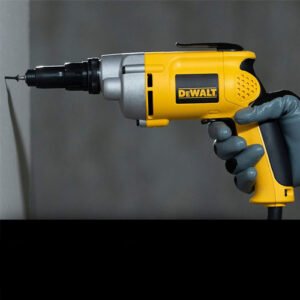
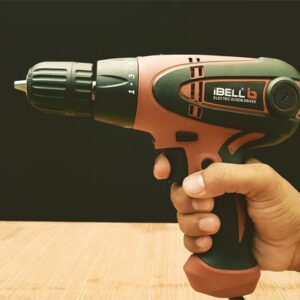


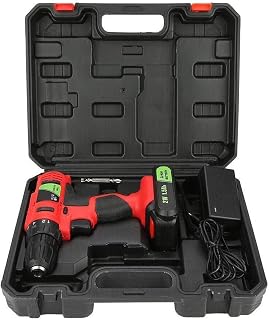


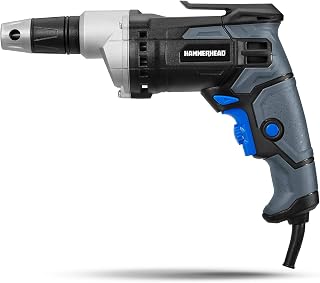

An advanced corded screwdriver is best selected by matching the tool's drive mechanism, torque characteristics, speed control, chuck or bit-holder design, ergonomics and intended application rather than by choosing the highest advertised power rating. For Australian workshops, construction sites, renovation projects and serious DIY applications, a mains-powered screwdriver can be particularly useful when uninterrupted operation is more important than cordless portability.
Unlike a conventional drill driver, a purpose-built electric screwdriver is generally designed around controlled screwdriving rather than being a general-purpose drilling machine. That distinction matters when repetitive fastening, consistent screw depth, reduced operator fatigue or specialised fastening work is involved.
The term advanced does not necessarily mean the largest motor or the fastest no-load speed. A more sophisticated corded screwdriver typically combines several practical characteristics:
The biggest decision is whether the convenience of mains power outweighs the portability of a battery-powered tool. Corded and cordless screwdrivers can both be excellent choices, but they solve different problems.
Consider a corded model when the work is performed primarily in a workshop, garage, renovation area or established job site with dependable mains access. It can also be a sensible choice when the project involves a high volume of fastening and the operator values uninterrupted operation over maximum mobility.
Motor wattage can be useful when comparing corded tools, but it should never be treated as a complete measure of screwdriving performance. Two tools with similar electrical input ratings can behave differently because of their gearing, motor design, speed range, torque delivery and control electronics.
For screwdriving, useful questions include how smoothly the tool starts, how controllable the trigger is, how effectively the gearing transfers power and whether the tool is designed for the particular fastening application.
Excessive power can make a tool harder to control for delicate fastening. A high-output screwdriver may be appropriate for demanding construction work but unnecessarily aggressive for cabinet assembly, light timber fastening or other applications where precise seating matters more than maximum torque.
The ideal tool provides enough capacity for the largest fasteners you regularly use while remaining controllable for everyday tasks.
Torque is one of the most important considerations when comparing advanced electric screwdrivers. Too little torque can cause incomplete fastening, while excessive torque can damage the screw head, workpiece or fastener.
For applications involving repeated fastening, consistent torque behaviour can be more valuable than simply having a very high maximum torque figure.
Fast rotational speed can reduce fastening time, but speed alone does not determine productivity. The operator needs to be able to control the tool as the screw approaches its final seating position.
Variable-speed triggers can provide useful control during screw engagement. Electronic speed regulation may also make a tool easier to operate consistently across different fastening jobs.
Low-speed operation is useful when starting a fastener, aligning a screw with a pilot hole or working with materials where excessive speed could cause damage.
Higher speeds can improve productivity when installing large numbers of compatible screws, particularly where the application does not require delicate final positioning.
The best choice is therefore not necessarily the fastest screwdriver. It is the model that provides an appropriate speed range for the jobs you actually perform.
Depth control can be one of the most valuable features on a specialised screwdriver. When screws must be installed to a repeatable depth, a depth-setting mechanism can reduce variation between individual fasteners.
This is particularly relevant to drywall and other repetitive construction applications where screw heads need to sit consistently relative to the surface without unnecessarily penetrating the material.
The connection between the screwdriver and the bit deserves close attention. A tool that uses a suitable quick-change holder can be more convenient for repetitive screwdriving than a conventional drill chuck, particularly when bits need to be changed frequently.
Before purchasing, identify the fastener types you use most often and confirm that suitable bits are available rather than assuming every screwdriver accepts every accessory.
Drywall screwdrivers deserve separate consideration because their priorities differ from those of general-purpose electric screwdrivers. A drywall tool is typically designed around controlled, repetitive screw installation rather than general drilling.
Models from established professional tool manufacturers such as Bosch Professional, Makita, DeWalt, Metabo and HiKOKI may be worth comparing when specialist fastening performance is the priority. Exact specifications and included accessories should always be checked for the individual model and Australian-market version.
A powerful screwdriver that becomes uncomfortable after an hour of repetitive work may be less useful than a slightly less powerful model with better balance and handling.
Look for a grip that allows the hand to maintain a natural position without forcing excessive pressure around the trigger. A well-shaped handle can make repetitive fastening less tiring.
Total weight is only part of the equation. Where the weight is concentrated can influence how the tool feels during use. A front-heavy screwdriver can require more wrist control, particularly during extended overhead or horizontal fastening.
The trigger should be easy to operate deliberately without requiring excessive finger pressure. Smooth control is particularly useful when screws need to be started slowly before faster driving begins.
For a corded screwdriver intended for frequent use, examine the construction of the housing, trigger, cable entry point, chuck or bit holder and adjustment mechanisms.
When researching advanced corded screwdrivers in Australia, established power-tool manufacturers can provide a useful starting point because they generally offer established product families, replacement accessories and professional-tool ranges. Availability varies by model and retailer, so verify the exact Australian specification before purchasing.
Brand reputation should not replace model-level comparison. A well-known manufacturer can have several screwdriver models designed for completely different applications, so compare the specifications and intended use of the exact tool rather than selecting a brand alone.
Australian buyers should consider more than the basic tool specification. Electrical compatibility, retailer support, replacement accessories and the intended working environment can all influence the practical value of a corded screwdriver.
Confirm that the specific product is intended for the Australian market and uses the appropriate electrical configuration. Avoid assuming that an overseas version is interchangeable with an Australian model simply because the tool has a similar name or appearance.
A screwdriver used inside a garage has different practical requirements from one used on a construction site. Think about cable length, access to outlets, extension-cord requirements, work height and how often the tool will be moved.
Two apparently similar tools can differ substantially in what is included. Check whether the package contains the required bits, depth attachments, carrying case, accessories or other application-specific components.
Electrical input is not a substitute for understanding torque delivery, gearing, speed control and application suitability.
A drill driver can perform screwdriving tasks, but a dedicated screwdriver may provide more specialised control for repetitive fastening. Decide whether you need a multipurpose machine or a tool optimised around screw installation.
For occasional DIY work, ergonomics may seem secondary. For repetitive fastening, however, balance, grip shape, trigger feel and overall handling can have a major effect on usability.
A screwdriver is only as useful as the bits and accessories available for the fasteners you intend to install. Check compatibility before buying.
Fast operation can improve productivity, but excessive speed can make delicate fastening harder to control. Look for a suitable operating range rather than simply the highest advertised speed.
The cable is part of the operating experience. Consider how it will move around benches, ladders, floors and workpieces before choosing a corded tool.
When two models appear similar, compare them systematically rather than relying on brand recognition or headline specifications.
Professionals should generally place greater emphasis on durability, sustained operation, ergonomics, predictable control and compatibility with frequently used fastening systems. A professional user may also benefit from choosing a model within an established tool ecosystem if compatible accessories and service arrangements are important.
A serious DIY user should focus on versatility and value without paying for specialised features that will rarely be used. If most projects involve timber, shelving, furniture, fixtures and general household maintenance, a versatile screwdriver may be more appropriate than a highly specialised production tool.
Occasional users should prioritise straightforward operation, reliable basic construction and compatibility with common bits. A sophisticated professional feature set may not provide meaningful value if the tool is used only a few times each year.
Routine care can help preserve the working condition of a power screwdriver and can also reveal developing problems before they become more serious.
The driver bit is a critical part of the fastening system. Even an excellent screwdriver can perform poorly when paired with an unsuitable, damaged or incorrectly sized bit.
Use the correct bit profile and size for the screw head. An undersized or poorly fitting bit can increase the chance of slipping, damaging the screw head or reducing control.
For frequent fastening, durable bits can be a worthwhile consideration because worn tips can compromise engagement and productivity. Keep commonly used replacement bits available rather than continuing to use visibly damaged accessories.
Safe operation should be considered alongside performance. Read the manufacturer's instructions for the exact model and use appropriate personal protective equipment and work practices for the material and application.
There is no single ideal budget for an advanced corded screwdriver. The appropriate level of investment depends on how often the tool will be used, how demanding the fastening work is and whether specialised controls are genuinely useful.
For occasional projects, paying substantially more for professional features may not produce a meaningful benefit. For frequent construction or workshop use, durability, ergonomics and consistent performance can justify considering a higher-grade model.
Compare the total ownership proposition rather than the purchase price alone. A tool that requires frequent replacement bits, has poor ergonomics or lacks the control needed for your application may offer less practical value than a better-specified model.
A high-quality corded screwdriver can be particularly useful when the work involves repetitive fastening from a consistent work position.
A corded screwdriver is most compelling for buyers who have reliable access to mains electricity and value continuous operation, predictable power delivery and freedom from battery charging. It can be an especially practical option for a workshop, garage or fixed construction environment.
If your projects regularly take place outdoors, on roofs, in unfinished buildings or in locations where power access is inconvenient, a cordless screwdriver may be the more practical solution despite the advantages of corded operation.
Before purchasing one of the advanced corded screwdriver options under consideration, use this checklist to narrow the field:
There is no universal best model for every Australian buyer. The right choice depends on the fastening application, required torque, speed control, depth adjustment, ergonomics, bit compatibility, workload and access to mains electricity. Compare the exact specifications of shortlisted models rather than choosing solely by brand or advertised power.
Yes, particularly for workshops, fixed work areas and repetitive fastening where continuous operation is valuable. Cordless technology is highly convenient, but a corded tool can remain attractive when battery charging and battery management provide little benefit for the intended workload.
Neither is automatically better. A drill-driver is generally more versatile, while a dedicated screwdriver can be better suited to repetitive fastening and specialised screwdriving tasks. Choose based on whether you prioritise general-purpose capability or screwdriving-focused control.
Makita offers professional corded fastening tools, but suitability depends on the exact model and application. Compare its specifications, control features, ergonomics and intended workload against competing models from brands such as Bosch Professional, DeWalt, Metabo and HiKOKI.
Bosch Professional has produced specialised corded screwdrivers for drywall and similar applications. When considering one, verify the exact model's speed, depth-control arrangement, bit system and Australian-market specification.
It is not useful to make a blanket comparison. Corded and cordless tools use different electrical and motor systems, and real-world screwdriving performance depends on more than nominal power. Compare the specifications relevant to the actual fastening application.
Prioritise controlled speed, consistent depth adjustment, comfortable handling, suitable bit compatibility and a design intended for repetitive fastening. Ergonomics are particularly important because drywall work can involve extended periods of repetitive or overhead operation.
Some corded screwdrivers are suitable for timber fastening, but suitability depends on the exact tool, fastener and material. Check the manufacturer's intended applications and operating specifications before using a specialist screwdriver for heavier timber construction work.
Adjustable torque is useful when you work with different materials, fastener sizes or applications requiring controlled seating. If your work is highly repetitive and consistent, specialised depth or torque control can also improve repeatability.
Start with intended application, torque and speed control, depth adjustment, bit compatibility, ergonomics and durability. After those factors, compare accessories, cable characteristics and overall ownership considerations.
The strongest approach to choosing an advanced corded screwdriver is to start with the fastening task rather than the product catalogue. Identify the materials, screw types, frequency of use and required level of control. Then compare tools that are specifically designed for that workload.
For professional buyers, durability, ergonomics and repeatability may deserve greater weight than purchase price. For DIY users, versatility and straightforward operation may be more important. For specialised drywall or repetitive fastening, dedicated depth control and application-specific design can be more valuable than general-purpose features.
Before purchasing, verify the exact Australian model, current specifications, included accessories and current customer feedback. Product configurations can change between markets and over time, so the model number and Australian-market specification should always take precedence over generic product descriptions.