

♥ Wishlist
Compare 29 Festool Plunge Saws products in Australia. Reviews, ratings, pros, cons and buying advice updated for October 2026.


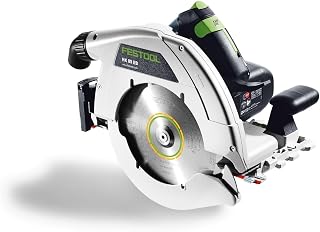

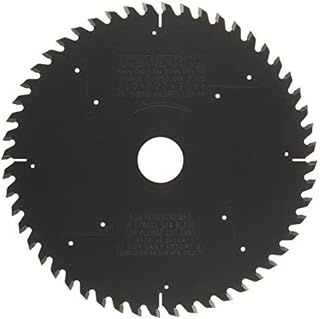

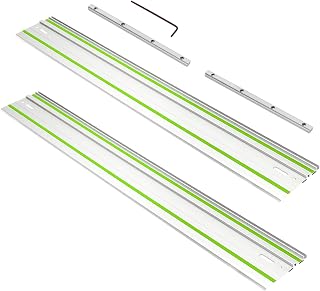


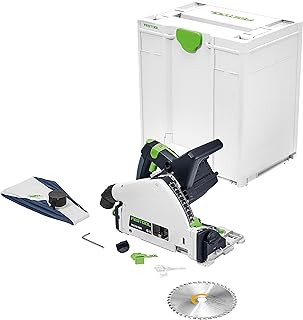
Choosing an advanced Festool plunge saw is less about finding the most expensive model and more about matching cutting depth, material, guide-rail requirements, blade configuration, dust extraction and day-to-day workflow. Festool's plunge-saw range is designed around a system approach, so the saw itself is only one part of the setup. Guide rails, saw blades, dust extractors and accessories can have a substantial effect on how useful a particular configuration becomes.
For Australian tradespeople, cabinetmakers, joiners, kitchen installers, furniture makers, builders and serious DIY users, the right choice depends heavily on the work being performed. A compact saw may be preferable for sheet goods and general workshop work, while a deeper-cutting model can make more sense when regularly processing thick timber, worktops or stacked materials.
This 2026 buying guide focuses on the practical differences that matter when comparing advanced Festool plunge saw solutions in Australia. Product specifications, package contents and retailer pricing can change, so always check the exact model designation and current specification before purchasing.
A plunge saw differs from a conventional circular saw because the blade can enter the workpiece at a controlled point rather than requiring an exposed edge to begin the cut. When combined with a compatible guide rail, this approach can make long straight cuts considerably easier to control and repeat.
Festool's plunge-saw ecosystem is particularly relevant to users who value repeatable cutting, integrated accessories and a consistent workshop-to-site workflow. The system is built around compatible rails and accessories rather than treating the saw as an isolated tool.
For professional users, this can be important because a plunge saw may be used for far more than basic panel cutting. Depending on the model, applications can include cutting doors to length, sizing sheet materials, producing worktop openings, making expansion joints, cross-cutting with compatible guide systems and processing thicker timber.
The most important Festool plunge-saw models to investigate are the TS 55 family, TS 60 K and TS 75. The TSV 60 K is also relevant for specialist users who need a scoring function for demanding panel work. These models are not simply interchangeable versions of the same machine; cutting capacity and specialist functions can materially change which one makes sense.
The TS 55 family is aimed at users who prioritise a relatively compact plunge-saw format for accurate cutting. It is particularly relevant to panel processing, cabinetry, furniture work and general sheet-material applications where maximum cutting depth is not the primary requirement.
When comparing TS 55 variants, pay close attention to the exact model generation, blade requirements and included accessories. Older and newer versions can have meaningful differences, so the model number should be checked rather than assuming that every TS 55 package has identical specifications.
A TS 55 configuration can be attractive when portability, control and clean panel cutting are more important than maximum depth. It is worth considering for users who regularly work with plywood, MDF, veneered boards and other sheet materials.
The TS 60 K occupies an important position between compact panel-focused plunge saws and the deeper-cutting TS 75. Current Festool specifications list a 1,500 W mains-powered motor, a 168 mm blade diameter, an idle speed range of 3,000 to 6,800 rpm and a cutting depth of up to 62 mm, with a 45-degree cutting depth of 45 mm. The current TS 60 K specification also lists a 27/36 mm dust-extraction connection and a product weight of approximately 4.7 kg without accessories. :contentReference[oaicite:0]{index=0}
The TS 60 K is particularly interesting for users who want more cutting capacity without moving to the larger TS 75 format. Festool also specifies KickbackStop functionality for the model, intended to reduce the risk associated with kickback during sawing or plunge cutting. :contentReference[oaicite:1]{index=1}
Its combination of cutting depth, guide-rail compatibility and relatively compact format makes the TS 60 K one of the most versatile models to compare when building an advanced Festool plunge-saw setup.
The TS 75 is the deeper-cutting option for users whose work regularly exceeds the practical capacity of smaller plunge saws. Festool lists a cutting depth of up to 75 mm for the TS 75 and a 1,600 W power rating. Current specifications for the TS 75 EBQ-Plus list a 210 mm saw blade, 0–75 mm cutting-depth adjustment, 55 mm cutting depth at 45 degrees, 27/36 mm dust-extraction connection and a product weight of 6.5 kg without accessories. :contentReference[oaicite:2]{index=2}
The additional capacity is useful when cutting thicker workpieces, heavy panels or substantial timber. However, the larger format also means that buyers should consider weight, handling and whether their normal applications genuinely require the additional depth.
For occasional sheet cutting, buying a larger saw solely because it has a higher specification can be unnecessary. For users regularly cutting thick stock, however, the TS 75's additional capacity can be a much more relevant advantage.
The TSV 60 K is a specialist option within the Festool sawing system because it combines plunge-cutting capability with a scoring function. Festool describes the scoring system as being designed to produce clean cuts on both sides of a panel, making the model particularly relevant to demanding panel processing. :contentReference[oaicite:3]{index=3}
This makes it a different proposition from simply choosing a deeper plunge saw. If your work frequently involves high-quality coated, veneered or sensitive panels where edge quality is critical, a scoring solution deserves consideration.
Comparing plunge saws solely by wattage or maximum cutting depth is a common buying mistake. The better approach is to evaluate the complete cutting system and determine which specifications directly affect your applications.
Cutting depth determines the maximum thickness of material the saw can process in a given configuration. It becomes particularly important when working with solid timber, thick benchtops, laminated worktops, stacked sheet goods or construction materials.
A larger cutting-depth figure does not automatically make a saw better for every buyer. If most of your work involves standard sheet materials, the additional capacity may rarely be used. A smaller, more manageable saw can therefore be the more sensible choice.
Do not look only at the maximum 90-degree cutting depth. Angled cuts normally reduce available depth, so users who frequently make mitre cuts should compare the 45-degree specification as well.
The TS 60 K, for example, is listed with a 0–62 mm cutting-depth range and a 45 mm cutting depth at 45 degrees. :contentReference[oaicite:4]{index=4}
Motor power provides useful context, but it should not be treated as a standalone performance ranking. The cutting result also depends on blade design, material, cutting speed, feed pressure, blade condition and extraction.
A saw that matches the intended material and blade configuration can be more useful than a more powerful model that is unnecessarily large for the user's work.
Blade diameter is directly related to cutting capacity and model compatibility. Buyers should never assume that blades are interchangeable across Festool plunge saws simply because they look similar.
Festool specifically states that the TS 60 K is designed for 168 mm saw blades and that 160 mm blades should not be used on the TS 60 K. :contentReference[oaicite:5]{index=5}
This is an important purchasing detail because buying the wrong blade diameter can create compatibility problems and unnecessary expense.
A guide rail is one of the most important parts of an advanced plunge-saw system. The rail helps control the saw's path and can make long panel cuts considerably more repeatable.
Before buying a saw, determine the rail lengths required for your work. Shorter rails can be convenient for compact jobs and transport, while longer rails can be useful for full-sheet materials and long workpieces.
Also check whether the specific saw and rail accessories support the cross-cutting or angle-cutting functions you intend to use. The TS 60 K, for example, can be used with Festool's cross-cutting guide-rail system for applications such as floor panels and other cross cuts. :contentReference[oaicite:6]{index=6}
Cabinetmakers and furniture makers generally benefit from precision, predictable cuts and good handling. Sheet goods, veneered panels, MDF and plywood can place greater emphasis on blade selection and splinter control than on maximum cutting depth.
A compact plunge saw can therefore be a logical starting point, while the TS 60 K becomes attractive when additional depth and broader application flexibility are useful.
Kitchen installation often combines panel cutting with worktop modifications, door trimming and on-site adjustments. Portability and controlled cutting are especially valuable because work may need to be completed in finished rooms rather than in a dedicated workshop.
The TS 60 K is worth investigating for this type of workflow because Festool lists applications including cutting interior doors to length, cutting recesses in doors and kitchen worktops and sizing chipboard and coated panels. :contentReference[oaicite:7]{index=7}
Flooring applications can benefit from accurate repeatable cross cuts and long straight cuts. A plunge saw combined with an appropriate rail system can be useful for trimming boards and panels while maintaining a controlled cutting line.
The TS 60 K specification specifically identifies cross cuts using the FSK cross-cutting guide rail for applications including floor panels, slats and boards. :contentReference[oaicite:8]{index=8}
If your primary requirement is cutting thick timber or large workpieces, the TS 75 deserves close attention. Its 75 mm maximum cutting depth provides a substantial increase over the smaller models. :contentReference[oaicite:9]{index=9}
The trade-off is increased size and weight. For a user who rarely needs deep cuts, that extra capacity may offer limited practical benefit. For a builder, carpenter or workshop user who regularly encounters thick material, it can be much more valuable.
When edge appearance is a major concern, the blade and cutting strategy can matter as much as the saw itself. Users working with veneered or coated panels should investigate blade tooth geometry, the intended material and whether a scoring solution is appropriate.
The TSV 60 K is specifically designed around a scoring function for high-quality panel processing, making it a specialist option rather than simply a larger version of a standard plunge saw. :contentReference[oaicite:10]{index=10}
A plunge saw is only as capable as the blade configuration being used for the material. Different tooth counts and tooth geometries are intended for different cutting objectives, so buyers should budget for suitable blades rather than treating the supplied blade as the only blade they will ever need.
A universal wood blade is useful when a single setup needs to handle multiple wood-based materials. Festool's range includes universal blades designed for applications involving solid wood, wood materials and construction panels. :contentReference[oaicite:11]{index=11}
This type of blade can be practical for general workshop and construction use where speed and versatility matter more than achieving the finest possible finish.
Fine-cut blades are more appropriate when surface quality and clean cross cuts are important. Festool lists fine-cut options for applications such as veneered and coated panels, solid-wood cross cuts, MDF, furniture manufacture and kitchen fitting. :contentReference[oaicite:12]{index=12}
Do not automatically choose the blade with the highest tooth count. Tooth configuration should match the cutting direction, material and desired finish.
Some cement-bonded and gypsum-bonded fibreboards require specialised blades rather than standard wood blades. Festool offers diamond-tipped blade solutions for certain abrasive materials and identifies compatible TS 60 K and TSV 60 K applications for one such blade. :contentReference[oaicite:13]{index=13}
Always verify compatibility and material suitability before cutting non-wood products. A blade intended for wood should not automatically be assumed suitable for abrasive construction materials.
Tooth count influences the balance between cutting speed and finish. A lower tooth count can be useful when rapid material removal is important, while higher tooth counts can be advantageous for cleaner cross cuts and finished surfaces.
The exact blade specification should always be checked against the Festool saw model, material and intended application.
Dust management is a major consideration when buying a professional plunge saw. Cutting MDF, fibreboard and other engineered materials can generate substantial airborne dust, making suitable extraction an important part of the overall setup.
Festool's plunge-saw specifications include dust-extraction connection dimensions, and compatible extraction systems can be used to improve workshop cleanliness and visibility around the cut. The TS 60 K, for example, is specified with a 27/36 mm extraction connection. :contentReference[oaicite:14]{index=14}
For Australian users, the extraction setup should be considered alongside the saw rather than purchased as an afterthought. Check hose compatibility, extractor capacity and the specific requirements of the material being cut.
Dust can obscure the cutting area and accumulate around the work surface. Efficient extraction can help maintain a clearer working environment and reduce the amount of debris left around the cutting system.
However, extraction should never be treated as a substitute for appropriate respiratory protection, ventilation, safe working procedures or the material manufacturer's safety guidance.
For many buyers, the guide rail is just as important as the saw. A plunge saw without the appropriate rail can still perform useful cuts, but the major advantage of the system comes from controlled, repeatable cutting over longer workpieces.
Consider transport and storage as well. A very long rail may be excellent for sheet cutting but inconvenient if the saw system is routinely transported between sites.
Kickback is one of the key hazards associated with circular saw operation. Festool's TS 60 K incorporates KickbackStop technology designed to reduce the risk of injury and workpiece damage associated with kickback during sawing or plunge cutting. :contentReference[oaicite:15]{index=15}
Safety technology should complement, not replace, correct technique. Users should still follow the manufacturer's operating instructions, use appropriate protective equipment and secure workpieces properly.
Variable speed can be useful when the cutting requirements change between materials. The TS 60 K is specified with an idle speed range of 3,000–6,800 rpm. :contentReference[oaicite:16]{index=16}
Speed selection should follow the saw and blade manufacturer's recommendations rather than simply choosing the highest available setting.
Precise depth adjustment is important for plunge cutting, particularly when the objective is to cut through a sheet without unnecessarily extending the blade beyond the workpiece.
Correct depth adjustment can also help control the cutting process and reduce unnecessary exposure of the blade below the material.
If your work includes mitre cuts, compare the available angular range and cutting depth at common angles. A saw may offer excellent straight-cut capacity but have materially less capacity when tilted.
The TS 60 K is specified with an angular range of -1 to 47 degrees. :contentReference[oaicite:17]{index=17}
Power ratings are useful, but they do not tell you whether the saw is appropriate for your actual workload. Consider cutting depth, blade compatibility, handling, rail requirements and extraction alongside motor power.
A professional plunge-saw system can require multiple blades for different materials and finish requirements. Include replacement and specialist blades in the long-term ownership calculation.
Blade diameter is a compatibility issue, not merely a performance preference. Festool explicitly identifies the TS 60 K as a 168 mm-blade system and states that 160 mm blades are not suitable for it. :contentReference[oaicite:18]{index=18}
If your main reason for choosing a plunge saw is long, accurate straight cuts, the rail should be included in your buying plan. Check whether the selected package contains a rail or whether it must be purchased separately.
Festool model names can appear similar while package contents differ. Current TS 60 K configurations, for example, can be supplied as versions with or without a guide rail and with different included accessories. :contentReference[oaicite:19]{index=19}
Before comparing retailer prices, check the exact product code and contents. A lower-priced package may simply contain fewer accessories.
The TS 75 offers significantly greater cutting capacity, but that does not mean it is the best choice for every workshop. If most work involves standard sheet materials, the additional capacity may be unnecessary.
Think beyond the saw body. Your actual setup may include guide rails, connectors, clamps, blades, dust extraction, storage and transport equipment. The best purchase is the configuration that supports the entire workflow.
Australian buyers should compare the exact local product configuration rather than relying on specifications copied from overseas listings. Model names, package contents, electrical specifications, retailer stock and pricing can differ between markets.
Before purchasing, record the complete model designation and product code. This makes it easier to distinguish between tool-only packages, guide-rail packages and other configurations.
For mains-powered tools, verify that the exact version is intended for the Australian market and matches local electrical requirements. Do not assume that an overseas package is automatically suitable simply because the model name is identical.
Comparing the complete contents often provides a more meaningful purchasing comparison than comparing headline prices alone.
Prices can change throughout the year because of retailer promotions, package changes, market conditions and stock levels. When researching a purchase, compare current Australian prices for the identical model and package rather than comparing different configurations.
Plywood can be cut effectively with an appropriately selected fine or universal blade, depending on the desired finish and cutting direction. For exposed edges, blade choice and feed technique become particularly important.
MDF produces fine dust and should be cut with suitable extraction and appropriate respiratory protection. A blade designed for clean panel cutting can be preferable where edge quality matters.
Coated panels can be sensitive to chipping and breakout. A suitable fine-cut blade and controlled cutting technique can help achieve a cleaner result. Users who routinely process high-value finished panels may also want to investigate specialist scoring solutions.
Solid timber places greater emphasis on cutting depth, blade configuration and feed control. If thick timber is common in your work, compare the TS 75 with smaller models rather than assuming the compact option will always be sufficient.
Chipboard can vary substantially in density and surface construction. Select a blade intended for the specific board and finish requirements, particularly where laminated or coated surfaces are involved.
Non-wood construction materials may require specialised blades. Festool's accessory range includes dedicated diamond blade solutions for certain cement-bonded and gypsum-bonded fibreboard and chipboard applications. :contentReference[oaicite:23]{index=23}
Always verify the exact material, blade and saw compatibility before cutting.
Resin, adhesive residue and accumulated material can affect cutting performance. Inspect the blade regularly and follow the manufacturer's cleaning and maintenance instructions.
Keep the guide rail clean and free from debris. Check the rail surface, splinter guard and underside before important cuts. Damage or contamination can affect how smoothly the saw travels.
Inspect for damaged, missing or excessively worn teeth. A blade that is no longer appropriate for the intended material can increase cutting resistance and reduce finish quality.
Inspect hoses, connections and filters according to the extractor manufacturer's instructions. Reduced extraction can increase dust around the work area and make the cutting process less clean.
Keep the saw, blades and rails protected from unnecessary impacts, moisture and contamination. Dedicated storage can also reduce the chance of damaging accessories during transport.
A plunge saw should be treated as a high-powered cutting tool, regardless of how refined its safety features are. Read the manufacturer's instructions before use and follow all applicable Australian workplace and safety requirements.
Features such as KickbackStop can provide an additional safety function, but they do not remove the need for correct setup and operating technique. Festool describes the TS 60 K KickbackStop as reducing the risk of injury and workpiece damage associated with kickback. :contentReference[oaicite:24]{index=24}
An advanced plunge saw becomes easier to justify when its precision and system features are used frequently. A professional who makes dozens of long panel cuts, installs kitchens, builds furniture or processes expensive sheet materials may benefit from features that would be unnecessary for occasional DIY work.
The value proposition should therefore be based on workflow rather than prestige. Consider how often you use the saw, how expensive the materials are, how important cut accuracy is, how much setup time matters and whether the accessory ecosystem can support your other tools.
A tool that reduces setup time, makes repeat cuts easier and fits naturally into your existing workflow can provide more practical value than one with a higher headline specification that is rarely used.
In cabinetmaking and furniture work, correcting a poor cut can waste expensive material. Consistent guide-rail positioning, suitable blades and controlled plunge action can therefore be more valuable than simply maximising cutting speed.
When reviewing several listings, create a simple comparison based on the exact configuration rather than the product family name.
Guide rails are fundamental to the plunge-saw concept and should be selected based on workpiece size and cutting requirements.
Cross-cutting guide systems can extend the usefulness of a plunge saw beyond long straight cuts. The TS 60 K is specified for use with Festool cross-cutting guide rails in applications such as floor panels, slats and boards. :contentReference[oaicite:25]{index=25}
Having appropriate blades for general-purpose work, fine cuts and specialist materials can make a greater practical difference than choosing between two closely related saw models.
A compatible extractor can help control dust and maintain a cleaner work environment. Consider hose compatibility, extractor capacity and the material being processed.
Users cutting very long panels may need accessories that help position, join or secure guide rails. These items are particularly relevant when the standard rail length does not cover the workpiece.
For occasional DIY users who make only a few cuts per year, a premium plunge-saw system may provide more capability than necessary. For people who use the tool regularly, the value of an integrated system can be much easier to justify.
A plunge saw is not automatically the ideal tool for every cutting task. A table saw may be more appropriate for repetitive ripping in a fixed workshop. A mitre saw can be more convenient for repeated short cross cuts. A jigsaw may be better for curved or irregular cuts. A reciprocating saw is intended for a different class of rough cutting applications.
The advantage of a plunge saw is its combination of controlled entry, straight cutting and portability. Choose it because those capabilities match your workflow, not simply because it is marketed as a premium power tool.
Confirm the cutting line, rail position and finished dimension before starting the saw. Precision tools cannot compensate for an incorrect measurement.
Movement during cutting can compromise accuracy and create safety hazards. Support the workpiece appropriately and ensure the offcut cannot interfere with the blade.
Use the manufacturer's recommended depth-setting procedure and avoid unnecessarily exposing more blade than the application requires.
Match tooth geometry and blade type to the material and desired finish. Do not use a general-purpose blade when a specialist blade is clearly more appropriate.
Excessive feed pressure can make the cut harder to control. Maintain a steady, appropriate feed rate and follow the manufacturer's operating guidance.
Make sure the guide rail is positioned correctly and that its contact surface is clean. For repeated work, establishing a consistent setup routine can help minimise dimensional errors.
There is no single best model for every Australian buyer. The TS 55 family is well suited to compact precision work, the TS 60 K offers a broader combination of cutting capacity and versatility, and the TS 75 is the stronger candidate when deep cutting is a routine requirement. The TSV 60 K is worth considering for users who specifically need a scoring function.
It depends on the application. The TS 60 K provides greater cutting depth than the compact TS 55 format and includes features such as KickbackStop. If your work primarily involves sheet materials and you value compact handling, the TS 55 may still be a better fit. If you regularly need additional depth and broader application flexibility, the TS 60 K deserves closer consideration.
The TS 75 makes the most sense when its deeper cutting capacity is genuinely useful. Festool lists up to 75 mm cutting depth for the TS 75. :contentReference[oaicite:26]{index=26} If your normal jobs rarely require deep cuts, a smaller model may provide a more convenient overall setup.
Yes, suitable Festool plunge-saw configurations can be used for worktop-related applications. Festool lists cutting recesses in kitchen worktops among the applications for the TS 60 K. :contentReference[oaicite:27]{index=27} The appropriate blade, depth setting, rail setup and workpiece support remain important.
Suitable Festool plunge-saw blades can be used for MDF. Festool's fine-cut TS 75 blade range, for example, identifies MDF as one of its intended applications. :contentReference[oaicite:28]{index=28} Always match the blade to the exact saw and material.
A guide rail is not necessarily required for every operation, but it is a major part of the system's precision-cutting capability. If long straight cuts are a primary reason for purchasing a plunge saw, a compatible guide rail should be included in the buying plan.
Festool states that the TS 60 K is designed exclusively for 168 mm saw blades and that 160 mm blades should not be used with it. :contentReference[oaicite:29]{index=29} Always follow the manufacturer's compatibility requirements.
A fine-cut blade designed for coated or veneered panels is generally the more appropriate category when surface quality is the priority. Festool identifies fine-cut blades for veneered and coated panels and furniture-related applications. :contentReference[oaicite:30]{index=30}
The range is designed around professional-style cutting workflows, but suitability depends on the exact trade and application. Buyers should assess the model, accessories, cutting depth, blade system, extraction and workload rather than relying solely on the brand name.
There is no universal replacement interval because blade life depends on material, usage frequency, cutting technique, contamination and tooth condition. Inspect the blade regularly and replace or professionally resharpen it when its condition no longer supports safe and appropriate cutting.
Festool states that its saw blades can be resharpened multiple times, with its current guidance indicating up to ten resharpenings for the applicable blades. :contentReference[oaicite:31]{index=31} Actual suitability depends on blade condition and the particular blade specification.
Yes, provided the user has a genuine need for the precision and system features. A premium plunge-saw setup can be particularly useful for serious DIY projects involving cabinetry, furniture, flooring or repeated sheet-material cutting, but it may be excessive for occasional basic cutting.
The strongest way to choose a Festool plunge saw in 2026 is to start with the job rather than the model name. A user primarily cutting cabinets and panels may have very different requirements from someone cutting thick timber or a professional installer modifying worktops on site.
The TS 55 family remains relevant for users who value compact precision cutting. The TS 60 K is particularly compelling to investigate when greater cutting depth and broader system versatility are required without moving directly to the larger TS 75. The TS 75 is the logical model to investigate when deep cutting is a core part of the workload, while the TSV 60 K deserves attention where panel finish and scoring capability are central to the application.
Before making a purchase, compare the exact Australian package, included accessories, blade configuration, guide-rail requirements and current retailer pricing. The most suitable choice is not necessarily the most powerful model; it is the configuration that gives you the required cutting capacity, accuracy, handling and system compatibility without paying for capabilities your work rarely uses.