

♥ Wishlist
Compare 19 DeWalt Plunge Saws products in Australia. Reviews, ratings, pros, cons and buying advice updated for October 2026.


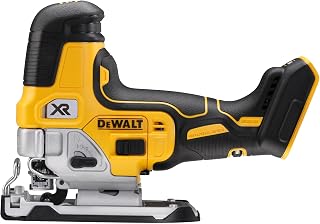


Choosing an advanced DeWalt plunge saw is less about selecting the most powerful-looking machine and more about matching the saw's cutting system, guide-rail compatibility, power source, depth control, dust management and intended materials to the work you actually perform. For Australian users, the choice can also depend on whether the saw will be used in a workshop, on a building site, for cabinetry and joinery, or for occasional renovation projects.
A plunge saw is designed to start a cut within the workpiece rather than requiring the blade to enter from an exposed edge. That makes this style of saw particularly useful for breaking down sheet materials, cutting worktops, trimming doors and producing controlled straight cuts. When combined with a guide rail, a quality plunge saw can provide a more repeatable cutting setup than a conventional circular saw used freehand.
DeWalt is particularly relevant to buyers who already use cordless or corded tools from the brand because battery-platform compatibility, chargers, cases and other accessories can influence the overall value of a purchase. However, an independent buying decision should still consider alternatives from brands such as Makita, Festool, Bosch and Milwaukee rather than assuming that brand consistency automatically makes one saw the best choice.
An advanced plunge saw typically combines controlled plunge action, accurate depth adjustment, a stable cutting base and compatibility with a guide system. The purpose is not simply to make a circular saw more expensive; the additional mechanisms are intended to improve control, repeatability and the quality of the finished cut.
One of the most important decisions is whether to choose a corded DeWalt plunge saw or a cordless model. Neither configuration is automatically superior. The right choice depends on the availability of power, expected workload, mobility requirements and the batteries already owned.
A cordless saw can be attractive for tradespeople who frequently move between rooms, work on construction sites or need to process material away from convenient power outlets. Eliminating a mains cable can also reduce the number of obstacles around large sheets and temporary work areas.
However, battery-powered convenience comes with considerations that should not be ignored. Buyers should check the battery platform, battery capacity recommendations, charging requirements, additional battery cost and the weight of the complete saw with the selected battery installed. A tool that feels manageable without a battery can feel substantially different once a large-capacity pack is fitted.
A corded plunge saw can be appropriate for a workshop or production environment where electrical power is readily available and the saw is expected to perform repeated cuts. There is no need to manage battery charge levels, and the complete tool may have a different weight balance from an equivalent cordless configuration.
For Australian buyers, always check the exact Australian-market electrical specification before purchasing a corded power tool. Imported versions may have different plugs, voltage requirements, documentation or warranty arrangements.
A plunge saw should not be evaluated independently from its guide-rail system. The rail is effectively part of the cutting setup, and its design can influence accuracy, portability and workflow.
Before buying a DeWalt plunge saw, determine which guide rails are officially compatible with the exact model and whether the rail is included. A saw may be competitively priced but become considerably more expensive once the required rail, connectors, clamps and accessories are added.
For cabinetry and furniture work, a rail system that remains stable during the cut can be more important than a small difference in headline motor power. For building work, portability and the ability to quickly set up long cuts may have greater practical value.
Maximum cutting depth is useful for comparing plunge saws, but it should not be treated as the only indicator of capability. A saw's practical cutting range depends on whether the cut is straight or bevelled, whether a guide rail is being used, the blade diameter, the material and the required finish.
When comparing specifications, look for cutting-depth information at both normal and bevel settings where available. A saw that offers sufficient capacity for your typical sheet goods may be a better choice than a larger machine that adds weight without providing a meaningful advantage for your applications.
Setting the blade only as deep as necessary can reduce unnecessary blade exposure beneath the workpiece. It can also make the cutting setup more controlled. For sheet materials, users should establish the actual thickness of the workpiece and configure the saw according to the manufacturer's instructions rather than automatically selecting maximum depth.
The saw itself is only one part of the cutting system. Blade selection has a major influence on cut quality, speed, material suitability and finish.
Lower-tooth-count blades can be suited to faster material removal, while higher-tooth-count blades can be preferable when a cleaner finish is required. The appropriate choice depends on the material, thickness and manufacturer's blade recommendations.
Do not assume that a blade will fit simply because it is marketed for circular saw use. Check the exact diameter, bore size, kerf requirements, maximum permitted blade speed and compatibility information for the DeWalt plunge saw.
For plywood, laminated panels, MDF and similar sheet products, the cutting objective often determines the ideal blade. A construction-oriented cut where speed is more important may call for a different blade from a cabinetmaking application where edge quality is critical.
Solid timber can require different blade characteristics depending on whether the cut follows or crosses the grain. Users should select blades intended for the material and application rather than treating all wood-cutting blades as interchangeable.
Laminated panels and decorative surfaces can be more demanding because surface chipping may be highly visible. A suitable fine-finish blade, careful support and controlled feed rate can be more important than simply increasing cutting speed.
Dust control deserves serious consideration when comparing plunge saws. Cutting engineered wood products can generate significant fine dust, and poor extraction can reduce visibility around the cutting line while increasing cleanup requirements.
Look for a plunge saw with an appropriate dust-extraction connection and consider the compatibility of the saw with your existing extractor. A dust port that does not fit your extraction hose efficiently can reduce the practical benefit of an otherwise well-designed system.
For workshop users, the extraction system should be considered as part of the complete cutting setup. For site work, portability, hose management and access to appropriate electrical power may become equally important.
Effective extraction can reduce dust but does not eliminate exposure. Follow the tool manufacturer's safety instructions and Australian workplace or product-safety guidance applicable to the job. Appropriate eye, hearing and respiratory protection may still be required depending on the material and environment.
Bevel capability expands the range of work a plunge saw can perform. It can be useful for cabinetry, furniture components, flooring, trim and construction applications where an angled cut is required.
When assessing bevel performance, do more than compare the maximum angle shown in a specification sheet. Consider how easily the angle can be set, whether the adjustment is easy to read, whether the base remains stable and whether the guide-rail system continues to provide predictable control at the selected angle.
A precise result comes from the entire system rather than the motor alone. Saw alignment, guide-rail condition, blade quality, workpiece support, depth setting, user technique and material stability all contribute to the finished cut.
Large sheets of plywood, MDF, particleboard and other panel products can be awkward to cut safely and accurately. A plunge saw becomes much more useful when the workpiece is properly supported.
The objective is to support the sheet without obstructing the blade path. Sacrificial insulation boards or purpose-designed cutting tables can be useful depending on the application, provided the setup is stable and compatible with the saw's cutting depth.
Never rely on a guide rail alone to prevent a large sheet from moving. Secure the material appropriately and make sure the cutting path is free of hidden fasteners, supports and other hazards.
Specifications can make two saws appear similar while their real-world handling feels very different. Ergonomics becomes especially important during repeated cuts.
Consider the complete operating weight, including the battery where applicable. A well-balanced tool can be easier to control along a long guide rail than a heavier tool whose centre of gravity sits awkwardly relative to the handles.
Handle placement affects how naturally the operator can guide the saw and maintain pressure during a long cut. Buyers should pay attention to grip design, trigger access and whether both hands can remain in a comfortable position throughout the cut.
A smooth and predictable plunge mechanism is particularly useful for controlled entry cuts. When comparing models, look for a mechanism that allows the blade to descend in a controlled manner rather than requiring excessive force.
Visibility becomes important when positioning the saw at the beginning of a cut or working without a guide rail. Dust extraction, base design and sight-line features can all influence how easily the operator can monitor the cutting area.
Brand comparison can help identify which ecosystem best suits your workshop, but individual model specifications should always take priority over brand reputation.
DeWalt is worth considering for users who value integration with an established DeWalt tool and battery ecosystem. Buyers should compare the exact plunge saw, compatible batteries, guide rails and accessories rather than choosing solely on the brand name.
Makita has a broad range of professional power tools and is a natural comparison point for buyers evaluating cordless cutting systems. Compare rail compatibility, battery platform, ergonomics, cutting specifications and accessory costs against the DeWalt option you are considering.
Festool is strongly associated with integrated woodworking systems, particularly where guide rails, extraction and precision cutting workflows are central to the job. It can be relevant for serious cabinetry and joinery users, although the complete system cost should be evaluated rather than comparing the saw alone.
Bosch offers professional power-tool options across woodworking and construction applications. When comparing Bosch and DeWalt, focus on the specific saw's rail system, blade configuration, extraction compatibility and ergonomics.
Milwaukee is another important comparison for tradespeople already invested in a cordless professional tool platform. Battery compatibility and the availability of other tools using the same platform can have a meaningful effect on overall ownership value.
A plunge saw marketed as a complete solution may still require a guide rail for the type of accurate straight cutting that motivates many buyers to purchase a track saw. Check exactly what is included before comparing prices.
For cordless models, the advertised tool price may not represent the complete operating setup. Check whether the product is supplied as a bare tool or as a kit and calculate the cost of the battery and charger if you do not already own compatible equipment.
Motor output is only one part of performance. For many users, rail stability, blade quality, dust extraction and ergonomics will influence the finished result more than a small difference in headline power.
A premium saw fitted with an unsuitable blade can deliver disappointing results. Always match the blade to the material and desired finish.
Before buying, investigate the long-term availability of blades, rails, rail connectors, clamps, dust accessories and other consumables. A tool can be excellent but inconvenient if essential accessories are difficult to source locally.
Product names can appear similar across different markets while the supplied accessories, electrical specifications, packaging and model suffixes differ. Check the complete Australian product description and model number before purchasing.
When narrowing a shortlist, use the same criteria for every candidate. This avoids allowing one attractive specification or promotional claim to dominate the decision.
Cabinetmakers generally need repeatable straight cuts, clean edges, reliable guide-rail performance and controlled handling. If your primary work involves plywood, MDF, melamine or laminated panels, prioritise the cutting system and blade selection rather than focusing solely on raw power.
A suitable cabinetmaking setup may also benefit from longer guide rails, rail connectors, clamps and a dependable extraction system. If the saw is expected to be used repeatedly throughout the day, ergonomics and accessory availability become increasingly important.
Renovation work often involves doors, flooring, benchtops, panels and installed materials where a controlled plunge cut can be particularly useful. Cordless operation may provide a practical advantage when moving around different areas of a property, but the complete battery-and-tool weight should be considered.
For renovation applications, also consider whether the saw can be positioned accurately in confined areas and whether the guide rail can be transported conveniently. A compact overall system can sometimes be more valuable than a tool with the highest specification.
Workshop users can place greater emphasis on repeatability, extraction compatibility, blade selection and guide-rail organisation. Because a workshop typically provides access to mains electricity and dedicated work surfaces, corded equipment may remain attractive for some users.
If the saw will become part of a broader woodworking workflow, consider how easily it integrates with your existing extraction equipment, workbench, cutting supports and storage system.
Tradespeople frequently move between work areas, so portability and setup time can matter as much as cutting specifications. A cordless DeWalt plunge saw may be particularly attractive to users who already carry compatible batteries and chargers.
For site work, inspect the complete package rather than the saw alone. A practical system might require a rail, connectors, clamps, spare batteries, charger and suitable transport case or storage solution.
DeWalt product names can include model identifiers and package suffixes that distinguish the tool configuration or included accessories. Buyers should compare the complete model number rather than assuming two visually similar listings contain the same package.
Pay particular attention to whether the listing describes a bare tool, kit, boxed configuration or package with additional accessories. When buying from an Australian retailer or marketplace, confirm that the listed model corresponds to the Australian-market product you intend to purchase.
Customer reviews can be useful, but they should be interpreted carefully. A high average rating does not automatically mean a saw is the best choice for professional woodworking, and a low rating may relate to delivery, packaging or an individual user's expectations rather than the cutting system itself.
Look for recurring comments about issues that matter to your application, such as guide-rail movement, plunge control, battery runtime, dust extraction, blade changes, ergonomics and long-term accessory availability. Give more weight to detailed reviews that describe the material being cut and the user's intended application.
Regular maintenance can help preserve cutting accuracy and reliable operation. Always follow the manufacturer's instructions for servicing, cleaning, inspection and component replacement.
Dust and debris can interfere with smooth movement along a guide rail. Inspect the contact surfaces regularly and clean them using methods appropriate for the manufacturer's materials and instructions.
Check the blade for damaged, missing or excessively worn teeth before use. A blade that requires excessive feed pressure or produces an unexpectedly rough cut may need inspection or replacement.
Inspect rails for damage, contamination and deformation. A damaged rail can affect the straightness and repeatability of cuts.
For corded models, inspect the power cable and plug for damage. For cordless models, check batteries, contacts and the tool interface according to the manufacturer's instructions. Damaged components should not be used.
Clean the tool appropriately after use and avoid allowing dust to accumulate around moving mechanisms. Do not use cleaning methods that could force debris deeper into electrical or mechanical components.
A plunge saw is a high-speed cutting tool and should be treated accordingly. Read the manufacturer's operating and safety instructions before use and use the correct blade for the material.
There is no single correct budget because the cost of a plunge-saw setup can extend beyond the saw itself. The complete system may include a guide rail, suitable blade, battery and charger, dust-extraction equipment, clamps, rail connectors and storage.
Instead of asking only whether a particular DeWalt saw is expensive or inexpensive, calculate the cost of the configuration you actually need. A cheaper bare tool can become the more expensive choice if you subsequently need several essential accessories, while a higher-priced kit may offer better value if it includes components you would otherwise purchase separately.
Price should be evaluated alongside the complete workflow. A saw that costs less initially may require additional spending on rails, batteries, chargers, blades or extraction accessories. It may also be less suitable for the type of work you perform, reducing the practical value of the purchase.
Conversely, paying more for features you rarely use is not automatically good value. The strongest buying decision is usually the configuration that provides the required cutting accuracy, capacity, mobility and accessory compatibility without paying for capabilities that do not contribute meaningfully to your work.
Use this sequence to narrow down the available options:
Depending on the exact DeWalt model under consideration, advanced features may include electronic controls, improved adjustment mechanisms, battery-management technology, integrated dust collection provisions or enhanced rail interaction. The value of each feature depends on how it affects your workflow.
For example, electronic technology is more useful when it contributes to controllability and consistent operation than when it exists merely as a specification-sheet feature. Similarly, a sophisticated adjustment mechanism is valuable when it makes accurate setup faster and more repeatable.
A plunge saw is not automatically the right tool for every cutting task. If your work consists mainly of rough construction cuts, short timber cuts or applications where guide-rail accuracy is unnecessary, a conventional circular saw may provide a simpler and more economical solution.
The main reason to choose a plunge saw is controlled cutting. If you rarely need internal cuts, long precision cuts or guide-rail work, the additional plunge mechanism and accessories may offer limited practical benefit.
A table saw can be preferable for repeated workshop operations where the workpiece can safely and consistently be brought to a stationary blade. It can be particularly effective for repetitive sizing and certain ripping operations.
A plunge saw remains more portable and can be more convenient for breaking down large sheets before they are moved through a workshop. For many serious woodworking environments, these tools are complementary rather than direct substitutes.
The terms "plunge saw" and "track saw" are often used interchangeably in consumer buying guides. Technically, the descriptions emphasise different aspects of the same general tool category: the plunge mechanism describes how the blade enters the material, while the track-saw terminology emphasises use with a guide rail or track.
When searching Australian retailers, manufacturers and customer reviews, it is therefore useful to search both terms. A product described as a DeWalt track saw may be relevant to someone specifically looking for a DeWalt plunge saw, provided the actual cutting mechanism and guide-rail compatibility match the intended application.
Australian buyers should pay attention to local product specifications rather than relying on information copied from overseas listings. Model names, accessory bundles, electrical configurations and warranty conditions can differ between markets.
Before purchasing in August 2026, check the current listing for the exact model and package. Product prices, stock status, retailer policies and included accessories can change, so historical pricing or an overseas specification should not be treated as a guarantee of what is currently offered in Australia.
The best DeWalt plunge saw depends on the user's application, preferred power source, cutting requirements, guide-rail needs and existing battery ecosystem. Rather than choosing a single model for every buyer, compare the exact specifications and package contents against the work you need to perform.
DeWalt produces professional-oriented power tools, but suitability should be judged against the exact model and workload. Professional users should pay particular attention to duty requirements, ergonomics, accessory availability, extraction, battery management and the manufacturer's specifications.
Plunge saws are well suited to controlled sheet-material cutting when the correct blade, depth setting, support arrangement and guide system are used. Plywood cutting performance depends heavily on blade selection and cutting technique.
Yes, a suitable plunge saw and blade can be used for MDF, provided the blade is appropriate for the material and the manufacturer's operating instructions are followed. Dust extraction is particularly important when working with dusty sheet materials.
A suitable blade and controlled cutting setup can be used for laminated sheet materials. To reduce the risk of surface damage, select a blade appropriate for the material and prioritise stable support and controlled cutting.
A guide rail is not required for every possible cut, but it is one of the main reasons buyers choose a plunge or track saw. For long, straight and repeatable cuts, a compatible guide rail can significantly improve control.
Neither is universally better. Cordless models prioritise mobility and convenience, while corded models can be attractive for stationary workshop use where continuous mains power is available. Existing battery ownership can strongly influence the value of a cordless purchase.
It depends on the exact product package. Some listings may be for a bare tool while others may include batteries and a charger. Always verify the current package contents before purchasing.
No. Blade compatibility must be confirmed using the saw's specifications and manufacturer's instructions. Diameter, bore, kerf, maximum speed and intended application all matter.
Dust extraction can be very important for visibility, cleanliness and exposure control, particularly when cutting engineered wood products. Choose an extraction setup compatible with the saw and follow applicable safety requirements.
Compatibility should never be assumed. Some rail systems may share general dimensions or appear physically similar, but the saw-to-rail interface, adjustment system and accessories must be confirmed for the exact products.
Consider blade diameter, bore, tooth count, tooth geometry, kerf, maximum rotational speed and suitability for the material. A blade intended for rough construction work may not produce the same finish as a blade designed for precision sheet cutting.
Use an appropriate sharp blade, support the workpiece properly, set the cutting depth correctly, secure the guide rail, maintain controlled feed pressure and use suitable dust extraction. The material and blade combination also have a major influence on the finished edge.
A complete kit can make sense when it includes the battery, charger, rail or other accessories you actually need. However, users who already own compatible DeWalt batteries or guide rails may obtain better value from a configuration that avoids unnecessary duplicate equipment.
The strongest DeWalt plunge saw choice is the one that fits the complete cutting workflow rather than the one with the most impressive specification on paper. Start with the materials you cut, the dimensions of your typical workpieces and the type of cuts you make most often. Then evaluate power source, cutting capacity, rail compatibility, blade selection, dust extraction, ergonomics and accessory costs.
For Australian buyers, the final step should always be to verify the current product listing, exact model number, included accessories, retailer conditions, warranty information and current price before ordering. Availability and pricing can change throughout 2026, so treat live retailer information as more authoritative than an older buying guide or cached specification.
If you already own DeWalt cordless tools, battery compatibility may make a cordless plunge saw particularly convenient. If your work is primarily workshop-based, a corded setup may deserve consideration. For precision woodworking, guide-rail performance, blade quality and dust extraction deserve as much attention as motor specifications.
Use the comparison criteria throughout this guide to narrow the available DeWalt options, then compare the complete specifications and verified customer feedback for the exact Australian products you are considering. That approach makes it easier to identify a plunge saw that delivers the right balance of precision, portability, durability, safety and overall value for your work.