

♥ Wishlist
Compare 16 Makita SDS Hammer Drill for Australian Jobs products in Australia. Reviews, ratings, pros, cons and buying advice updated for October 2026.


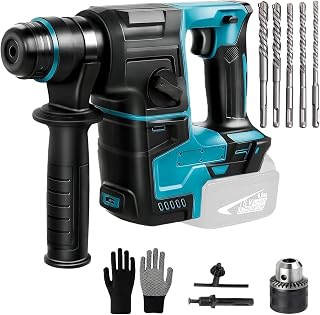


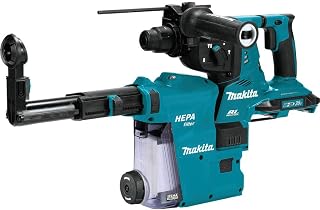


Choosing an advanced Makita SDS hammer drill is less about selecting the drill with the highest headline specification and more about matching the tool architecture to the work you actually perform. Australian users may encounter compact SDS-Plus rotary hammers, higher-output cordless machines, corded trade models and larger SDS-Max systems, each designed around a different balance of drilling capacity, impact performance, portability, runtime and accessory compatibility.
For renovation work, electrical and plumbing installation, masonry fixing and general construction, an SDS-Plus machine is usually the most versatile format. For substantially larger holes, heavy chiselling and demanding concrete work, an SDS-Max platform may be more appropriate. Makita's 18V LXT and 40V XGT cordless ranges also provide different approaches to balancing portability and power, while corded models remain relevant where continuous operation is more important than cordless convenience.
The chuck standard determines which accessories the hammer drill can accept, so this should be checked before comparing motor power or advertised performance. SDS-Plus is widely suited to everyday masonry drilling, anchor holes, concrete fixings and lighter chiselling. SDS-Max uses larger accessories and is intended for more demanding drilling and demolition applications.
An SDS-Plus hammer drill can cover a broad range of common building tasks without the size and weight associated with larger demolition equipment. For someone drilling anchor holes in concrete, installing fixings, chasing masonry or occasionally carrying out light chiselling, the format can provide a useful compromise between capability and portability.
SDS-Max becomes more compelling when the work routinely involves larger holes, substantial chiselling or prolonged heavy-duty masonry work. Buying an SDS-Max machine simply because it appears more powerful can be counterproductive if most jobs require small fixing holes, because the larger tool and accessories can add unnecessary bulk and expense.
Makita's cordless ecosystem is an important consideration for Australian buyers who already own compatible batteries and chargers. The Makita 18V LXT platform has a broad range of tools, while the 40V XGT system is designed around higher-demand cordless applications. Battery compatibility should always be confirmed against the exact model rather than assumed from the Makita brand or tool appearance.
18V LXT SDS-Plus models can be particularly attractive when portability, an established battery ecosystem and everyday drilling capability are priorities. The exact performance, operating modes, dimensions, weight and drilling capacities vary between models, so buyers should compare the individual specification sheet rather than treating every 18V model as equivalent.
Models in the Makita DHR family illustrate how substantially SDS-Plus machines can differ within the same broad battery platform. Depending on the model, buyers may encounter compact designs intended for lighter work, more substantial rotary hammers with increased capability, or multi-function machines offering drilling, hammer drilling and chiselling modes.
For users who regularly work on demanding concrete and masonry applications, the 40V XGT range deserves consideration. The platform is positioned above the 18V LXT system for higher-demand cordless applications, but the right choice still depends on the actual job rather than voltage alone.
A higher-voltage platform can be attractive where sustained output and cordless operation are important, but it can also involve a different battery investment and potentially greater tool weight. Buyers should therefore consider the complete system cost, including batteries and chargers, rather than comparing bare-tool prices alone.
Impact energy is relevant to how effectively a rotary hammer can work against hard masonry and concrete. It should not be considered in isolation. A tool's overall suitability also depends on drilling capacity, speed control, mechanical design, weight, ergonomics, accessory selection and the application for which the machine was designed.
For occasional anchor holes, a compact rotary hammer may provide all the capability required. For extensive concrete drilling or chiselling, a higher-output machine can make more sense. Compare the manufacturer's stated impact specification for the exact model rather than relying on a generic description of a product family.
Advanced SDS hammer drills commonly provide combinations of rotary drilling, hammer drilling and hammer-only operation. A multi-mode machine can therefore be considerably more versatile than a basic hammer drill when the work involves both drilling and chiselling.
Variable-speed control can improve precision when starting a hole, positioning an accessory or working with materials where excessive speed is undesirable. A responsive trigger can also make the tool easier to control during repetitive installation work.
Depending on the model, Makita SDS hammer drills may incorporate electronic controls designed to manage speed, load or operating behaviour. These features can improve usability, but buyers should distinguish between genuinely useful control functions and specifications that have little relevance to their typical applications.
Vibration management deserves particular attention for users who spend significant time drilling or chiselling. A well-designed anti-vibration system can make prolonged work more manageable. However, no vibration-control feature eliminates exposure altogether, so operators should follow the manufacturer's safety guidance and applicable workplace requirements.
Brushless motor systems are common in newer cordless power tools and can offer advantages in efficiency, electronic control and maintenance requirements. However, brushless construction should not automatically be interpreted as meaning that one tool will outperform every other model. Motor technology needs to be evaluated alongside the complete specification and intended application.
An integrated LED can be useful when drilling in service cavities, corners, dim construction areas and locations where overhead lighting does not illuminate the drilling point effectively. It is a convenience feature rather than a substitute for suitable task lighting.
A powerful rotary hammer can be an excellent choice for difficult concrete work but an unnecessarily tiring choice for repeated overhead drilling. Tool weight should therefore be assessed in relation to the position in which the machine will be used.
The cordless-versus-corded decision is primarily a workflow question. Cordless machines provide freedom from power leads and are especially convenient for remote sites, occupied buildings, outdoor work and installations where extension leads would be inconvenient. Corded machines can remain attractive where continuous operation and access to suitable mains power are readily available.
The cost of a cordless SDS hammer drill should be considered as part of the wider battery system. A bare tool may look attractive when compared with a kit, but the total cost changes if compatible batteries and a charger are not already available.
Before buying, determine whether the advertised configuration includes batteries, a charger, a carrying case or accessories. Retailer listings can vary by kit configuration, and the same underlying tool can be offered in different packages. Always compare the exact model number and included equipment rather than comparing photographs or product names alone.
If you already use Makita cordless tools, staying within a compatible battery platform can reduce duplication of chargers and batteries. If you are starting from scratch, compare the long-term range of tools you expect to purchase rather than selecting a platform solely because one individual hammer drill appears inexpensive.
Dust management is an important consideration when drilling concrete, brick and masonry. Fine construction dust can become airborne rapidly, particularly during repeated overhead drilling. A compatible dust-extraction arrangement can help control the material generated at the drilling point.
When comparing advanced SDS hammer drills, check whether the exact model supports a compatible extraction attachment or dust-management solution. Also consider whether the accessory affects tool balance, drilling visibility or overall workflow.
The hammer drill is only part of the drilling system. Bit quality, diameter, length, tip design and suitability for the material can significantly affect drilling performance. A premium rotary hammer paired with an unsuitable or worn accessory is unlikely to deliver the expected result.
Use accessories specifically designed for the application and compatible with the SDS chuck standard. Reinforced concrete can be substantially more demanding than ordinary masonry, and drilling through reinforcement may require a different procedure or accessory strategy. Do not assume that every concrete bit is suitable for cutting through steel reinforcement.
Brickwork can vary considerably in hardness and construction. A hammer drill should be used with an accessory appropriate for the masonry being drilled, while excessive impact force should be avoided where the surrounding material could crack or spall.
SDS chisels are available in different profiles for tasks such as material removal, chasing and general demolition. Select the accessory according to the work rather than assuming a single chisel shape is suitable for every application.
More power is not always better. A larger rotary hammer can be heavier, more expensive and less convenient for small fixing holes. Select the performance level that comfortably covers your normal workload rather than paying for capability that will rarely be used.
One of the easiest mistakes is purchasing a tool without checking whether it uses SDS-Plus or SDS-Max. The difference affects which bits and accessories you can use, so confirm the chuck type before committing to the purchase.
A bare tool and a complete kit are not equivalent purchases. A fair comparison should account for batteries, charger, case and included accessories where applicable.
Battery voltage is only one part of the overall specification. Motor design, impact system, electronics, ergonomics, tool size, operating modes and intended application all influence whether a hammer drill is appropriate for a particular job.
A tool that performs well on paper can become inconvenient if it is awkward to hold for the duration of the intended work. Consider the drilling position and expected session length before prioritising maximum output.
Bits and chisels are consumables from a practical purchasing perspective. If you regularly drill multiple hole diameters, calculate the broader accessory requirement rather than focusing exclusively on the initial tool purchase.
Use the following checklist when comparing several models side by side:
Australian buyers researching the Makita range may encounter several established model families. The correct choice depends on the exact specification and kit configuration, so model names should be used as a starting point for comparison rather than as a substitute for checking current manufacturer information.
Exact specifications, included accessories, battery requirements and Australian kit configurations can change between variants. Always verify the model number printed on the retailer listing and compare it against the current manufacturer specification before purchasing.
Electricians commonly need to drill masonry for anchors, conduit supports, cable routes and mounting hardware. A compact SDS-Plus machine can be attractive because it provides hammer-drilling capability without the bulk of a larger demolition-oriented tool. Weight, drilling control and dust management can be especially important when working indoors or overhead.
Plumbing applications can involve masonry fixings, penetrations and installation work in difficult positions. Consider the required hole diameter, drilling depth and access constraints before choosing the machine. A versatile SDS-Plus model may be sufficient for many installation tasks, while larger penetrations can justify more specialised equipment.
Renovation work can vary from small anchor holes to tile removal and masonry chiselling. A multi-mode SDS-Plus hammer drill can therefore be useful when one tool needs to cover several tasks. Buyers should nevertheless consider whether the expected demolition work is light enough for an SDS-Plus system or substantial enough to warrant SDS-Max equipment.
Construction users should place greater emphasis on durability, ergonomics, battery logistics, accessory availability and serviceability. If the tool will be used throughout the day, comfort and vibration management can become as important as raw drilling performance.
DIY users should avoid paying for industrial-level capacity that will rarely be used. A smaller SDS-Plus machine may be the more sensible investment for occasional concrete drilling, masonry anchors and limited chiselling. The most suitable model is the one that provides enough capability without becoming unnecessarily difficult to handle or maintain.
Customer reviews can provide useful information, but they should be interpreted alongside the manufacturer's specification. Look for repeated comments concerning ergonomics, battery life in comparable workloads, chuck behaviour, accessory compatibility, vibration and long-term usability rather than relying on a single enthusiastic or negative review.
Regular care can help preserve the performance and usability of a rotary hammer. Always follow the maintenance instructions supplied for the exact model because lubrication procedures, inspection requirements and service intervals can differ.
Concrete and masonry dust can accumulate around vents, controls and moving components. After use, remove loose dust and debris using an appropriate cleaning method. Do not obstruct ventilation openings.
Check drill bits and chisels for excessive wear, damage or deformation. Worn accessories can reduce drilling efficiency and may place additional demands on the tool. Replace accessories when they no longer meet the manufacturer's recommended condition.
The SDS interface should be kept clean and maintained according to the manufacturer's instructions. If an accessory does not lock, release or operate correctly, stop using the tool until the cause has been identified.
For cordless models, use compatible batteries and chargers and follow the manufacturer's storage, charging and handling instructions. Avoid exposing batteries to conditions outside their specified operating and storage limits.
Concrete drilling can create dust, noise, vibration and flying debris. Before beginning work, identify hidden electrical cables, plumbing and other services where relevant. Use appropriate personal protective equipment and follow applicable Australian workplace, construction and electrical safety requirements.
Australian buyers should pay attention to the exact local configuration of corded tools and chargers. A product description aimed at another market may not correspond to the electrical configuration, included charger or warranty arrangements applicable to an Australian purchase.
For cordless equipment, confirm that the supplied charger is appropriate for the Australian market and that the product listing clearly identifies the intended regional configuration. Avoid assuming that an overseas listing and an Australian retail package are identical simply because they share the same model family.
The word "advanced" should not be interpreted as a single technical specification. In a practical buying context, an advanced SDS hammer drill may combine brushless motor technology, electronic control, multiple operating modes, vibration management, improved ergonomics, cordless power systems, dust-management compatibility and sophisticated protection features.
The value of these features depends on the job. A professional drilling concrete every day may benefit substantially from premium ergonomics and electronic controls, while a homeowner drilling a handful of anchor holes may place greater value on compact dimensions and a reasonable total purchase cost.
There is no single best model for every Australian buyer. The right choice depends on the required drilling diameter, material, operating modes, chuck standard, tool weight, power source and existing battery platform. Compare the exact specifications of the models that fit your workload rather than selecting solely on price or advertised power.
For many ordinary concrete drilling and fixing applications, SDS-Plus can be an appropriate format. The correct choice depends on hole size, drilling depth, concrete hardness, frequency of use and whether chiselling is required. Larger and more demanding work may justify an SDS-Max system.
Some professional users may find 18V LXT SDS-Plus machines suitable for their applications, particularly where mobility and moderate-size masonry drilling are priorities. Professional suitability depends on the specific model and workload rather than the battery voltage alone.
Not necessarily for every user. The 40V XGT platform is designed for higher-demand cordless applications, while 18V LXT offers a broad established ecosystem. If your work involves demanding concrete drilling and you value higher-output cordless equipment, XGT may be worth investigating. For lighter installation work, an LXT model may be more practical.
Do not assume direct compatibility. SDS-Plus and SDS-Max are different accessory systems. If a specific adapter or accessory solution is being considered, verify compatibility and the manufacturer's instructions before use.
If you already own compatible batteries and a charger, a bare tool can avoid unnecessary duplication. If you are entering the battery platform for the first time, a complete kit may be more convenient. Compare the total cost of the tool, batteries and charger rather than comparing the advertised bare-tool price alone.
Many cordless SDS-Plus machines can handle common renovation tasks such as masonry drilling, concrete anchors and light chiselling. The suitable model depends on the size and frequency of the work. For substantial demolition or very large drilling applications, a higher-capacity system may be more appropriate.
Brushless motors can provide useful efficiency and electronic-control advantages, particularly in cordless equipment. However, the presence of a brushless motor should be considered alongside impact performance, ergonomics, drilling capacity, battery platform and intended application.
Confirm the exact model number, included accessories, battery and charger configuration, electrical configuration where relevant, manufacturer warranty terms, retailer return conditions and current price. Also make sure the product description corresponds to an Australian-market configuration rather than an imported package with different contents or support arrangements.
For an informed 2026 purchase, start with the work rather than the product name. Decide whether you need SDS-Plus or SDS-Max, establish the largest routine hole size, determine whether chiselling is required, choose between corded and cordless operation, and then compare models within the appropriate Makita platform.
After narrowing the field, compare weight, impact specification, operating modes, vibration control, dust-management options, battery compatibility and included accessories. Finally, check the current Australian retailer listing, manufacturer information, customer feedback and total ownership cost before making a decision.
The strongest buying decision is rarely the machine with the longest specification list. It is the model that provides enough performance for the intended concrete and masonry work, remains comfortable to operate, uses an accessory system that fits the job and integrates sensibly with the user's existing tools and workflow.