

♥ Wishlist
Compare 9 Milwaukee Cordless Bandsaws products in Australia. Reviews, ratings, pros, cons and buying advice updated for October 2026.



Choosing an advanced Milwaukee cordless bandsaw is less about selecting the model with the largest headline specification and more about matching the saw to the materials, cutting frequency, work environment and portability requirements of the job. For Australian tradespeople, maintenance teams, fabricators, installers and serious DIY users, cordless operation can be particularly useful where extension leads, generators or fixed workshop equipment would make repetitive cutting less convenient.
Milwaukee's cordless bandsaw range spans compact one-handed designs through larger deep-cut machines intended for heavier material. The most suitable option depends on the type of stock being cut, the maximum dimensions involved, the desired cutting speed, battery platform, ergonomics and how frequently the tool will be used.
Before buying, compare the exact model number rather than relying solely on terms such as “advanced”, “deep cut”, “compact” or “high performance”. Product generations can differ considerably in dimensions, controls, capacity, battery configuration and included accessories.
An advanced cordless bandsaw combines the controlled cutting action of a portable bandsaw with the convenience of a battery-powered platform. Unlike a handheld grinder, a bandsaw removes material progressively with a continuous toothed blade. This can make it particularly useful for producing controlled cuts through metal tubing, threaded rod, conduit, pipe, angle material and other suitable stock.
For professional applications, the important question is not simply whether a saw is cordless. The more useful comparison is how effectively its complete design handles repeated cuts. Motor control, blade speed, cutting capacity, trigger response, balance, blade tracking, battery compatibility and serviceability all influence practical usefulness.
Milwaukee uses several cordless bandsaw configurations, and understanding the differences between these designs is more useful than comparing model names in isolation.
Compact bandsaws are designed around portability and access. Their smaller form can be advantageous for electrical installation, plumbing, maintenance, fabrication and other work where a larger deep-cut machine would be unnecessarily cumbersome.
A compact saw can also be easier to carry around a jobsite or use in confined areas. The trade-off is that compact designs generally have a smaller cutting envelope, so buyers should check the specified capacity before choosing one for larger pipe or structural stock.
One-handed Milwaukee bandsaws are particularly relevant where the operator needs to position material, work around existing installations or make repeated cuts while maintaining a relatively compact tool profile. However, “one-handed” should not be interpreted as meaning that every application should be performed with one hand. Safe control, stable workholding and the manufacturer's operating instructions remain important.
For overhead, awkward or confined work, weight distribution becomes especially significant. A tool that looks compact in product photography may feel very different after a battery is installed, so compare the complete operating weight and grip arrangement where that information is available.
Deep-cut models are aimed at users who regularly work with larger-diameter material or require greater throat capacity. Their larger cutting envelope can make them more versatile for fabrication and mechanical work, but that additional capability normally comes with a larger tool body and greater overall weight.
When comparing deep-cut models, look beyond the maximum capacity figure. Consider whether the saw remains comfortable during repetitive work and whether its physical dimensions are appropriate for the spaces in which it will actually be used.
Specification tables can look similar across cordless bandsaws, but individual specifications answer different purchasing questions. Prioritise the specifications that correspond directly with your intended work.
Cutting capacity is one of the most important specifications because it defines the approximate size of workpiece the saw is designed to accommodate. A buyer who normally cuts small conduit has very different requirements from someone cutting larger pipe, channel or structural material.
Do not choose a machine solely because its stated maximum capacity exceeds your current needs. Extra capacity can be useful, but a more compact machine may be preferable when portability and access are more important.
Blade speed influences how the saw interacts with different materials. Variable-speed control can provide greater flexibility, particularly when a single tool is expected to handle several types of metal.
Higher speed is not automatically better. Blade selection, material type, workpiece thickness and the manufacturer's recommendations all affect appropriate cutting technique. When comparing models, look for a control system that gives you useful adjustment rather than focusing only on the highest stated speed.
Blade length, width, thickness and tooth configuration determine whether a replacement blade is suitable. Before purchasing a cordless bandsaw, check the availability of compatible replacement blades in Australia and identify the blade specifications required by the exact model.
For metal cutting, tooth pitch is especially important. Coarser and finer tooth configurations are intended for different material thicknesses and cutting situations. A professional user who makes many different cuts may benefit from keeping multiple suitable blade options available.
Modern cordless tools rely on electronic control systems to regulate motor performance and manage the interaction between the motor and battery. When evaluating an advanced bandsaw, consider how the control system affects trigger response, speed management, overload behaviour and consistency under load.
Marketing terms describing motor technology can be useful for identifying a product family, but they should not replace practical comparison of capacity, runtime expectations, ergonomics and the manufacturer's documented specifications.
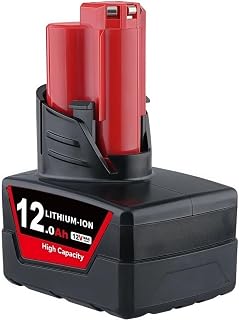
Battery compatibility can have a major effect on the overall value of a cordless bandsaw. If you already own Milwaukee cordless tools, a bandsaw compatible with the same battery platform may reduce the need to establish a separate battery ecosystem.
Check carefully whether a listing includes the bare tool only or supplies batteries and a charger. “Tool only” products can appear less expensive because the battery and charger are purchased separately. Conversely, a kit may be more appropriate for someone entering the platform for the first time.
Battery selection involves more than choosing the highest-capacity pack available. A larger battery may provide more energy for extended cutting, while a smaller pack can reduce the tool's overall weight and improve handling in confined spaces.
The blade is a consumable component and can have a substantial influence on cutting performance. Even an advanced cordless bandsaw can perform poorly when fitted with an unsuitable, damaged or excessively worn blade.
Tooth pitch describes the spacing of the teeth and is commonly selected according to the thickness and type of material being cut. Thin material generally requires an appropriate finer-tooth configuration, while thicker stock can call for a different tooth arrangement.
The objective is to maintain an appropriate number of teeth engaged with the workpiece while avoiding an unnecessarily aggressive or unsuitable blade configuration. Always follow the blade and tool manufacturer's recommendations for the specific material.
Bi-metal blades are commonly associated with metal-cutting applications because they combine different material characteristics within the blade construction. They can be available in multiple tooth patterns and pitches for different applications.
For buyers comparing replacement blades, confirm the exact blade dimensions and compatibility rather than assuming that every blade marketed for a Milwaukee cordless bandsaw will fit every Milwaukee model.
A dull blade can increase cutting effort and make the tool less pleasant to operate. Continuing to use a blade after its useful cutting performance has deteriorated can also make it harder to produce clean, controlled cuts.
Inspect blades regularly for damage, unusual tooth wear and other signs that replacement is appropriate. Keep replacement blades stored so that teeth are protected from unnecessary damage.
Portable bandsaws are particularly useful for cutting suitable metal stock, but the exact materials and dimensions supported depend on the tool and blade. Typical applications can include metal pipe, tubing, conduit, threaded rod, angle material and other compatible stock.
Do not assume that a tool's ability to cut one type of metal means it is automatically suitable for every metal, alloy or profile. Material hardness, thickness, geometry and blade selection all influence the cutting process.
An angle grinder and a portable bandsaw can both be used for cutting metal, but they are fundamentally different tools. A bandsaw uses a continuous toothed blade, while a grinder uses an abrasive disc.
A bandsaw can be attractive when controlled material removal, reduced sparks and repeatable straight cuts are priorities. A grinder may remain preferable when versatility, rapid trimming, grinding, deburring or cutting in unusual orientations is more important.
Reciprocating saws are extremely versatile and can accept blades designed for many materials, but their cutting action differs significantly from a bandsaw. A bandsaw's continuous blade can provide a different cutting experience for repetitive metal-stock work.
If your primary requirement is cutting pipe and tubing efficiently in fabrication or installation environments, a bandsaw may be the more specialised solution. If you need a general-purpose demolition and cutting tool capable of handling a broad range of applications, a reciprocating saw may offer greater overall versatility.
Specification sheets rarely communicate the full ergonomic experience of a power tool. When a bandsaw is used for only a few cuts, weight and balance may seem secondary. During repetitive production work, however, grip position, trigger access, vibration, balance and battery placement can become much more important.
Consider how the saw will be held relative to the workpiece. A compact body may improve access, while a larger frame can provide greater capacity. The best configuration is the one that provides adequate capacity without creating unnecessary bulk for the work being performed.
A cordless bandsaw is still a high-powered cutting tool and should be treated accordingly. Features such as trigger controls, blade guards, adjustable speed systems and electronic protection can contribute to controlled operation, but no electronic feature replaces correct work practices.
Maximum capacity is valuable only when you actually need it. A large deep-cut bandsaw can add weight and bulk to everyday tasks where a compact model would be easier to carry and position.
A bare tool can be an excellent choice for an existing Milwaukee battery-platform user, but it may not represent the complete cost for a new user. Always compare the tool-only and kit configurations relevant to your situation.
Brushless motor terminology, electronic controls and other technology descriptors are useful, but they do not tell the entire story. Cutting capacity, blade compatibility, ergonomics and intended application should remain central to the comparison.
A bandsaw depends on suitable replacement blades. Before committing to a particular model, establish which blades it requires and whether appropriate replacement options are readily obtainable in your market.
A published maximum cutting capacity should not be interpreted as a recommendation to operate continuously at that limit. Material type, geometry and operating conditions all matter. Choose a machine with enough capacity for your normal work rather than planning every job around the upper boundary.
Two bandsaws with similar specifications can feel substantially different because of their physical layout. Battery location, handle geometry, motor position and frame design all influence balance.
For a useful comparison, create a short specification checklist before reviewing individual models. This prevents marketing terminology from dominating the buying decision.
Users working primarily with conduit, threaded rod, cable-support hardware and similar stock may prefer a compact cordless bandsaw that prioritises portability and access. Battery compatibility can be particularly convenient when other cordless Milwaukee tools are already part of the kit.
Pipe and tubing applications make cutting capacity and blade suitability particularly important. Consider the common diameter and wall thickness of your material rather than selecting a model solely on its maximum published capacity.
Fabrication users may place greater emphasis on repeatability, cutting capacity, blade selection and endurance during repeated cuts. A deeper-cut model can make sense where larger stock is common, while a compact model may be more efficient for lighter fabrication work.
Maintenance work often involves unpredictable access conditions. A cordless bandsaw can be attractive because it eliminates the need to position a power lead around the work area. Tool dimensions, weight, battery strategy and one-handed or compact operation can therefore become important selection factors.
DIY buyers should consider actual frequency of use. If the saw will only make occasional small cuts, buying into a large professional configuration may provide capabilities that remain unused. If metal fabrication is a regular hobby, however, investing in the appropriate Milwaukee battery platform and a suitable bandsaw may provide greater long-term utility.
When comparing cordless bandsaws in Australia, check the Australian specification and configuration rather than assuming that information from an overseas listing applies identically. Model names can appear across different markets, while supplied accessories, battery configurations and product documentation can vary.
Pay attention to whether a listing is for the bare tool, a battery kit or a bundle containing additional accessories. Also compare the exact model identifier across retailers so that you are evaluating the same machine rather than superficially similar products.
Australian buyers should also consider the practical availability of replacement blades, batteries and chargers. A cordless power tool is part of a system, and long-term convenience depends on being able to maintain that system after the original purchase.
Customer ratings can provide useful buying signals, but a single star rating rarely explains whether a bandsaw is appropriate for your particular application. Read reviews for recurring observations about battery use, handling, blade changes, cutting capacity and suitability for specific materials.
Regular maintenance can help preserve the tool's cutting performance and identify problems before they become more serious. Always follow the maintenance schedule and procedures supplied by Milwaukee for the exact model.
Check for damaged teeth, abnormal wear, contamination and other visible problems. A blade that is no longer cutting effectively should be replaced with the correct compatible blade rather than continually increasing cutting pressure.
Metal chips and debris can accumulate around moving components and the blade area. Clean the tool according to the manufacturer's instructions and avoid methods that could force debris into electrical or mechanical components.
Blade tracking and guide components contribute to controlled cutting. If the blade appears to track incorrectly or the tool develops unusual behaviour, stop using it and investigate the cause according to the manufacturer's service instructions.
Store and charge Milwaukee batteries according to the manufacturer's recommendations. Avoid exposing battery packs to inappropriate temperatures, moisture or physical damage, and inspect packs before use.
Cut quality depends on more than the saw itself. Workpiece support, blade selection, cutting pressure and operator technique all matter.
A cordless bandsaw is a specialised cutting solution rather than a universal replacement for every cutting tool. If your work mainly involves demolition, irregular cuts, grinding, polishing or heavy stationary fabrication, another tool category may be more suitable.
A benchtop or stationary bandsaw can also be preferable when maximum precision, controlled workholding and workshop-based production are more important than portability. Likewise, a grinder or reciprocating saw may be more useful when a single tool must handle a wide variety of tasks.
The purchase price is only one component of cordless bandsaw ownership. A more useful comparison considers the complete system required for the intended work.
For someone already invested in Milwaukee batteries, a bare-tool purchase may have a different value proposition from that of a buyer starting a new cordless system. Compare the total setup cost rather than comparing tool prices in isolation.
If you are narrowing a long list of Milwaukee cordless bandsaws, start with the job rather than the product.
There is no single best model for every Australian buyer. The right choice depends on cutting capacity, material, frequency of use, portability, battery platform and budget. Compact models suit access-focused applications, while larger deep-cut configurations can be more appropriate for bigger stock.
Milwaukee cordless bandsaws are designed for applications that can include suitable metal cutting, but the exact materials, dimensions and blade requirements depend on the model. Always check the manufacturer's specifications and use a compatible blade for the intended material.
Choose compact when portability, access and lighter handling are priorities. Choose deep-cut when your regular work genuinely requires a larger cutting capacity. Avoid selecting a larger machine solely because its maximum capacity is higher.
Battery compatibility depends on the exact Milwaukee product and battery platform. Confirm the required battery system for the specific model before purchasing, particularly when comparing products from different generations or tool families.
Neither is universally better. A bandsaw is a specialised option for controlled cutting of suitable stock, while an angle grinder provides broader cutting and grinding versatility. The better choice depends on the work and the finish required.
Check the exact blade length, width, thickness, tooth pitch and compatibility requirements specified for the bandsaw. Select the tooth configuration according to the material and thickness being cut.
Not necessarily. A higher-capacity battery can be useful for longer cutting sessions, but it also adds weight. A smaller compatible battery may provide better handling for short jobs or confined work. Match battery size to the application rather than automatically choosing the largest pack.
They can be highly useful in professional environments where portable cutting of suitable stock is required. The appropriate model depends on the workload, cutting capacity, material, battery strategy and operating environment.
There is no universal replacement interval because blade life depends on material, thickness, tooth configuration, cutting frequency, technique and operating conditions. Replace a blade when its condition or cutting performance indicates that it is no longer appropriate for the job.
A bare tool can make sense if you already have compatible Milwaukee batteries and a charger. A kit may be more practical when establishing the battery platform. Compare the complete equipment required for your intended use rather than the advertised tool price alone.
Before choosing a Milwaukee cordless bandsaw, verify each of the following against the exact model listing and current manufacturer information:
A useful top-10 comparison should not simply rank products by price or headline specifications. Give the greatest weight to the factors that affect your actual cutting work: suitable capacity, battery compatibility, blade availability, handling, speed control, intended material and overall system value.
For professional users, reliability-related considerations should be assessed through documented specifications, manufacturer information and consistent customer feedback rather than unsupported claims. For occasional users, portability and total cost may deserve more weight than maximum cutting capacity.
As you compare the available Milwaukee cordless bandsaws for 2026, verify the exact Australian configuration, current specifications, included accessories and retailer terms before making a purchase. Product configurations and availability can change, so the most useful buying decision is based on the current listing for the exact model rather than an older specification or generic product description.