

♥ Wishlist
Compare 20 Milwaukee Angle Grinders products in Australia. Reviews, ratings, pros, cons and buying advice updated for October 2026.


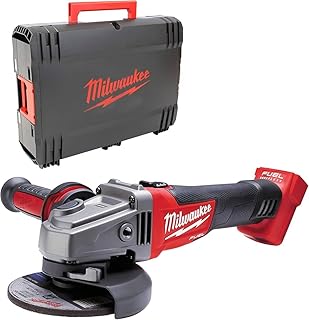


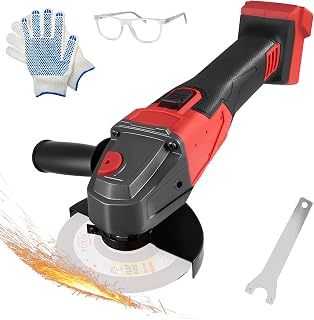
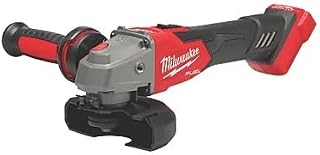


Choosing an advanced Milwaukee angle grinder is less about finding the most powerful-looking tool and more about matching the grinder's disc size, motor technology, control system, braking behaviour, battery platform and intended workload to the job. Milwaukee's Australian range includes M18 FUEL, M18 brushless and corded angle grinders, with specialist configurations for tight-access grinding, variable-speed work, high-speed cutting, tool tracking and heavy-duty applications.
For Australian buyers, the distinction between a basic cordless grinder and an advanced model can be significant. Features such as RAPIDSTOP braking, electronic clutch protection, variable-speed control, ONE-KEY connectivity, tool-free accessory changes and specialised guards can affect productivity and control. The right combination depends on whether the grinder will mainly be used for fabrication, metal preparation, cutting, maintenance, construction, fencing, automotive work or occasional DIY projects.
Milwaukee's Australian angle-grinder range currently includes several configurations rather than one universal model. The manufacturer's Australian catalogue lists M18, M18 FUEL, ONE-KEY and corded options, including 125 mm grinders, a flathead design, a large 180/230 mm cordless grinder and corded 125 mm machines. This makes configuration more important than simply choosing the newest-looking grinder.
The M18 FUEL 125mm angle grinder with deadman paddle switch is a strong general-purpose configuration for users already invested in the M18 battery platform. The Australian specification lists an 8,500 RPM no-load speed, M14 spindle, electronic clutch, kickback prevention, overload protection, tool-free guard adjustment and compatibility with 125 mm discs.
This type of grinder makes sense when versatility is more important than specialist functionality. It can be considered for cutting and grinding applications where a compact cordless format is preferable to a mains-powered machine.
The braking version adds RAPIDSTOP functionality to the standard M18 FUEL configuration. Milwaukee states that the brake brings the disc to a stop in under two seconds, while electronic clutch and overload protection are intended to improve control and protect the tool under demanding conditions.
A braking grinder can be particularly relevant for users who frequently move between cutting and grinding tasks or who value reduced accessory coast-down after releasing the paddle switch.
The flathead configuration is designed around access rather than simply maximum speed. Milwaukee states that its low-profile head can reach into tight workspaces at angles of up to 42 degrees. That makes this design particularly interesting for fabrication, metalwork and maintenance applications where a conventional grinder head cannot easily reach the workpiece.
The Australian specification lists an 8,500 RPM no-load speed, 125 mm wheel diameter, M14 spindle, anti-vibration handle, electronic kickback protection and RAPIDSTOP braking.
The M18 FUEL ONE-KEY 125mm high-speed braking grinder is aimed at users who want both higher-speed cutting capability and connected tool management. Milwaukee lists four selectable speed modes of 3,000, 5,000, 7,000 and 9,000 RPM, along with RAPIDSTOP braking, electronic clutch protection, overload protection and ONE-KEY functionality.
ONE-KEY can be especially relevant for professional users managing larger tool inventories. Rather than treating connectivity as a reason by itself to buy a grinder, consider whether tracking and managing tools actually provides value in your workplace.
Variable speed can be more useful than maximum RPM when the grinder is used with different materials and accessories. Milwaukee's Australian M18 FUEL variable-speed model provides five speed settings across a 3,500 to 8,500 RPM range.
This configuration deserves consideration for users who perform more than straightforward heavy grinding. Lower speeds can provide greater control for applications where running an accessory at maximum speed is inappropriate, although the permitted speed of every wheel, disc, brush or accessory must always be checked before use.
The M18 FUEL ONE-KEY dual-trigger model takes a different approach to operational control. Its design requires two-handed activation, includes AUTOSTOP multi-axis kickback protection and provides four selectable speeds from 3,500 to 8,500 RPM.
Milwaukee also specifies a permanent multi-position side handle and RAPIDSTOP braking. This configuration is aimed at users who place a high priority on controlled operation and additional electronic protection rather than simply wanting the lightest grinder possible.
Not every buyer needs the full feature set of an M18 FUEL grinder. Milwaukee also lists an M18 Brushless 125mm angle grinder with deadman paddle switch in its Australian range.
A brushless M18 grinder can be worth considering when cordless compatibility and straightforward grinding capability matter more than advanced connectivity, variable speed or the additional electronic features found on specialist FUEL configurations.
Corded grinders remain relevant for Australian workshops, fabrication areas and fixed workstations where uninterrupted mains power is preferable to battery changes. Milwaukee's Australian catalogue includes 125 mm corded models with different power ratings and control configurations.
The key advantage of a corded grinder is not automatically greater performance in every task. Instead, the major practical benefit is continuous operation without managing battery capacity. For repetitive workshop grinding, this can be a meaningful consideration.
The Milwaukee AGV15-125XE is listed in the Australian range as a 125 mm, 1550W angle grinder. A corded model in this class is worth comparing when the intended workload involves sustained grinding and the work environment already provides convenient access to mains power.
When comparing corded and cordless alternatives, look beyond the headline wattage. Ergonomics, disc compatibility, switch design, guard adjustment, vibration, cable management and the nature of the work can have a greater effect on day-to-day usability than a single power figure.
For applications that require a substantially larger wheel, Milwaukee's Australian catalogue also lists an M18 FUEL 180mm/230mm large angle grinder. This should not be treated as simply a bigger version of a 125 mm grinder.
Larger grinders are intended for different classes of work and require the correct accessories, guards, operating technique and workspace. Buyers should select a large grinder only when the application genuinely calls for its wheel capacity and cutting or grinding capability.
A 125mm disc, equivalent to approximately 5 inches, is one of the most versatile sizes in Milwaukee's Australian angle-grinder range. It offers a useful balance between manoeuvrability, cutting depth, accessory availability and overall tool size.
For many metalworking applications, a 125mm grinder is easier to position than a larger machine while still providing enough capacity for common cutting, grinding and surface-preparation tasks. This is one reason the majority of Milwaukee's advanced cordless configurations in the Australian catalogue use the 125mm format.
A larger wheel can be appropriate when the application demands greater cutting capacity or material-removal capability. However, increased wheel diameter also changes the handling characteristics, weight, accessory requirements and safety considerations. A larger grinder should therefore be selected because the work requires it, not because a larger specification automatically sounds better.
Milwaukee's M18 FUEL angle grinders use POWERSTATE brushless motor technology. Brushless motors eliminate the conventional mechanical brushes used in brushed motor designs and can offer benefits in efficiency, durability and electronic control.
For buyers, however, “brushless” should not be treated as a complete performance specification. The practical result depends on the entire system: motor, gearing, electronics, battery, disc, workload and cooling design.
A high-quality brushless grinder can still perform poorly for a particular application if the wrong disc is fitted, the battery is unsuitable for the workload or the grinder is used outside its intended operating conditions.
RAPIDSTOP is one of the most important differences between conventional and advanced Milwaukee grinder configurations. Instead of allowing the accessory to coast for an extended period after the switch is released, compatible models use an electronic braking system designed to stop the accessory quickly.
Milwaukee's Australian specifications report braking times under two seconds for several 125mm models. The ONE-KEY high-speed model specifies different braking times depending on the accessory type, while the dual-trigger model is specified with accessory braking of less than one second.
Braking performance should still be viewed as one part of safe operation. A rapidly stopping disc does not eliminate the need for the correct guard, appropriate personal protective equipment, correct accessory selection and proper handling.
Kickback is a serious consideration with angle grinders. It can occur when an accessory binds, stalls or catches in the workpiece, causing the tool to react unexpectedly.
Several Milwaukee M18 FUEL grinders use an electronic clutch or related kickback protection. The purpose is to detect certain overload or stall conditions and respond electronically rather than allowing the motor to continue driving through the event.
Advanced protection features should supplement—not replace—good technique. Operators should maintain a stable stance, use both hands where required, keep guards correctly positioned, avoid forcing the disc and select accessories specifically suited to the material and application.
A grinder with one high-speed setting can be excellent for conventional cutting and material removal, but variable speed becomes valuable when the same tool is used for a wider variety of accessories and materials.
Milwaukee's M18 FUEL variable-speed model provides a selectable range from 3,500 to 8,500 RPM, while other advanced ONE-KEY models provide their own predefined speed modes.
Before using a lower or higher speed, always verify the accessory manufacturer's maximum permitted speed and intended application. The grinder's selectable speed range does not mean every accessory is suitable for every setting.
ONE-KEY is primarily a professional fleet-management feature rather than a direct substitute for mechanical performance. Milwaukee's ONE-KEY grinders can be connected to the platform for tool tracking and management.
This can be useful for contractors, workshops and businesses where multiple tools move between vehicles, crews and jobsites. A private DIY user with only a few tools may receive considerably less practical value from connectivity.
When comparing two otherwise similar grinders, ask whether you genuinely need inventory visibility, tracking and digital tool-management capabilities. If not, allocating more of the budget toward batteries, quality accessories or another tool may provide greater practical value.
Many of Milwaukee's advanced Australian cordless grinders use a deadman paddle switch. The operator must maintain the appropriate switch position for the grinder to run, rather than relying on a conventional lock-on arrangement.
Switch design affects more than comfort. It can influence how quickly the grinder can be stopped, how naturally it can be controlled in different orientations and how comfortable it is during extended use.
Users should pay particular attention to switch ergonomics when choosing between otherwise similar models. A grinder that feels awkward in the hand can become tiring during repetitive work.
The flathead Milwaukee M18 FUEL grinder is designed around access into confined spaces. Its low-profile head can reach positions that may be difficult for a conventional grinder.
For fabrication and maintenance work, this can be more valuable than an increase in no-load RPM. If your work regularly involves corners, internal welds, narrow gaps or restricted access, head geometry deserves serious consideration.
On the other hand, if most work takes place on open surfaces, a conventional grinder may provide a more straightforward and potentially more economical solution.
A cordless grinder is only as useful as the battery system supporting it. Buyers who already own M18 batteries should consider the capacity, condition and number of packs available before purchasing a tool-only grinder.
High-demand grinding and cutting can consume battery capacity substantially faster than lighter-duty applications. A second battery can therefore be more useful to a professional user than a small difference in grinder specifications.
Milwaukee also offers M18 REDLITHIUM and REDLITHIUM HIGH OUTPUT battery options. The appropriate battery depends on the grinder, workload, runtime requirements and the broader M18 tools already owned.
A tool-only grinder can make financial sense if you already own compatible M18 batteries and a suitable charger. It can also reduce duplication in a large cordless tool collection.
A kit can be more attractive for someone entering the M18 platform because it may include the grinder, batteries and charger in one package. However, compare the exact contents rather than assuming every kit includes the same battery capacity or charger.
For example, Milwaukee Australia lists both tool-only and kit configurations for certain M18 FUEL grinders. Kit contents can vary significantly between model numbers, so the included battery capacity and charger should always be checked before purchase.
Buying an advanced grinder without considering its accessories is a common mistake. The grinder is only one part of the cutting or grinding system.
Check the disc diameter, spindle specification, accessory type, maximum permitted RPM and intended application before installation. Milwaukee's 125mm grinders commonly use an M14 spindle, but buyers should confirm the specification for the exact model rather than assuming every Milwaukee grinder is identical.
Different grinding and cutting applications can require different guards. Milwaukee supplies different guard configurations with several of its grinders, including Type 27 and Type 1 arrangements on certain 125mm models.
The correct guard must match the accessory and application. Never remove or modify a guard simply because it makes access easier. The increased accessibility is not worth compromising the protection provided by the correct guard.
Angle grinders are high-speed cutting and grinding machines capable of generating sparks, fragments, dust and significant noise. They should be treated as high-risk power tools regardless of whether the grinder is cordless or corded.
Cutting and grinding are different operations and should not be treated as interchangeable simply because both use an angle grinder.
A cutting disc is designed for controlled cutting and is generally much thinner than a grinding wheel. A grinding wheel is designed for material removal and should be used in the orientation and application specified by its manufacturer.
Using the wrong accessory can increase the risk of breakage, binding and loss of control. Always follow the accessory manufacturer's instructions and the grinder's manual.
Rather than ranking grinders solely by RPM, evaluate the following factors together.
Maximum RPM is not the same thing as maximum suitability. A variable-speed grinder may be the better choice when different accessories and materials are involved.
A tool-only price can look attractive until the required battery and charger are added. Compare the complete cordless setup with the alternatives you already own.
A larger wheel does not automatically make everyday work easier. For many general-purpose applications, the smaller 125mm format offers better manoeuvrability.
Digital tool management is valuable in some professional environments but unnecessary for many individual users. Treat it as a workflow feature rather than a universal performance upgrade.
Switch ergonomics can significantly influence comfort and control. Compare the actual switch arrangement rather than assuming every paddle-switch grinder feels the same.
A grinder may require cutting discs, grinding wheels, flap discs, guards and other accessories. Build the complete operating cost into your buying decision.
Milwaukee uses terms such as M18, FUEL, ONE-KEY, RAPIDSTOP and POWERSTATE across different configurations. The important comparison is the exact model number and its specifications.
An M18 FUEL model is particularly compelling for users who already operate within Milwaukee's M18 ecosystem and need a professional cordless grinder with advanced electronic control.
These models can be especially suitable for tradespeople, fabricators, maintenance workers, contractors and serious workshop users who value cordless mobility without giving up features such as brushless motors, electronic protection and rapid braking.
A corded Milwaukee grinder can make more sense for a workshop or fixed work area where mains power is readily available and continuous operation is more important than cordless mobility.
For repetitive work, a corded grinder avoids battery swaps and can simplify tool readiness. The trade-off is reduced mobility and the need to manage the power cable safely around the work area.
Milwaukee should not be evaluated in isolation. Australian buyers may also compare professional angle grinders from Bosch Professional, Makita, DeWalt, Metabo and HiKOKI.
The strongest comparison is usually ecosystem-based. If you already own several M18 batteries, Milwaukee's cordless ecosystem may offer more practical value than switching platforms. Conversely, someone already invested in another battery system may find it more economical to stay within that ecosystem.
Compare the exact grinder configurations rather than comparing brands by reputation alone. Disc size, battery voltage, switch design, braking, speed control, electronic protection, included equipment and accessory compatibility can differ substantially between models.
A 125mm M18 FUEL grinder is a logical starting point because it combines a compact form factor with broad accessory compatibility. If tight-access grinding is common, the flathead model deserves additional consideration.
Look for a configuration with the appropriate RPM, braking and electronic protection, while ensuring that the cutting disc is correctly rated for the application. Milwaukee's M18 FUEL ONE-KEY high-speed model is specifically positioned around high-speed cutting capability.
A variable-speed model offers greater control when your work involves accessories that benefit from different operating speeds.
ONE-KEY models are worth considering when tracking and managing tools across a business or multiple jobsites is genuinely useful.
The M18 FUEL flathead grinder is the specialist choice to investigate when conventional grinder geometry prevents access to the work area.
A corded 125mm grinder can be preferable where uninterrupted mains operation is more important than portability.
Consider the M18 FUEL large angle grinder only when your application requires the larger 180mm or 230mm format. Larger tools should be selected with particular attention to accessory compatibility, handling and safety requirements.
Good maintenance helps preserve tool performance and can make problems easier to identify before they become serious.
Customer reviews can help identify practical issues that specifications do not always reveal, but they should be read critically.
Look for recurring comments about ergonomics, battery consumption, switch feel, vibration, accessory changes and suitability for the reviewer's workload. Give more weight to reviews that explain the application and operating conditions than to one-line statements about whether a grinder is “good” or “bad”.
Also distinguish reviews of the exact model from reviews of similar Milwaukee grinders. A product family can contain models with substantially different braking systems, speed controls, switches and electronics.
Milwaukee frequently sells cordless tools in tool-only form. A tool-only grinder does not necessarily represent a complete ready-to-use purchase.
Before choosing one, confirm whether you already have a compatible M18 battery and charger. If not, compare the total cost of the grinder, battery and charger against an available kit.
Do not assume that a higher-capacity battery is automatically the best option. Battery weight, runtime, power requirements and the balance of the grinder can all influence the practical result.
The best advanced Milwaukee angle grinder for an Australian buyer is the model that matches the application rather than the one with the longest feature list. For general-purpose cordless metalworking, a 125mm M18 FUEL configuration provides a versatile starting point. For faster cutting and connected tool management, the M18 FUEL ONE-KEY high-speed model adds specialist functionality. For restricted access, the flathead design can solve a problem that additional motor speed cannot. For variable applications, adjustable RPM can be more useful than maximum speed. And for continuous workshop work, a corded Milwaukee grinder remains a practical alternative.
Milwaukee's Australian catalogue confirms that the current range spans multiple M18 FUEL configurations, M18 brushless options and corded grinders, so buyers should compare exact model numbers rather than assuming that every Milwaukee angle grinder has the same specifications.
Before purchasing, compare the complete configuration: grinder, battery, charger, guards, accessories, switch design, speed control, braking, electronic protection, ergonomics and intended workload. Then compare current Australian retailer pricing and verified customer feedback for the exact model. That approach is more reliable than choosing solely from headline RPM, battery voltage or brand familiarity.
A 125mm M18 FUEL grinder is a sensible general-purpose category for users who want cordless portability and advanced electronic features. The ideal exact model depends on whether you need braking, variable speed, ONE-KEY or specialist access.
Yes. The M18 FUEL 125mm models are cordless grinders designed around Milwaukee's M18 battery platform. Some listings are tool-only, so check whether a battery and charger are included before buying.
M18 identifies Milwaukee's 18V cordless platform, while M18 FUEL identifies a higher-specification range using Milwaukee's POWERSTATE brushless motor, REDLINK PLUS electronic intelligence and related system technologies.
For many metalworking, fabrication, maintenance and construction applications, 125mm provides a useful balance between accessibility and cutting or grinding capability. It is also a major size within Milwaukee's Australian cordless grinder range.
Yes. Milwaukee Australia lists an M18 FUEL 125mm variable-speed braking angle grinder with a 3,500 to 8,500 RPM range and five speed settings.
RAPIDSTOP is Milwaukee's electronic braking technology designed to bring the rotating accessory to a rapid stop after the tool is released. Exact braking performance varies by grinder and accessory.
ONE-KEY provides connected tool-management functionality, including tracking and management features on compatible Milwaukee tools. It can be particularly useful for professional tool fleets.
Neither is universally better. Cordless models provide mobility and avoid power cables, while corded models can be advantageous for continuous work where mains power is readily available.
It depends on the exact listing. Milwaukee Australia offers both tool-only and kit configurations for certain grinders. Always check the contents associated with the exact model number.
No. Disc diameter alone is not enough. Check the accessory type, spindle compatibility, maximum rated RPM, intended application and all manufacturer instructions before use.
A paddle switch can provide convenient control in many positions, but the best switch design depends on your work. Compare the exact switch arrangement, ergonomics and operating requirements before choosing.
Milwaukee markets its angle grinders for demanding construction, fabrication, repair and industrial applications. Suitability for a specific professional task still depends on selecting the correct model, accessory and operating method.
Inspect the grinder before each use and follow the maintenance schedule and instructions supplied with the exact model. More demanding environments may require more frequent cleaning and inspection.