

♥ Wishlist
Compare 22 Milwaukee Multi Tools products in Australia. Reviews, ratings, pros, cons and buying advice updated for October 2026.


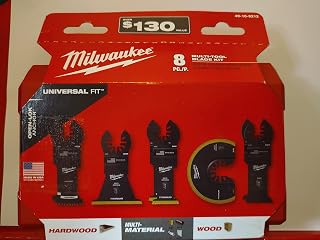


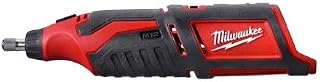


Choosing an advanced Milwaukee multi-tool in Australia is less about finding the tool with the longest feature list and more about matching the right platform, power level, ergonomics, accessories and intended workload. Milwaukee's current Australian multi-tool range centres on its M12 and M18 platforms, with the M12 FUEL Multi-Tool M12FMT-0 and M18 FUEL Multi-Tool M18FMT-0 providing two particularly relevant options for buyers who want cordless versatility for cutting, trimming, sanding and renovation work.
For Australian tradespeople, renovators, maintenance workers and serious DIY users, an oscillating multi-tool can fill an important gap between conventional saws, sanders and hand tools. It can make controlled plunge cuts, trim door jambs, remove grout, cut timber or plastic, sand awkward areas and handle detail work where a larger power tool would be inconvenient. The best choice depends heavily on whether compact size or maximum cutting performance is the priority.
The most important decision for many Milwaukee buyers is the platform. Both the M12 FUEL and M18 FUEL multi-tools use brushless POWERSTATE motors, REDLINK PLUS electronic intelligence, variable speed control, tool-free accessory changes and vibration-reduction technology. However, their physical size, oscillation characteristics and intended balance of portability and power are different.
The Milwaukee M12 FUEL Multi-Tool is designed around the compact M12 platform. Milwaukee Australia specifies a 10,000–20,000 OPM operating range, 12 speed settings and a 3.9° oscillation angle. The tool is approximately 285 mm long and weighs about 1.0 kg without the battery. Its compact format can be particularly useful for detailed work, confined areas and jobs where minimising tool fatigue is important.
The M12 FUEL model includes a variable speed dial, integrated LED lighting, tool-free blade changing and vibration-dampening technology. It is suitable for applications such as flush cutting, plunge cutting, grout removal, sanding and other awkward cutting or finishing tasks.
The M18 FUEL Multi-Tool takes a larger-platform approach. Milwaukee Australia lists a 10,000–20,000 OPM operating range, a 4.2° oscillation angle and 10 speed settings. The tool is approximately 310 mm long and weighs around 1.2 kg without the battery.
Its 4.2° oscillation angle is one of the key specifications to consider for buyers who regularly perform more aggressive cutting. The M18 FUEL model also incorporates an Auto-Load feature that starts precise cuts at a lower speed before automatically increasing speed when the tool encounters load. A 180° LED provides illumination around the front working area.
The word “advanced” should not be treated as a marketing label alone. A genuinely capable oscillating multi-tool combines motor performance, electronic control, mechanical movement, ergonomics and accessory compatibility. Looking at these elements separately makes it easier to compare models objectively.
Both the M12 FUEL and M18 FUEL multi-tools use Milwaukee POWERSTATE brushless motor technology. Brushless motors are particularly relevant in cordless tools because they avoid the traditional brushes and commutator arrangement used by brushed motors. The result is a motor architecture suited to modern electronically controlled cordless tools.
For a multi-tool, motor performance matters because cutting resistance can change dramatically depending on the material, blade type, cutting depth and pressure applied by the operator. A capable motor and electronic control system can help the tool maintain useful performance as load changes.
Milwaukee's REDLINK PLUS electronics are designed to coordinate the tool and battery while providing protection against conditions such as overload, overheating and over-discharge. This is particularly important in cordless equipment because motor demand, battery output and thermal conditions are closely connected.
Electronic intelligence should therefore be considered alongside the motor rather than treated as an unrelated feature. A high-output motor is only useful when the complete tool and battery system can manage the demands placed on it.
Variable speed is one of the most useful features on an oscillating multi-tool. Different materials and accessories can require different operating speeds. A slower setting can provide greater control during delicate work, while higher speeds can be useful when the application and accessory are appropriate.
The M12 FUEL provides 12 speed settings, while the M18 FUEL provides 10 settings plus its Auto-Load function. This makes speed control a meaningful specification when comparing the two models.
Oscillation angle describes the angular movement of the accessory during each oscillation cycle. It is not the only factor determining cutting speed, but it is an important mechanical specification.
The M12 FUEL uses a 3.9° oscillation angle, while the M18 FUEL uses a 4.2° oscillation angle. The larger angle of the M18 FUEL contributes to its more aggressive cutting characteristics, although real-world results also depend on blade design, material, battery condition, technique and applied pressure.
A multi-tool is valuable because its movement allows accessories to work in places where conventional rotary or reciprocating tools may struggle. Instead of relying on a single blade for one task, the same tool body can accept different accessories for cutting, sanding, scraping and grout removal.
Flush cutting is one of the classic uses for an oscillating multi-tool. It can be useful when trimming timber, door jambs, skirting or other materials where a conventional saw would be difficult to position.
The blade can be positioned close to a surface, making controlled flush cuts possible when the correct accessory and technique are used. For renovation projects, this can be particularly useful when preparing openings or trimming components without dismantling surrounding materials.
Plunge cutting allows an operator to start a cut within a material rather than beginning at an exposed edge. This can be useful for installing electrical boxes, modifying timber, cutting openings and making repairs.
Plunge cuts demand careful control. The operator should select a blade designed for the material and avoid forcing the tool. Marking the cut line beforehand can significantly improve accuracy.
With a suitable grout-removal accessory, an oscillating multi-tool can be useful during bathroom and kitchen renovation work. It can remove deteriorated grout from joints where using a larger cutting tool would be impractical.
Care is essential because the accessory can contact surrounding tiles. Controlled speed, shallow passes and appropriate pressure are preferable to aggressive cutting when working near finished surfaces.
Oscillating sanding pads allow a multi-tool to reach corners and other areas that can be difficult to access with a conventional random orbital sander. The trade-off is that a multi-tool is generally a detail-sanding solution rather than a replacement for a dedicated large-area sander.
Scraper accessories can be useful for removing adhesives, sealants, coatings and other unwanted material where an appropriate accessory is available. As with cutting, the correct accessory and controlled pressure are more important than simply running the tool at maximum speed.
The accessory can influence performance almost as much as the tool itself. Two users can have the same Milwaukee multi-tool but achieve very different results because they are using different blades or sanding accessories.
Wood-cutting blades are designed for timber applications, but users should still match the blade to the material. Softwood, hardwood, laminate and timber containing nails can impose very different demands on an accessory.
Bi-metal and other metal-oriented blades can be appropriate for cutting metal components, fasteners and mixed-material applications when the specific accessory is rated for the job. The blade specification should always be checked before cutting unfamiliar materials.
Carbide accessories can be useful where increased wear resistance is needed, particularly for abrasive materials or demanding applications. They are often more expensive than basic accessories, so they make the most sense when their durability or cutting characteristics provide a practical benefit.
Triangular sanding pads are particularly useful for corners and detailed surfaces. Sandpaper grit should be selected according to the task. Coarse abrasives are suited to faster material removal, while finer grits are more appropriate for finishing.
Grout accessories vary in width and construction. A narrow accessory may provide more precise control in a joint, while a wider accessory can cover more material. The accessory should be matched to the joint width and the surrounding surface.
Australian buyers should pay close attention to whether a product listing contains the tool only or a complete kit. A tool-only purchase can appear less expensive at first, but the total cost can be substantially different if a compatible battery and charger are not already available.
Milwaukee Australia's current range includes an M12 FUEL Multi-Tool kit, while the M12FMT-0 and M18FMT-0 are available as tool-only configurations. Buyers should always verify the exact contents of the retailer listing because kit contents and bundle configurations can change.
Battery choice affects the overall size, balance and working experience of a cordless multi-tool. A larger battery can provide additional energy capacity, but it also adds weight. A compact battery can make a tool easier to handle in tight spaces, but runtime may be more limited depending on the application.
The most sensible battery is therefore not automatically the largest available. Consider the type of work being performed, expected cutting duration, accessibility and whether other tools in the same platform already use the battery.
The M12 platform is designed around compact cordless tools. For users who already own several M12 products, adding an M12 multi-tool can be convenient because the existing battery ecosystem can support another tool without introducing a separate platform.
The M18 platform is suited to a broad range of professional cordless tools. Buyers already using M18 equipment may find the M18 FUEL Multi-Tool a logical way to extend the usefulness of their existing batteries and chargers.
Multi-tools can transmit noticeable vibration because the accessory repeatedly oscillates at high speed. Extended use can therefore make vibration control an important buying criterion.
Both current Milwaukee FUEL multi-tools incorporate vibration-dampening technology. The practical benefit is not simply comfort. Reduced vibration can make it easier for an operator to maintain control during detailed work and may reduce fatigue over longer sessions.
Tool length and weight should also be considered. The M12 FUEL is approximately 285 mm long and 1.0 kg without the battery, whereas the M18 FUEL is approximately 310 mm long and 1.2 kg without the battery. Actual handling weight increases once the battery is fitted.
Integrated lighting is useful when cutting inside cabinets, beneath benches, around plumbing, inside wall openings or in other areas where ambient light is poor. The M12 FUEL includes an integrated LED, while the M18 FUEL provides a 180° span LED designed to improve visibility around the working area.
Lighting should be considered a convenience and visibility aid rather than a replacement for proper work lighting. The cut line should remain clearly visible before the tool is started.
One of the most common mistakes is choosing a tool without checking whether its battery platform matches the batteries already owned. M12 and M18 batteries are different systems. A buyer should confirm the platform before ordering.
Cheap or unsuitable accessories can undermine the performance of a premium cordless multi-tool. Always check the intended material, tooth configuration, accessory dimensions and compatibility.
More power is not always the best solution. If most work involves detail trimming, cabinet installation, light renovation or confined spaces, compact size may be more valuable than maximum cutting aggression.
A tool-only listing does not necessarily include a battery or charger. Before comparing prices, calculate the complete setup required for your intended use.
Forcing an oscillating multi-tool into a material can reduce control and accelerate accessory wear. A suitable blade, appropriate speed and controlled technique are generally more effective than excessive downward pressure.
A multi-tool's usefulness depends on having the right accessories. Buyers should consider their first several applications before choosing a blade and sanding assortment.
For general renovation work, start by listing the jobs you expect to perform rather than choosing based solely on model name.
The M12 FUEL M12FMT-0 is particularly compelling for buyers who value compact cordless equipment and already have access to the M12 battery system. Its 10,000–20,000 OPM range, 12-setting speed dial, 3.9° oscillation angle and approximately 1.0 kg tool-only weight create a specification profile focused on versatility and portability.
It can make sense for electricians, carpenters, maintenance professionals, installers, renovators and advanced DIY users who regularly encounter tight or awkward cutting tasks.
The M18 FUEL M18FMT-0 is better suited to buyers who prioritise more aggressive cutting characteristics and already use the M18 platform. Its 4.2° oscillation angle, 10,000–20,000 OPM operating range, Auto-Load function and 1.2 kg tool-only weight position it toward demanding applications.
Milwaukee specifically positions the M18 FUEL multi-tool for applications including large cuts through hardwood, nail-embedded wood, grout removal and other demanding work. This makes it a particularly relevant candidate for professional users who expect their multi-tool to perform more than occasional detail work.
A useful comparison should focus on specifications that affect actual work rather than simply counting features.
When comparing Australian listings, do not judge a deal solely by the advertised headline price. Establish exactly what is included and compare equivalent configurations.
Milwaukee products can appear under very similar names while having different kit configurations. Model numbers provide a more reliable way to distinguish a tool-only product from a battery kit or another bundle.
For example, M12FMT-0 identifies the M12 FUEL Multi-Tool tool-only configuration, while M12FMT201HB identifies an M12 FUEL Multi-Tool kit configuration. Similarly, M18FMT-0 identifies the M18 FUEL Multi-Tool tool-only model.
Always compare model numbers when reviewing several retailer listings. This avoids accidentally comparing a bare tool with a kit and drawing an incorrect conclusion about value.
Proper maintenance helps preserve performance and makes accessory changes safer and easier.
Dust and debris can accumulate around moving components and ventilation areas. After use, remove loose debris and keep the tool free from excessive buildup. Avoid introducing moisture into areas not designed for it.
Blades should be inspected for excessive wear, damaged teeth, bending or other defects. Sanding accessories should be replaced when they no longer provide effective abrasion or when their backing has deteriorated.
Before operating the tool, make sure the accessory is properly secured and positioned. A loose accessory can compromise cutting accuracy and create a safety hazard.
Use compatible Milwaukee batteries and chargers and follow the relevant manufacturer's battery instructions. Avoid using visibly damaged battery packs. Store batteries appropriately and keep contacts clean.
Unusual noise, excessive vibration, overheating, inconsistent operation or visible damage should not be ignored. Stop using the tool when appropriate and consult the manufacturer's instructions or an authorised service resource.
An oscillating multi-tool is versatile, but it remains a high-speed cutting and sanding power tool. Read the applicable operator manual before use and select personal protective equipment appropriate for the material and application.
Australian buyers should consider the environment in which the tool will be used. Construction sites, renovation projects, workshops and maintenance environments can expose equipment to dust, debris, heat and demanding working conditions.
For professional users, platform compatibility can also have a significant effect on productivity. A tradesperson who already owns several M12 or M18 tools may benefit from standardising batteries and chargers across the kit rather than purchasing an isolated cordless system.
For home renovators, the priority may be different. A compact M12 tool can be easier to store and handle, while an M18 model may be preferable if the multi-tool will be used for substantial renovation or demolition work.
The M12 FUEL Multi-Tool is worth considering when portability, access and lower tool-only weight are major priorities. It provides the control features and brushless motor technology expected from Milwaukee's FUEL range without moving to the larger M18 platform.
The M18 FUEL Multi-Tool is the stronger candidate when the priority is aggressive cutting and demanding renovation applications. Its larger 4.2° oscillation angle and Auto-Load function are particularly relevant to this type of work.
If a workshop already contains M12 batteries and chargers, the M12 FUEL Multi-Tool can be an efficient platform expansion. The ability to share batteries across compatible M12 equipment can simplify tool management.
For users already invested in M18, the M18 FUEL Multi-Tool provides a way to add oscillating cutting and detail work without introducing another battery platform.
New buyers should compare complete kit costs rather than tool prices alone. A battery, charger and accessory requirements should be included when calculating the actual cost of entering a platform.
Customer reviews can provide useful information, but they should not be treated as a substitute for specifications or manufacturer documentation. Look for recurring themes rather than isolated comments.
Verified customer reviews are most useful when combined with technical specifications and an understanding of the intended application.
Prices for cordless tools and kits can vary between retailers and promotional periods. Instead of assuming the cheapest listing is automatically the best deal, compare equivalent configurations.
A lower-priced tool-only model may not represent better value than a slightly more expensive kit if you still need to purchase a compatible battery and charger. Conversely, buying a complete kit when you already own several suitable batteries can result in unnecessary duplication.
Before purchasing, compare the total setup cost, included accessories, battery capacity, warranty information, seller reputation and current customer feedback.
An oscillating multi-tool should not be viewed as a universal replacement for dedicated saws and sanders. Its strength is versatility and access.
There is no single best model for every Australian buyer. The M12 FUEL M12FMT-0 is a strong option for compactness and portability, while the M18 FUEL M18FMT-0 is more appropriate for buyers prioritising demanding cutting performance and the M18 battery ecosystem.
The M12 FUEL can handle a wide range of renovation and maintenance applications when paired with an appropriate accessory. Its suitability depends on the material, cutting depth, workload and frequency of use. For more demanding cutting and demolition-oriented applications, the M18 FUEL may be the better fit.
Not universally. The M18 FUEL offers a larger platform and 4.2° oscillation angle, which can favour demanding cutting. The M12 FUEL is shorter and lighter as a tool-only unit and offers 12 speed settings, making it attractive for users who value compact handling and detailed work.
It depends on the configuration. The M12FMT-0 and M18FMT-0 are tool-only models, so batteries and chargers are not included. Milwaukee also offers kit configurations, so buyers should verify the exact model number and package contents before purchasing.
No. M12 and M18 are separate Milwaukee battery platforms. Choose a battery that matches the tool's specified platform.
With suitable accessories, an oscillating multi-tool can be used for applications involving materials such as timber, plastics, grout and certain metals. Always check the accessory manufacturer's specifications and the tool's operator documentation before cutting a particular material.
Yes, an oscillating multi-tool can be very useful for grout removal when fitted with an appropriate grout-removal accessory. Controlled operation is important to reduce the risk of damaging surrounding tiles.
Yes. Compatible sanding pads and abrasive sheets can be used for detail sanding, especially in corners and confined areas. A dedicated orbital or random orbital sander remains preferable for larger surfaces.
OPM means oscillations per minute. It describes how many oscillation cycles the tool performs in one minute. A higher OPM setting is not automatically better for every material or accessory, which is why variable speed control is valuable.
The oscillation angle describes the angular movement of the accessory. It is one factor influencing cutting behaviour and aggressiveness, but motor performance, accessory design, material and technique also affect results.
For frequent users, brushless motor technology is a worthwhile feature to consider. It is part of the motor and electronic architecture used in Milwaukee's FUEL multi-tools and is designed for efficient cordless performance and electronic control.
Buy tool only if you already own compatible batteries and a charger. A kit can make more sense if you are entering the platform and need the battery and charging equipment as well.
Before choosing an advanced Milwaukee multi-tool in Australia, work through the following checklist:
The Milwaukee M12 FUEL and M18 FUEL multi-tools are aimed at different priorities rather than being simple good-versus-better alternatives. The M12 FUEL M12FMT-0 is compelling when compact size, lower tool-only weight and detailed control are important. Its 12-setting speed dial, 3.9° oscillation angle and 10,000–20,000 OPM range make it a versatile choice for maintenance, installation, renovation and detail applications.
The M18 FUEL M18FMT-0 is the more suitable direction for buyers who expect heavier workloads and want the cutting characteristics of the larger M18 platform. Its 4.2° oscillation angle, Auto-Load functionality, 10,000–20,000 OPM range and larger platform make it particularly relevant for demanding cutting and renovation applications.
For Australian buyers in 2026, the smartest purchase is ultimately the model that fits the work rather than simply the model with the highest specification. Compare the platform, complete kit contents, accessories, ergonomics, workload and current retailer pricing before making a decision. When comparing deals, always verify the exact model number and current specifications because package contents and market pricing can change.