

♥ Wishlist





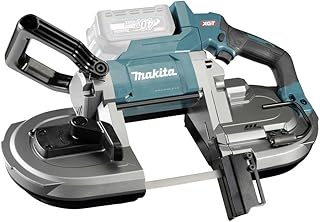


Makita cordless bandsaws offer a practical solution for Australian tradespeople, workshop users and maintenance professionals who need portable cutting equipment. Unlike a traditional corded bandsaw, a cordless model does not require a mains cable running from the work area to a power outlet. That can make setup simpler and give you greater freedom when working on-site, inside partially completed buildings or in locations where access to electricity is inconvenient.
A cordless bandsaw uses a continuous blade that travels around wheels to produce a controlled cutting action. This design is particularly useful for cutting suitable metal stock, pipe, conduit, tubing and other workpieces when the selected tool and blade are appropriate for the application. Before choosing a model, consider the materials you work with most often and check the manufacturer's specifications for compatible materials and maximum cutting dimensions.
Portability is one of the main reasons to consider a Makita cordless bandsaw. A cord-free tool can be easier to move between work areas and can reduce the need for extension leads. This is valuable for trades that regularly move around construction sites or carry out installation and maintenance work away from a fixed workshop.
The bandsaw format can also provide controlled cuts through appropriate materials. The continuous blade moves in one direction rather than using the reciprocating motion found on some other portable saws. Depending on the model, this can make a cordless bandsaw useful for repeat cutting tasks where a steady cutting action is important.
Cutting capacity should be one of the first specifications you compare. The capacity determines the approximate size of material that the saw can accommodate. If you regularly cut larger pipe, tubing or stock, look for a model designed to handle those dimensions. For smaller maintenance jobs, a compact saw may offer a more convenient balance between capacity and portability.
Do not select a tool based on cutting capacity alone. Blade speed, blade dimensions, weight, ergonomics and the manufacturer's recommended applications also affect how suitable a bandsaw will be for your work. Reviewing these specifications together can help you choose equipment that matches your normal workload.
For cordless power tools, battery compatibility is an important consideration. If you already use compatible Makita battery platforms, check whether the bandsaw works with the batteries you own. Also confirm whether a particular listing includes a battery and charger or whether the tool is supplied as a bare unit.
Battery capacity can influence runtime and overall working convenience. For demanding or extended cutting sessions, having a suitable spare battery can reduce interruptions. Always follow the manufacturer's charging, storage and operating guidance for the battery system.
Makita cordless bandsaws can suit a range of professional and workshop environments. Metalworkers may use an appropriate bandsaw for cutting selected metal sections, while plumbers and installers can benefit from portable cutting equipment when preparing pipe or tubing. Construction and maintenance teams may also appreciate the convenience of carrying a cordless saw between different work areas.
For workshop users, a cordless bandsaw can complement larger stationary equipment when portability is more important than high-volume fixed cutting. For site work, its compact format can make it easier to position the tool close to the workpiece without arranging a mains connection.
The blade is an important part of bandsaw performance. Different materials and cutting requirements can call for different blade specifications. Before replacing or purchasing blades, confirm compatibility with the particular bandsaw and select a blade intended for the material being cut.
Using the correct blade can help support clean, controlled cutting while reducing unnecessary wear. Follow the manufacturer's instructions for blade installation, tension and maintenance, and inspect the blade regularly for signs of damage or excessive wear.
When a bandsaw will be carried around a jobsite, weight and ergonomics become especially relevant. A tool that feels manageable during short tasks may feel different during repeated cutting. Consider the handle design, overall weight and balance, particularly if you expect to use the saw in awkward positions or for multiple cuts throughout the day.
It is also worth considering visibility around the cutting area and how easily you can position the blade on the workpiece. Good control helps you work consistently while keeping the tool aligned with the intended cut. Always use appropriate personal protective equipment and follow safe operating procedures.
The right Makita cordless bandsaw depends on your material, required cutting capacity, frequency of use and preferred battery setup. Compare the available specifications carefully rather than choosing solely by appearance or price. Check what is included with each product, especially when deciding between a bare tool and a kit with batteries and a charger.
For Australian shoppers, portability can be particularly useful when a project involves multiple work areas or limited access to mains power. By matching the bandsaw's capacity, blade requirements and battery system to your actual work, you can select a cordless cutting tool that fits your workshop or jobsite needs.
Explore Makita cordless bandsaws for portable, controlled cutting across workshops, construction sites, maintenance tasks and fabrication projects in Australia. These compact power tools combine the cutting action of a bandsaw with cordless convenience, making them useful when access to a mains power outlet is limited. Compare suitable Makita cordless band saw options according to cutting capacity, portability, power source and intended application.