

♥ Wishlist
Compare 22 Bosch Routers for Precise Woodworking products in Australia. Reviews, ratings, pros, cons and buying advice updated for October 2026.




Choosing an advanced Bosch router is less about finding the tool with the highest wattage and more about matching the router's design, control system, collet arrangement, depth adjustment, accessories and working format to the jobs you actually perform. A router used for occasional edge profiling has very different requirements from one used for cabinetry, template routing, joinery, repeated groove cutting or demanding hardwood work.
For Australian buyers, it is also important to distinguish between Bosch DIY and Bosch Professional equipment. Bosch offers routers for different levels of woodworking, and the right choice can depend on whether you are completing home improvement projects, building furniture, working in a workshop or using the tool regularly for trade applications.
The Bosch router range covers several useful formats rather than one universal design. Current Australian Bosch DIY listings include models such as the POF 1200 AE and AdvancedTrimRouter 18V-8, while Bosch's broader professional range includes higher-performance plunge-router platforms. Availability, kits and regional variants can change, so Australian buyers should verify the exact model number, included accessories and specifications before ordering.
These should not automatically be treated as five equal alternatives. A compact cordless router, a DIY plunge router and a professional heavy-duty plunge router solve different problems. The best choice depends on the workpiece, cutter size, routing depth, frequency of use and level of control required.
The first decision should be the physical format of the router. A plunge router allows the motor and cutter to move vertically into the workpiece, while a compact trim router is easier to manoeuvre around edges and smaller components. A plunge configuration is generally more versatile when the work requires starting a cut inside a panel rather than beginning from an existing edge.
If your projects regularly alternate between edge trimming and deeper internal routing, a modular system can be particularly attractive. For example, the Bosch AdvancedTrimRouter 18V-8 can be paired with a dedicated plunge base, allowing one cordless motor platform to cover a wider range of woodworking operations.
Motor wattage is useful, but it should not be treated as a simple ranking system. A powerful router can maintain cutting performance under demanding loads, yet a lighter router may be easier to control and more appropriate for delicate edge work.
For Australian woodworking applications, consider the relationship between motor power, cutter diameter, material hardness and routing depth. Hardwood, thick stock and larger cutters can impose substantially greater loads than light edge profiling in softwood.
For example, Bosch lists the POF 1200 AE at 1,200 W and the POF 1400 ACE at 1,400 W in its Australian documentation. The Bosch Professional GOF 130 is a separate professional-class design with a 1,300 W rated input. These figures demonstrate why wattage alone cannot determine which router is better: the intended application, control features and physical design matter just as much.
Variable-speed control becomes increasingly valuable as the range of router bits and materials expands. A router running at maximum speed is not automatically the best configuration for every cutter or application.
Smaller cutters, larger-diameter cutters, different materials and different cutting conditions can require different speed settings. Always follow the router-bit manufacturer's permitted operating speed and the router's instruction manual rather than choosing a speed based solely on personal preference.
Constant-speed or electronic control systems can also be valuable because maintaining a more consistent operating speed under load can contribute to predictable cutting behaviour. However, electronic features should be evaluated alongside mechanical depth control, base stability and ergonomics rather than treated as a substitute for correct technique.
Collet compatibility is one of the most important specifications to check before purchasing an advanced router. A router is only useful for a particular cutter if the cutter's shank is compatible with the router's approved collet system.
Bosch routers can use different combinations depending on the specific model and regional configuration. Australian documentation for Bosch DIY models identifies 6 mm and 8 mm tool-holder options on relevant routers, while professional models may support additional collet configurations.
Do not assume that a cutter will fit simply because it appears physically similar. Use only router bits and accessories approved for the specific machine and application.
Precise depth adjustment is one of the clearest differences between a basic router and a tool intended for more advanced woodworking. When creating grooves, rebates, templates or repeated joinery features, small differences in cutting depth can affect the final fit and appearance.
Look for a design that makes coarse adjustment straightforward while allowing fine adjustment when the final depth needs to be dialled in accurately. A good depth mechanism should also remain stable after adjustment rather than requiring repeated correction during normal use.
For production-style woodworking, repeatability can be more valuable than having the maximum possible depth. A router that lets you establish and reproduce a setting confidently can save considerable setup time over multiple workpieces.
Routing produces chips and fine dust, particularly when cutting MDF, plywood, engineered boards or other materials that generate substantial airborne particles. Dust management should therefore be considered part of the router selection process rather than an optional convenience.
Check whether the router has a suitable dust-extraction connection and whether the base and accessory configuration allow the extraction hose to remain clear of the workpiece and cutter path.
Good extraction does not eliminate the need for safe working practices. Routing should be performed with suitable personal protective equipment and appropriate workshop ventilation and dust-control measures.
A router can have excellent specifications on paper and still be the wrong choice if it is difficult to control. Router work often involves maintaining a consistent feed rate while keeping the base flat against the workpiece. Weight distribution, handle placement, switch position and visibility can therefore influence real-world usability.
For long workshop sessions, a slightly less powerful machine that is comfortable and predictable may be more useful than a heavier model whose additional capacity is rarely required.
Bosch's cordless router approach is particularly relevant to Australian users already invested in a compatible Bosch battery platform. A cordless router eliminates the power cable during operation, which can simplify setup and make edge work more convenient.
The trade-off is that cordless tools introduce battery weight and require consideration of battery availability, runtime, charging and the demands of the application. Heavy continuous routing can make a corded model attractive when uninterrupted mains power is readily available.
Do not compare cordless and corded routers only by nominal power figures. Their operating characteristics are different, and the more useful comparison is whether each format can comfortably handle your intended cutter, material, depth and workload.
For buyers considering the AdvancedTrimRouter 18V-8, battery-platform compatibility deserves particular attention. Bosch positions this cordless router within its 18V POWER FOR ALL ecosystem, which can make the tool more attractive to households that already use compatible batteries.
Before buying a bare tool, check whether you already own a compatible battery and charger. If not, compare the total cost of the complete system rather than comparing the bare-tool price with a corded router package.
A router's usefulness is strongly influenced by its accessory ecosystem. Two machines with similar motor specifications can provide very different practical capabilities if one has better-supported guides, bases, extraction adapters and depth-control accessories for your projects.
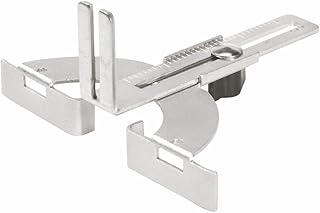
A parallel guide helps maintain a consistent distance from the edge of a workpiece. This is useful for straight grooves, edge offsets and repeatable routing operations. Check compatibility carefully because guide designs and mounting systems are not universal.
Template guides are useful when routing around a pattern or template. They can improve repeatability when producing multiple matching components, but the template, guide diameter, cutter and desired finished dimension must all be considered together.
A plunge base can transform the capabilities of a compact routing motor. The Bosch Router Plunge Base, for example, is designed for the AdvancedTrimRouter 18V-8 and expands its use into applications such as slot and pocket milling.
A router compass or circle-cutting arrangement can be useful for producing circular features, arcs and curved components. When comparing accessories, confirm that the attachment is approved for your particular Bosch router and that its adjustment range suits the dimensions of your project.
An extraction adapter can make a significant difference in workshop cleanliness. Check the connection size and compatibility with your vacuum before assuming an adapter will fit.
The router itself is only one part of the cutting system. Router-bit geometry, material, diameter and condition can have a major influence on the quality of the finished cut.
Carbide-tipped cutters are commonly used for woodworking applications involving harder or more abrasive materials. Bosch documentation also distinguishes between high-speed-steel and carbide-tipped router bits according to material and application. Regardless of the cutter type, use only undamaged bits that are approved for the router and operated within the manufacturer's specified limits.
Do not select a bit solely because its profile looks appropriate. The cutter's diameter, shank size, maximum permitted speed and intended material must all be compatible with the router and application.
The size of the workpiece can influence which Bosch router is most comfortable to use. Large panels and substantial timber can benefit from the stability of a full-size plunge router, while smaller components may be easier to control with a compact cordless machine.
One of the most important comparisons is not between two individual models but between the Bosch DIY and Bosch Professional product families.
Bosch DIY products are generally aimed at home improvement, hobby and woodworking users who want capable tools for occasional or regular household projects. Bosch Professional equipment is positioned for more demanding professional applications and can offer designs better suited to intensive workshop or trade use.
This does not mean that every professional router is automatically the best choice for a homeowner. A larger professional machine can be unnecessarily heavy, expensive or cumbersome for occasional edge routing. Conversely, a frequent furniture maker may benefit from the additional control and capacity of professional equipment.
Many router purchases go wrong because the buyer focuses on one headline specification instead of the complete system. Avoid these common mistakes when comparing Bosch routers in Australia.
A structured comparison makes it easier to avoid being distracted by marketing terminology. Create a shortlist based on the jobs you actually perform and score each router against the same criteria.
For edge profiling, a compact router can be more convenient than a large plunge router. The Bosch AdvancedTrimRouter 18V-8 is particularly relevant to buyers who want cordless operation and already use compatible Bosch 18V POWER FOR ALL batteries.
The key considerations are not maximum plunge depth but handling, visibility, cutter compatibility and the ability to maintain a stable base along the workpiece edge.
A conventional corded Bosch DIY plunge router can be a sensible choice when a homeowner needs a more versatile machine for grooves, profiles, rebates and general woodworking. The POF 1200 AE represents the type of conventional corded router that should be compared when the priority is broad utility rather than cordless portability.
Users should also compare more feature-rich alternatives such as the POF 1400 ACE when electronic control and additional refinement are priorities.
For demanding workshop applications, professional Bosch plunge-router designs deserve consideration. The important advantages to investigate include depth-control precision, mechanical stability, motor performance, guide compatibility, ergonomic controls and the availability of accessories suited to repeatable work.
A professional router can make sense when it will be used frequently enough to justify its greater capability. For occasional home projects, however, the additional size and complexity may provide little practical benefit.
Some woodworkers use routers in a router table for repeated edge profiles, joinery and production-style work. Before planning a router-table setup, confirm that the particular router and mounting arrangement are compatible with the intended table and accessories.
Router-table work changes the way the tool is controlled because the workpiece is moved against a fixed cutter arrangement. This makes appropriate guards, featherboards, extraction and safe operating procedures particularly important.
Routers operate at high rotational speeds, and the cutter remains a significant hazard even when the machine is not running. Bosch's safety guidance emphasises the importance of using sharp, undamaged and suitable router bits and avoiding conditions that can cause kickback or cutter breakage.
Trying to remove a large amount of material in one pass can place unnecessary load on the router and cutter. Multiple controlled passes can provide better control and allow the machine to remove material progressively.
The appropriate depth per pass depends on the router, cutter, material and application. There is no universal depth that is safe or optimal for every combination. Follow the instructions supplied with the machine and cutter.
Regular maintenance helps preserve predictable operation. A router used in a dusty woodworking environment can accumulate debris around the base, ventilation areas, adjustment mechanisms and extraction connections.
Even a high-quality router requires correct technique. The quality of a routed edge or groove is affected by the cutter condition, setup, workpiece stability, feed rate, cutting depth and machine control.
Australian buyers should pay attention to the exact local model designation rather than relying solely on overseas reviews. A Bosch router sold in another market may have a different included accessory kit, product code, voltage specification, collet arrangement or availability status.
Before purchasing, confirm that the product is intended for the Australian market and that its electrical specification is appropriate. Also check what is actually included in the package. Product names can refer to several variants, and a bare tool may contain considerably fewer accessories than a complete kit.
The purchase price is only one part of the cost. A router may require additional cutters, guides, extraction adapters, batteries, chargers, storage solutions or replacement components.
A slightly more expensive router can sometimes represent better value if it already provides the features and accessories required for the intended work. Conversely, paying for advanced capabilities that will never be used can unnecessarily increase the overall cost.
Customer reviews can be useful, but they should supplement rather than replace technical research. When reading reviews for Bosch routers, focus on recurring observations about handling, adjustment, accessory compatibility, setup and long-term usability rather than isolated comments.
Instead of attempting to identify one universally superior Bosch router, build a shortlist of two or three models that fit your application.
This approach is more useful than selecting a winner solely from a ranking because the right router changes according to the project.
Use this checklist when comparing current Bosch router options in Australia during 2026:
There is no single best Bosch router for every Australian buyer. The right model depends on whether you need edge trimming, general DIY routing, cabinetry, furniture making, template work or heavier workshop applications. Compare the Bosch AdvancedTrimRouter 18V-8, POF-series DIY routers and suitable Bosch Professional routers according to your workload and accessories.
A cordless Bosch router can be worthwhile when portability and fast setup matter, particularly if you already own compatible Bosch 18V POWER FOR ALL batteries. For long, demanding routing sessions in a workshop, a corded model may remain more practical.
No. Higher power can be useful for demanding work, but router weight, control, depth adjustment, cutter compatibility, ergonomics and accessories are equally important. A compact machine can be the better choice for edge profiling even when a larger router has more motor power.
A beginner should generally prioritise controllability, straightforward depth adjustment, suitable accessories and a manageable form factor. A Bosch DIY router can be appropriate for home woodworking when its capabilities match the intended tasks.
Some Bosch systems are designed to accept dedicated plunge bases. The Bosch AdvancedTrimRouter 18V-8, for example, has a compatible Bosch plunge base designed to expand its routing applications. Always verify compatibility with the exact model and accessory.
The correct bit depends on the application, router and material. Check the maximum permitted cutter diameter and speed for the exact router, then follow the router-bit manufacturer's specifications. Never assume that a physically fitting bit is automatically approved for the machine.
No. Router-bit compatibility depends on shank diameter, collet configuration, cutter dimensions and the router's permitted operating specifications. Check the exact model documentation before purchasing or installing a bit.
Choose according to workload rather than the label alone. Bosch DIY can be well suited to home and hobby applications, while Bosch Professional equipment is more appropriate to users who need greater capability for demanding or frequent work.
Yes. A heavier router can provide a stable feel during substantial routing, but it can also be more tiring and less convenient for small components and edge work. Consider the size and type of your typical projects.
Yes. Routing can produce substantial chips and fine dust. A compatible extraction setup can improve workshop cleanliness and visibility, but it should be combined with appropriate protective equipment and safe working practices.
Check the exact model number, Australian electrical specification, included accessories, collet sizes, battery requirements, warranty information provided by the manufacturer or retailer, seller reputation and current customer feedback. Do not rely solely on the product title because multiple variants can share similar names.
An older model can remain useful if it meets your requirements and the necessary accessories, documentation and replacement components remain available. Compare its specifications and support position with current models before deciding.
The best advanced Bosch router for an Australian woodworking setup is the one that provides the right combination of power, control, handling and accessory compatibility for the work you actually do. Start with the application rather than the brand name or wattage figure.
For compact edge work and cordless convenience, investigate the AdvancedTrimRouter 18V-8 and its compatible accessories. For general DIY routing, compare Bosch's corded POF-series options. For demanding workshop work, examine Bosch Professional plunge-router designs and pay particular attention to depth control, ergonomics, guide compatibility and long-term serviceability.
Before purchasing, verify the exact Australian model, specifications, included accessories and current availability. Compare the complete system cost, read recent verified customer reviews, and make sure the router's collets, cutters, guides and bases match the projects you intend to undertake.
A careful comparison based on real woodworking requirements is far more useful than choosing a router simply because it appears at the top of a generic ranking. In 2026, the strongest buying decision is the one that balances capability, control, compatibility, safety and long-term usefulness for your particular Australian workshop.