

♥ Wishlist
Compare 28 Cordless Routers for Precise Woodworking products in Australia. Reviews, ratings, pros, cons and buying advice updated for October 2026.
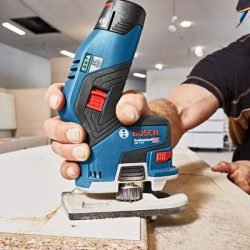
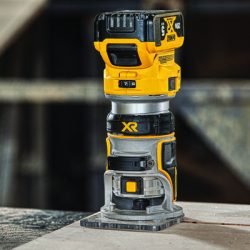
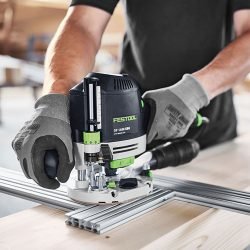
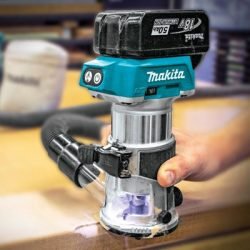
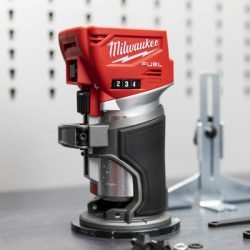


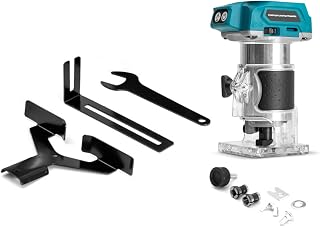


Choosing an advanced cordless router is less about selecting the tool with the largest advertised specification and more about matching the router's power delivery, control system, battery platform, collet configuration and intended routing work. For Australian buyers, the right choice can range from a compact palm or trim router for edge work to a more substantial cordless plunge router for template routing, joinery and controlled material removal.
This guide is designed to help compare advanced cordless router solutions on meaningful criteria rather than relying solely on star ratings, headline voltage or marketing terminology. Product specifications, included accessories, battery compatibility and current retailer availability can change, so check the manufacturer's current specification sheet and the retailer's listing before purchasing.
An advanced cordless router should provide more than freedom from a power cord. The strongest designs combine a capable brushless motor with electronic speed control, predictable starting behaviour, useful depth adjustment, good visibility around the cutter and a battery system capable of supplying sustained power without making the tool unnecessarily bulky.
For demanding work, several characteristics become particularly important:
One of the most important distinctions when comparing cordless router solutions is the type of base and routing work the tool is designed to perform. A compact trim router is not automatically a less capable product; it is simply optimised for different tasks.
Compact routers are particularly useful for rounding edges, trimming laminate or veneer, flush-trimming templates and performing smaller decorative routing operations. Their reduced size can make them easier to manoeuvre around workpieces and more comfortable during detailed work.
Their limitations become more apparent when the job requires significant material removal, large-diameter cutters, repeated deep passes or plunge-based operations. Before buying, consider the cutter diameter and depth of cut you realistically expect to use rather than choosing solely on tool size.
A plunge router is better suited to operations where the cutter needs to enter the workpiece away from an edge. This can include stopped grooves, mortises, hinge recesses and template-based routing. A properly designed plunge mechanism should move smoothly while allowing the operator to establish and repeat a precise depth.
Plunge routers can also be heavier and physically larger than compact routers. That extra size may be worthwhile for demanding work, but it can be unnecessary if most of your projects involve simple edge profiling.
For cordless power tools, the router itself is only part of the purchasing decision. The battery ecosystem can determine whether a cordless tool remains economical over several years.
If you already own compatible batteries and chargers from a major professional platform, staying within that ecosystem can reduce the need to purchase additional charging equipment and battery packs. Popular cordless tool ecosystems include Makita, DeWalt, Milwaukee, Bosch Professional and other established manufacturers, while Ryobi provides a broad DIY and home-workshop-oriented platform.
Do not assume that batteries from two tools are interchangeable simply because their voltage numbers look similar. Compatibility is determined by the manufacturer's battery platform, mechanical interface and electronic system.
Australian shoppers may encounter routers advertised around 18V or 20V-class battery systems. The number printed on the packaging should not be treated as a direct measure of real-world cutting performance. Manufacturers can use different conventions for nominal and maximum battery voltage.
Instead of comparing voltage in isolation, evaluate motor design, battery capacity, electronic control, cutter size, intended material and the complete tool ecosystem.
Battery capacity is commonly expressed in amp-hours. A higher-capacity battery can provide more stored energy, but it also tends to add weight and physical size.
For a router, the largest battery is not necessarily the best battery. A compact pack may improve handling during edge routing, while a higher-capacity pack may be preferable for longer sessions or heavier cutting. The most practical choice depends on how the router will actually be used.
Brushless motors are now common in higher-end cordless woodworking tools because they can offer efficient operation and electronic control without conventional motor brushes. However, the presence of a brushless motor should not be interpreted as a guarantee that one router will outperform every other model.
For advanced routing, look at the complete control system. Useful features can include electronic speed regulation, variable speed selection, overload management and soft-start behaviour. These systems are particularly valuable when the router encounters changing grain direction or when a larger cutter creates a higher cutting load.
Cutter diameter affects the cutting speed at the edge of the bit. As cutter diameter increases, the outer cutting edge travels faster at the same rotational speed. This is one reason variable-speed control can be valuable when moving between small round-over bits, larger profiling cutters and different materials.
Follow the cutter manufacturer's recommended operating range rather than selecting a speed simply because it sounds powerful. Incorrect speed selection can affect cut quality, heat generation and cutter life.
The collet is one of the easiest specifications to overlook and one of the most important to verify before purchase. A router can have excellent motor performance but still be inconvenient if its supplied collet configuration does not match the cutter collection you intend to use.
Check:
Never assume that an accessory designed for one router platform will automatically be safe or compatible with another. Cutter manufacturers' specifications and the router manufacturer's limits should take precedence.
Depth adjustment separates a basic router from a tool that is genuinely useful for precision woodworking. When producing a shallow decorative profile, small changes in depth can noticeably affect the finished appearance. In joinery, a small error can affect fit, alignment or the amount of material left in a component.
Look for a base adjustment system that allows the desired depth to be established securely and repeated consistently. Plunge models should also be evaluated for the smoothness of their plunge mechanism, the clarity of their depth scale and the practicality of their depth stop.
Fine adjustment is particularly useful when setting up a router table operation, matching an existing profile or making incremental changes during test cuts. The exact adjustment mechanism differs between manufacturers, so compare how the control works in practice rather than judging it by the name of the feature alone.
A stable base helps keep the cutter at a consistent relationship to the workpiece. A broad, rigid base can be useful on large surfaces, while a compact base can improve access around narrow edges and smaller components.
When comparing models, examine the relationship between the motor, battery and base. A heavy battery positioned high or toward one side can influence balance. A well-designed cordless router should feel controllable rather than simply light or powerful on paper.
For plunge routers, pay attention to travel range, depth-stop design, locking behaviour and the feel of the plunge action. Smooth movement makes it easier to lower the cutter in a controlled manner, particularly when beginning a cut away from an edge.
Routing produces a substantial amount of fine wood dust, particularly when profiling hardwoods or using cutters that remove significant material. Effective dust extraction can improve visibility around the cutting area and reduce the amount of airborne dust that escapes into the workshop.
When comparing routers, inspect the design of the dust-extraction port and whether the supplied or optional accessories are compatible with your extraction setup. A dust port that is technically present but awkwardly positioned may be less useful than a straightforward system that connects securely to your existing equipment.
Dust extraction should not replace appropriate respiratory protection and workshop ventilation. Always follow the safety instructions for the router, material and dust-extraction equipment.
Integrated LED lights can be useful when the base, hands or workpiece geometry makes the cutter area difficult to see. Lighting is particularly helpful when following a pencil line or template.
However, LEDs should be considered a supporting feature rather than a substitute for a clear line of sight. A router base that provides good physical visibility around the cutter remains valuable even when lighting is available.
A cordless router may have excellent specifications but still be uncomfortable if its controls are poorly positioned or its centre of gravity is awkward. This matters because routing frequently involves holding the tool steadily while maintaining a consistent travel speed.
Consider:
Large cutter compatibility can be useful, but maximum cutter diameter should not be treated as a simple ranking system. The appropriate cutter depends on the router's design, collet capacity, manufacturer limits, material and cutting operation.
A compact router may be ideal for small round-over and chamfer cutters even if it cannot accommodate the largest profiling bits. Conversely, a larger plunge router may offer more flexibility for demanding applications but may be unnecessarily cumbersome for light edge work.
Routing performance changes substantially depending on the material. Softwoods, hardwoods, plywood, MDF and manufactured boards each place different demands on the cutter and machine.
Softwood can generally be routed efficiently, but grain direction and resin content can affect the finish. Sharp cutters and appropriate feed speed remain important.
Hardwoods can create greater cutting resistance and may expose weaknesses in a tool's power delivery or handling. Making several shallow passes can be preferable to attempting to remove a large amount of material in one pass.
Plywood can be routed successfully, but different veneer layers may behave differently as the cutter passes through them. A sharp bit, stable workholding and sensible feed rate can help reduce breakout.
MDF can produce a large quantity of fine dust. Dust extraction is therefore especially important. Cutter sharpness also matters because dull tooling can generate unnecessary heat and reduce the quality of the cut.
For rounding, chamfering and decorative edge work, a compact cordless trim router is often the most convenient form factor. Prioritise handling, visibility, depth adjustment and battery weight.
Cabinetmaking may require several different routing operations, including hinge recesses, dados, rabbets and template work. A plunge-capable router with accurate depth control can provide greater versatility, although a compact router can remain useful for lighter edge operations.
Joinery demands repeatability. Depth adjustment, stable bases and predictable electronic control can be more important than headline motor specifications.
For occasional furniture projects, a versatile cordless router that shares batteries with tools already owned can make more sense than purchasing the largest professional model. Consider the actual cutter sizes and operations required before paying for additional capability that may rarely be used.
Frequent users should place greater emphasis on durability, ergonomics, accessory availability, battery logistics and serviceability. A professional tool that integrates into an existing battery ecosystem may be more useful than a theoretically more powerful router that requires a separate charging platform.
Brand ecosystem can be an important part of the decision, particularly for buyers who already own cordless tools. Makita, DeWalt, Milwaukee and Bosch Professional all have established cordless power-tool ecosystems, while Ryobi is widely associated with a broad battery platform aimed at home users and DIY workshops. Festool is another established name in professional woodworking, particularly where integrated dust extraction and system-based accessories are important considerations.
The best brand is not universal. A buyer who already owns several compatible batteries may receive more practical value from staying within that platform. Someone starting from scratch should compare the router, batteries, chargers and other tools they expect to purchase rather than judging the router in isolation.
When reviewing a shortlist of advanced cordless routers, use the same criteria for every model. This prevents a prominent marketing specification from overshadowing a more important practical limitation.
Customer reviews can provide useful information, but review counts and average ratings do not tell the entire story. A router may receive strong ratings from occasional DIY users while professional users care about different characteristics such as sustained workload, adjustment precision or accessory compatibility.
When reading verified customer feedback, look for recurring comments rather than isolated praise or criticism. Pay particular attention to comments concerning battery runtime, balance, depth adjustment, cutter compatibility, dust collection and long-term usability.
Also distinguish between reviews of the bare tool and reviews of a kit containing batteries and accessories. Different configurations can have different value propositions even when the underlying tool is identical.
Voltage is an important part of a cordless system, but it is not a complete performance measurement. Motor efficiency, electronic control, battery technology, cutter selection and mechanical design all contribute to the final result.
A tool-only listing can appear substantially less expensive than a complete kit. Before comparing prices, establish whether each option includes the battery and charger you need.
More capability is not always more useful. A large router can become tiring for simple edge work. If most projects involve small profiles, a compact model may be the better fit.
The opposite mistake is choosing a compact trim router for work that requires plunge operation, larger cutters or substantial material removal. Check the intended applications before deciding.
Verify collet sizes before purchasing. If your existing cutter collection uses a different shank size, the apparent bargain may require additional accessories.
Buying a single cordless tool can become expensive if it starts a completely new battery platform. Conversely, choosing a compatible bare tool can be economical when you already have suitable batteries and a charger.
A high-capacity battery can extend operating time, but it also adds weight. For detailed routing, handling and balance can matter more than maximum runtime.
Routing creates significant dust, particularly in sheet goods. Consider extraction compatibility before buying rather than treating it as an optional afterthought.
A tool-only package can make sense for an existing cordless-tool owner with compatible batteries and chargers. It avoids duplicating equipment that is already available.
A complete kit may be more convenient for someone entering a battery platform for the first time. However, compare the capacity of the included battery, the charger specification and the accessories supplied rather than assuming every kit provides equivalent value.
Battery selection should reflect the type of routing you perform. For short edge-profiling jobs, a smaller pack may keep the router nimble. For extended routing sessions, a higher-capacity pack can reduce battery changes.
It can be useful to own batteries of different capacities within the same ecosystem. Use the smaller pack when handling and access are priorities and a larger pack when longer runtime is more important.
The router cannot compensate indefinitely for poor-quality or unsuitable cutters. A sharp, correctly specified cutter can have a substantial effect on cut quality, heat generation and the amount of effort required from the tool.
When comparing advanced routers, budget for appropriate cutters as well as the machine. Consider profile, diameter, shank size, material construction and the manufacturer's recommended operating speed.
Carbide cutting edges are common for woodworking applications because they can provide useful wear resistance. The quality and geometry of the cutter still matter, so the presence of carbide alone does not establish that two cutters are equivalent.
Larger cutters require greater care because the cutting edge travels at a higher peripheral speed at the same rotational speed. Follow the cutter manufacturer's speed recommendations and the router manufacturer's maximum cutter limits.
A high-quality router cannot produce consistent results if the workpiece moves during the cut. Secure workholding is therefore part of the routing system rather than a separate consideration.
Use suitable clamps, a stable bench or an appropriate workholding system. Ensure that clamps and supports cannot interfere with the router base or cutter path.
Router movement deserves careful attention. Conventional routing generally provides more predictable control for standard operations, while climb cutting can cause the router to pull itself along the workpiece unexpectedly.
Climb cuts should only be considered when the technique is appropriate for the specific operation and the operator understands the increased control requirements. For routine work, prioritise predictable tool movement and secure workholding.
Trying to remove a large amount of material in one pass can increase the cutting load and make the tool harder to control. Multiple shallow passes can reduce the load per pass and make it easier to maintain a consistent feed rate.
This is especially relevant for cordless routers because sustained heavy cutting can place significant demand on the battery and motor system.
Regular maintenance can help preserve performance and reduce avoidable wear. Always follow the specific manufacturer's maintenance instructions for the model you own.
Router bits should be treated as precision cutting tools. Store them so that cutting edges do not strike each other or hard surfaces. Keep them clean and inspect them before use.
A damaged, excessively worn or contaminated cutter can affect the quality of the cut and may increase vibration. Replace cutters when they no longer meet the manufacturer's condition or safety requirements.
Cordless operation removes the electrical power cord from the work area, but it does not eliminate the normal hazards associated with high-speed rotating cutters.
Australian buyers should compare the complete ownership proposition rather than relying on a headline price. Listings can differ according to whether they contain the bare tool, battery, charger, guide accessories or additional bases.
Before purchasing, verify that the exact model number corresponds to the Australian-market configuration you intend to buy. Check the current product specification, included accessories, battery compatibility and retailer terms at the time of purchase.
Australian availability can also vary between online and physical retailers. A model that appears in international reviews may have a different kit configuration or accessory selection in Australia, so local specifications should take precedence.
Instead of thinking about the router as a standalone purchase, consider building a complete routing system around the jobs you perform.
Cordless routing is particularly attractive when freedom of movement, quick setup and portability matter. It can be convenient for installation work, mobile workshops, renovation projects and jobs where managing a mains cable would be inconvenient.
The decision is less straightforward for very intensive workshop use where continuous operation, unlimited mains power and existing corded equipment are already part of the workflow. In those situations, cordless convenience needs to be weighed against battery changes and the cost of maintaining the cordless platform.
A cordless router is not automatically the superior option for every application. A corded model can remain attractive for extended stationary workshop use where access to mains power is straightforward and battery portability provides little benefit.
If your priority is continuous high-load routing at a fixed workbench, compare both cordless and corded alternatives rather than limiting the search to one category.
The lowest purchase price is not necessarily the lowest total cost. Consider the router, battery, charger, accessories and future battery purchases as one system.
A higher-priced router may make more financial sense if it fits an existing battery platform and avoids duplicate chargers and batteries. Conversely, a premium tool can be poor value if its additional features are irrelevant to the work you perform.
When comparing current Australian listings, make sure the models are genuinely equivalent. Tool-only and kit configurations should not be compared as though they contain the same equipment.
For a consistent editorial comparison, advanced cordless router candidates can be assessed across several categories:
This framework should be adapted to the buyer's priorities. A professional cabinetmaker may assign greater importance to precision and durability, while an occasional DIY user may prioritise price, battery compatibility and ease of use.
An advanced cordless router is particularly suitable for woodworkers who value mobility, already own compatible batteries or frequently move between work areas. It can also be an excellent addition to a cordless workshop where multiple tools share one battery platform.
It may be less compelling for someone who performs all routing at a fixed bench and already has a suitable corded router. In that situation, upgrading to another corded model or adding a specialised router may provide more practical value.
Choose a compact router when most of your work involves edge profiling, trimming, light joinery and small decorative cuts. The smaller format can make detailed work easier and reduce fatigue during repetitive operations.
A plunge model is the stronger choice when your projects regularly require starting cuts within the surface of the workpiece, controlled depth changes or template-based routing. If your work involves both edge profiling and plunge operations, compare models with interchangeable or compatible base systems where available.
The best advanced cordless router solution is the one that matches the work rather than the one with the most impressive specification sheet. Start by identifying the routing operations you perform most often, then work backwards through router type, cutter requirements, depth adjustment, battery platform, ergonomics and accessories.
For an existing cordless-tool owner, battery compatibility can be one of the strongest reasons to choose a particular model. For a new buyer, compare the complete ecosystem rather than the router alone. A practical combination of router, battery, charger, cutters and extraction accessories will usually matter more than a single headline specification.
Before purchasing in Australia, confirm the exact model number, current specifications, included accessories, battery requirements and current retailer price. Product availability, configurations and pricing can change during 2026, so treat the information displayed at the point of purchase as the final reference.
There is no single best model for every Australian buyer. The right option depends on whether you need compact edge routing or plunge capability, which cutter sizes you use, whether you already own compatible batteries and how frequently you expect to use the tool.
Many modern cordless routers are capable of woodworking applications involving hardwood, but performance depends on the router, battery, cutter, depth of cut and feed rate. For heavier work, multiple controlled passes can be preferable to forcing the cutter through a large amount of material at once.
A brushless motor can offer useful efficiency and electronic-control advantages, particularly in a cordless tool. However, brushless construction should be evaluated alongside depth adjustment, ergonomics, battery performance, collet compatibility and the overall design.
Choose based on the balance between runtime and handling. Smaller batteries can keep a compact router easier to manoeuvre, while larger-capacity batteries can be useful for longer sessions or heavier workloads.
Compatibility depends on the router's collet system. Check the exact supported shank sizes and maximum cutter specifications before buying or using a particular router bit.
Not necessarily. Voltage labelling conventions differ between manufacturers, and voltage alone does not provide a complete picture of cutting performance. Compare the entire motor, battery and electronic-control system.
Variable speed can be useful when working with different cutter sizes and materials. It gives the operator more flexibility to select an appropriate operating speed within the limits specified by the router and cutter manufacturers.
Neither is universally better. A plunge router is more appropriate for many internal and depth-controlled cuts, while a compact trim router can be easier to handle for edge profiling and lighter work.
They can be, provided the selected model matches the workload, battery requirements and precision demands of the workshop. Professional buyers should pay particular attention to ergonomics, accessory availability, battery logistics and long-term service considerations.
If you already own compatible batteries and a charger, a bare tool can be the more practical configuration. If you are starting a new battery platform, compare complete kits and calculate the cost of obtaining the battery and charger separately.
It is highly relevant for routing because cutting can generate considerable wood dust. A router with a practical extraction connection can help keep the work area clearer and improve visibility around the cut.
There is no universal replacement interval. Inspect the cutter regularly and replace it when it becomes excessively worn, damaged or otherwise unsuitable according to the cutter manufacturer's guidance.
A versatile router can cover many applications, but no single machine is ideal for every job. Compact routers excel at portability and edge work, while larger plunge-capable machines provide advantages for deeper and more demanding operations.
Advanced cordless router shopping becomes much easier when the decision is based on the complete system: router architecture, motor control, cutter compatibility, depth precision, battery platform, ergonomics, dust management and accessory support. For Australian buyers in 2026, those factors provide a more reliable basis for comparison than voltage ratings, review counts or promotional claims alone.
Use the shortlist on this page as a starting point for commercial research, then compare the exact specifications and kit contents of the models that fit your workshop. The strongest purchase is ultimately the router that delivers the required control and capability while integrating naturally with your existing tools, cutters and working environment.