

♥ Wishlist
Compare 21 Compact Pipe Cutter for Precise Pipe Cutting products in Australia. Reviews, ratings, pros, cons and buying advice updated for October 2026.






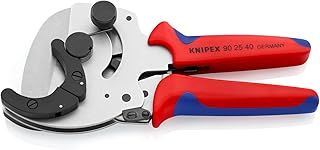
Choosing a compact pipe cutter is less about finding the smallest tool and more about matching the cutter mechanism, cutting capacity, pipe material and available working space to the job. A tool that performs well on accessible copper pipe may be unsuitable for stainless steel, multilayer plumbing pipe or thicker-wall tubing. For Australian buyers, the intended plumbing or workshop application, compatible pipe systems and the manufacturer's stated specifications should be checked before purchase.
An advanced compact pipe cutter can be particularly useful where a conventional full-size cutter cannot be rotated easily. This makes compact designs relevant for maintenance work, plumbing repairs, renovation projects, automotive applications, refrigeration-related work and workshop fabrication. The best choice should provide controlled cutting without requiring excessive force or unnecessary clearance around the pipe.
Modern compact pipe cutters can incorporate several design features intended to improve control, repeatability and access. These may include a ratcheting or hinged mechanism, adjustable cutting pressure, hardened cutting wheels, multiple guide rollers, quick-adjust systems or a compact body designed for restricted spaces.
However, additional mechanisms do not automatically make a cutter better. Every feature should be considered in relation to the work being performed. A sophisticated adjustment system can be valuable for frequent professional use, while a simpler cutter may be preferable for occasional household maintenance.
One of the most common purchasing mistakes is choosing a cutter solely according to pipe diameter. The cutter must also be designed for the material and wall characteristics of the pipe. Copper, aluminium, brass, stainless steel and other metals can behave very differently under cutting pressure.
Plastic and multilayer plumbing products require additional caution because many metal pipe cutters are not intended to produce a suitable cut on those materials. Always check the manufacturer's stated material compatibility instead of assuming that a cutter suitable for copper will also be appropriate for plastic or composite pipe.
Copper is commonly associated with compact pipe cutters because the material can generally be cut with a purpose-designed rotary cutter. A correctly sized cutting wheel and properly adjusted pressure can produce a clean circumferential cut without unnecessarily crushing the tube.
Aluminium and brass tubing can also be compatible with suitable rotary cutters, but the correct wheel specification remains important. Thin-wall tubing can be more vulnerable to distortion if excessive pressure is applied. Buyers should therefore examine the manufacturer's material and wall-thickness guidance rather than relying only on nominal diameter.
Stainless steel generally places greater demands on the cutting wheel and cutter mechanism than softer tubing. If stainless steel is part of the intended workload, look specifically for a model whose manufacturer identifies stainless steel as a supported material. A compact cutter designed primarily for softer copper tubing should not automatically be treated as a stainless-steel cutter.
Plastic and multilayer systems often call for cutters specifically designed around their construction. A rotary metal pipe cutter can produce an unsuitable or damaged edge if used outside its intended application. Where a plumbing system specifies a particular cutting method, follow the pipe manufacturer's installation instructions and use the appropriate tool.
Cutting capacity should be evaluated using the manufacturer's stated minimum and maximum pipe dimensions rather than a generic description such as small, compact or professional. Two compact cutters can have noticeably different operating ranges.
Pay attention to the actual outside diameter range supported by the cutter. Pipe terminology can create confusion because nominal pipe sizes do not always correspond directly to measured outside diameter. This is especially important when comparing plumbing products from different standards or systems.
The primary advantage of a compact pipe cutter is often access rather than cutting speed. Conventional cutters may require enough surrounding space for the entire tool to rotate around the pipe. In a confined installation, that clearance may simply not exist.
Compact and mini cutters reduce the space required for operation, but buyers should still consider the complete movement required to make a cut. A small body does not necessarily mean that the tool can operate in every confined location.
For pipework positioned close to walls, cabinets, structural components or other services, a compact design can make positioning easier. Models with a small turning radius or mechanisms designed for restricted access can be particularly useful.
Some compact designs use mechanisms that allow the user to advance the cutting action progressively rather than continuously rotating a large handle. This can be advantageous where hand movement is restricted. Before buying, check how the mechanism operates and whether it is intended for the material you plan to cut.
Hinged cutters can simplify placement around an existing pipe because the tool may not need to be slid over an open pipe end. This can be useful during repair work, although the hinge construction, adjustment range and manufacturer's operating instructions should be considered carefully.
The cutting wheel is one of the most important components in a rotary pipe cutter. A well-designed cutter with a worn, damaged or unsuitable wheel can perform poorly, so buyers should consider replacement-wheel availability when evaluating long-term value.
Look for clear manufacturer information about compatible replacement wheels. Where possible, verify whether replacement components are readily identifiable by model number or part number. This is especially useful for professionals who expect the tool to receive frequent use.
Guide rollers keep the cutter positioned around the pipe while the cutting wheel progressively penetrates the material. Their condition can affect the smoothness and consistency of the cutting process.
For repeated work, buyers should examine how securely the rollers are mounted, whether they turn freely and whether the design keeps the cutter aligned without excessive side movement. A cutter that requires unusually high force or repeatedly wanders around the pipe may not be the right choice for precision work.
A pipe cutter should generally be advanced progressively rather than forced aggressively into the pipe. Excessive pressure can contribute to deformation, premature wheel wear or an uneven cut, particularly with thin-wall tubing.
The correct operating method varies between tools, so the manufacturer's instructions should take priority. In general, controlled adjustment and repeated passes are preferable to treating the cutter like a conventional shearing tool.
A pipe cutter can create an external or internal edge that needs attention after cutting. This is why deburring capability should be included in the buying decision, particularly for plumbing and fluid-handling applications.
Some cutters incorporate a dedicated deburring feature, while others require a separate tool. If the cutter does not include a suitable deburring mechanism, consider whether there is enough room in the tool kit for a dedicated reamer or deburring tool.
When comparing several products, looking at the same criteria for every model provides a more useful assessment than relying on marketing descriptions. A practical comparison should include capacity, material compatibility, mechanism, dimensions, weight, wheel type, replacement parts and intended application.
The right cutter depends on workload. A tradesperson making numerous cuts during installation or maintenance may place greater importance on durability, consistent adjustment and replacement components. A homeowner completing an occasional repair may prioritise compact storage, straightforward operation and compatibility with the specific pipe being repaired.
Professional branding alone should not determine the purchase. Brands such as RIDGID, Rothenberger, Milwaukee, Bahco, Knipex, Irwin and Stanley offer tool products across different categories and applications, but individual pipe cutter models must still be evaluated by their own specifications. A reputable brand does not mean every cutter in its range is appropriate for every pipe.
A cutter becomes more useful when its design fits the rest of the user's tool kit. For mobile tradespeople, compact dimensions can be valuable because the tool takes up less room in a service bag. For workshop users, a larger but more robust cutter may be preferable if portability is less important.
Small size is useful only when the cutter still provides adequate capacity, grip and cutting control. An extremely compact model can become frustrating if the pipe falls outside its practical operating range.
Diameter alone does not establish compatibility. Always check the manufacturer's material recommendations before cutting stainless steel, plastic, multilayer pipe or other specialised tubing.
Pipe naming conventions can vary. Measure the actual pipe where appropriate and compare it with the cutter's stated capacity rather than assuming that a nominal pipe size is equivalent to the cutter's numerical range.
A compact cutter can still require movement around the pipe. For repair work, evaluate the physical space surrounding the pipe before purchasing.
The initial purchase price is only one part of long-term tool value. A cutter that uses identifiable replaceable wheels can be easier to maintain than one for which compatible components are difficult to establish.
No single compact pipe cutter should automatically be treated as a universal solution. Different pipe materials, wall thicknesses and installation conditions can require different cutting tools.
Start with the actual pipe rather than the tool. Identify the pipe material, outside diameter, approximate wall construction and whether the pipe is already installed. Then determine how much clearance exists around the cutting location.
Next, eliminate cutters that do not explicitly support the required material or dimensions. From the remaining choices, compare mechanism, ergonomics, adjustment control, wheel replacement options and maintenance requirements. This approach prevents attractive but unsuitable features from influencing the decision.
Australian buyers should pay attention to the exact product configuration offered for the local market. Product descriptions can vary between regions, and an overseas listing may describe dimensions, compatible accessories or model numbers differently.
For plumbing-related work, the suitability of the cutting tool should also be considered alongside the requirements of the particular pipe, fitting and installation system. Where Australian plumbing requirements or a manufacturer's installation specification apply, those requirements should take precedence over a generic tool description.
When purchasing through an Australian retailer or marketplace, check the complete listing for model number, included accessories, replacement components, manufacturer instructions and applicable local product information. Do not assume that a similarly named model sold in another market has exactly the same configuration.
Pipe cutting is a relatively simple operation, but the work environment can introduce significant hazards. Before cutting installed pipework, establish what the pipe carries and whether the system has been isolated and made safe. Cutting an unknown or live pipe can result in serious injury, property damage or contamination.
Basic maintenance can help preserve cutting performance. After use, remove debris from the cutter and inspect the cutting wheel and guide rollers. If the manufacturer's instructions specify lubrication or another maintenance procedure, follow those instructions rather than applying an unsuitable lubricant.
Keep the tool dry and protect the cutting wheel from unnecessary impact. For cutters carried regularly in a plumbing or maintenance bag, a protective case or dedicated compartment can prevent the mechanism from being damaged by heavier tools.
A cutting wheel should be replaced when it is worn or damaged to the point that it no longer performs correctly. Signs of a problem can include slipping, difficulty maintaining a consistent cut, excessive force requirements or visible damage. Use a replacement component specified for the particular cutter model and application.
A compact rotary pipe cutter is only one option. The best method depends on the pipe and the job.
These tools can make sense for plumbers, maintenance technicians, HVAC-related trades where compatible tubing is involved, workshop users, installers, renovators and homeowners who regularly work with pipe. They are particularly attractive when limited access makes a full-size cutter inconvenient.
For someone who only needs to make one straightforward cut on an accessible pipe, a highly specialised compact cutter may offer little practical advantage over a suitable basic tool. The greater the frequency of use and the more restricted the working environment, the more valuable specialised design features can become.
Customer ratings can help identify recurring issues, but the numerical rating alone does not explain whether a product is suitable for a particular application. When comparing reviews, look for comments that identify the material and diameter of pipe used, frequency of use, access conditions and long-term performance.
The cheapest cutter is not necessarily the most economical choice, particularly for frequent professional use. Long-term value can depend on durability, cutting-wheel replacement, ease of adjustment and whether the tool remains useful across the pipe sizes encountered most often.
Conversely, paying more for features that will never be used does not automatically represent good value. A buyer should identify the required specifications first and then compare the cost of suitable models. Check today's prices because retailer pricing and product availability can change over time.
There is no single best model for every Australian buyer. The appropriate choice depends on pipe material, outside diameter, wall construction, available clearance, frequency of use and budget. Start by eliminating models that do not explicitly support your pipe type, then compare the remaining options on mechanism, durability, ergonomics and replacement components.
Some are, provided the particular model is designed for the pipe materials, dimensions and workload involved. Professional suitability should be judged from the manufacturer's specifications, construction, replacement-part support and intended application rather than the word professional in a product title.
Some models may support both materials, but this must be confirmed from the manufacturer's specifications. Stainless steel can place different demands on the cutting wheel and mechanism than softer tubing, so compatibility should never be assumed.
Not necessarily. Body dimensions, turning radius, adjustment mechanism and the amount of hand movement required all affect accessibility. Compare the complete operating design rather than looking only at the overall length of the tool.
Rotary pipe cutters commonly use replaceable cutting wheels, although the exact service arrangement varies by model. If you expect frequent use, check replacement-component availability before buying.
A built-in deburring feature can be convenient because it reduces the number of separate tools required. It is not essential if you already use a dedicated deburring tool or if the particular application has different finishing requirements.
Use a cutter specifically suited to the pipe and follow its adjustment instructions. Excessive cutting pressure can deform thin-wall tubing. Progressive adjustment and controlled cutting are generally preferable to forcing the wheel into the material.
They can be worthwhile when the additional construction quality, adjustment control, access design or serviceability matches a demanding workload. For occasional use, a simpler compatible model may provide better value. Compare specifications and actual requirements rather than price alone.
Check the exact model number, supported pipe materials, minimum and maximum outside diameter, included accessories, cutting-wheel specification, replacement parts, dimensions and manufacturer instructions. Also compare current Australian pricing and detailed verified customer feedback before purchasing.
The strongest compact pipe cutter choice is the one that matches the real job rather than the one with the longest feature list. For Australian buyers, start with pipe material and outside diameter, then consider wall construction, access limitations, cutting mechanism and expected workload. After confirming technical compatibility, compare ergonomics, cutting-wheel replacement, maintenance requirements and current retailer pricing.
For occasional repairs, prioritise straightforward operation and compatibility. For frequent professional work, place greater emphasis on consistent cutting, durable construction, serviceable components and suitability for the pipe systems encountered regularly. Before purchasing, compare the specifications of the shortlisted models and read verified customer feedback for evidence that relates directly to your intended application.