

♥ Wishlist
Compare 7 Cordless Heat Guns for Convenient Heat Applications products in Australia. Reviews, ratings, pros, cons and buying advice updated for October 2026.


Choosing an advanced cordless heat gun is less straightforward than choosing a conventional heat gun because battery platform, heat-up speed, airflow, temperature control, runtime and portability all influence how useful the tool will be in real work. For Australian buyers, compatibility with an existing 18V or 20V-class power-tool battery system can be particularly important because a bare-tool purchase may be considerably more practical when you already own compatible batteries and a charger.
This guide is designed to help you compare advanced cordless heat gun solutions by their technical characteristics rather than relying on a single headline specification. Whether you need a heat gun for heat-shrink tubing, electrical work, adhesive removal, vinyl and decal work, thawing frozen components, softening sealants or general workshop applications, the right configuration depends on the job.
An advanced cordless heat gun generally goes beyond simply producing hot air. Useful upgrades can include multiple temperature settings, variable airflow, electronic temperature management, rapid heating, LED work lighting, thermal protection, battery monitoring, ergonomic controls and compatibility with a professional battery platform.
The most important distinction is that cordless heat guns have to balance heating performance against battery consumption. A compact battery-powered model may be extremely convenient for short jobs, but it may not provide the same sustained heat output as a high-powered mains-operated heat gun. Buyers should therefore assess the tool according to the duration, material and precision required rather than assuming that cordless automatically means better.
Temperature is a fundamental specification, but maximum temperature alone does not determine whether a heat gun is suitable for a particular job. A tool capable of reaching a very high temperature can still be less useful for delicate work if it offers poor low-temperature control or limited airflow adjustment.
For applications such as heat-shrink tubing, controlled lower heat can be preferable because the objective is to shrink the material without unnecessarily exposing surrounding components to excessive heat. By contrast, adhesive removal and some paint-softening applications may require substantially higher temperatures.
Variable temperature allows the operator to match heat output to the material. This can reduce the risk of scorching, melting or deforming workpieces. It can also make a cordless heat gun more versatile because the same tool can potentially handle both delicate and demanding applications.
When comparing products, look beyond phrases such as "high heat" or "professional temperature." Check the manufacturer's stated temperature range and determine whether the adjustment is genuinely useful or merely offers two broad presets.
Heat and airflow work together. A high temperature with aggressive airflow behaves differently from a lower temperature with a concentrated stream of air. Advanced models may therefore provide more than one airflow level or an electronically managed combination of heat and airflow.
For precision work, controlled airflow can make it easier to direct heat onto a small area. For broader jobs such as removing large adhesive labels, a wider and stronger airflow may be more useful.
Battery compatibility can be one of the strongest reasons to choose one cordless heat gun over another. If you already own cordless tools from a particular ecosystem, a compatible bare tool can reduce the need to purchase another battery and charger.
Popular professional and consumer power-tool ecosystems in Australia include Makita, DeWalt, Milwaukee, Bosch and Ryobi, although the availability and compatibility of individual heat gun models varies by platform and market. Battery voltage should never be treated as proof of compatibility: batteries generally need to belong to the exact platform specified for the tool.
Buyers may encounter apparently different voltage figures between brands. Some systems are marketed using nominal voltage while others use maximum charged voltage. Consequently, a 20V Max product and an 18V-class product can belong to broadly comparable battery categories without their batteries being physically or electronically interchangeable.
Always check the manufacturer's compatibility information rather than attempting to determine compatibility from voltage alone.
Cordless heat guns are commonly offered in bare-tool and kit configurations. The better choice depends heavily on what you already own.
Before comparing prices, confirm whether the advertised configuration includes the battery, charger, nozzles and carrying case. Comparing a bare tool against a complete kit can produce a misleading impression of value.
Rapid heat-up is particularly useful for tradespeople and workshop users who repeatedly switch the tool on and off. A heat gun that reaches its operating temperature quickly reduces waiting between applications and can make short jobs more convenient.
However, advertised heat-up performance should be considered alongside battery capacity and operating conditions. The fastest initial heating does not necessarily mean the tool will maintain the same performance throughout a long session.
Runtime is difficult to compare using battery capacity alone. A higher-capacity battery generally stores more energy, but actual operating time depends on heat setting, airflow, battery condition, ambient temperature and how continuously the tool is operated.
For occasional heat-shrink work, short adhesive-removal tasks or mobile repairs, a compact battery may be sufficient. For repeated professional use, carrying a second compatible battery can be more practical than expecting one battery to cover an entire working day.
When assessing a cordless heat gun, consider the complete tool-and-battery weight rather than the advertised bare-tool weight.
Nozzles control how hot air reaches the workpiece. A concentrated nozzle can focus heat into a smaller area, while a wider outlet can distribute heat across a larger surface. Reflector-style accessories can be useful for applications such as heat-shrink tubing, depending on the tool and accessory system.
Accessory compatibility deserves attention because an advanced heat gun can become significantly more versatile when suitable nozzles are available. Check whether accessories are included, sold separately or limited to proprietary fittings.
A cordless heat gun can be particularly useful where access to mains power is inconvenient. Removing a power cord can improve mobility around vehicles, construction sites, workshops and outdoor work areas, provided the application does not require prolonged maximum-power operation.
Heat-shrink tubing is one of the most practical applications for a compact heat gun. Controlled heat can shrink tubing around electrical connections, cable joints and other suitable components. A reflector-style nozzle may help distribute heat more evenly around cylindrical tubing.
Heat can soften many pressure-sensitive adhesives, making labels, decals and certain adhesive residues easier to remove. The correct temperature depends on the surface. Plastics, painted finishes and composite materials can be sensitive to excessive heat, so controlled settings are preferable.
Heat guns are commonly used in applications involving vinyl because controlled warmth can make some vinyl materials more pliable. Precision airflow is valuable when working around edges, curves and recessed sections.
For appropriate electrical applications, a heat gun can help with heat-shrink insulation and similar tasks. The operator should keep the heat directed only where required and protect heat-sensitive components from unnecessary exposure.
Other potential uses include softening selected sealants, loosening some adhesive bonds, assisting with controlled material shaping and thawing frozen components. The suitability of a heat gun varies significantly by material, so manufacturer instructions for the material being heated should always take priority.
Heat guns operate at temperatures high enough to cause burns, ignite combustible materials and damage surfaces. Advanced safety features can reduce operational risk, but they do not replace careful handling.
Never assume that a safety feature makes a heat gun safe to leave unattended. The hot nozzle and surrounding components can remain dangerous after the heating element has been switched off.
Heat-gun ergonomics become increasingly important when the tool is used for several minutes at a time. A battery mounted at the rear or underside changes the balance of the tool, so weight distribution matters as much as total weight.
Look for a comfortable grip, accessible controls and a trigger or switch arrangement that suits the intended application. If the tool must be held close to a workpiece for detailed work, a compact and balanced design may be preferable to a heavier model with a larger battery.
For buyers already invested in cordless tools, the battery ecosystem may be the deciding factor. Well-known brands such as Makita, DeWalt, Milwaukee, Bosch and Ryobi offer broad cordless tool ranges, while the exact heat-gun options, battery systems and Australian-market configurations should be checked individually.
Makita is particularly relevant to buyers already using its cordless battery platforms. When evaluating a Makita heat gun, check the exact battery family, included accessories, control options and Australian-market specification rather than assuming that every Makita battery is interchangeable.
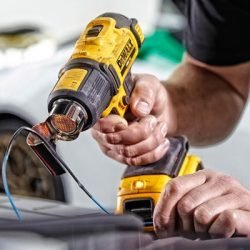
DeWalt is another major cordless platform for professional and trade users. Buyers should distinguish between compatible battery families and verify whether the selected heat gun is sold as a bare tool or kit in the Australian market.
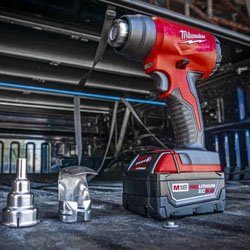
Milwaukee is widely associated with professional cordless equipment and is worth considering for users already invested in its compatible battery ecosystem. Compare temperature control, airflow, battery requirements and included accessories before selecting a model.
Bosch offers multiple cordless tool families, so platform compatibility deserves particular attention. Do not assume that a battery from one Bosch cordless range will automatically fit a heat gun from another.
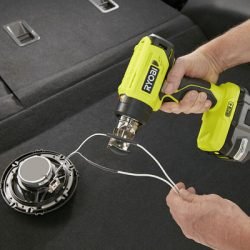
Ryobi can be attractive to homeowners and DIY users who already own compatible cordless tools. When assessing a Ryobi heat gun, compare the complete operating package, including battery requirements and accessory availability, rather than looking only at the tool price.
The cordless-versus-corded decision is primarily a question of mobility, runtime and sustained power.
A cordless heat gun is not automatically the better choice simply because it is newer or more portable. If your work involves long periods of continuous heating, a corded model may still be the more appropriate tool.
Compact models prioritise portability and ease of handling. They can be particularly convenient for electrical work, maintenance, craft projects and short-duration jobs.
Higher-output cordless models are generally more appropriate when faster heating, stronger airflow or more demanding applications are priorities. The trade-off can be additional weight, greater battery consumption and a larger overall tool footprint.
A very high maximum temperature does not automatically indicate superior performance. Temperature range, airflow, controllability and thermal regulation collectively determine usefulness.
Buying a bare tool without checking the exact battery platform can turn an apparently economical purchase into an incomplete setup. Verify compatibility before ordering.
A bare heat gun and a complete kit are fundamentally different packages. Always compare what is included before deciding which represents better value.
A cordless heat gun may look lightweight on paper but become noticeably heavier with a high-capacity battery attached. This matters when performing detailed or overhead work.
If your work depends on concentrated or distributed airflow, the correct nozzle can be more useful than a small difference in headline temperature.
Battery-powered heating tools have different thermal and power characteristics. Review the manufacturer's operating guidance and choose a model appropriate for the expected duty cycle.
When comparing the products in a top-10 list, use the same criteria for every model. This avoids giving an advantage to a product simply because it advertises one impressive specification.
Product specifications can be confusing because manufacturers may emphasise different measurements. A useful comparison starts by separating heating performance from battery information.
Look for the stated temperature range and adjustment method. Multiple selectable temperatures are generally more informative than a single maximum-temperature figure.
Airflow is usually expressed as a volume of air moved over a period of time. Compare figures only when the measurement units and testing conditions are comparable.
Voltage identifies the battery system category but does not independently determine heat-gun performance. Electronics, heating-element design, airflow and thermal management all contribute.
Battery capacity is commonly expressed in ampere-hours. A larger capacity generally provides more stored energy within the same battery family, but it also tends to increase battery weight and physical size.
Australian buyers should confirm that the specific configuration is intended for the Australian market. Product names can be similar across countries while included batteries, chargers, model numbers and packaging differ.
Before purchasing, check the Australian product listing for the exact model number, battery configuration and included accessories. If a retailer displays several regional variants, compare the model codes rather than relying solely on product photographs.
For buyers starting a cordless platform, investigate the wider battery ecosystem before committing. A heat gun may be used relatively infrequently compared with a drill or impact driver, so the long-term value can come from sharing batteries with other tools.
Hot environments, dusty workshops and outdoor work can place additional demands on power tools. Store batteries according to manufacturer instructions and avoid exposing the tool or battery to conditions outside its specified operating and storage limits.
Proper maintenance helps preserve performance and reduces avoidable problems. Because heat guns operate at elevated temperatures, inspection should focus on the nozzle, air intake, housing, controls and battery interface.
Battery consumption can be reduced by using only the heat and airflow required for the application. Avoid operating continuously at maximum settings when a lower setting is sufficient.
For repeated jobs, preparing the workpiece and choosing the correct nozzle can also improve efficiency. A suitable nozzle can concentrate heat where it is needed instead of requiring excessive overall output.
DIY users can benefit from cordless convenience when the heat gun will be used for occasional repairs, adhesive removal, heat-shrink tubing and household projects. Ease of use and battery compatibility may matter more than maximum output.
Users working regularly with heat-shrink tubing may prioritise precise temperature control, suitable reflector nozzles, portability and fast heat-up.
For vehicle-related work, cordless operation can be convenient because extension leads may be awkward around a vehicle. Temperature control is especially important when working near plastics, trim, wiring and painted surfaces.
Tradespeople who already use a professional battery platform may value compatibility and durability over a low initial purchase price. A shared battery system can also simplify transportation and charging requirements.
Workshop users should consider whether cordless operation genuinely improves their workflow. If the heat gun is used continuously near a workbench, a corded unit may remain practical, while cordless equipment becomes more compelling when mobility is important.
There are situations where a conventional corded heat gun can be more appropriate. Continuous high-output heating consumes significant battery energy, and a mains-powered tool eliminates the need to stop for battery changes.
If your primary work is performed at a fixed bench with convenient mains power, compare corded and cordless models before making a decision. The best tool is the one that fits the workflow rather than the one with the most advanced feature list.
Start with the application rather than the brand. If your primary task is heat-shrink tubing, prioritise controllable heat and appropriate nozzles. If adhesive removal is the main purpose, look for useful temperature and airflow adjustment. If mobility is the reason for choosing cordless, pay close attention to total weight and battery availability.
Next, consider your existing battery ecosystem. A compatible bare tool can be particularly attractive when you already own several batteries and a charger. If you do not own a compatible platform, compare the cost of entering the ecosystem rather than evaluating the heat gun alone.
Finally, assess how frequently the tool will be used. Occasional DIY users may not benefit from paying for features designed around intensive professional workflows. Conversely, tradespeople who use a heat gun regularly may find that better controls, faster heating, improved ergonomics and platform compatibility justify a higher overall investment.
Some are, depending on the application. Professional suitability depends on temperature control, airflow, runtime, duty cycle, battery availability and the material being heated. A cordless model can be excellent for mobile work while a corded model may remain preferable for long periods of continuous high-output heating.
There is no universal best battery size. A compact battery can reduce tool weight, while a higher-capacity battery can provide more energy for longer work sessions. Match the battery to the required runtime and the amount of weight you are comfortable carrying.
No. Battery voltage alone does not establish compatibility. Use only batteries specifically approved for the tool's battery platform and model family.
No. Maximum temperature is only one part of heat-gun performance. Adjustable temperature, airflow control and thermal regulation can be more important for applications requiring precision.
Yes, cordless heat guns can be convenient for heat-shrink work because they can be used without a mains cable. A model with controllable heat and a suitable reflector nozzle can provide useful control, provided the tool is appropriate for the tubing and application.
Yes. Excessive heat can soften, deform, discolour or otherwise damage many plastics. Always begin with an appropriate lower setting where possible, maintain suitable movement and follow the material manufacturer's recommendations.
Heat can soften many adhesives and make some stickers easier to remove. However, the underlying surface may also be heat-sensitive. Painted finishes, plastics and laminates should be treated cautiously.
Neither is universally more important. Temperature determines the thermal intensity while airflow influences how heat is delivered and distributed. The best configuration depends on the material and task.
They require the same basic care as other heating tools, with additional attention to the battery system. Keep air passages clear, inspect the nozzle and housing, allow the tool to cool before storage and follow the manufacturer's battery-storage instructions.
If the brand offers a compatible heat gun within the same battery ecosystem, this can be a practical choice. Shared batteries and chargers can simplify ownership, but confirm exact platform compatibility before purchasing.
The cordless format can be useful outdoors because it removes dependence on a nearby power outlet. However, operating conditions should remain within the manufacturer's specified limits, particularly regarding temperature, moisture, dust and battery storage.
The best advanced cordless heat gun for Australia in 2026 is not necessarily the model with the highest temperature, largest battery or longest feature list. A strong choice is the one that provides the right combination of controllable heat, suitable airflow, battery compatibility, runtime, ergonomics and accessories for the jobs you actually perform.
For existing cordless-tool owners, battery-platform compatibility should be one of the first filters. For buyers starting from scratch, compare the complete kit cost and consider whether the battery ecosystem will be useful for future tools. For professional users, prioritise repeatable performance, control, handling and runtime. For occasional DIY work, simplicity and value may be more important than advanced electronic features.
Before making a purchase, compare the exact Australian specifications, included accessories, battery configuration and current retailer pricing. Product configurations can change, so verify the details for the specific model you intend to buy rather than relying on a generic product name or an older specification.