

♥ Wishlist
Compare 9 DeWalt Cordless Caulking Guns products in Australia. Reviews, ratings, pros, cons and buying advice updated for October 2026.


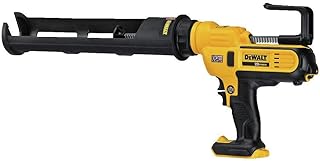


An advanced cordless caulking gun can make a substantial difference when a project involves long runs of sealant, adhesive, construction adhesive or other cartridge-based materials. Instead of repeatedly squeezing a manual trigger, a battery-powered tool uses a motor and drive mechanism to deliver controlled pressure through the cartridge. This can reduce hand fatigue and make it easier to maintain a consistent bead over long applications.
For Australian buyers, choosing the right model involves more than looking at battery voltage or brand recognition. Cartridge compatibility, thrust force, speed control, anti-drip behaviour, trigger response, battery ecosystem, weight, balance and serviceability can all affect whether a cordless caulking gun is genuinely useful on site.
DeWalt has an extensive cordless power-tool ecosystem, so buyers who already own compatible DeWalt batteries may have a practical reason to consider a DeWalt cordless caulking gun. However, compatibility should always be checked by exact model and battery platform rather than assumed from the brand name alone.
Basic powered caulking guns simply automate the pushing action. More advanced models place greater emphasis on control, material handling and repeatability. These characteristics become particularly important when working with high-viscosity sealants or when appearance and joint consistency matter.
Thrust force is one of the most important specifications when comparing powered caulking guns. It describes how much pushing force the drive mechanism can apply to the plunger. A higher thrust rating can be useful for demanding, high-viscosity materials, but maximum force alone does not determine whether a tool is the best choice.
A gun with very high thrust but poor speed control may be unnecessarily aggressive for delicate finishing work. Conversely, a model with insufficient force can struggle with thick sealants, causing the motor to work harder or producing inconsistent flow.
The most useful combination is generally sufficient thrust together with controllable output. Buyers should therefore consider the materials they regularly use rather than selecting a model solely because it has the largest numerical thrust specification.
Thick construction adhesives, polyurethane products and certain specialised sealants can require considerably more force than low-viscosity acrylic or silicone products. If your work routinely involves these materials, prioritise a model designed to handle demanding cartridges and verify its published specifications before purchase.
For softer silicone, acrylic and similar materials, extreme thrust may be less important than smooth speed adjustment. Excessive output can make it difficult to create a neat joint, particularly around corners, fixtures and finished surfaces.
Variable-speed control allows the user to regulate how quickly the plunger advances. This matters because bead size depends on the relationship between material flow and hand movement.
If the tool advances too quickly, sealant can accumulate faster than the operator can move the gun. If it advances too slowly, the bead may become thin, discontinuous or uneven. A useful cordless caulking gun should therefore provide enough control to match different materials and working conditions.
Battery compatibility can be one of the strongest reasons to choose a particular cordless caulking gun. If you already use several DeWalt cordless tools, a compatible caulking gun can potentially allow the same battery family to serve multiple tools. The exact battery requirements should always be confirmed for the specific model being considered.
Do not assume that every DeWalt battery fits every DeWalt cordless tool. Battery platforms, voltage classes and physical interfaces can vary between product families and generations. Check the manufacturer's specifications for the exact tool and battery combination before ordering.
A larger-capacity battery can provide more operating time between charges, but it may also add weight. That extra weight can become noticeable when applying sealant overhead or when holding the tool for extended periods.
For occasional household work, a smaller compatible battery may be sufficient. For professional users applying large quantities of sealant, longer runtime may justify a higher-capacity battery, provided the additional weight does not interfere with handling.
One of the most common buying mistakes is choosing a powered caulking gun without first checking the packaging formats used by the materials you actually purchase.
Caulking and adhesive products can be supplied in different cartridge sizes and packaging styles. Some applications use standard rigid cartridges, while others may use sausage packs or specialised containers. A gun designed for one format may not accept another without the appropriate configuration or accessory.
Material continuing to emerge after releasing the trigger can create waste and make finishing work messier. An anti-drip or pressure-release mechanism can help reduce this problem by stopping or relieving forward pressure when the trigger is released.
This feature is particularly valuable when working with visible joints, because even a small amount of unwanted material can require additional tooling or cleanup.
Anti-drip performance should not be treated as a substitute for good technique. The correct speed, nozzle preparation, pressure and release timing remain important. Buyers should also distinguish between a genuinely effective pressure-release mechanism and marketing language that does not explain how the system operates.
Trigger feel becomes increasingly important as application time increases. A stiff or poorly positioned trigger can make precision work uncomfortable, while a responsive variable-speed trigger can provide much finer control.
When comparing advanced cordless caulking guns, consider the following ergonomic details:
A cordless caulking gun may not look particularly heavy compared with a drill or grinder, but the way its weight is distributed can have a significant effect on comfort. A front-heavy design may require more wrist control, especially when applying sealant above shoulder height.
Consider the complete working weight rather than the bare-tool weight. The cartridge, nozzle and battery all contribute to the final load carried by the operator.
A manual caulking gun remains perfectly adequate for small jobs and occasional repairs. A cordless model becomes more attractive when the volume of material or duration of application makes repeated manual squeezing uncomfortable.
For a homeowner sealing one or two small areas, a manual tool may provide better overall practicality. For renovation, construction, installation or repeated sealing work, the productivity benefits of a cordless tool can become more significant.
Pneumatic caulking guns can be useful in workshops and production environments where compressed air is already available. Cordless models eliminate the need for an air compressor and hose, which can make them more convenient on mobile jobsites.
The better choice depends on the work environment rather than simply which technology is newer.
When shopping for a cordless caulking gun, DeWalt should be evaluated alongside other established power-tool manufacturers rather than in isolation. Brands such as Milwaukee, Makita and Bosch Professional also have extensive cordless tool ecosystems and may offer relevant alternatives depending on the user's existing batteries and preferred features.
The most meaningful comparison is not simply brand versus brand. Compare the exact models for thrust, speed control, compatible packaging, battery system, weight, included accessories, warranty terms and intended applications.
If your workshop already contains several cordless tools from one manufacturer, staying within the same battery ecosystem can simplify charging and battery management. However, ecosystem compatibility should never outweigh a major difference in suitability for the actual caulking application.
Someone who already owns compatible DeWalt batteries may value a DeWalt model differently from a buyer starting a cordless tool collection from scratch.
For occasional bathroom, kitchen, window, skirting-board or general maintenance work, precise low-speed control and comfortable handling can be more valuable than extreme thrust.
Renovation work can involve many different sealants and adhesives. A versatile tool with broad cartridge compatibility and adjustable output can reduce the need to switch between different application methods.
Professional users should pay particular attention to durability, battery runtime, loading speed, trigger control and compatibility with the materials used most frequently. Time spent changing cartridges or managing batteries can accumulate significantly during a full working day.
Installation work often requires clean, controlled adhesive lines. Smooth output adjustment can be more important than maximum thrust, particularly when applying adhesive to finished components where excessive material can create cleanup problems.
Outdoor work may expose the tool to dust, moisture and changing temperatures. The exact environmental limitations of the selected tool should be checked in the manufacturer's documentation rather than assuming that a professional-grade appearance means unrestricted outdoor use.
Product pages can contain numerous specifications, but not every number has equal practical importance. Concentrate on the characteristics that directly affect your work.
If you are comparing multiple DeWalt cordless caulking gun listings, create a simple specification checklist rather than relying on product names alone. Model numbers are particularly important because visually similar tools can have different configurations or intended markets.
Searching for a product using only a broad phrase such as “DeWalt cordless caulking gun” can produce multiple configurations, regional versions, kits and bare-tool listings. The exact model number provides a much stronger basis for comparison.
Australian shoppers should be particularly careful when a listing appears on an international marketplace. Battery configurations, included accessories, plugs, packaging and warranty arrangements can differ between markets.
Before placing an order, confirm that the specific product configuration is appropriate for the Australian market. This includes checking the battery and charger configuration, applicable warranty arrangements, product documentation and retailer terms.
Do not assume that an imported listing has exactly the same package contents or support arrangements as an Australian-market version. Compare the exact model and kit description rather than relying on photographs alone.
Viscosity describes how easily a material flows. Thin materials require less force, while thicker materials require more pressure to move through the cartridge and nozzle.
The same cordless caulking gun can therefore feel very different depending on the material being used. A tool that performs comfortably with silicone may need substantially more effort from its motor and drive mechanism when used with a thick construction adhesive.
Nozzle size also influences the required pressure. A narrow opening restricts flow and can require greater force, while a larger opening permits more material to pass through. The correct nozzle should therefore be selected for the required joint and material rather than simply choosing the smallest possible opening.
Good application begins before the trigger is pressed. Correctly preparing the cartridge can improve control and reduce unnecessary mess.
A cordless caulking gun can regulate material delivery, but the operator still controls travel speed and nozzle position. A consistent bead generally requires coordinated movement rather than simply increasing the tool's speed.
Sealant residue can interfere with moving parts if it is allowed to cure around the plunger, cartridge holder or other components. Cleaning requirements vary according to the material being used, so follow the material manufacturer's recommendations and the power-tool manufacturer's maintenance instructions.
Cordless tool performance depends partly on proper battery handling. Use the manufacturer's recommended charger and battery procedures, and observe the storage and temperature guidance supplied with the battery system.
For work planning, consider having appropriately charged compatible batteries available rather than assuming one battery will cover an entire day of intensive caulking. Actual runtime varies according to material viscosity, trigger use, load, battery capacity and operating conditions.
A powered caulking gun can apply substantial force. Keep hands away from the plunger and other moving components, and never place fingers between the cartridge and drive mechanism while the tool is operating.
Customer reviews can be useful when they provide specific information about real-world usability, but review scores should not be treated as a substitute for technical verification.
When reading reviews for a DeWalt cordless caulking gun, look for repeated comments about trigger control, cartridge loading, battery life, balance, material compatibility and ease of cleaning. Pay greater attention to detailed reviews that identify the materials and applications involved.
A review saying that a tool “works great” provides limited buying information. A review explaining that it handles a particular type of adhesive smoothly, remains comfortable during long applications and accepts the user's preferred cartridge format is much more useful for commercial investigation.
The cheapest cordless caulking gun is not necessarily the lowest-cost solution. Total value depends on how well the tool fits the user's existing battery ecosystem, how frequently it will be used and whether it provides the control and cartridge compatibility required.
An advanced cordless model is most compelling for people who regularly apply sealant or adhesive and want greater control with less repetitive hand effort. It can be particularly practical for contractors, installers, renovators, maintenance workers and serious DIY users.
For very occasional household repairs, the additional cost and battery requirements may not be justified. A manual caulking gun can remain a simple and effective choice when only a small quantity of material needs to be applied.
There is no single best model for every Australian buyer. The right choice depends on the required thrust, material viscosity, cartridge format, battery platform, tool weight, speed control and frequency of use. Compare the exact models against your normal applications rather than choosing solely from a ranking.
Many powered caulking guns are designed for sealants, but compatibility should be confirmed for the specific model and silicone packaging being used. Always check the manufacturer's specifications and the sealant manufacturer's instructions.
Some models are designed to handle high-viscosity adhesives, but the exact suitability depends on the tool's thrust capability and cartridge configuration. Check the technical documentation before using a particularly thick adhesive.
Package contents vary by exact model and kit. Some listings may contain the bare tool, while others may be supplied as kits. Check the complete product description before purchasing rather than assuming a battery and charger are included.
No. Battery compatibility depends on the exact tool and battery platform. Confirm compatibility using the manufacturer's specifications for the specific model.
No. Higher thrust can be valuable for thick materials, but controlled output is equally important. Excessive force without appropriate speed control can make delicate applications more difficult.
Neither is universally more important. Thrust affects the tool's ability to push demanding materials, while battery capacity affects potential operating time. Choose based on the materials and workload you expect.
They can be particularly useful in professional applications because they can reduce repetitive trigger effort and provide controlled material delivery. Professional suitability depends on durability, battery management, cartridge compatibility and the materials being used.
Start with a low speed setting, use an appropriate nozzle opening and maintain steady movement. If the tool has pressure-release or anti-drip functionality, use it correctly according to the manufacturer's instructions.
Compare the exact model numbers, thrust, speed adjustment, supported cartridge formats, battery compatibility, weight, dimensions, included accessories and package contents. Then consider current Australian pricing and applicable warranty conditions.
The best advanced DeWalt cordless caulking gun for an Australian buyer is the model that matches the materials, cartridge formats, workload and battery ecosystem involved in the job. High thrust can be valuable for thick adhesives, while variable-speed control and a responsive trigger are often more important for neat finishing work. Battery compatibility, weight and balance become increasingly important when the tool is used for extended periods.
Rather than selecting a model solely because it appears near the top of a list, compare the exact specifications and package contents of the options you are considering. Check current Australian retailer information, verify compatibility with your preferred sealants and adhesives, read detailed customer feedback, and compare today's prices before making the final purchase decision.