

♥ Wishlist
Compare 11 Cordless Nail Gun products in Australia. Reviews, ratings, pros, cons and buying advice updated for October 2026.


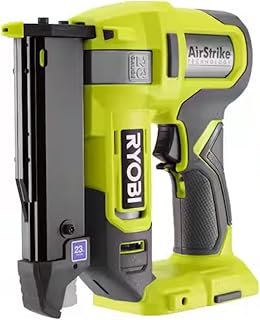


An advanced cordless nail gun can make framing, carpentry, cabinetry, trim installation, fencing repairs and general construction work considerably more efficient than manual fastening or equipment that depends on a separate air compressor. However, cordless nailers are not interchangeable. The right tool depends on the fastener type, nail length and diameter, material being joined, required driving depth, working environment, battery platform and the amount of work expected from the tool.
For Australian buyers, it is particularly important to compare the complete system rather than judging a nail gun by its headline specifications alone. A tool may offer impressive driving power but be poorly suited to delicate trim, while another may be exceptionally convenient for finishing work but unsuitable for structural applications. Battery availability, charger compatibility, local service arrangements, consumable availability and the manufacturer's stated application limits should all form part of the decision.
The term advanced cordless nail gun generally describes equipment that combines cordless convenience with features intended to improve fastening consistency, productivity, control and usability. Depending on the model and nailer category, these features can include brushless motors, electronic firing systems, selectable firing modes, tool-free depth adjustment, jam-release mechanisms, LED work lights, belt hooks, dry-fire protection, battery indicators and electronic monitoring.
Not every feature is equally valuable for every user. A professional installer who drives thousands of fasteners may place much greater importance on cycle speed, battery efficiency, balance and downtime than a homeowner completing occasional repairs. Conversely, someone installing delicate mouldings may prioritise depth control and trigger response over maximum driving speed.
Cordless operation eliminates the need to manage a pneumatic hose and, for many applications, removes the requirement to transport an air compressor. This can be especially useful when moving around a renovation site, working at height or completing small jobs where setting up pneumatic equipment would be inconvenient.
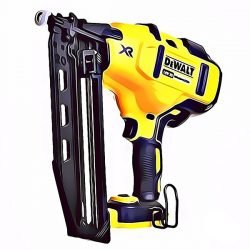
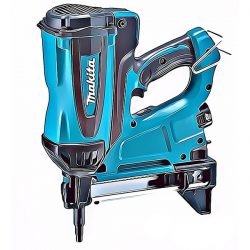
The battery system also becomes part of the buying decision. Buyers should consider whether the nail gun uses batteries already owned for other compatible tools. Platforms from brands such as Milwaukee, DeWalt, Makita and Ryobi can make a compatible battery ecosystem particularly useful when a workshop already contains tools from the same manufacturer.
Brushless motors are widely used in modern cordless power tools because they can provide efficient electronic motor control without conventional motor brushes. For a nail gun, this can contribute to efficient operation and a design intended for repeated use. However, brushless construction alone does not establish that one nailer is more suitable than another. Firing mechanism, battery system, ergonomics, application range and overall design still matter.
Advanced cordless nailers may use electronic controls to manage firing, motor operation and safety interlocks. These systems can help provide predictable operation when correctly matched to the intended fastener and material.
Look for controls that are straightforward to understand. A complicated interface is not necessarily better if it slows down routine work. The most useful controls are generally those that let the operator make precise adjustments without interrupting the workflow.
Before comparing individual models, identify the type of nailer required. The nailer category determines the fasteners it accepts and strongly influences the type of work for which it is appropriate.
Cordless framing nailers are designed for demanding fastening applications involving timber construction and other heavy-duty work within the manufacturer's specified limits. They generally accommodate substantially larger framing nails than finish or brad nailers.
For Australian construction and renovation work, buyers should check the manufacturer's application guidance rather than assuming that any framing nailer is appropriate for structural work. Fastener specifications, timber type, connection design and applicable building requirements all need to be considered separately from the tool's driving capability.
Finish nailers are intended for applications where a relatively discreet fastening point is desirable. They are commonly considered for trim, mouldings, cabinetry components and other finishing tasks where the fastener needs to provide adequate holding power without creating the appearance associated with larger nails.
A finish nailer can be a better choice than a framing nailer for detailed interior work because the tool and fastener are designed around a different balance of power, precision and finish quality.
Brad nailers use smaller-gauge fasteners and are generally aimed at lightweight finishing and assembly tasks. They can be useful for attaching decorative trim, small mouldings and components where a less conspicuous fastening point is preferred.
The smaller fastener should not be interpreted as universally better. The joint still needs sufficient holding strength, and the fastener must be appropriate for the material and application.
Pin nailers use extremely small fasteners and are particularly useful where the appearance of the finished surface is a priority. They can be suitable for delicate trim and temporary positioning during adhesive-based assembly, depending on the manufacturer's instructions.
Because pin nails provide less mechanical holding power than larger fasteners, they should not be substituted for a more substantial fastening method simply because the resulting hole is less visible.
Some cordless fastening systems are designed around staples rather than nails, while certain product families include several fastening formats across different tools. If the project involves upholstery, flooring-related work, sheathing, fencing or other staple applications, confirm that the tool is actually designed for the required staple specification rather than assuming that a nailer can perform the same job.
Nail length is one of the most important specifications to verify. A tool may accept a broad range of fastener lengths, but the useful range depends on the application and material thickness.
Do not choose a nailer solely because it accepts the longest advertised nail. Determine the sizes you actually need for your projects and make sure suitable fasteners are readily obtainable in Australia.
Fastener gauge influences the balance between holding power, hole size and suitability for different materials. Larger structural fasteners are fundamentally different from small finishing nails, so the gauge specification should be checked before considering other features.
A larger magazine can reduce interruptions because more fasteners can be loaded at once. This can matter during repetitive work, particularly for professional users. However, a larger magazine can also affect the physical size and balance of the tool.
For occasional DIY use, a slightly smaller magazine may be perfectly acceptable if the nailer is easier to handle. For production-oriented work, reduced reload frequency can be more valuable.
Depth adjustment is particularly important for finish and trim applications. The ability to tune how deeply the fastener enters the material can help reduce protruding nails and minimise unnecessary surface damage.
Tool-free adjustment is generally more convenient than requiring a separate tool for routine changes. Buyers should also look at how clearly the adjustment mechanism indicates its setting.
Some cordless nailers provide sequential firing, contact or bump firing, or other selectable operating modes depending on the tool category. Sequential firing can offer controlled placement, while a faster firing mode may be useful for repetitive applications where the manufacturer permits it.
Never assume that every firing mode is appropriate for every application. Follow the tool's operating instructions and the relevant safety requirements.
Tool weight is only part of the ergonomic equation. Battery position, handle shape, magazine orientation and centre of gravity can significantly affect how a nailer feels during extended use.
A heavier tool may be manageable for short jobs but become tiring during overhead installation. Conversely, an ultra-light design may be less suitable if the project requires substantial driving power. Whenever possible, compare the complete tool with its intended battery installed rather than comparing bare-tool weights alone.
Battery capacity can influence how long a cordless nailer can operate between charges, but runtime is affected by the application, fastener size, material, firing frequency, battery condition and tool design.
Instead of focusing exclusively on amp-hour ratings, consider how many compatible batteries you already have and whether you can rotate charged batteries during demanding jobs. A dual-battery workflow can be more practical than purchasing an entirely different platform solely for a theoretical runtime advantage.
Choosing a cordless nailer can effectively mean choosing part of a battery ecosystem. This is why platform compatibility deserves attention before comparing individual tools.
Platform selection should not be based on brand reputation alone. Check the exact battery compatibility, charger requirements, tool-only versus kit configuration, battery generation and manufacturer's current compatibility information before purchasing.
Not every cordless nailer uses the same power architecture. Some cordless fastening systems use rechargeable batteries with an electric drive mechanism, while other systems may combine a battery with a fuel or gas-based operating system.
Battery-electric designs can provide a relatively straightforward charging workflow, while fuel-based systems introduce consumable fuel cells into the operating equation. The practical choice depends on the tool category, project demands, consumable availability and the user's preferred maintenance routine.
When comparing these systems, look beyond the phrase “cordless.” Two cordless nailers can have very different operating requirements, running costs and maintenance considerations.
A high-quality nailer should provide consistent fastening when operated within its specified range. Inconsistent depth can create additional finishing work, especially when installing visible trim.
When comparing products, examine the manufacturer's depth-control design, operating instructions and intended applications rather than assuming that a higher motor specification automatically means better finished results.
Fast firing can improve productivity, but maximum firing speed should never be considered in isolation. A tool that fires quickly but requires frequent battery changes, complicated reloads or repeated depth adjustments may not deliver a practical productivity advantage.
For repetitive professional work, consider the complete workflow: loading, firing, repositioning, battery changes, jam clearing and maintenance.
Fastener jams can interrupt a project and become particularly frustrating when the tool is being used continuously. A well-designed jam-release system can make recovery easier.
Before buying, determine whether the manufacturer's instructions explain how to clear common jams and whether the process can be completed safely without unnecessary disassembly.
Dry-fire protection can help prevent the tool from cycling when the magazine is empty or nearly empty, depending on the design. This can reduce unnecessary wear and help the operator recognise when fasteners need to be replenished.
The trigger system should be considered alongside the contact or nose safety mechanism. These components are central to safe operation and controlled firing.
A nail gun is not a conventional drill or impact driver. Buyers should read the operating manual before use and understand how the specific model's trigger, nose contact, lockout and firing modes function.
The same cordless nail gun can behave differently depending on the material being fastened. Timber density, moisture content, thickness, grain direction and the presence of harder sections can influence driving performance.
Many common construction and carpentry applications involve softwood. The required fastener size depends on the joint and application rather than the material category alone.
Hardwoods can present greater resistance to penetration. Before using a cordless nailer on dense timber, verify that the tool and selected fastener are approved for the application. Do not force a tool beyond its intended operating range simply because it is marketed as high powered.
Manufactured boards can respond differently from solid timber. Fastener placement, edge distance and nail size can influence the risk of splitting, breakout or poor holding power.
Finish and brad nailers are often more appropriate for trim work than heavy-duty framing equipment. Depth adjustment, nose design and the size of the resulting fastening mark can be particularly important when the finished surface will remain visible.
Outdoor fastening introduces additional considerations such as moisture exposure, corrosion resistance and the material being joined. The nailer itself does not determine whether a fastening system is suitable for outdoor exposure. The fastener specification and project requirements must also be considered.
More power is not automatically better. A framing nailer can be inappropriate for delicate trim, while a small brad nailer may be completely inadequate for heavy construction work.
A nail gun is only useful if suitable nails can be obtained. Check the exact fastener specification, including length, gauge, angle or collation type where applicable, before committing to a particular model.
A bare tool may appear attractive when compared with a complete kit, but buyers who do not already own compatible batteries may need to purchase batteries and a charger separately. Compare the complete cost of ownership rather than the bare-tool price alone.
Two nailers with similar published weights can feel very different during use. Battery placement, handle design and balance can have a substantial effect on fatigue.
Cordless operation removes certain pneumatic-system maintenance requirements but does not eliminate maintenance altogether. Fastener magazines, contact mechanisms, battery contacts and other components still require appropriate care according to the manufacturer's instructions.
Brand loyalty is useful when it simplifies battery ownership, but it should come after identifying the correct nailer category. Start with the project, fastener and material, then compare suitable tools.
Tool-free depth and mode adjustments can save time when moving between materials or applications. Their value increases when a tool is used throughout the day.
Integrated lighting can improve visibility in cupboards, corners, renovation spaces and other poorly illuminated areas. It is a convenience feature rather than a substitute for proper work lighting.
A secure belt hook can be useful when climbing ladders or moving between fastening locations. Storage features matter less for workshop-only use but can be valuable for mobile tradespeople.
Battery indicators can help operators anticipate charging requirements. This is particularly useful when a project involves repeated fastening cycles and limited access to charging equipment.
For intensive use, investigate the manufacturer's approach to service and replacement components. A professional tool can represent a long-term investment, so serviceability may matter more than a small difference in initial specifications.
A structured comparison makes it easier to separate meaningful specifications from marketing features. Create a shortlist and evaluate each tool against the same criteria.
A homeowner completing occasional repairs may benefit most from a compact cordless finish or brad nailer if the intended projects involve trim and light woodworking. A broad battery ecosystem can also be valuable because the same batteries may support other household tools.
Renovators should consider whether several fastening categories will be required. One nailer may be ideal for trim while another is needed for heavier timber construction. Buying a tool that matches the dominant workload is generally more sensible than trying to make one nailer perform every task.
Precision, control, fastener size and surface appearance are usually more important than maximum driving power. Smaller fasteners and precise depth adjustment can be particularly useful where holes must be unobtrusive.
Professional users should place greater emphasis on reliability, battery management, ergonomics, fastener availability and service support. A small improvement in workflow can become significant when a tool is used repeatedly throughout the working week.
Users working on framing or other demanding construction applications should prioritise a nailer specifically designed for those applications. Fastener compatibility and manufacturer instructions should be treated as essential requirements rather than optional specifications.
Proper maintenance can help preserve performance and reduce avoidable interruptions. Always follow the maintenance schedule and procedures supplied by the manufacturer because different nailer mechanisms have different service requirements.
Nail guns are high-energy fastening tools and should be treated accordingly. Read the complete manufacturer's operating instructions before first use and use the personal protective equipment specified for the application.
Customer reviews can provide useful information, but they should be interpreted alongside technical specifications and the manufacturer's documentation. A review from someone using a brad nailer for occasional trim work may tell you little about how the same tool performs in a professional production environment.
Look for recurring themes rather than isolated comments. Useful review topics include battery life, ease of loading, depth adjustment, balance, reliability, jam frequency, fastener compatibility and long-term usability.
Pay particular attention to whether reviewers describe the actual application. A product receiving praise for being lightweight may be ideal for overhead trim work but less suitable for users who prioritise heavy-duty driving capability.
The cheapest cordless nail gun is not necessarily the lowest-cost option over its useful life. Consider the complete system before making a decision.
For Australian shoppers, compare current retailer pricing separately from the underlying technical evaluation. Prices, bundles, promotions and stock status can change, so a buying guide should not treat a temporary advertised price as a permanent product characteristic.
Cordless convenience does not automatically make pneumatic equipment obsolete. For workshop environments with an established compressor system, pneumatic nailers can remain practical. They may also make sense where the operator already has the required air infrastructure and does not want to manage multiple cordless battery platforms.
The cordless advantage becomes more compelling when portability, rapid setup and freedom from hoses are major priorities. The best choice depends on the workflow rather than a universal ranking between technologies.
A cordless nailer can be particularly valuable when setup time, portability and repetitive fastening are important. It can reduce the amount of equipment that needs to be moved around a site and can make short jobs more convenient.
The value proposition is strongest when the tool is used frequently enough to justify its cost and when the battery platform can support several other tools. For occasional fastening, however, buyers should consider whether the convenience justifies purchasing another battery and charger system.
The best advanced cordless nail gun is ultimately the one that matches the fastening job, not necessarily the tool with the longest specification sheet. Start with the fastener and application, then work backward toward the required nailer category, battery system, power characteristics and ergonomic features.
For heavy construction and framing, prioritise an appropriate heavy-duty nailer and compatible structural fasteners. For trim, moulding and cabinetry, prioritise precision, depth control and an appropriate finish fastener. For occasional household projects, battery compatibility and ease of use may provide more practical value than professional-grade performance that will rarely be used.
Brands such as Milwaukee, DeWalt, Makita, Paslode, Ryobi and Metabo HPT are useful names to include when building a comparison shortlist, but the exact model specifications should always be checked before purchase. Product generations, battery compatibility, included accessories and retailer configurations can change over time.
For an Australian buyer comparing cordless nailers in 2026, the most reliable approach is to match the tool to the project, verify the fastener specification, assess the complete battery ecosystem, compare ergonomics and maintenance requirements, and then review current retailer pricing and verified customer feedback before making the final decision.
There is no single best type for every application. A framing nailer is designed for substantially heavier fastening than a finish, brad or pin nailer. The correct choice depends primarily on the fastener and job requirements.
Yes, cordless nailers can be suitable for professional applications when the specific tool is designed for the required workload and fastening task. Professional buyers should pay particular attention to ergonomics, battery management, reliability, consumable availability and service arrangements.
A brushless motor can provide advantages in modern cordless tool design, but it should not be used as the only measure of quality. Compare the complete system, including fastening range, firing mechanism, depth adjustment, ergonomics, battery compatibility and manufacturer support.
Usually not. Framing, finish, brad and pin nailers are designed around different fastener sizes and applications. Attempting to use one category outside its intended purpose can result in poor fastening or an unsuitable joint.
A bare tool can make sense if you already own compatible batteries and a charger. A complete kit may be more practical when starting a new battery platform. Compare the total cost rather than the advertised tool-only price.
It can be extremely important for cordless-tool users. Staying within an existing battery ecosystem can reduce the need for additional chargers and batteries and can simplify workshop management.
The correct nail size depends on the joint, material, required holding power and tool specifications. Always follow the manufacturer's approved fastener range and the requirements of the particular construction or woodworking application.
Cordless nail guns can be used safely when operated correctly, but they are powerful fastening tools and require appropriate precautions. Read the manufacturer's instructions, use the specified safety equipment and never bypass the tool's safety mechanisms.
Yes. Cordless operation does not mean maintenance-free operation. Cleaning, inspection, battery care and other maintenance should be performed according to the manufacturer's instructions for the specific model.
Check the exact model number, nail compatibility, battery requirements, included accessories, manufacturer's Australian warranty information, retailer terms, current price and availability of compatible consumables. Specifications should be confirmed against the current manufacturer documentation before purchase.
Before placing an order, verify the exact product specification rather than relying on a generic description of the product family. Confirm that the model is intended for your application, accepts the required fastener dimensions and works with the battery system you plan to use.
It is also sensible to compare several reputable options rather than automatically selecting the most expensive or most powerful model. Read verified customer reviews for recurring issues, compare manufacturer specifications, check current Australian retailer information and consider the total cost of the tool, batteries, charger and consumables.
By evaluating the fastening category, material compatibility, fastener range, driving control, battery ecosystem, ergonomics, maintenance requirements and long-term ownership cost together, Australian buyers can narrow a large selection of cordless nail guns down to the models that genuinely fit their work in 2026.