

♥ Wishlist
Compare 45 Hiker Knives Hand Tools for Outdoor Adventures in Australia products in Australia. Reviews, ratings, pros, cons and buying advice updated for October 2026.







![Gerber Scout Clip Folding Knife, Lightweight, Micarta Grip [1064582]](https://m.media-amazon.com/images/I/81Iq6PvOWuL._AC_UL320_.jpg)






An advanced hiker knife is best treated as a compact outdoor hand tool rather than simply a blade. For Australian hiking, bushwalking, camping and general trail use, the right choice should balance cutting performance, portability, corrosion resistance, grip security, ease of maintenance and responsible storage. A knife that looks impressive on a product page is not necessarily the most practical option for a day hike or multi-day trip.
When comparing advanced hiker knives in 2026, look beyond headline features and examine the complete tool: blade geometry, steel type, handle construction, locking or retention mechanism, sheath or carry system, overall weight, maintenance requirements and the conditions in which you expect to use it. These factors have a greater effect on everyday usefulness than appearance alone.
Australia presents a wide range of outdoor environments, from humid coastal tracks and wet forest to dry inland trails and alpine conditions. That makes material selection particularly important. A knife intended for occasional walks near the coast may have different requirements from one carried regularly through wet bushland or used around a campsite.
Blade steel influences edge retention, toughness, corrosion resistance and sharpening behaviour. There is no universally perfect steel because improving one characteristic can involve compromises elsewhere. A very wear-resistant steel may be more demanding to sharpen, while a steel selected for toughness may require more frequent edge maintenance.
Common stainless steels used in outdoor knives include options from established families such as 420, 440, 8Cr13MoV, AUS-8, VG-10, 14C28N, D2 and various proprietary formulations. Their actual performance depends on heat treatment, blade geometry and manufacturing quality, so the steel name should never be considered in isolation.
For Australian hiking, corrosion resistance deserves particular consideration. A knife carried close to the body can be exposed to perspiration, while humid weather, rain and coastal environments can accelerate surface corrosion. Stainless steel is therefore attractive for many hikers, although stainless does not mean completely maintenance-free.
Edge retention describes how well a cutting edge resists becoming dull during use. Sharpenability describes how easily that edge can be restored. These are related but different considerations. A knife that remains sharp for a long time may be appealing for extended trips, but if it eventually requires specialist equipment or considerable effort to sharpen, that advantage may be less important to a casual hiker.
Blade thickness, grind type, edge angle and blade profile all influence cutting behaviour. A thinner cutting geometry can slice efficiently, while a thicker geometry may provide greater durability for demanding utility work. For normal hiking tasks, the most practical design is usually the one that matches the intended workload rather than the one with the most aggressive specifications.
One of the most important buying decisions is whether to choose a fixed-blade design or a folding knife. Both formats can be useful outdoor tools, but they offer different advantages.
A fixed blade has a blade that remains permanently extended from the handle. The simple construction can make cleaning straightforward and can provide a rigid cutting platform for appropriate outdoor utility tasks. A well-designed sheath can also protect the blade and make storage more secure.
A folding knife can be more compact when stored, which is useful when space and weight matter. However, the pivot and locking mechanism introduce additional components that need to be kept clean and functioning correctly.
The handle is not merely an aesthetic component. It determines how securely and comfortably the tool can be held during normal cutting work. Outdoor users should consider grip texture, ergonomics, material durability and behaviour in wet conditions.
G10 and similar composites are popular in outdoor tools because they can provide a durable, textured surface. They are generally well suited to users who prioritise a secure grip and low maintenance.
Micarta is another established handle material found on outdoor knives. Its appearance and surface characteristics can change somewhat with use, while its relatively tough construction makes it a popular choice for utility-oriented designs.
Fibre-reinforced nylon and related synthetic materials can keep weight down while providing useful durability. They are particularly worth considering when the knife will be carried frequently and weight is an important part of the overall equipment strategy.
Metal handles can provide a robust feel, but they may be heavier and can feel less comfortable in cold or wet conditions depending on the design. Texture and ergonomics should therefore be assessed alongside material choice.
Two knives with almost identical specifications can feel very different in use. Handle length, thickness, contouring, finger clearance and texture can influence control and comfort. Product photographs can help, but measurements and detailed specifications are more reliable when determining whether a particular design will suit your hands.
Look for a handle that allows a natural grip without forcing the hand into an awkward position. Avoid assuming that highly aggressive texturing is always better; excessive texture can create discomfort during longer periods of ordinary utility work.
Weight matters more to some hikers than others. A knife that weighs very little may be preferable for a minimalist day-hiking setup, while a more substantial outdoor tool may make sense in a dedicated camping kit. The correct decision depends on whether the knife is expected to perform occasional emergency or utility functions or more frequent campsite tasks.
Consider the knife as part of the entire loadout. A heavy sheath, belt attachment and additional accessories can substantially increase the carry weight beyond the published weight of the knife itself.
For fixed-blade knives, sheath quality is a major part of the overall product. The sheath should retain the knife securely, protect the blade and allow appropriate storage without creating unnecessary exposure.
For folding knives, examine how securely the closed knife stays contained and whether the pocket clip or other carry mechanism is robust enough for ordinary transport.
Folding knives can use different locking systems, including liner locks, frame locks, back locks and other proprietary mechanisms. The specific mechanism matters less than its quality, condition and suitability for the intended utility role.
A locking mechanism should operate consistently and should not be treated as a substitute for careful handling. Keep moving parts clean, inspect the mechanism periodically and discontinue use if the knife develops unexpected looseness or mechanical problems.
Australian knife laws are not identical across every state and territory, and restrictions can depend on the type of knife, circumstances of possession, location and intended purpose. Outdoor users should check the current rules that apply in the specific state or territory where the knife will be carried or used.
Being on a hiking trip does not automatically make every knife lawful to carry in every circumstance. Before purchasing or carrying an outdoor knife, verify current requirements through the relevant Australian government or police authority for your jurisdiction. Pay particular attention to rules concerning possession in public places, transport, prohibited knife types and legitimate reasons for carrying a knife.
Responsible outdoor practice also means avoiding unnecessary display or handling of a knife in public areas. When travelling to and from a hike, secure the tool appropriately and follow the applicable transport requirements.
A hiking knife can serve legitimate utility purposes when used responsibly. Typical outdoor applications can include preparing food, opening packaging, cutting cord where appropriate, trimming suitable materials and performing basic campsite maintenance. The exact suitability depends on the design and manufacturer instructions.
A knife should not be treated as a replacement for specialised tools. For example, heavy chopping, prying, striking or other tasks outside the intended design can damage the blade, handle or locking mechanism and increase the risk of injury.
Modern outdoor knives can include a long list of advertised features. Some genuinely improve usability, while others may have little practical value for a particular hiker.
Serrations can be useful for certain fibrous cutting tasks, but they can also make sharpening more complicated. If your normal hiking requirements involve straightforward food preparation and general utility work, a plain edge may be easier to maintain.
A combination edge attempts to provide both a conventional cutting section and a serrated section. This can increase versatility, but it also means maintaining two different edge geometries.
These mechanisms can affect how easily a folding knife is opened and how much space it occupies. Their practical value depends on the individual design and the user's preferences.
Some multi-purpose outdoor tools include additional emergency-oriented features. Before paying extra for them, determine whether they have a genuine role in your hiking equipment and whether their presence adds meaningful utility without unnecessary bulk.
Well-established outdoor and knife manufacturers can provide useful starting points when comparing products, but brand reputation should not replace model-level research. Companies such as Victorinox, Gerber, Leatherman, Buck, CRKT, Spyderco, Benchmade, Kershaw, Opinel and Morakniv offer different approaches to outdoor cutting tools.
When comparing brands, examine the individual model's published specifications rather than assuming that every product from a particular manufacturer has the same construction or performance characteristics.
A detailed specification sheet can reveal more than a marketing description. Compare the following measurements and construction details wherever they are provided:
Corrosion resistance becomes particularly important when outdoor equipment is exposed to moisture for extended periods. A knife can encounter rain, condensation, wet vegetation, sweat and coastal air during normal outdoor activities.
After exposure to moisture, clean the knife according to the manufacturer's instructions and dry it thoroughly before storage. Do not assume that a stainless blade can be left wet indefinitely. Folding knives deserve particular attention around the pivot and other areas where moisture and debris can remain trapped.
Good maintenance can help preserve both the cutting edge and the mechanical components of an outdoor knife. A simple maintenance routine is often more valuable than purchasing a knife with unnecessarily complex features.
Every cutting edge eventually requires maintenance. Before choosing a knife, consider whether you are comfortable maintaining its edge yourself or would prefer a design that is straightforward to sharpen with commonly available equipment.
Plain edges are generally easier for beginners to understand because the entire edge follows a consistent geometry. Serrated edges require a sharpening method suited to the individual serration pattern. Avoid removing excessive material simply to produce an extremely sharp edge; controlled, consistent maintenance is more important than chasing a particular level of sharpness.
For a day hike, portability is often more important than maximum robustness. A compact, corrosion-resistant knife that can handle ordinary utility tasks may be more sensible than a large outdoor model that spends most of the trip unused.
Consider the actual tasks you expect to perform. If the knife will mainly remain packed as part of an emergency or general-purpose kit, weight and compact storage may deserve greater priority than heavy-duty construction.
Extended trips can place greater emphasis on durability, maintainability and resistance to environmental exposure. If the knife will be used regularly around an established campsite, examine handle comfort, edge maintenance and cleaning requirements particularly carefully.
Even on longer trips, avoid selecting a knife solely because it is larger. The best camping tool is the one whose capabilities correspond to the tasks it is designed to perform.
Lightweight hiking equipment generally rewards compact tools and minimal redundancy. General camping equipment can justify a broader range of tools because weight may be less critical. This distinction is useful when comparing otherwise similar knives.
Customer reviews can provide useful information, but they should be interpreted carefully. Look for recurring observations rather than relying on a single enthusiastic or negative review. Comments about fit, dimensions, corrosion, edge maintenance, locking behaviour, sheath retention and long-term usability can be more useful than vague statements about whether a product is “great.”
Also distinguish between complaints about the product and complaints caused by incorrect expectations. A compact hiking knife may be unsuitable for someone expecting a heavy-duty chopping tool, even if the knife performs well within its intended role.
Instead of choosing a product from a single headline rating, create a simple checklist based on your own hiking habits. This prevents attractive but unnecessary features from dominating the decision.
If several products appear similar, rank specifications according to their practical importance. For many Australian hikers, a sensible hierarchy starts with legal suitability and intended purpose, followed by ergonomics, corrosion resistance, construction quality, weight and maintenance requirements.
Do not allow a premium steel name, decorative finish or unusually long feature list to outweigh basic usability. A well-matched tool is usually more useful than a technically sophisticated knife that does not suit the user's hiking style.
Set a budget after determining the required specifications rather than choosing a price category first. Entry-level products can be appropriate for straightforward utility needs, while higher-priced knives may offer upgraded materials, refined construction or more specialised features.
Before paying more, identify exactly what the additional cost provides. If the difference is primarily cosmetic and does not improve the characteristics that matter for your use, a less expensive option may provide better overall value.
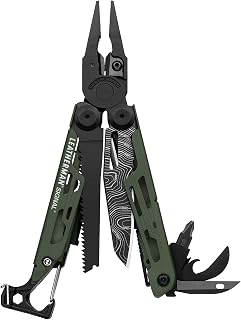
Some hikers may benefit more from a compact multi-tool than a dedicated knife. Products from brands such as Leatherman and Victorinox can combine cutting capability with other tools, potentially reducing the need to carry separate equipment.
The trade-off is that multi-tools can be heavier or less specialised than a dedicated knife. Compare the tools you will genuinely use rather than counting the maximum number of functions advertised.
A hiking knife should always be handled as a sharp tool. Keep fingers clear of the cutting path, use a stable cutting surface for appropriate tasks and avoid forcing the blade through materials it was not designed to cut. Keep the blade closed or appropriately secured when a folding or fixed-blade design is being transported or stored.
Never use an outdoor knife as a pry bar, hammer, screwdriver or substitute for another tool unless the manufacturer specifically designed that component for the purpose. Misuse can cause structural failure and injury.
There is no single best knife for every Australian hiker. The right choice depends on intended use, blade format, weight, corrosion resistance, handle design, maintenance requirements and the laws applicable to the location and circumstances in which the knife will be possessed or carried.
Neither format is universally better. Folding knives offer compact storage, while fixed-blade designs have simpler construction and can be convenient for appropriate outdoor utility work. The better option depends on your equipment priorities and applicable legal requirements.
The best steel depends on the balance you want between corrosion resistance, toughness, edge retention and ease of sharpening. For many outdoor users, corrosion resistance and straightforward maintenance are particularly valuable.
No. Stainless steels are generally more resistant to corrosion than many non-stainless alternatives, but they can still stain or corrode under unfavourable conditions. Cleaning and drying remain important.
Weight matters most when reducing pack weight is a priority. For minimalist hiking, a compact knife can make more sense than a heavier model. For vehicle-based camping, weight may be less significant.
A plain edge is often simpler to maintain, while serrations can be useful for particular fibrous cutting tasks. Choose according to the work you actually expect the knife to perform.
They can be, but only when the additional cost corresponds to features or construction characteristics that matter to you. Compare materials, geometry, ergonomics, maintenance and durability rather than price alone.
Clean it after use, dry it thoroughly, inspect the blade and mechanical components, maintain the edge appropriately and follow the manufacturer's care instructions. Folding knives should receive particular attention around pivots and locking components.
No general assumption should be made that a hiking knife can be carried anywhere. Knife laws vary between Australian jurisdictions and can depend on the circumstances. Check current official requirements for the relevant state or territory before carrying an outdoor knife in public.
Before choosing an advanced hiker knife, compare the complete specification rather than relying on a product title or star rating. The strongest candidate should be appropriate for your intended outdoor tasks, comfortable to handle, practical to maintain, suitably resistant to the conditions you expect to encounter and lawful to possess or carry in the relevant circumstances.
A useful independent comparison should consider more than popularity. Products can be assessed according to construction, material selection, practical ergonomics, portability, maintenance requirements, intended outdoor role and specification transparency. Customer feedback can add useful context, but it should complement rather than replace technical information.
Specifications, model configurations and retailer information can change over time. Before purchasing, verify the current manufacturer's specifications and the information supplied by the retailer, including dimensions, materials, included accessories and applicable terms. Where relevant, check current Australian legal requirements separately rather than relying on an old buying guide.
The best advanced hiker knife is not necessarily the largest, most expensive or most technically complex option. For Australian outdoor users, the strongest choice is the one that fits the intended utility tasks, provides a secure and comfortable grip, suits the local environment, can be maintained without unnecessary difficulty and can be stored and carried responsibly.
Use the specifications, maintenance requirements, current customer feedback and legal considerations together when comparing options. That approach makes it easier to separate genuinely useful outdoor tools from products whose additional features add complexity without delivering meaningful benefits for your hiking needs.