
♥ Wishlist
Compare 17 Ingco Combi Drill products in Australia. Reviews, ratings, pros, cons and buying advice updated for October 2026.




Choosing an advanced INGCO combi drill in Australia involves more than comparing voltage, advertised torque or the number of accessories included in a kit. A useful cordless combi drill needs to balance drilling performance, hammer-drilling capability, fastening control, battery runtime, ergonomics, durability and compatibility with the rest of your power-tool collection.
INGCO offers a broad range of cordless and corded power tools, so model specifications can vary considerably. Before buying, compare the exact model number, battery platform, charger configuration, chuck capacity, speed range, torque settings, impact rate and included accessories rather than relying only on a product name.
This guide is designed for Australian buyers comparing advanced INGCO combi drill solutions for DIY projects, home maintenance, renovation, workshop tasks and regular trade-oriented use. Product specifications, kit contents and retailer availability can change, so always confirm the current specification for the exact model you are considering.
A combi drill combines several functions in one cordless tool. Depending on the model, it can normally operate as a conventional drill, an adjustable clutch driver and a hammer drill for masonry applications. An advanced model generally distinguishes itself through stronger mechanical components, a wider operating range, more refined speed control, higher torque capability, brushless motor technology on applicable models, improved ergonomics or compatibility with a larger battery platform.
For Australian users, the most useful question is not simply whether a drill has the highest advertised specification. It is whether its combination of power, control and battery capacity matches the jobs you actually perform.
Battery terminology deserves particular attention when comparing cordless drills. Listings may use nominal battery voltage, platform branding or marketing terminology, and the number printed on a product does not by itself tell you how the drill will perform in every application.
When comparing an INGCO drill with alternatives from brands such as Makita, Bosch, DeWalt, Milwaukee, Ryobi, HiKOKI or AEG, compare the complete system rather than treating voltage as a direct performance ranking. Motor design, electronic control, gearing, battery capacity and mechanical construction all influence practical performance.
Amp-hours, commonly abbreviated as Ah, indicate battery capacity rather than directly measuring drilling power. A higher-capacity battery can provide more stored energy, although it may also add weight and increase the size of the tool assembly.
For occasional DIY use, buying the largest battery available is not necessarily the best choice. For extended renovation or workshop work, however, additional capacity can become much more valuable.
Motor construction is one of the most important differences between cordless drill models. Traditional brushed motors use physical brushes and a commutator, whereas brushless motors use electronic commutation.
A brushed drill can still be entirely appropriate for intermittent household jobs. If the tool will be used frequently, however, a brushless model can be worth considering as a longer-term investment, provided its other specifications also match the intended workload.
Torque is frequently highlighted in cordless drill specifications, but maximum torque should not be treated as the only indicator of quality. A high torque figure is useful when demanding fastening or low-speed drilling is required, but controlled delivery of that torque can be equally important.
A good combi drill should give the operator sufficient control to select an appropriate setting for the task. Driving small screws into soft timber requires a different approach from drilling a large hole or fastening heavy-duty hardware.
The adjustable clutch allows the user to select a predetermined resistance level before the drive disengages. This can help prevent over-tightening and is particularly useful when installing multiple screws to a consistent depth.
A two-speed gearbox makes a combi drill substantially more versatile. The lower gear is normally intended for applications requiring greater torque and controlled rotation, while the higher gear is designed for faster drilling where the material and bit allow it.
The variable-speed trigger provides another layer of control. Starting a hole slowly can help the cutting edge engage accurately before increasing speed. This is especially useful when drilling metal or when working with larger bits.
The hammer setting is one of the features that separates a combi drill from a conventional drill-driver. It introduces an impact action intended to help the drill bit work through masonry.
A hammer drill can be useful for occasional holes in brick, block and similar masonry. However, a combi drill should not automatically be considered a replacement for a dedicated rotary hammer or SDS-type hammer drill when substantial masonry, concrete or demolition work is involved.
The chuck is the interface between the drill and the accessory. Many modern cordless combi drills use a keyless chuck, allowing drill bits and driver accessories to be installed without a separate chuck key.
Check the chuck capacity carefully. A commonly encountered maximum capacity is 13 mm, but exact specifications vary between models. Chuck capacity does not mean every 13 mm accessory is suitable for every material or application; the manufacturer's drilling capacity and recommended accessories remain important.
The ideal model depends on the type of work rather than a generic ranking. A homeowner assembling furniture may prioritise compact dimensions and clutch control, while someone renovating a property may value brushless operation, battery capacity and higher drilling capability.
Prioritise a lightweight design, precise trigger control, a useful clutch range and a compact battery. Extremely high torque is rarely the primary requirement for these tasks.
Look for adequate torque, a two-speed gearbox, a dependable chuck and batteries capable of supporting longer work sessions. Consider the diameter and type of holes you regularly need to make.
Hammer functionality becomes more important. Compare the manufacturer's masonry drilling capacity and remember that the correct masonry bit and operating technique have a major effect on results.
Brushless construction, thermal and overload protection, battery availability and ergonomics become increasingly important. A tool that is comfortable to use repeatedly can be more valuable than one with a specification sheet dominated by maximum figures.
Drill performance is only useful if the tool can be controlled comfortably. Weight, grip shape, trigger position, balance and battery placement can affect fatigue during extended use.
There is no single runtime figure that applies to every user. Battery consumption depends on material, bit diameter, drilling depth, speed, pressure, operating temperature, tool efficiency and how frequently the trigger is used.
Driving hundreds of small screws may produce a very different battery demand from repeatedly drilling large holes through dense timber. Hammer drilling can also impose a different workload from light fastening.
When comparing kits, look at whether the package includes one battery, multiple batteries, a charger or tool-only configuration. A lower-priced tool-only package may make sense for an existing INGCO battery-platform owner, while a new buyer may need to account for the complete cost of obtaining compatible batteries and charging equipment.
Battery compatibility can influence the long-term value of a cordless tool. If you already own compatible INGCO batteries, buying a tool-only version may be attractive. If you are starting from scratch, compare the battery and charger included with each kit.
Before purchasing, verify:
Comparing INGCO with established alternatives can help clarify which features actually matter for your workload. Brand comparison should focus on the complete ecosystem, not simply the drill itself.
Makita is widely recognised for its extensive cordless tool ecosystem. When comparing the two, consider battery-platform breadth, model availability, ergonomics, accessory compatibility and the level of performance required rather than assuming one brand is automatically better for every buyer.
Bosch offers consumer and professional-oriented power-tool ranges with different battery ecosystems. Compare the exact product family because specifications, batteries and intended workloads can differ significantly between ranges.
DeWalt is particularly relevant to buyers considering a broader professional-style cordless system. If you already own compatible DeWalt batteries, staying within that ecosystem may be more practical than switching platforms solely for one drill.
Milwaukee's cordless range is strongly oriented toward professional applications. Buyers should compare the total investment required for batteries, chargers and additional tools rather than comparing bare-tool specifications alone.
Ryobi is another important ecosystem to consider for Australian DIY users. The breadth of compatible tools can be a deciding factor if you expect to expand beyond a combi drill into saws, sanders, garden tools or other cordless equipment.
HiKOKI and AEG provide further alternatives in the Australian cordless-tool market. Compare model-specific motor technology, battery platform, service arrangements, ergonomics, included equipment and intended workload before deciding.
A specification checklist makes it easier to compare apparently similar models. Record the following details for every shortlisted drill.
Maximum torque is only one specification. A drill with excellent torque but poor balance, an unsuitable battery or limited control may be less useful for everyday work than a more balanced model.
Tool-only listings can appear inexpensive because the battery and charger may be excluded. Calculate the complete setup cost before comparing different kits.
A larger drill and high-capacity battery can add unnecessary weight for simple household tasks. Compactness and control can be more valuable for furniture assembly and light maintenance.
Combi drills are versatile, but dedicated impact drivers, rotary hammers and specialist drills can outperform them in particular applications.
A capable drill paired with an unsuitable or worn-out bit will not deliver good results. Budget for appropriate drill bits and replace damaged accessories.
Two listings can appear to represent the same drill while including different battery capacities, chargers, cases or accessories. Always compare the complete contents of the package.
Prioritise simplicity, manageable weight, useful clutch adjustment, sufficient drilling capacity and reasonable battery availability. There is little benefit in paying for professional-level capability that will rarely be used.
Look for a brushless motor where available, a capable battery platform, two-speed gearing, strong chuck construction, useful hammer functionality and a battery capacity appropriate for long sessions.
Consider ergonomics, repeatability, chuck performance, speed control and the ability to keep multiple batteries charged. A second battery can be particularly useful when work needs to continue while another battery is charging.
Examine the entire cordless ecosystem. Battery compatibility, durability, replacement batteries, charger options, tool availability and manufacturer support may matter more than saving money on the initial drill purchase.
A combi drill is a powerful rotating tool and should be treated accordingly. Read the manufacturer's instructions before use and select accessories appropriate for the material and tool.
Routine care can help preserve a cordless drill's performance and make problems easier to identify before they become serious.
Remove dust and debris from ventilation openings and the exterior after demanding jobs. Avoid allowing accumulated dust to obstruct cooling airflow.
Check that drill bits are held securely and that the chuck operates smoothly. A bit that is not properly secured can slip or run inaccurately.
Use compatible chargers and follow the battery manufacturer's storage and charging recommendations. Protect batteries from excessive heat, moisture, impact and other conditions that can cause damage.
Replace bent, cracked, excessively worn or damaged drill bits. Dull accessories can require more pressure and may generate unnecessary heat.
Unusual noises, excessive vibration, inconsistent speed, burning smells or abnormal heating should not be ignored. Stop using the tool when necessary and consult the manufacturer's instructions or an appropriately qualified service provider.
When comparing multiple listings, create a simple specification checklist rather than judging from photographs or headline claims.
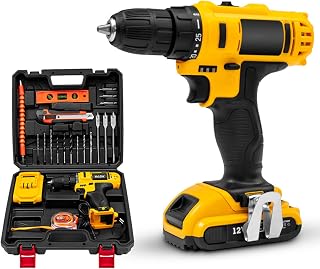
Kit contents differ by model and retailer, so buyers should verify the package before ordering. A cordless kit may include the drill body, one or more batteries, a charger and a storage case or bag. Some configurations may also contain drill and driver accessories.
Do not assume that an image showing several accessories means all of them are included. The written package contents and exact model specification should take priority.
Versatility is the main attraction of a combi drill, but specialised tools can be preferable for demanding applications.
Australian buyers should pay attention to the exact local configuration of a power tool. Listings can vary between markets, and a product shown in an international review may not have identical accessories, battery configurations or specifications in Australia.
Before purchasing, check that the listing is intended for the Australian market and confirm the included charger, battery configuration and electrical requirements. Also consider the availability of compatible replacement batteries and accessories through established Australian retailers.
For an affiliate buying guide, it is sensible to compare the current specifications and retailer information immediately before purchase rather than treating a historical price, kit configuration or availability statement as permanent.
Brand reputation can be useful, but it should not replace model-level research. INGCO, Makita, Bosch, DeWalt, Milwaukee, Ryobi, HiKOKI and AEG all have different product ranges and target users. Even within one brand, entry-level and advanced models can have substantially different specifications.
A sensible buying process is to shortlist models based on your application first, then evaluate the brand ecosystem, battery compatibility, support options, specifications and total ownership cost.
Customer reviews can provide useful information that specification sheets do not always reveal, but they should be interpreted carefully. Look for repeated observations rather than relying on a single enthusiastic or negative review.
Some modern cordless drills incorporate electronic systems designed to manage overload, overheating or battery conditions. Exact protection features vary by model, so check the individual specification rather than assuming every INGCO drill includes the same electronics.
An integrated LED can be genuinely useful when working inside cupboards, under benches or in other areas where the drill can block ambient light.
Where fitted, an electronic brake can stop the chuck more quickly after releasing the trigger. This can improve control during repetitive fastening and drilling work.
Advanced brushless models may use electronic control to regulate motor performance under changing loads. The value of this feature depends on how frequently and heavily the drill is used.
The best advanced INGCO combi drill is ultimately the model that provides the right combination of power, control, battery compatibility and comfort for your actual workload. Maximum torque and headline voltage can help narrow the field, but they should not be the only deciding factors.
For most buyers, the strongest comparison starts with the exact model number and then moves through motor type, speed range, clutch control, chuck capacity, drilling capabilities, battery configuration, ergonomics and kit contents. From there, compare the total cost of ownership and the wider battery ecosystem.
If you are comparing the top INGCO options available in Australia in 2026, verify the latest retailer listing, current specifications and customer feedback immediately before purchase. Product configurations and availability can change, so the exact listing should always be treated as the final reference for what is included.
The best option depends on your intended workload, budget and existing battery platform. A compact model may be preferable for household maintenance, while a brushless, higher-capacity model can make more sense for frequent renovation or workshop use.
Combi drills are well suited to many DIY applications because they combine drilling, screwdriving and hammer-drilling functions. Choose a model whose stated capacities match the materials and hole sizes you intend to work with.
Brushless technology can be particularly attractive for users who operate their drill frequently. Occasional DIY users may find a quality brushed model sufficient, depending on the price and specifications of the particular tool.
A combi drill with a hammer function can be suitable for some masonry applications, but its capabilities depend on the exact model and bit. For frequent or heavy concrete drilling, a dedicated rotary hammer is generally a more appropriate category of tool.
Choose based on the balance between runtime and weight. Smaller batteries are easier to handle, while higher-capacity batteries can reduce charging or battery-change interruptions during longer jobs.
No. Voltage alone does not determine overall tool performance. Motor technology, gearbox design, electronics, battery capacity, torque delivery, ergonomics and accessory selection also matter.
If you do not already own compatible batteries and a charger, a complete kit can be more practical. Existing INGCO battery-platform users may prefer a tool-only configuration if their current batteries are compatible.
There is no universal ideal number. What matters most is having enough adjustment to control fastening force for the materials and fasteners you commonly use.
Check the exact model number, motor type, battery platform, battery capacity, charger inclusion, chuck capacity, speed range, torque specification, drilling capacities and complete kit contents. Also compare current customer feedback and the retailer's current listing.
It can handle many everyday screwdriving jobs, but an impact driver is designed specifically around impact-assisted fastening. Users who drive large numbers of screws or structural fasteners may benefit from having both tools.
Not for demanding masonry work. A combi drill's hammer function is useful for lighter applications, while an SDS-type rotary hammer is designed for substantially more intensive masonry and concrete drilling.
Do not assume universal compatibility. Confirm the exact battery platform and compatibility information for both the drill and battery before purchasing additional equipment.
Look beyond maximum torque and voltage. Compare motor type, speed control, clutch behaviour, chuck design, drilling capacities, weight with battery, battery configuration, protection electronics, included accessories and the long-term value of the battery platform.