

♥ Wishlist
Compare 4 Cordless Angle Drill for Tight Spaces & Precise Drilling products in Australia. Reviews, ratings, pros, cons and buying advice updated for October 2026.
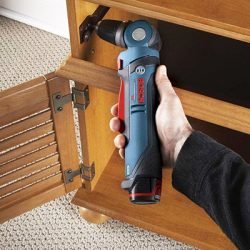
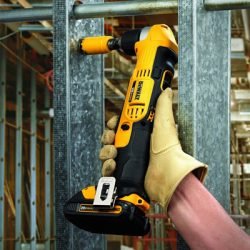
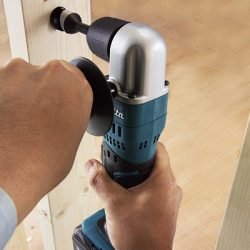
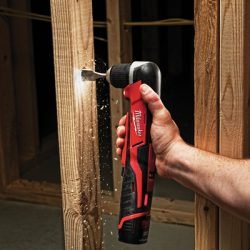

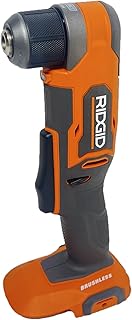

An advanced cordless angle drill is designed for situations where a conventional drill cannot provide a practical working position. The defining advantage is the compact, angled form that helps users work inside cabinets, between framing members, beneath benches, around plumbing, and in other restricted areas. For Australian buyers, the right choice depends on more than battery voltage or headline torque. Chuck design, overall head length, tool height, battery platform, speed control, ergonomics, and access to compatible accessories can have a much greater effect on day-to-day usefulness.
Before comparing individual models, identify the type of work the tool will actually perform. A compact right-angle drill used for cabinet installation has different requirements from a high-torque model used for timber framing, construction work, or drilling through larger materials. Some users may also benefit from a drill-driver configuration, while others need a dedicated right-angle drill capable of handling demanding drilling applications.
Modern cordless angle drills combine a geared drive system, compact right-angle transmission, variable-speed trigger, electronic controls, and a rechargeable battery system. More advanced models may add multiple speed ranges, brushless motors, electronic overload protection, LED work lighting, adjustable side handles, belt hooks, or improved vibration management.
The angled head is particularly useful because it changes the geometry of the tool rather than simply making a conventional drill smaller. This allows the user to position the drilling axis where a standard drill body would collide with a wall, beam, cabinet, pipe, or neighbouring component.
A standard cordless drill is generally the more versatile all-purpose option. It can handle drilling, screwdriving, and many routine workshop jobs, while an angle drill is primarily valuable when access is the limiting factor. Buying an angle drill makes the most sense when the compact head solves a problem that another drill cannot solve comfortably or safely.
Specifications are useful only when they are interpreted in relation to the intended application. A larger battery, higher voltage, or greater advertised torque does not automatically make a particular angle drill the better choice for every Australian buyer.
Battery voltage provides a broad indication of the electrical platform and tool class, but it should not be treated as a direct measurement of drilling performance. Battery capacity, commonly expressed in amp-hours, affects how much energy the battery stores and can influence runtime and weight.
A higher-capacity battery may be beneficial for extended construction work, but it can also make a compact angle drill heavier and less convenient in confined spaces. For overhead or cabinet work, a smaller battery can sometimes provide a better balance even if its runtime is lower.
Brushless motors eliminate the traditional carbon brushes used by brushed motor designs. This can allow manufacturers to create efficient electronic motor-control systems and reduce a component that experiences mechanical wear. Brushless technology is particularly common in premium cordless power tools.
That does not mean every brushed angle drill is unsuitable. For occasional DIY use, the total tool specification, price, ergonomics, battery compatibility, and intended workload should be considered together.
Torque describes the turning force available from the drive system. It becomes increasingly important when drilling larger holes, driving substantial fasteners, or working in dense materials. However, maximum torque figures should not be considered in isolation because practical performance also depends on gearing, motor control, drill-bit design, material resistance, battery condition, and operator technique.
For delicate assembly or cabinetry, excessive torque can make controlled screwdriving more difficult. For heavier construction applications, insufficient torque can cause the motor to labour and slow down significantly.
Variable speed is one of the most useful features on a cordless angle drill. Lower speeds provide greater control and are often appropriate for larger drill bits or demanding drilling. Higher speeds can be useful with smaller bits when the material and accessory call for greater rotational speed.
A model with two mechanical speed ranges can provide a broader working range than trigger control alone. When comparing specifications, check both the low-speed and high-speed ranges rather than focusing only on the maximum revolutions per minute.
The chuck determines which drill bits and accessories can be securely held. Keyless chucks are convenient because they can generally be adjusted without a separate chuck key. Chuck capacity is also important because it indicates the range of accessory shank sizes the tool is designed to accommodate.
Do not assume that a compact angle drill can accept every accessory used with a conventional drill. Check the manufacturer's stated chuck capacity and compatibility before purchasing larger bits, hole saws, or specialist accessories.
For an angle drill, physical dimensions can be more important than headline motor specifications. A short head can make a significant difference when drilling between closely spaced components. Examine the complete tool dimensions rather than relying on marketing language such as compact or ultra-compact.
Also consider the height of the battery connection, handle position, and any auxiliary handle. A tool may have a short angled head but still be difficult to position in a particularly narrow cavity.
Weight matters because angle drills are frequently used in uncomfortable positions. A tool that feels manageable at bench height can become tiring when held sideways, above shoulder level, or at arm's length.
Compare the stated weight with the battery attached when possible. Battery-free tool weights can make two models appear closer in weight than they feel during actual use.
Battery compatibility can be one of the most important long-term purchasing decisions. Major cordless-tool manufacturers commonly build families of products around shared battery platforms. Brands such as Makita, DeWalt, Milwaukee, Bosch Professional and Ryobi offer broad cordless ecosystems, although battery compatibility is specific to each platform and should never be assumed between brands.
If you already own several cordless tools, remaining within your existing battery ecosystem may reduce the need to purchase additional chargers and batteries. Conversely, if you are starting from scratch, compare the broader range of compatible tools you may want in the future rather than selecting a battery platform solely for one angle drill.
For cabinetry, the priority is usually control, compact dimensions and comfortable handling rather than maximum drilling force. A short head can be especially valuable when installing hardware inside cupboards or close to panels.
A variable-speed trigger and suitable clutch or torque control can also help reduce the risk of overtightening screws. A compact battery may improve balance during repetitive installation work.
Tradespeople working around framing, pipes, conduits and electrical installations can benefit from the geometry of an angle drill. The ability to position the chuck and drill bit in a narrow area can reduce the need to reposition surrounding components.
However, the presence of an angle drill does not eliminate the need to verify what is behind a surface before drilling. Electrical wiring, plumbing and structural components should always be considered before creating an opening.
Construction applications can place significantly greater demands on a cordless angle drill. Larger holes, repeated drilling cycles and dense timber favour a model with an appropriate torque range, effective gearing, robust construction and a battery system suited to sustained use.
For heavy work, pay particular attention to manufacturer-specified drilling capacities. Do not select a tool solely because it has a high torque figure if the manufacturer does not rate it for the required bit size or material.
Metal drilling requires appropriate rotational speed, cutting fluid where suitable, correctly selected drill bits and controlled pressure. An angle drill can provide valuable access, but its compact design does not change the basic requirements of metalworking.
Check the manufacturer's stated metal-drilling capacity and recommended accessories. Avoid exceeding those specifications, particularly with large-diameter accessories that can place substantial loads on the drivetrain.
For occasional home projects, a cordless angle drill may be unnecessary if a standard drill already provides sufficient access. It becomes more attractive when your projects regularly involve confined spaces, awkward furniture assemblies, cabinetry, decking structures, or repair work where a conventional drill is difficult to position.
Ergonomics can determine whether an angle drill feels like a useful specialist tool or an awkward compromise. Look at the handle shape, trigger position, grip diameter, centre of gravity, battery placement and availability of an auxiliary handle.
Accessories are part of the buying decision. A powerful angle drill is only as useful as the bits and attachments appropriate for the jobs you intend to perform.
Check the chuck capacity, spindle design and manufacturer's accessory recommendations before buying hole saws, auger bits, spade bits, twist drills or other specialist accessories. Large accessories can generate substantial reaction forces, particularly when they encounter knots, dense material or binding.
Use sharp, correctly sized accessories and avoid forcing a bit when the motor begins to labour. A properly selected accessory generally produces better results while placing less unnecessary stress on the tool.
Advanced cordless drills may include electronic protection systems intended to manage overheating, overload conditions, battery discharge or abnormal operating conditions. Some models may also incorporate mechanical or electronic braking and additional control features.
Safety technology is useful, but it should supplement correct operating technique rather than replace it. Read the manufacturer's instructions for the exact model and accessory combination before use.
More torque is not automatically better. A high-torque tool can be unnecessarily heavy for cabinetry and light installation tasks. Choose a torque and speed range appropriate to your typical workload.
Compactness is central to the reason for buying an angle drill. Always compare actual dimensions and head length when restricted access is the main reason for the purchase.
Voltage is only one part of the system. Motor design, gearing, electronics, battery characteristics, tool weight and accessory selection all contribute to practical performance.
A bare tool can look attractive when compared with a complete kit, but a new user may also need a compatible battery and charger. Compare the complete system cost rather than the tool body alone.
Manufacturers specify recommended capacities for drilling different materials. If you regularly use large auger bits, hole saws or other demanding accessories, verify the relevant capacity before buying.
Battery ecosystems can contain multiple voltage classes and generations. Confirm the exact platform and model compatibility instead of assuming that batteries carrying the same brand name are interchangeable.
A practical comparison should begin with your application and work backwards toward the specification. The following framework helps separate genuinely useful features from specifications that may have little effect on your particular projects.
Australian cordless power-tool listings are commonly presented in different configurations, so price comparisons need to be made carefully. A bare-tool package may contain the drill only, whereas a kit can include one or more batteries, a charger, a case or additional accessories.
When comparing today's prices, confirm exactly what is included. Two listings can appear to represent the same model while containing substantially different packages. Also check the stated model number rather than relying only on product photographs or shortened listing names.
Established power-tool brands such as Makita, DeWalt, Milwaukee, Bosch Professional, Ryobi and Metabo HPT have different cordless platforms, product ranges and positioning. The best brand for one buyer may not be the best for another because battery ownership, intended workload and the wider tool ecosystem can significantly affect value.
Rather than choosing a brand based only on reputation, compare the specific angle drill model against its closest alternatives. Look at battery compatibility, dimensions, speed, torque, chuck capacity, included equipment and the manufacturer's stated applications.
Regular care can help keep a cordless angle drill operating reliably. Always follow the maintenance instructions supplied with the specific model because construction, lubrication requirements and service procedures vary between manufacturers.
Remove accumulated dust and debris from ventilation openings, the chuck area and other accessible surfaces. Avoid allowing debris to build up around cooling passages because restricted airflow can contribute to excessive heat during demanding use.
Blunt or damaged drill bits can increase the load on the motor and make drilling less controlled. Replace accessories showing excessive wear, deformation or damage.
Use batteries and chargers specified for the tool platform. Store and charge battery packs according to the manufacturer's instructions, and inspect packs for visible damage before use.
Make sure accessories are securely clamped before operation. If the chuck develops unusual movement, slipping or other abnormal behaviour, stop using the tool and consult the manufacturer's service guidance.
Battery runtime depends on the workload rather than simply the battery's amp-hour rating. Large holes, high resistance, prolonged operation and heavy pressure can consume substantially more energy than light screwdriving.
An angle drill is a specialist tool, so it is not always the correct answer to a difficult drilling problem. If access is only occasionally restricted, a standard drill with an appropriate accessory may be sufficient. For extremely tight spaces, a dedicated compact driver or another specialist tool may provide better control.
Likewise, users who regularly perform very heavy drilling should examine whether a dedicated high-power drill or purpose-built construction tool is more appropriate. The correct tool is the one whose geometry, capacity and operating limits match the work rather than the one with the most impressive specification sheet.
An advanced cordless angle drill is particularly useful for tradespeople, serious DIY users, cabinet installers, carpenters, maintenance workers and anyone who frequently encounters restricted drilling positions. It can also be valuable as a specialist second drill for users who already own a conventional cordless drill.
For an occasional user who rarely encounters tight spaces, the additional specialist capability may not justify purchasing a separate tool. In that situation, comparing the cost and usefulness of a standard cordless drill against an angle drill can prevent unnecessary duplication.
For the Australian market, a strong shortlist should be based on suitability rather than a single universal ranking. Prioritise models with specifications that match your materials, working environment and expected frequency of use.
Customer reviews can provide useful information, but they should be evaluated alongside the manufacturer's specifications. Look for recurring comments about the same practical characteristic rather than treating one highly positive or highly negative review as representative of every user.
Pay attention to whether reviewers are discussing the same model number and configuration. A review may refer to a different generation, battery, kit or similarly named product. Also distinguish between comments about delivery or packaging and comments that actually evaluate the tool's performance.
The importance of each specification changes according to the job. For confined-space drilling, physical dimensions can matter more than maximum torque. For large holes in timber, torque, gearing and battery capability become more important. For cabinetry, control, balance and compactness can outweigh raw power.
An angle drill is primarily used where a conventional drill is difficult to position. Its right-angle configuration can make drilling and fastening easier in confined spaces such as cabinets, framing cavities and areas close to walls or other obstructions.
Some are designed for demanding construction applications, while others are intended primarily for lighter work. Check the manufacturer's stated drilling capacities, torque, speed range and recommended applications rather than assuming that every cordless angle drill is suitable for heavy construction.
A brushless motor can offer advantages in efficiency, electronic control and motor design, particularly in higher-performance cordless tools. However, whether it is worth paying more depends on how frequently and heavily the tool will be used.
If you already own compatible batteries and a charger, a bare tool may be sufficient. If you are entering a new battery ecosystem, compare the complete kit cost and included equipment before deciding.
No. Voltage is an important part of a cordless platform, but practical performance also depends on motor design, gearing, electronic controls, battery characteristics, accessory selection and the workload.
It depends on the application. A smaller pack may improve balance and access in confined areas, while a larger-capacity battery can be useful for prolonged heavy work. Compare runtime requirements against the additional weight.
Many angle drills can be used for fastening when the manufacturer permits the application and the correct accessory is installed. For delicate fastening, use appropriate torque or clutch settings where available and avoid excessive force.
Compare the complete package, not just the displayed price. Confirm whether the listing includes the battery, charger, case and accessories, and make sure you are comparing the same model generation and configuration.
Established manufacturers including Makita, DeWalt, Milwaukee, Bosch Professional, Ryobi and Metabo HPT offer cordless power-tool platforms and specialist drilling solutions. Availability and exact model ranges can vary, so verify the current Australian specification for the particular model being considered.
There is no single runtime figure that applies to every job. Battery duration varies according to capacity, material, drill-bit size, drilling pressure, speed, temperature, tool condition and workload. Manufacturer specifications and application guidance provide a more useful basis for comparison.
Before choosing from a 2026 shortlist, compare the actual specifications and package contents for each model. The best advanced cordless angle drill is the one that provides the required access and performance without adding unnecessary weight, expense or complexity.
The best advanced cordless angle drill for an Australian buyer is not necessarily the most powerful or most expensive model. The strongest choice is the one that combines suitable access, drilling capacity, speed control, battery compatibility, ergonomics and reliability characteristics for the work you actually perform.
For confined-space applications, compact dimensions and balance deserve particular attention. For heavier drilling, torque, gearing, battery capacity and manufacturer-rated drilling limits become more important. For users already invested in a cordless ecosystem, battery compatibility can significantly influence overall value.
Before making a purchase, compare current Australian specifications, package contents, compatible accessories and verified customer feedback for the exact model. Checking these details alongside today's prices can help you identify the angle drill that provides the most useful combination of capability, convenience and long-term value for your requirements.