

♥ Wishlist
Compare 29 Karcher Pressure Washer for Australian Cleaning Jobs products in Australia. Reviews, ratings, pros, cons and buying advice updated for October 2026.


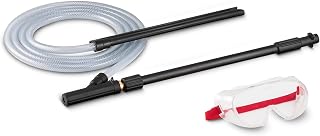


Choosing an advanced Kärcher pressure washer is less about buying the machine with the highest advertised pressure and more about matching the washer's performance class, water flow, controls, accessories and intended cleaning surfaces to the work you actually need to do. For Australian homes, that can mean anything from washing a family car and outdoor furniture to cleaning concrete paths, garden walls, patios, fences and larger exterior areas.
Kärcher's home-and-garden range is organised into performance classes such as K 2, K 3, K 4, K 5 and K 7. The higher classes generally provide greater cleaning capability, but a larger machine is not automatically the best choice for every household. Kärcher's published performance information shows why pressure, water flow and usable cleaning area should be considered together rather than treating maximum bar pressure as the only specification that matters.
Exact configurations, accessories and model availability can vary between markets and retailers, so Australian shoppers should verify the specification of the particular model number before purchasing rather than assuming every K-class machine has identical equipment.
Kärcher's performance-class approach is useful because it puts the machine's capability into context. Published specifications for the range show a progression from the compact K 2 class through K 3, K 4 and K 5, with higher classes generally offering increased pressure and water flow. Kärcher's published comparison data lists indicative maximum pressure figures of 110 bar for K 2, 120 bar for K 3, 130 bar for K 4 and 145 bar for K 5, alongside increasing area performance and water-flow capability.
These figures should be treated as a way to understand the product class rather than as a guarantee of real-world cleaning speed on every surface. Nozzle design, distance from the surface, dirt type, detergent, surface cleaner, water supply and operator technique can all influence results.
K 2 machines are generally suited to smaller, less demanding cleaning jobs. They make sense when the pressure washer will be used occasionally for garden furniture, garden tools, bins, balconies or similar tasks.
A compact washer can also be easier to store and transport. If your typical job is a quick clean rather than a large driveway or heavily soiled masonry, buying a substantially larger machine may add cost and bulk without providing a meaningful benefit for your routine work.
K 3 models occupy a useful middle ground for homeowners who need more capability than a lightweight entry-level machine but do not regularly clean large areas of heavily contaminated paving or masonry.
Typical applications can include bicycles, garden furniture, fences, garden equipment and smaller vehicles. For occasional domestic use, this class can offer a sensible balance between portability and cleaning capability.
K 4 machines are particularly relevant when a pressure washer needs to handle more than just light cleaning. Kärcher identifies K 4 applications including small vehicles, garden fences and bicycles, while the class can also be appropriate for broader outdoor household tasks.
The K 4 class is worth considering when your shopping list includes both delicate work, such as vehicle cleaning, and moderately stubborn dirt around outdoor areas. Adjustable pressure control becomes especially useful because the safest setting for painted surfaces is not necessarily the same setting required for hard masonry.
K 5 models are aimed at users who regularly encounter moderate to heavy dirt and larger cleaning jobs. Published Kärcher specifications for K 5 models include maximum pressure around 145 bar and water flow up to approximately 500 litres per hour, although exact figures and equipment depend on the model.
A K 5 can be a better fit than a smaller washer when the machine will be used for larger vehicles, stone walls, paths, outdoor areas or repeated cleaning sessions where additional performance can make the work more practical.
The K 7 class is designed for demanding home-and-garden applications. A current K 7 Smart Control specification, for example, lists maximum pressure of 180 bar, maximum water flow of 550 litres per hour and an area performance figure of 60 square metres per hour.
The important point is not simply that the K 7 has a higher maximum pressure. Its combination of pressure, water flow, motor design, accessories and control features makes it a more substantial machine. That can be advantageous for larger areas, but it can also mean more weight, storage requirements and equipment than a casual user actually needs.
One of the most common pressure washer buying mistakes is comparing machines exclusively by bar rating. Pressure describes the force available at the working point, but water flow determines how much water is delivered during cleaning. Both contribute to practical cleaning performance.
For example, a washer intended for a small garden chair does not necessarily need the same water delivery as a machine used to clean extensive paving. More capable equipment can move loosened dirt and debris away from the working area more efficiently, particularly when cleaning larger surfaces.
For commercial-intent searches such as “best Kärcher pressure washer for driveway cleaning” or “best Kärcher for car washing”, the most useful comparison therefore involves the complete cleaning system rather than one headline number.
Australian conditions can create a wide variety of pressure-washing requirements. Coastal homes may deal with salt residue, outdoor areas can accumulate dust and organic matter, and paved surfaces may develop moss, algae or embedded grime depending on local conditions. Vehicle owners may also want a pressure washer for routine car washing while avoiding unnecessarily aggressive cleaning.
For vehicle cleaning, adjustable pressure is more important than simply choosing the highest-power machine. Paint, trim, badges, seals, wheels and sensitive components do not all require the same treatment.
A suitable Kärcher setup should ideally allow the user to control the working pressure, maintain an appropriate distance and use an appropriate vehicle detergent. A wide spray pattern is generally more appropriate for broad painted surfaces than an aggressive concentrated jet.
Pressure washing should never be treated as a substitute for correct vehicle-washing technique. Dirt particles can contribute to surface scratching when they are dragged across paint, so pre-rinsing, appropriate detergent and suitable washing tools remain important.
Hard concrete and paving can tolerate more aggressive cleaning than many painted or delicate surfaces, but the surface is still not indestructible. Excessive pressure or concentrating the nozzle too closely can mark some materials, remove loose surface material or create visible cleaning patterns.
For broad flat areas, a compatible surface cleaner can be more practical than relying on a narrow spray lance. Surface cleaners distribute the cleaning action across a wider area and can reduce splash compared with working a concentrated jet back and forth.
Patios often contain a mixture of hard and relatively sensitive materials. Before pressure washing, identify whether the surface is concrete, natural stone, painted material, timber, composite material or another finish.
Adjustable pressure is particularly valuable here. A machine with substantial maximum capability can still be used responsibly if the user selects an appropriate pressure and nozzle for the surface.
Garden furniture varies enormously. Powder-coated metal, plastic, timber and composite furniture should not automatically be treated with the same spray pattern or pressure.
For lightweight furniture, the objective is usually to remove surface dirt rather than maximise impact. A broader spray pattern, suitable detergent and sensible working distance can be more important than having the most powerful Kärcher available.
Fences and walls require careful attention to material condition. Weathered timber, loose paint, mortar joints and deteriorated surfaces can be damaged by aggressive cleaning.
Hard masonry may tolerate considerably more cleaning force, but even masonry should be approached progressively. Start with a less aggressive setting and increase the cleaning intensity only when the surface demonstrates that it can tolerate it.
Advanced Kärcher models increasingly focus on helping users select an appropriate cleaning setting rather than leaving every decision to trial and error.
Power Control systems can provide more direct control over the selected pressure. Smart Control models take this further by integrating electronic controls and, on supported models, smartphone connectivity.
The Kärcher K 7 Smart Control, for example, can connect to the Kärcher Home & Garden app via Bluetooth. Kärcher describes an application consultant that provides guidance for different cleaning situations, while its G 180 Q Smart Control spray gun includes an LCD display.
These features are particularly useful for households where the pressure washer will be used across multiple surfaces. They are less important if the machine will perform one simple task at a consistent setting.
The spray lance is one of the most important parts of the pressure washer because it determines how the available cleaning power reaches the surface.
A Vario Power spray lance allows the user to adjust the working pressure by changing the lance setting. This is useful when moving between different surfaces because a vehicle, fence and masonry surface should not necessarily be cleaned with identical force.
A Dirt Blaster uses a rotating concentrated jet designed for stubborn dirt. It can be highly useful on suitable hard surfaces, but it should not be treated as an all-purpose nozzle.
Using a concentrated rotating jet on delicate paint, soft timber or sensitive finishes can create unwanted damage. Always follow the surface manufacturer's guidance and Kärcher's instructions for the particular accessory.
Kärcher's Multi Jet accessories are designed to combine multiple spray functions into one lance. For compatible K 4 and K 5 models, the 4-in-1 Multi Jet provides different spray modes including a high-pressure flat spray, rotary nozzle, detergent spray and wider flat jet.
The main advantage is convenience. Instead of repeatedly changing separate lances, the user can select the required spray type from the compatible multi-function accessory.
A standard spray lance is versatile, but it is not always the fastest way to clean a large flat surface. Surface cleaners are designed to cover a broader area while helping contain spray and distribute the cleaning action.
Accessory compatibility matters. A surface cleaner designed for one Kärcher performance class should not automatically be assumed to fit every Kärcher pressure washer.
Pressure alone does not always provide the best cleaning result. Detergent can help loosen traffic film, grease, organic contamination and other residues before the final rinse.
Kärcher uses its Plug & Clean system on various models, allowing compatible detergent containers to be connected directly to the machine. This can simplify detergent changes, particularly for users who switch between different cleaning tasks.
Always use detergents that are suitable for the pressure washer and the surface being cleaned. A stronger detergent is not automatically a better detergent, and incorrect chemical use can affect finishes, vegetation, painted surfaces or drainage systems.
Motor construction becomes increasingly relevant as pressure washer performance rises. Kärcher states that selected K 4, K 5 and K 7 models use water-cooled asynchronous motors, with water cooling helping manage motor temperature during operation.
For buyers comparing models that appear similar on paper, motor design, duty expectations, pump construction, cooling and the manufacturer's maintenance requirements can provide more useful information than cosmetic differences.
A high-performance pressure washer consumes more electrical power and water than a lightweight model may use. If the machine is only needed for occasional small cleaning jobs, the additional capability may not justify the extra size or operating requirements.
The best purchase is therefore the machine that provides enough capability for the largest jobs you realistically expect to perform without making routine use unnecessarily cumbersome.
Hose length is an easily overlooked specification. A longer high-pressure hose can reduce how often the main machine has to be moved, which is particularly useful around vehicles and large outdoor areas.
However, longer is not universally better. Hose management becomes increasingly important as length increases, and a poorly stored hose can become awkward to handle.
Also consider the electrical supply. Australian users should confirm that the exact model is intended for the local electrical system and that the installation, extension arrangements and operating environment comply with the manufacturer's requirements and applicable safety guidance.
Pressure washers depend on an adequate water supply. Before buying, check the machine's inlet requirements and make sure the available hose, tap and water supply can support the intended operation.
Some Kärcher performance classes can also be operated with alternative water sources when the specific model supports water suction. This can be useful in appropriate circumstances, but it should only be done according to the model's instructions and with a suitable clean water source.
Do not assume that a rainwater tank, barrel or other reservoir can automatically be connected to every pressure washer. Pump protection, water cleanliness, inlet configuration and suction capability all need to be considered.
Maximum pressure is only one part of cleaning performance. Water flow, nozzle selection, cleaning width and accessories can be equally important.
A more powerful washer does not make sensitive surfaces safer to clean. It simply gives the user more available cleaning force, which must be controlled correctly.
A pressure washer can become substantially more useful when paired with suitable lances, surface cleaners, vehicle accessories and detergent systems. Check compatibility with the exact model number before purchasing an accessory.
A large pressure washer with a long hose and multiple accessories requires more storage space than a compact machine. Measure your available storage area before choosing an advanced model.
Kärcher uses performance classes and different equipment levels. Two machines that both carry a K-class number may differ in hose length, spray gun, included accessories, control system and convenience features.
If you routinely clean a large driveway, patio or exterior area, prioritise practical area performance and accessory compatibility. If you only clean a bicycle and garden furniture, maximum performance may be unnecessary.
A Dirt Blaster or concentrated jet can be useful for appropriate stubborn dirt, but it is not the correct choice for every surface. Begin conservatively and increase cleaning intensity only when appropriate.
When two models appear similar, use a structured comparison rather than focusing on price alone.
The K 4 and K 5 classes are among the most relevant choices for homeowners who want a capable all-round pressure washer without automatically moving to the largest domestic class.
Kärcher's published performance information places K 4 below K 5 in both pressure and water-flow capability. K 4 is suited to moderate household cleaning and vehicles, while K 5 is better positioned for larger areas and heavier domestic cleaning requirements.
Choose K 4 when portability, moderate cleaning and controlled versatility are priorities. Consider K 5 when larger outdoor areas, heavier dirt and more frequent demanding cleaning are part of the expected workload.
The K 5-to-K 7 decision is primarily about how much cleaning capability you genuinely need. A K 7 can provide substantially higher maximum pressure and water flow than many K 5 configurations, making it attractive for demanding outdoor work.
However, the K 7's additional capability may not be necessary for routine car washing, furniture cleaning and occasional small patio maintenance. The K 5 can be the more proportionate choice when those tasks make up most of the workload.
For large properties, extensive hard surfaces or users who expect to perform substantial cleaning work, the additional capacity of a K 7 becomes easier to justify.
Car-focused buyers should prioritise control and accessory compatibility rather than simply maximum pressure. A good setup should make it easy to rinse loose dirt, apply suitable detergent and perform controlled cleaning without exposing paintwork to unnecessarily aggressive impact.
Consider a machine with adjustable pressure, an appropriate vehicle detergent system and accessories designed for vehicle cleaning. A foam or detergent application accessory can be useful for pre-washing, while suitable soft washing equipment should be used for contact cleaning.
Wheels and tyres can require different cleaning approaches from painted panels. Brake dust and road contamination may need appropriate chemical treatment rather than simply increasing pressure.
Driveways reward a different set of features. Cleaning speed, water flow and broad-area accessories become more important when the surface covers many square metres.
A surface cleaner can help produce a more uniform result than repeatedly moving a narrow spray pattern across concrete. For stubborn spots, targeted cleaning may still be required after the main pass.
Before pressure washing, inspect the driveway for damaged concrete, loose aggregate, cracks, deteriorated joints and areas where previous coatings may be vulnerable.
For patios, identify the surface before selecting a pressure setting. Concrete pavers, natural stone, painted surfaces and timber decking each have different tolerances.
Use a broad cleaning method where appropriate, avoid holding a concentrated jet too close to the surface and test an inconspicuous area before cleaning the entire patio.
If detergent is required, verify that it is compatible with the surface and that runoff can be managed appropriately.
Regular care can help keep a pressure washer operating reliably. Maintenance should always follow the exact instructions supplied with the model.
An advanced pressure washer is not defined solely by maximum pressure. The more useful definition is a system that gives the user better control over cleaning power, broader accessory compatibility, easier detergent application, more convenient storage and, on selected models, digital assistance.
For example, a Smart Control machine can provide application guidance through a connected app, while Power Control models focus on helping users select the appropriate cleaning level. Premium configurations may add convenience features such as hose reels, expanded accessory packages or more sophisticated spray equipment.
These features are valuable when they solve a real problem. If a buyer already knows which pressure and accessory combination is appropriate for a simple cleaning routine, paying extra for digital guidance may provide little practical benefit.
When cleaning performance is disappointing, increasing pressure should not automatically be the first solution. Better results can often come from improving the cleaning process.
Retail prices can make one pressure washer appear dramatically better value than another, but the equipment package needs to be considered. A lower-priced machine may include fewer accessories, while a higher-priced package may include a surface cleaner, additional lances or detergent.
When comparing Australian listings, record the exact model number, maximum pressure, water flow, hose length, included spray equipment, detergent system and included accessories. Then compare the complete package rather than the headline price.
Also check whether the listing is for a current Australian configuration or an imported variant. Electrical specifications, plugs, included accessories, manuals and warranty arrangements can differ between regional versions.
For an affiliate-style buying decision, compare the exact model specification across reputable Australian retailers and marketplaces. Check the current product description, included accessories, customer feedback, delivery terms, warranty information and today's price before placing an order.
Do not rely on an old review or a generic K-class description when the retailer is listing a specific model. Model numbers can identify meaningful differences in equipment and configuration.
There is no single best model for every Australian household. K 4 and K 5 models are particularly relevant for many general domestic applications, while K 2 and K 3 are better suited to lighter workloads and K 7 models are aimed at more demanding cleaning. The right choice depends on surface types, cleaning frequency, area size and desired accessories.
No. Maximum pressure is only one part of pressure washer performance. Water flow, spray pattern, nozzle design, cleaning width, detergent and technique also influence the result. Higher pressure can also increase the risk of damage when used incorrectly on sensitive surfaces.
K 5 is a higher-performance class, but that does not make it automatically better for every user. K 4 can be the more proportionate choice for moderate domestic cleaning, while K 5 makes more sense when larger areas and heavier cleaning are regular requirements.
It can be, depending on how the machine will be used. A K 7 provides substantial cleaning capability, but car washing often benefits more from controlled pressure, suitable spray equipment and correct washing technique than from maximum available power.
Yes, suitable Kärcher models can be used for appropriate concrete-cleaning tasks. However, the correct pressure, nozzle and distance depend on the condition and finish of the concrete. Test an inconspicuous section first when the surface condition is uncertain.
Yes. Kärcher identifies vehicle cleaning among the applications for several of its home-and-garden pressure washer classes. Use an appropriate spray pattern, sensible pressure, suitable vehicle detergent and safe working distance.
Not necessarily, but a compatible surface cleaner can be worthwhile if you regularly clean large patios, paths or driveways. It can make broad-area cleaning more convenient and consistent than using a narrow spray jet alone.
Smart Control is a technology-oriented control system used on selected Kärcher pressure washers. The K 7 Smart Control, for example, includes a Smart Control spray gun with an LCD display and Bluetooth connectivity to the Kärcher Home & Garden app, where an application consultant provides cleaning guidance.
Power Control models are designed to give users greater control over cleaning pressure. Depending on the specific model, this can include a Power Control spray gun and application guidance through the Kärcher Home & Garden app.
Where a particular Kärcher model uses a water-cooled motor, the design is intended to help manage motor temperature. Kärcher uses water-cooled asynchronous motors in selected K 4, K 5 and K 7 models. Compare the complete machine specification rather than choosing solely on motor terminology.
Hose length affects convenience and working radius. A longer hose can reduce how frequently the machine needs to be moved around a vehicle or large outdoor area, although it also requires sensible storage and handling.
Follow the maintenance schedule and procedures supplied with the exact model. Basic care commonly includes inspecting hoses and connectors, keeping the water filter and nozzles clean, rinsing accessories when appropriate and storing the machine correctly.
The strongest way to choose an advanced Kärcher pressure washer in Australia is to start with the work rather than the product name. List the surfaces you intend to clean, estimate the largest area, determine how frequently the machine will be used and decide which accessories would genuinely save time.
For light domestic tasks, a compact K 2 or K 3 can be sufficient. For versatile household cleaning and vehicle work, K 4 deserves close consideration. K 5 becomes more attractive when cleaning areas are larger or dirt is more demanding, while K 7 is aimed at users who need a higher level of domestic cleaning performance.
Among the advanced features, Power Control can be valuable when surface-specific pressure adjustment is important, while Smart Control is more compelling for users who want digital guidance and connected controls. Comfort-focused configurations can also make sense when storage, hose management and included accessories are major priorities.
Before buying, verify the exact model number, Australian electrical specification, current accessory package, hose length, water-flow rating, maximum pressure and compatibility with any additional accessories you intend to purchase. Then compare current retailer listings and verified customer feedback for the precise configuration.
The best Kärcher pressure washer is ultimately the one whose performance, control system, accessories and physical size match the cleaning jobs you will actually perform. Buying according to those criteria is more useful than simply choosing the most powerful machine in the range.