

♥ Wishlist
Compare 20 Makita Angle Grinders Australia products in Australia. Reviews, ratings, pros, cons and buying advice updated for October 2026.


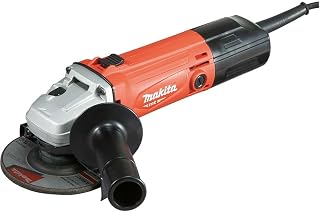


Choosing an advanced Makita angle grinder is less about finding the most powerful-looking model and more about matching the grinder to the material, disc size, operating environment, battery platform, switch design and workload. Makita's current grinder range spans compact 18V LXT models, higher-output 40Vmax XGT machines and corded options, with substantial differences in speed control, switch configuration, protection features and accessory compatibility.
For Australian buyers, the most useful comparison starts with the job rather than the model number. A grinder used occasionally for cutting bolts or cleaning welds has different priorities from one used throughout the day for fabrication, construction, masonry or metal preparation. Battery availability, authorised local supply, replacement accessories and the total cost of entering an existing battery platform can also influence the better choice.
The two cordless platforms are particularly important when comparing advanced Makita angle grinders. The 18V LXT family offers a broad ecosystem for users who already own compatible batteries and chargers, while 40Vmax XGT models are designed around higher-demand applications and include several advanced grinder configurations.
Makita 18V LXT grinders can make sense when you already have an LXT battery collection. Models in the DGA range include brushless motors, electronic control systems and different switch configurations depending on the version. The DGA504, for example, is a 125mm 18V brushless grinder with an 8,500rpm no-load speed and automatic speed control. :contentReference[oaicite:0]{index=0}
The XGT range includes advanced 125mm brushless grinders such as the GA005G and variable-speed models such as the GA023G. Makita's current comparison information shows that the 40Vmax XGT 125mm family includes slide-switch, paddle-switch, variable-speed, X-Lock, high-output and flat-head configurations. :contentReference[oaicite:1]{index=1}
Disc diameter determines the class of work the grinder is designed to perform. A 125mm grinder is a particularly versatile size for general metalworking, fabrication, construction maintenance and cutting applications. It can accept compatible grinding wheels, cut-off wheels and other accessories when the specific guard and accessory requirements are satisfied.
Do not assume that a larger disc automatically makes a grinder better. A larger grinder can add weight and bulk, while a compact 125mm machine can be easier to position accurately. For many general-purpose users, 125mm is a useful middle ground.
No-load speed is expressed in revolutions per minute and describes how quickly the spindle rotates without a cutting or grinding load. It should never be considered in isolation. The accessory must be rated for the grinder's operating speed, and the correct wheel type and diameter must be used.
Many Makita 125mm cordless grinders operate around 8,500rpm, while selected variable-speed models provide a range around 3,000 to 8,500rpm. The ability to reduce speed can be useful when an application or accessory calls for greater control rather than maximum rotational speed. :contentReference[oaicite:2]{index=2}
Variable-speed control is one of the features that can distinguish an advanced grinder from a basic general-purpose model. Instead of operating at a single maximum speed, the user can select a more appropriate operating range for the accessory and material.
This can be valuable for tasks such as surface preparation, finishing and certain polishing-related applications where maximum speed is not always desirable. It does not mean that every variable-speed grinder is automatically superior; it means that the grinder offers greater control when the application benefits from it.
Brushless motors are common throughout Makita's cordless professional grinder range. The absence of conventional motor brushes reduces one source of mechanical wear and allows electronic motor management to be integrated into the tool's design.
For buyers comparing two otherwise similar cordless grinders, a brushless motor can be an important long-term ownership consideration. However, motor technology should be evaluated alongside battery platform, protection electronics, switch design, ergonomics and the intended workload.
Makita uses Active Feedback sensing Technology, commonly abbreviated as AFT, on selected grinders. The system is designed to stop the motor when it detects a sudden stoppage or related rotational feedback condition. It is a protective electronic feature rather than a substitute for correct handling, appropriate accessories or safe working practices.
Selected 40Vmax XGT grinders, including the GA005G, incorporate AFT along with other electronic protection features. :contentReference[oaicite:3]{index=3}
Some Makita grinders use Automatic Drive Technology or related electronic control to adjust operating behaviour according to load. The DGA504, for example, is specified with automatic speed control intended to adjust speed and torque during operation. :contentReference[oaicite:4]{index=4}
This type of control is particularly relevant when the grinder encounters changing resistance. Rather than judging performance solely by maximum rpm, buyers should consider how the tool manages changing loads during real work.
An anti-restart function is another useful feature to check. Its purpose is to prevent unintended startup following a power interruption or similar event while the switch remains in a particular position. Makita includes anti-restart protection on selected cordless grinder models.
A braking system can reduce the time the accessory continues rotating after the grinder is switched off. This can be valuable when moving between cuts, repositioning the tool or working in confined areas. Not every grinder has the same braking specification, so buyers should verify the exact model rather than assuming every Makita grinder includes it.
Soft-start technology gradually brings the motor up to operating speed rather than producing an abrupt full-speed start. This can improve controllability during startup and make the tool feel more manageable when beginning a cut or grinding operation.
Selected Makita cordless grinders use Extreme Protection Technology, or XPT, which is designed to improve resistance to dust and water under specified working conditions. It should not be interpreted as making a power tool waterproof or suitable for unrestricted exposure to water.
The switch design deserves more attention than it often receives in buying guides because it affects how the grinder is started, operated and released.
A slide-switch grinder can be convenient for applications where a continuous operating position is preferred. Some models use lock-on functionality, allowing the grinder to remain running without continuously holding a trigger.
The important consideration is whether the switch layout feels appropriate for the positions in which the grinder will be used. Buyers should also consider how easily the tool can be shut down and whether gloves or restricted hand positions will affect switch access.
Paddle-switch grinders are operated through a switch positioned around the handle area. They can be attractive for users who prefer a different method of maintaining control over the tool during grinding and cutting.
Makita offers both slide-switch and paddle-switch versions across its cordless grinder platforms, including 18V LXT and 40Vmax XGT families. :contentReference[oaicite:5]{index=5}
Selected Makita grinders use X-Lock, while conventional models use traditional spindle and lock-nut arrangements. X-Lock is designed around a tool-free accessory mounting system that can make accessory changes faster when compatible X-Lock accessories are available.
Conventional mounting remains highly versatile because compatible grinding and cutting accessories are widely established across the power-tool market. The better system depends on the accessories you already own and the frequency with which you change discs.
There is no single best Makita grinder for every Australian buyer. The following model families illustrate how different specifications can change the buying decision.
The DGA504 is a 125mm 18V LXT brushless grinder with an 8,500rpm no-load speed. Its automatic speed-control system adjusts speed and torque according to operating conditions. :contentReference[oaicite:6]{index=6}
It is a logical model to investigate for users who want a general-purpose 18V LXT grinder and already have compatible batteries. Buyers should still compare it with newer or more feature-rich LXT alternatives before purchasing.
The DGA513 is a 125mm 18V LXT brushless variable-speed grinder. Makita's published comparison data lists an operating range of approximately 3,000 to 8,500rpm. :contentReference[oaicite:7]{index=7}
The key reason to consider this type of model is control rather than simply maximum output. Variable speed can make the grinder more adaptable to different accessory and material requirements.
The DGA517 and DGA519 represent paddle-switch variants within Makita's 18V LXT 125mm grinder family. The DGA519 adds X-Lock functionality, making it particularly relevant for users who prioritise fast accessory changes and want the corresponding mounting system. :contentReference[oaicite:8]{index=8}
The GA005G is a 40Vmax XGT 125mm brushless slide-switch grinder. Published specifications list an 8,500rpm no-load speed, 125mm wheel capacity and a design intended for demanding professional use. It also incorporates AFT, soft start, braking and XPT-related features. :contentReference[oaicite:9]{index=9}
For a buyer already using XGT batteries, this type of grinder deserves serious consideration where higher-demand cordless work is expected.
The GA023G is a 40Vmax XGT 125mm variable-speed slide-switch grinder. Makita's current comparison information places its speed range at approximately 3,000 to 8,500rpm. :contentReference[oaicite:10]{index=10}
This configuration is particularly interesting for users who want the XGT platform but also value variable-speed control.
When two grinders appear almost identical on paper, use a structured comparison rather than choosing purely by price or advertised power.
Many Makita cordless tools are sold as tool-only products, commonly identified by a Z suffix in model naming. This can be economical for someone who already owns compatible batteries and a charger.
For a first-time user of a battery platform, however, the lowest advertised grinder price may not represent the lowest total cost. A complete kit can include batteries and a charger, while a skin may require those components to be purchased separately.
Battery capacity should be considered alongside tool demand. A higher-capacity battery can provide greater energy storage, but it can also affect the overall weight and balance of a handheld grinder.
For frequent overhead work, a lighter configuration may be preferable to maximising battery capacity. For extended heavy grinding, the additional runtime of a larger compatible battery may be more important. There is therefore no universally ideal battery size.
Also remember that published battery runtimes can vary substantially with material, disc type, pressure, cutting depth, temperature and working technique. Avoid treating a manufacturer's runtime figure as a guaranteed number for your particular job.
The grinder is only part of the cutting or grinding system. The wheel, disc or accessory must match the grinder's diameter, spindle arrangement, speed rating and intended application.
For weld cleanup, edge preparation and general metal grinding, a 125mm grinder offers a useful combination of accessibility and material-removal capability. Disc selection, abrasive type and operator technique can have as much effect on the result as the grinder itself.
Cutting applications require a suitable cut-off wheel and the correct guard and operating procedure. The grinder should be allowed to perform the work without excessive lateral force. Users should follow the instructions supplied with both the grinder and cutting accessory.
Variable-speed grinders can be worth considering for applications involving different abrasive accessories or surface-finishing requirements. Lower operating speeds can provide greater control where the accessory and application permit it.
Concrete and masonry can generate significant dust. If the intended application involves substantial dust production, buyers should investigate compatible dust-management accessories and the manufacturer's specified equipment for the exact grinder. XPT should not be treated as a dust-extraction system.
A grinder can have excellent electrical specifications and still be uncomfortable for prolonged use. The shape of the motor housing, circumference of the grip, side-handle position, battery placement and overall balance all affect handling.
Weight should also be evaluated with the battery installed. A bare-tool specification can make two cordless grinders appear similar even though their working configurations feel substantially different once the battery is attached.
For frequent use, consider whether the grinder allows a stable two-handed grip, whether the controls can be reached without changing hand position and whether the tool's centre of gravity feels manageable for the intended task.
Maximum rpm does not tell you how well a grinder will perform under load, how controllable it will be or whether it is appropriate for your accessories. Look at the complete specification and application requirements.
Buying into a new cordless platform solely because the grinder appears attractive can create additional battery and charger costs. Existing Makita users should first identify which battery ecosystem they already have.
A tool-only grinder may not include a battery, charger or case. Always inspect the exact package contents before comparing offers.
Two 125mm grinders can differ significantly in switch type, variable-speed control, accessory mounting, protection electronics and battery platform.
If your workshop already contains conventional grinding wheels and cut-off discs, switching to an X-Lock model may change which accessories you need. Conversely, X-Lock can be appealing when quick accessory changes are a priority.
For an expensive professional tool, it is sensible to verify that the model is intended for the Australian market and to understand the applicable warranty requirements. Makita Australia's MyMakita service currently states that selected new cordless skins can qualify for a five-year limited warranty when registered online within 30 days of the tax invoice date, subject to the applicable terms and conditions. :contentReference[oaicite:11]{index=11}
Price comparisons should be made on an equivalent configuration. A grinder sold without a battery should not be directly compared with a kit containing batteries and a charger.
Independent buying guides are useful for narrowing the field, but the final specification check should be made against the exact model. Makita's published comparison resources demonstrate how many closely related grinder configurations exist, including differences in switch type, speed range, X-Lock compatibility and electronic features. :contentReference[oaicite:12]{index=12}
Australian buyers should also confirm that the exact model number corresponds to the local-market product rather than relying on specifications copied from another country's listing. Accessories and package contents can differ between markets.
Routine care can help preserve the tool and identify problems before they become more serious.
Angle grinders are high-speed cutting and grinding tools and require appropriate personal protective equipment and safe operating procedures. The exact requirements depend on the material, accessory and workplace.
An 18V LXT model is a strong candidate for buyers who already own compatible Makita batteries and need a versatile cordless grinder for general fabrication, maintenance, construction or workshop tasks. The range is broad enough to offer fixed-speed, variable-speed, slide-switch and paddle-switch configurations.
For occasional DIY users, an 18V grinder can also make sense when its battery ecosystem will be used for other tools. The key is to evaluate the entire platform rather than treating the grinder as an isolated purchase.
A 40Vmax XGT grinder is worth considering when cordless performance is a major priority and the user is prepared to invest in the XGT ecosystem. The platform includes multiple 125mm grinder configurations, including fixed-speed and variable-speed versions and different switch and accessory systems. :contentReference[oaicite:13]{index=13}
For someone who already owns XGT batteries, the decision is particularly straightforward because the battery platform cost has effectively already been addressed. For a new buyer, however, the cost of batteries and chargers should be included in the overall comparison.
Cordless technology is convenient, but corded grinders remain relevant where continuous access to mains power is available and maximum runtime is more important than portability.
A corded model can be attractive for a fixed workshop or fabrication environment where the grinder is used frequently and there is little need to move around a job site. Makita's broader grinder range includes corded 125mm machines alongside its cordless models. :contentReference[oaicite:14]{index=14}
The best advanced Makita angle grinder for 2026 is the one whose specifications solve the actual problem you need to perform. For many users, a 125mm 18V LXT model will provide an excellent balance of portability and platform compatibility. Users seeking more demanding cordless capability may prefer the 40Vmax XGT family, while variable-speed models are worth closer examination when accessory and material requirements vary.
Do not make the decision solely from a model number, advertised rpm or headline discount. Compare the complete tool configuration, battery platform, switch design, protection features, accessory system, weight and intended workload. Then verify the exact Australian model and current package contents before purchasing.
There is no universal best model. A 125mm 18V LXT grinder is a sensible starting point for many general-purpose users, particularly those who already own compatible LXT batteries. Buyers needing more demanding cordless performance should compare the 40Vmax XGT range as well.
An 18V Makita grinder can be suitable for a wide range of cutting, grinding and fabrication tasks. Suitability depends on the material, accessory, workload and model. Heavy continuous work may justify comparing higher-output XGT models.
Not automatically. XGT offers a range aimed at higher-demand cordless applications, while LXT provides a mature and extensive 18V ecosystem. The better choice depends on your workload and which battery platform you already use.
For many general-purpose applications, 125mm is a versatile size. It provides a useful compromise between cutting capacity, accessibility and tool size. Larger grinders are more appropriate when the application specifically requires a larger wheel.
They can be worthwhile when you regularly use accessories or materials that benefit from different operating speeds. If your work consists mainly of straightforward grinding and cutting at the recommended accessory speed, a fixed-speed model may be sufficient.
Both are 125mm 18V LXT brushless grinder configurations, but the DGA513 adds variable-speed capability. Published Makita comparison information lists the DGA513 at approximately 3,000 to 8,500rpm, whereas the DGA504 is listed at 8,500rpm no-load speed. :contentReference[oaicite:15]{index=15}
Both are 18V LXT 125mm paddle-switch variable-speed grinder configurations. The DGA519 is the X-Lock version, while the DGA517 uses conventional accessory mounting. :contentReference[oaicite:16]{index=16}
X-Lock uses a dedicated tool-free accessory mounting approach, while conventional Makita grinders use a traditional spindle and locking arrangement. The better choice depends on accessory availability and how frequently you change discs.
Not necessarily. Many Makita cordless grinder listings are available as tool-only configurations. Always check the exact model suffix and package contents before purchasing.
Makita Australia provides warranty arrangements subject to its applicable terms. Its MyMakita service currently states that selected new cordless skins can qualify for a five-year limited warranty when registered online within 30 days of the tax invoice date, subject to the stated conditions. Buyers should verify the current terms for the exact product before relying on a warranty period. :contentReference[oaicite:17]{index=17}
There is no single service interval that applies to every grinder and every workload. Follow the manufacturer's maintenance instructions and arrange inspection or servicing when the tool develops unusual noise, vibration, electrical behaviour, overheating or other faults.
Using an appropriate Australian retail channel can make it easier to verify the exact local model, package contents, purchase documentation and applicable warranty arrangements. Compare reputable retailers rather than choosing solely on the lowest headline price.
Product specifications, retailer pricing, package contents and promotional offers can change during 2026. Before making a purchase in Australia, verify the exact Makita model number, current specifications, included accessories, battery requirements and applicable warranty conditions.