

♥ Wishlist
Compare 52 Newborn Caulking Gun Hand Tool for Precise Sealing products in Australia. Reviews, ratings, pros, cons and buying advice updated for October 2026.


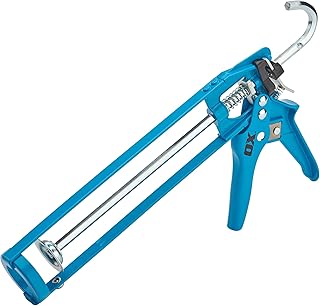
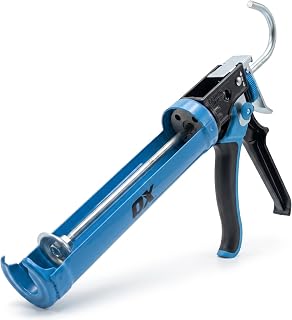


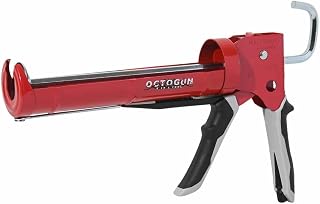


Choosing an advanced Newborn caulking gun is less about finding the most complicated hand tool and more about matching the gun's mechanical design to the sealant, adhesive, cartridge and application conditions. A caulking gun that feels excellent with a low-viscosity acrylic may be frustrating when used with a high-viscosity construction adhesive, polyurethane sealant or hybrid polymer product.
For Australian buyers, the selection process also deserves attention to cartridge compatibility, thrust ratio, trigger control, plunger design, barrel construction, nozzle access and the type of work being performed. Domestic maintenance, bathroom and kitchen sealing, carpentry, glazing, renovation, flooring and construction applications can all place different demands on a manual caulking gun.
This guide expands the buying considerations behind advanced Newborn caulking gun hand tools so you can compare specifications more intelligently, identify genuinely useful features and avoid paying for features that do not improve the type of work you actually perform.
Newborn is a recognised name in manual dispensing tools, with caulking guns designed around controlled material delivery rather than simply pushing a cartridge forward. The important distinction between basic and more advanced designs is usually the combination of mechanical advantage, trigger action, plunger control, frame construction and ergonomics.
A quality manual caulking gun should provide predictable forward movement of the plunger, enough mechanical advantage for the material being dispensed and sufficient control to stop the flow cleanly when the trigger is released. These characteristics become increasingly important when applying long, continuous beads where inconsistent pressure can create visible gaps, excessive material use or an uneven finished joint.
Thrust ratio is one of the most useful specifications to understand when comparing manual caulking guns. It describes the mechanical advantage provided by the trigger and plunger mechanism. Higher thrust ratios generally make it easier to dispense thicker materials, although the exact experience depends on the formulation, temperature, cartridge design and condition of the sealant.
For lightweight acrylic or similar easy-flow materials, an extremely high thrust ratio may not be necessary. For dense construction adhesives and high-viscosity sealants, additional mechanical advantage can reduce the force required at the trigger.
A strong dispensing mechanism is only useful if the operator can regulate it accurately. Trigger geometry, handle shape and the smoothness of the mechanical movement influence how easily you can maintain a consistent bead.
For detailed finishing work, a smooth trigger can be more valuable than simply choosing the highest available thrust ratio. If the mechanism feels jerky, maintaining a uniform bead can become difficult, particularly around corners, joints and changes in direction.
Before comparing individual Newborn caulking guns, check which cartridge format the model accepts. Manual dispensing tools can differ in their compatibility with standard cartridges, larger-volume cartridges, sausage packs or other dispensing formats.
The cartridge capacity is especially important because the wrong barrel configuration can make an otherwise excellent gun unsuitable for the material you intend to use. Do not assume that every manual caulking gun accommodates every sealant package.
Standard cartridges are common for household sealants, construction adhesives and many general-purpose products. A conventional open-frame caulking gun can be convenient when you regularly switch between different cartridges and want straightforward access to the nozzle and plunger.
If you regularly complete long sealing runs, a larger-capacity dispensing system can reduce interruptions. However, additional capacity can also increase tool size and weight. A larger gun is not automatically better for detailed work where manoeuvrability matters.
The plunger must correctly engage the rear of the cartridge. Look for specifications describing the plunger type and intended cartridge format rather than relying solely on photographs. Correct engagement helps the dispensing mechanism transfer force efficiently and can reduce unwanted movement of the cartridge during use.
One of the most visible differences between manual caulking guns is the frame design. Open-frame models expose more of the cartridge and can make loading, unloading and inspection straightforward. Enclosed or barrel-style designs can provide additional cartridge support and may feel more substantial during dispensing.
The better design depends on the material and application. Frame style should therefore be considered alongside cartridge compatibility and thrust ratio rather than treated as an isolated quality indicator.
The frame and mechanical components determine much of a caulking gun's durability and handling characteristics. When comparing advanced hand tools, pay attention to the materials used in the frame, plunger rod, trigger mechanism and other load-bearing components.
Steel can provide a rigid platform for dispensing higher-viscosity materials. A rigid frame can help keep the cartridge aligned as trigger pressure increases. Steel construction may also appeal to tradespeople who expect frequent use.
Aluminium can reduce weight while maintaining useful structural rigidity. It may be particularly attractive when the tool needs to be carried around a job site or used repeatedly above shoulder height.
Not every plastic component indicates poor quality. Engineered polymers can be useful for handles, grips and non-load-bearing components because they can reduce weight and improve comfort. The important question is where the material is used and whether the mechanical components are sufficiently robust for the intended application.
Caulking is often underestimated as a repetitive task. A single joint may take only a few minutes, but larger renovation projects can involve many metres of continuous sealing. Handle shape, trigger reach and tool balance can therefore influence comfort significantly.
The sealant itself should influence your choice of caulking gun. Product formulations vary considerably, and a manual gun that works well with one cartridge may require substantially more effort with another.
For relatively easy-flowing materials, excessive mechanical advantage may not provide a meaningful benefit. A moderate thrust mechanism can offer a better balance between force and control.
Silicone products vary in consistency, so the manufacturer's recommended application method and cartridge requirements should be checked. Smooth trigger action can be especially useful when creating neat joints around bathrooms, kitchens, windows and other finished surfaces.
Dense construction adhesives can demand considerably more force than lightweight sealants. A higher-thrust manual gun can make these applications easier, particularly when the adhesive is cold or naturally resistant to extrusion.
Polyurethane and hybrid formulations can have different dispensing characteristics from traditional acrylic and silicone products. Always compare the material's viscosity and packaging with the caulking gun's specifications before purchase.
Sealant consistency can change with temperature. Materials that dispense comfortably in one environment may become noticeably harder to extrude when cooler. Conversely, warmer conditions can change flow characteristics and influence how quickly a bead spreads.
This is relevant in Australia because application conditions can vary considerably between indoor rooms, shaded outdoor areas, exposed construction sites and hot surfaces. Rather than selecting a caulking gun solely according to the material name, consider the conditions in which you expect to use it.
The dispensing gun is only part of the finished result. Nozzle preparation has a major influence on bead size and shape. Cutting the nozzle too close to the tip can create an excessively narrow opening, while cutting too far down can produce more material than necessary.
The angle of the cut can also influence how the nozzle travels along the joint. For many applications, a consistent opening and controlled tool movement are more important than simply applying more pressure to the trigger.
Use the smallest practical opening that can deliver the required bead without excessive trigger force. A larger opening is not necessarily faster because it can increase material consumption and make finishing more difficult.
Try to coordinate trigger pressure and movement speed. Increasing trigger pressure while slowing the gun can create a thicker bead, while moving too quickly without sufficient material flow can produce gaps.
Pressure-release behaviour is another useful specification when comparing manual caulking guns. After the trigger is released, residual pressure inside the cartridge can continue forcing material through the nozzle. A suitable pressure-release mechanism can help reduce unwanted dripping.
However, drip control does not replace good application technique. The nozzle should still be positioned and moved deliberately, and excess material should be addressed before it cures according to the sealant manufacturer's instructions.
When shopping for an advanced Newborn caulking gun, separate genuinely useful features from features that merely make a product appear more sophisticated.
Newborn is not the only manufacturer worth considering when comparing manual dispensing tools. Depending on the application and availability in Australia, buyers may also encounter brands such as Albion, Cox and Tajima. Milwaukee is another established tool brand that may be relevant when comparing dispensing equipment across a broader tool collection.
The objective should not be to select a brand simply because it is familiar. Compare the specific model's cartridge compatibility, thrust ratio, frame construction, ergonomics and dispensing mechanism.
Newborn models can be worth investigating when you specifically want a manual dispensing tool designed around controlled cartridge application and different levels of mechanical advantage. Compare each model individually because specifications and intended applications can differ.
Albion is another name to consider in professional dispensing equipment. Buyers comparing higher-force manual guns should examine the exact thrust mechanism and cartridge format rather than making a decision based solely on brand reputation.
Cox dispensing equipment can be relevant for users looking beyond basic household caulking guns. When comparing a Cox model with a Newborn model, focus on application requirements, packaging compatibility and mechanical design.
Tajima offers a range of hand tools, including dispensing tools. Its products may appeal to users who value compact tool design and established hand-tool engineering, but the appropriate model still depends on the sealant and cartridge format.
Before choosing a model, work through the following checklist rather than relying only on star ratings or product photographs.
More mechanical advantage is not always better. If the material is easy to dispense, an extremely high thrust mechanism may make fine control less intuitive. Match the dispensing force to the material.
A caulking gun can have excellent construction and still be unsuitable if it cannot correctly accept the cartridge format you need. Always check the manufacturer's specifications.
Customer reviews can reveal useful information about comfort, handling and recurring problems, but they should be interpreted alongside technical specifications. A product can receive positive feedback from users working with a completely different material or application.
A heavier tool is not automatically stronger or more durable. Construction quality, mechanical design and material selection matter more than weight alone.
A technically capable caulking gun can still be a poor choice if the handle is uncomfortable or the trigger requires awkward finger positioning. Consider how long and how frequently you expect to use it.
The goal is not simply to force sealant from a cartridge. The goal is to create a controlled, continuous bead that can be tooled appropriately for the specific product. Trigger control and application technique therefore matter as much as raw dispensing force.
For bathroom and kitchen applications, precision and control can be more important than maximum mechanical force. Consider the joint size, sealant type, nozzle size and access around fixtures. A compact, controllable manual gun may be preferable when working in confined areas.
Window and door sealing can involve long runs and require a consistent bead. A smooth dispensing mechanism and comfortable grip can become important when maintaining a uniform application over extended distances.
Construction adhesives used in carpentry can be thicker than common household sealants. Compare the adhesive's viscosity with the gun's thrust ratio and cartridge compatibility before selecting a model.
For occasional household use, an extremely specialised professional dispensing mechanism may not be necessary. A reliable manual gun with appropriate cartridge compatibility, reasonable thrust and comfortable handling may provide better overall value.
Renovation work can involve several different sealants and adhesives. In this situation, versatility becomes particularly important. Consider whether the same tool can accommodate the cartridge formats you are likely to use rather than optimising exclusively for one product.
Frequent users should pay closer attention to ergonomics, mechanical smoothness, frame rigidity, component durability and cartridge loading speed. Small handling differences become more noticeable when a tool is used repeatedly throughout a working day.
When comparing a shortlist of ten advanced Newborn caulking gun options, use the same evaluation framework for every model. This prevents an inexpensive model with limited specifications from being compared unfairly with a professional high-thrust design.
Product specifications can appear confusing when several models use different terminology. Start with the cartridge format, then examine thrust ratio, frame construction, weight and dimensions. After that, look at additional features such as pressure release, rotating barrels and integrated tools.
Do not treat every specification as equally important. Cartridge compatibility is generally a prerequisite, while features such as a built-in nozzle cutter are convenience factors. Thrust ratio becomes particularly significant when dispensing dense materials, while ergonomics become increasingly important for repetitive use.
Proper cleaning can help maintain smooth operation and prevent cured sealant from interfering with the dispensing mechanism. The exact cleaning procedure should follow the instructions supplied by the caulking gun and sealant manufacturers.
A manual caulking gun is relatively simple to operate, but it still requires sensible handling. Always follow the safety information supplied with the specific sealant and dispensing tool.
Even the best manual caulking gun cannot compensate for poor surface preparation. Clean, dry and suitably prepared surfaces are important for sealant adhesion, subject to the requirements of the particular product.
Before applying the bead, determine the required joint size and prepare the cartridge nozzle accordingly. Hold the gun at a consistent angle and maintain steady movement. Apply enough material to fill the joint without creating unnecessary excess.
Tooling techniques vary by sealant. Always follow the manufacturer's instructions regarding working time, tooling, surface preparation and curing.
Advanced manual caulking guns remain useful because they provide direct control without requiring a battery, charger or compressed-air system. They are convenient for smaller projects, maintenance work and applications where portability matters.
A manual gun can also be a sensible choice when the amount of dispensing is relatively modest and the material does not justify an electric or pneumatic system. For repetitive professional work involving very large volumes, however, buyers may want to compare manual dispensing against powered alternatives based on productivity and operator fatigue.
Manual tools rely on hand pressure and mechanical advantage, while battery-powered dispensers use a motor to advance the material. Neither approach is universally superior.
If your primary requirement is a dependable hand tool for normal cartridge-based work, an advanced Newborn manual model may be more appropriate than automatically moving to a powered dispenser.
Customer ratings can be useful for identifying recurring themes, but they should not replace technical comparison. Look for repeated comments about trigger smoothness, cartridge loading, plunger engagement, leakage, frame rigidity and long-term handling rather than focusing on a single overall score.
It is also useful to check whether reviewers were using the same type of sealant or adhesive that you intend to use. A caulking gun that performs well with a relatively soft sealant may receive different feedback when used with a dense construction adhesive.
The most valuable features are those that directly improve your intended work. If you occasionally seal small household joints, advanced mechanical features may offer limited practical benefit. If you routinely dispense thick adhesives or complete long sealing runs, stronger mechanical advantage and improved ergonomics can be considerably more relevant.
If you are unsure which type of advanced Newborn caulking gun best matches your requirements, start with these questions:
The best model depends on the sealant or adhesive, cartridge format, required dispensing force, frequency of use and preferred ergonomics. There is no single model that is automatically best for every Australian buyer.
Choose a thrust ratio appropriate to the viscosity of the material. Easier-flowing sealants generally require less mechanical advantage, while thick adhesives and dense sealants can benefit from a higher thrust ratio.
Many manual caulking guns can be suitable for DIY applications when the cartridge and material are compatible with the particular model. Advanced features can be useful, but occasional users should prioritise ease of control, compatibility and comfort.
Not necessarily. High thrust is valuable when dispensing resistant materials, but excessive mechanical advantage can be unnecessary for easy-flowing products. Application requirements should determine the appropriate specification.
Potentially, provided the cartridges are compatible with the gun and the materials are appropriate for the dispensing system. Always check the manufacturer's specifications for the exact model and cartridge format.
Not automatically. Metal construction can provide useful rigidity, but overall mechanical design, cartridge support, trigger action, weight and ergonomics also affect performance.
Start with cartridge compatibility and the adhesive's dispensing requirements. A higher thrust ratio, rigid frame and comfortable trigger can be useful when working with dense construction adhesives.
It can be useful for reducing continued material flow after releasing the trigger. However, good pressure control, nozzle preparation and application technique remain important.
Compare individual models rather than brands in isolation. Examine thrust ratio, cartridge compatibility, construction, trigger design, ergonomics, pressure release and the material you plan to dispense.
Consider how the tool will be used. Lightweight construction can be advantageous for extended or overhead work, while a rigid design can be valuable when substantial dispensing force is required.
Cartridge compatibility should generally be checked first because the gun must correctly accommodate the material packaging. After that, consider thrust ratio, trigger control, construction and ergonomics.
No. Reviews can provide useful real-world observations, but they should be considered alongside manufacturer specifications and the exact sealant or adhesive you intend to use.
The strongest approach to choosing an advanced Newborn caulking gun is to start with the material rather than the tool. Identify the sealant or adhesive, confirm its cartridge format and application requirements, then choose the dispensing mechanism that provides sufficient force without sacrificing control.
For Australian buyers, also consider the environment in which the tool will be used, the frequency of application, the amount of overhead or repetitive work involved and the availability of compatible cartridges and accessories. A professional-looking specification sheet does not automatically make a tool the right choice.
When comparing the top ten options, give the greatest weight to cartridge compatibility, thrust ratio, trigger control, construction quality, ergonomics and application suitability. Then use current customer feedback and retailer information as supporting evidence before making a purchase decision.
For the latest buying decision, compare the exact model specifications, read current verified customer reviews, check today's retailer pricing and confirm that the cartridge and sealant you intend to use are compatible. Product specifications, packaging and availability can change, so verify these details immediately before purchasing.