

♥ Wishlist


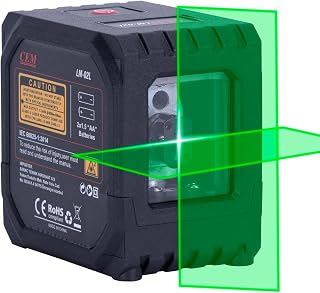


A corded line laser level projects one or more laser lines onto a surface, creating a visual reference for levelling and alignment tasks. Unlike a traditional spirit level, a laser can extend a reference line across a larger working area. This can be useful when several points need to remain aligned during installation or construction.
Corded models connect to mains electricity rather than depending solely on an internal rechargeable battery or disposable cells. For suitable indoor work areas with convenient access to power, this can provide a practical option for longer sessions. Before purchasing, check the product specifications for its power requirements and intended operating conditions.
Line laser levels can support a wide range of measuring and positioning jobs. Renovators may use them when positioning wall features, shelving, cabinetry, tiles or other fittings. Tradespeople can use projected lines as visual references while carrying out installation and finishing work. They can also be useful in workshops where repeatable horizontal or vertical alignment matters.
For Australian projects, consider the environment where the laser will operate. Indoor renovation work is often well suited to visible line lasers, while bright outdoor conditions can make laser visibility more challenging. Always check the stated working range, visibility information and operating limitations before selecting a model.
Think about the type of reference you need. A horizontal line can assist with level installation, while a vertical line can help with plumb alignment. Models capable of producing multiple lines may provide additional flexibility for jobs requiring more than one reference plane.
The useful range depends on the model and surrounding light. Check the manufacturer's stated range rather than assuming that every laser performs identically. For indoor work, a clearly visible line may be more important than maximum distance.
Some laser levels incorporate self-levelling mechanisms that automatically compensate for small positioning errors within a specified range. This can simplify setup, but users should still follow the manufacturer's instructions and verify the reference before beginning precision work.
Because a corded laser level requires access to electrical power, consider where the equipment will be positioned. A suitable cord length can reduce the need to reposition the unit, while an appropriate power connection can make longer indoor jobs more convenient.
Stable positioning is important for accurate reference lines. Check whether the selected model is compatible with the mounting or support equipment you already use. A secure setup can also make it easier to maintain consistent alignment while working.
Start by identifying the jobs you perform most often. If your projects mainly involve indoor installation, wall work or renovation, prioritise useful line visibility, suitable accuracy and easy positioning. If you regularly move between locations, consider whether a corded design fits your workflow and whether reliable access to mains power is available.
It is also worth checking the technical specifications before ordering. Compare the number and type of projected lines, working range, levelling method, power requirements, mounting options and included accessories. Product dimensions and weight can matter when equipment needs to be transported or positioned repeatedly.
A suitable line laser can reduce the need to transfer measurements manually between multiple points. Instead, a visible reference line can provide a consistent guide across the working surface. This may help improve workflow when installing multiple components that need to follow the same horizontal or vertical position.
For professional and DIY applications alike, use the laser according to its instructions and verify measurements when accuracy is critical. Laser equipment should be handled responsibly, and users should avoid directing laser light toward people, vehicles or aircraft.
Browsing the corded line laser level category lets you compare equipment intended for similar alignment and levelling applications. Rather than choosing solely on price, consider how the specifications match your particular project. The right balance of visibility, range, accuracy, power arrangement and usability can make a meaningful difference to everyday work.
From renovation and installation tasks to workshop and construction applications, a corded line laser level can provide a practical visual reference for accurate alignment. Review the available specifications carefully and select a model that suits your working conditions, project requirements and access to electrical power.
Achieve clear reference lines for building, renovation, installation and workshop projects with a corded line laser level. Designed to provide visible horizontal, vertical or cross-line references, these laser levels can help Australian tradespeople, renovators and DIY users work with greater consistency. A corded model can be particularly useful when you prefer continuous mains power for jobs where you do not want to rely on battery runtime. Whether you are aligning cabinets, installing fixtures, setting out walls or checking levels during construction, choosing a laser level that matches your working environment can make everyday measuring tasks more straightforward.