

♥ Wishlist


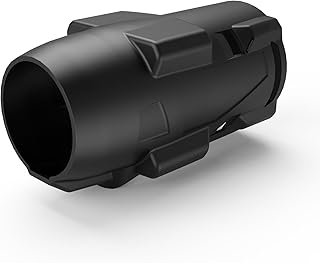


A Milwaukee Corded Impact Wrench can suit users who want impact fastening performance without relying on battery capacity during extended work. For Australian workshops, garages and trade environments, the right impact wrench can help speed up repetitive fastening and removal tasks while reducing the manual effort required from a standard hand wrench.
Before choosing a model, think about the fasteners you work with, the required drive size and the level of torque needed for the application. An impact wrench is commonly used for jobs involving nuts and bolts where repeated fastening or removal would otherwise take considerable time. Selecting a suitable tool helps ensure that the wrench matches both the application and the working environment.
Start by identifying the type of fastening work you perform. Automotive maintenance, machinery servicing, fabrication, workshop repairs and general mechanical work can all have different requirements. A tool intended for occasional maintenance may not need the same characteristics as one used throughout a busy workshop.
The drive size determines which compatible sockets can be used with the impact wrench. Common impact wrench drive sizes include 3/8-inch, 1/2-inch, 3/4-inch and 1-inch formats across the wider Milwaukee impact wrench range. Smaller drives can suit lighter fastening work, while larger drives are commonly associated with heavier-duty applications. Always match the drive size to the sockets and fasteners required for your jobs.
Torque is an important consideration when comparing impact wrenches. Higher torque can help with stubborn or heavily tightened fasteners, but maximum torque figures should not be the only factor in your decision. Consider the application, fastener specifications and the level of control required. For final tightening where a precise specified torque is essential, use an appropriate calibrated torque wrench according to the manufacturer's or fastener manufacturer's requirements.
Tool size and access can make a major difference in practical use. A compact impact wrench may be easier to position around restricted areas, while a larger high-torque design may be more suitable for demanding fastening tasks. For a fixed workshop environment, mains power can provide continuous operation without stopping to recharge a battery, provided a suitable power supply is available.
Impact wrenches are widely associated with automotive servicing, mechanical maintenance, machinery assembly and workshop repairs. They can also assist with construction and fabrication tasks where suitable sockets and fastening procedures are used. For Australian tradespeople, choosing the correct tool means considering the materials, fasteners and working conditions involved in the job rather than selecting a wrench based on torque alone.
For vehicle-related work, an impact wrench can be useful for removing and installing wheel fasteners and other suitable mechanical connections. In workshop environments, it can help with repetitive fastening where speed and reduced manual effort are valuable. Always follow the vehicle, equipment or fastener manufacturer's specifications when tightening critical connections.
An impact wrench combines rotational movement with impact action to deliver high fastening force through a compatible socket. This makes it particularly useful when conventional hand tools become slow or physically demanding. The impact mechanism can help loosen stubborn fasteners and accelerate repetitive work.
A corded configuration can be particularly relevant for users who work in a workshop or other location with reliable access to mains electricity. It removes the need to manage battery charge levels during continuous operation. However, the power lead can limit movement compared with a cordless tool, so the layout of your workspace should form part of your purchasing decision.
When comparing products in this category, look beyond the Milwaukee name and assess the individual tool specifications. Check the drive size, power requirements, torque information, operating controls, tool dimensions, weight and compatibility with your existing sockets and accessories. These details can help you choose a model that fits your workflow.
It is also useful to consider whether you need a tool only or a package that includes accessories. If you already own suitable sockets and workshop equipment, a tool-only option may be sufficient. New users should check exactly what is included before ordering so they can plan for any additional sockets, extension leads or other accessories required for their application.
Milwaukee's Australian impact wrench range is currently heavily centred on M12 and M18 cordless platforms, including compact, mid-torque and high-torque models. Therefore, shoppers specifically seeking a corded Milwaukee impact wrench should carefully review the product specifications and power source listed for each item before purchase. This distinction is important because a cordless impact wrench and a mains-powered corded model provide different operating arrangements.
The right Milwaukee impact wrench depends on how and where you intend to use it. Consider your typical fasteners, required socket drive, available power, workspace access and expected workload. For continuous workshop use, mains-powered operation may be convenient where available. For mobile jobs, a cordless configuration may offer greater freedom of movement.
Browse the Milwaukee Corded Impact Wrench category at AMA Toolzon to compare available options and identify a tool that aligns with your Australian workshop or trade requirements. Always review the current product specifications, included accessories, electrical requirements and manufacturer's guidance before purchasing or using an impact wrench.
Find a Milwaukee Corded Impact Wrench for demanding fastening work, workshop tasks and trade applications in Australia. This category is designed for shoppers looking for the controlled impact action of an impact wrench with a continuous mains-powered setup. When choosing an impact wrench, consider the drive size, torque requirements, access around fasteners, working environment and the type of jobs you complete most often.