

♥ Wishlist
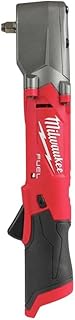


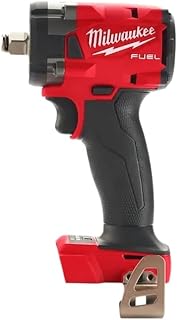


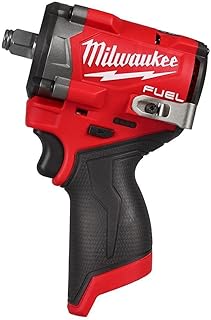


A Milwaukee impact wrench is designed to deliver rapid rotational force for tightening and loosening nuts, bolts and other fasteners. Cordless impact wrenches are particularly useful where portability matters because they remove the need for a power cord, air hose or nearby compressor. For Australian tradespeople, mechanics, maintenance teams and serious DIY users, the right impact wrench can make repetitive fastening work more convenient and efficient.
Milwaukee offers impact wrench configurations across different torque classes and drive sizes. The suitable model depends on the fastener size, available working space, required torque, frequency of use and battery platform already used on the job. Comparing these factors helps you select a tool that matches the application rather than simply choosing the highest torque available.
Compact impact wrenches suit applications where access and tool size are important. Their smaller footprint can help when working around engine bays, machinery, frames and other confined areas. They are useful for lighter fastening duties where a compact cordless tool provides a practical balance between power and manoeuvrability.
Mid-torque models provide a useful step between compact and high-torque tools. They can handle a broader range of automotive, maintenance, installation and general trade applications while remaining easier to handle than larger high-torque machines. Consider a mid-torque option when you need more capability than a compact model without regularly working with the largest fasteners.
High-torque Milwaukee impact wrenches are designed for demanding fastening and removal tasks. They can be suitable for heavy equipment, structural applications, commercial vehicles, industrial maintenance and other jobs involving stubborn or large fasteners. When selecting a high-torque model, also consider its physical size, weight, drive size and the battery required for the intended workload.
The drive size affects which sockets can be used with an impact wrench. Common configurations include 1/2-inch, 3/4-inch and 1-inch drives, with the appropriate size depending on the application and fastener requirements. A 1/2-inch model can suit many automotive and general-purpose tasks, while larger drive sizes are commonly considered for heavier-duty fastening.
Milwaukee impact wrench models may also use different anvil and socket-retention designs. Friction rings are convenient when sockets need to be changed regularly, while pin-detent systems can provide a more secure socket-retention approach for particular applications. Check the individual product specifications before selecting compatible impact sockets.
Many Milwaukee impact wrenches use the M18 cordless platform. If you already own compatible M18 batteries and chargers, choosing a tool from the same platform can simplify battery management across your workshop or jobsite. Battery capacity also matters because demanding applications can place greater demands on available power and runtime.
Torque output is an important specification, but it should not be the only consideration. Compare fastening torque and nut-busting torque where supplied, as these figures describe different aspects of tool performance. Also review speed, impacts per minute, drive size, tool length, weight and control settings.
Some Milwaukee models include selectable drive modes and electronic control features that allow users to adjust tool behaviour for different fastening tasks. ONE-KEY compatible models can provide additional tool customisation, tracking and management functions. These features can be valuable for professional users managing multiple tools or seeking greater consistency between applications.
A Milwaukee impact wrench can be used for many fastening and removal tasks, including automotive repairs, wheel service, machinery maintenance, construction, fabrication, equipment servicing and general workshop work. The correct tool should always be matched to the manufacturer's torque requirements for the fastener and application.
Start by identifying the work you perform most often. For confined automotive areas and lighter fastening, a compact model may provide the required accessibility. For general mechanical and trade work, a mid-torque model can provide additional versatility. For heavy-duty applications, consider a high-torque model with an appropriate drive size.
Next, check whether you need a tool-only package or a kit that includes batteries and a charger. Existing M18 users may prefer a tool-only option when compatible batteries are already available. New users should check the complete kit contents and battery requirements before ordering.
Finally, consider ergonomics and control. A lighter tool can be easier to use repeatedly, while a larger high-torque model may be better suited to demanding applications. Select the combination of torque, size, drive configuration, battery compatibility and control features that best matches your regular work.
When comparing Milwaukee impact wrench products, review each model's specifications carefully rather than relying only on the category name. Check the drive size, torque figures, battery requirements, dimensions, weight, included accessories and available control features. This approach makes it easier to identify a cordless impact wrench that suits your workshop, vehicle servicing needs, trade work or professional maintenance application.
Explore Milwaukee impact wrench options for fastening, loosening and high-torque applications across automotive, construction, mechanical and maintenance work in Australia. From compact cordless models for restricted spaces to high-torque solutions for demanding fasteners, this category helps you compare drive sizes, torque levels, battery platforms and features before choosing the right tool for your job.