

♥ Wishlist
Compare 15 Corded Band Saw products in Australia. Reviews, ratings, pros, cons and buying advice updated for October 2026.




An advanced corded band saw is best selected by matching its cutting capacity, blade system, motor characteristics, portability, control features and intended material to the work you actually perform. For Australian workshops, tradespeople and serious DIY users, the right specification can matter more than simply choosing the highest-powered model.
Unlike a general-purpose circular saw, a band saw uses a continuous loop blade running around wheels. This design can produce controlled cuts through timber, metal and other suitable materials while generating a different cutting profile from toothed circular blades. Portable corded band saws are particularly useful where a compact tool is preferable to a stationary machine, while benchtop and floor-standing machines are better suited to repeated workshop work.
When comparing advanced corded band saw solutions for 2026, look beyond headline wattage. Consider throat capacity, cutting depth, blade speed, blade dimensions, variable-speed control, guide design, tracking adjustment, trigger operation, shoe stability, vibration control, dust or chip management, replacement-blade availability and the quality of the manufacturer's service ecosystem.
The term advanced does not necessarily mean the most expensive or most powerful tool. In a buying guide, an advanced corded band saw is better understood as a model offering a combination of useful engineering features that improve cutting control, repeatability, durability or operator convenience.
One of the first decisions is whether you need a portable corded band saw or a stationary workshop band saw. These are not interchangeable categories, even though both use the same fundamental continuous-blade principle.
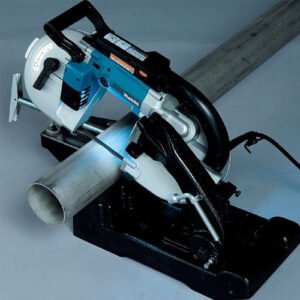
Portable models are designed to be carried to the workpiece. They are particularly useful for cutting long stock, pipe, conduit, profiles and components that would be awkward to transport to a stationary machine. Their compact form can also make them attractive for maintenance, fabrication and installation work.
The trade-off is that portable models generally provide less support and workpiece control than a dedicated stationary machine. Operator technique therefore becomes especially important. A portable band saw should be assessed for balance, grip, blade visibility and the ability to maintain a straight cut without excessive force.
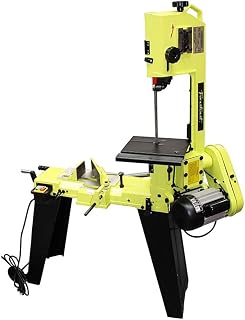
Benchtop machines provide a more controlled workshop environment. They can be useful for shaped timber cuts, smaller fabrication projects and repeated work where having the material supported on a table is advantageous.
When assessing a benchtop machine, pay attention to table size, throat capacity, maximum cutting height, blade tensioning, guide adjustment and the rigidity of the stand or mounting arrangement.
Floor-standing machines are generally aimed at users who require greater capacity, a dedicated workspace and more substantial workpiece support. They can make sense for production-oriented workshops and frequent cutting operations.
However, a larger machine is not automatically the better purchase. If your work consists mainly of occasional cuts on smaller stock, the additional footprint and setup requirements may offer little practical benefit.
Motor power is an important specification, but it should not be treated as a direct measure of cutting performance. Electrical input power tells you something about the motor system, but it does not by itself reveal how effectively the machine transfers power to the blade or maintains performance under load.
For corded tools in Australia, check the stated electrical specifications and make sure the product is appropriate for the Australian mains supply. Do not assume that a model sold internationally has identical electrical requirements, accessories or documentation in every market.
A better comparison considers motor power alongside blade speed, drive design, cutting capacity, intended material and duty cycle. A machine designed for lighter portable cutting can have a very different performance profile from a large workshop band saw, even if individual specifications appear similar.
For demanding work, the ability to maintain a useful blade speed under load can be more relevant than a peak specification. Excessive pressure can slow the blade, increase heat and accelerate blade wear. A well-matched saw should allow the operator to feed the work at a controlled rate rather than relying on aggressive force.
Blade speed should be considered in relation to the material being cut. Timber, mild steel, stainless steel, aluminium and other materials can require different cutting approaches and blade characteristics. Always follow the manufacturer's operating instructions and the blade manufacturer's recommendations for the specific material.
Variable-speed control can make a corded band saw more versatile because the operator can select a more appropriate operating range instead of relying on one fixed speed. This can be particularly useful for users who switch between materials.
However, variable speed is not automatically better for every application. If your work is highly specialised and uses one material and blade type, a correctly specified fixed-speed machine may provide everything you need.
The blade is one of the most important components of a band saw. Comparing machines without considering blade compatibility can lead to an unsuitable purchase.
Band saw blades are normally specified by their overall loop length. The correct length depends on the particular machine. Never assume that two visually similar saws accept the same blade length.
Blade width affects cutting behaviour and application suitability. Wider blades can offer useful stability for certain cuts, while narrower blades can be advantageous for curves on suitable stationary machines. The machine's specifications determine which blade widths are supported.
Tooth pitch and configuration influence cutting performance, finish and material suitability. Fine-tooth blades are generally associated with different applications from coarse-tooth blades. For metal cutting, blade selection should also account for material type and thickness.
Bi-metal band saw blades combine different materials within the blade construction to balance tooth durability and flexibility. They are commonly considered for demanding metal-cutting applications, although the correct tooth geometry and pitch remain essential.
Carbide-tipped band saw blades are designed for specialised cutting applications where their characteristics justify the additional cost. They should not be selected merely because carbide sounds more durable; compatibility, material, cutting speed and intended workload all matter.
Teeth per inch, commonly abbreviated as TPI, is a critical blade specification. Selecting the wrong tooth pitch can negatively affect cutting speed, finish, blade life and the risk of tooth damage.
As a general principle, thinner material often benefits from a finer tooth pitch so that enough teeth remain engaged with the workpiece. Thicker material can require a coarser pitch to provide appropriate chip clearance. Exact selection should follow the blade manufacturer's recommendations because material type and machine characteristics also affect the choice.
Cutting capacity is one of the specifications most likely to determine whether a band saw is genuinely suitable for your projects.
Do not buy solely according to the largest advertised capacity. Consider the size of the stock you actually handle and allow sensible room for the way you need to position it.
Correct blade tracking and tension are fundamental to band saw operation. If the blade does not run correctly around the wheels, the cut can become unstable and blade wear can increase.
Look for an adjustment system that is understandable and accessible. Good adjustment capability is valuable, but complicated controls that are difficult to set correctly can be frustrating for less experienced users.
Users should follow the manufacturer's procedure for blade tension and tracking rather than relying on guesswork. Over-tensioning can place unnecessary stress on the machine and blade, while insufficient tension can contribute to poor tracking.
Blade guides help control the blade near the cutting zone. Depending on the machine, guides may use different arrangements of bearings or guide blocks.
When comparing advanced corded band saws, examine how easily the guides can be adjusted for different material thicknesses. A guide system that is rigid, properly supported and easy to position can contribute to cleaner and more controlled cutting.
A variable-speed machine is usually more attractive to users who cut a variety of materials. It can provide greater control over the operating range and may simplify the transition between applications.
A fixed-speed machine can still be an excellent choice when the intended workload is consistent. If you primarily cut one material using a compatible blade, paying extra for controls you rarely use may not provide meaningful value.
Ergonomics can be overlooked when comparing technical specifications, especially with portable band saws. Yet the way a tool feels during a long series of cuts can influence accuracy and fatigue.
Consider the position of the main handle, auxiliary handle, trigger, power cord and workpiece contact point. A balanced design can make it easier to keep the blade aligned without excessive wrist or arm movement.
For portable models, also consider whether you can clearly see the cutting area while maintaining a secure grip. The best configuration is the one that allows controlled feeding without forcing the operator into an awkward posture.
Band saws can produce vibration and noise, particularly when cutting hard materials, using an unsuitable blade or operating with incorrect tension. Machine design, wheel balance, blade condition and workpiece support can all influence the experience.
When product specifications include vibration or sound information, use those figures as comparison points rather than guarantees of what every user will experience. Workpiece geometry, material and operating technique can substantially change actual conditions.
Appropriate hearing and eye protection should be used according to the manufacturer's instructions and the requirements of the task.
Battery-powered band saws offer freedom from a mains cable, while corded models can be attractive where continuous access to mains power is available. For workshop users performing repeated cuts, avoiding battery charging and battery management can be a meaningful advantage.
If the tool will spend most of its life in a workshop, a corded design can be a particularly practical option. If portability around remote job sites is the overriding priority, battery models deserve comparison.
Metal cutting places different demands on a band saw from timber cutting. Blade selection, tooth pitch, blade speed, coolant or lubrication requirements, workpiece clamping and feed pressure all become important considerations.
For metal fabrication, do not assume that a general-purpose woodworking band saw can simply be converted into a metal-cutting machine. Verify that the model is specifically designed and rated for the material and application.
When comparing metal-capable machines, investigate the supported blade specifications, speed range, cutting capacity, workpiece support and manufacturer's guidance for ferrous and non-ferrous materials.
Woodworking users often need a different combination of characteristics. Throat capacity, maximum cutting height, table stability, blade width, blade tracking and the ability to use blades suited to straight or curved work can be more important than features designed primarily for metal fabrication.
For curved cuts, blade selection becomes particularly important. A narrow blade can generally follow tighter curves on a suitable stationary machine, while wider blades can be advantageous for stability and straighter work. The appropriate choice depends on the machine and the radius required.
Portable band saws can be useful when cutting pipe, tube, angle, channel and similar stock that is difficult to position on a conventional workshop machine. Before purchasing, check the maximum dimensions and whether the frame geometry allows the tool to engage the intended stock comfortably.
For repeated fabrication work, also consider how quickly the blade can be changed and whether replacement blades are practical to source. A machine that is inexpensive initially can become less attractive if its required consumables are difficult to obtain.
Australian buyers should pay attention to more than the product's headline specifications. Electrical compatibility, local documentation, plug configuration, replacement consumables, service arrangements and retailer-specific terms can all affect ownership.
Established power-tool manufacturers can be useful starting points for research because they often have broader tool ecosystems and established replacement-part channels. Depending on the application and specific model, brands such as Makita, DeWalt, Milwaukee, Bosch and Metabo can be worth comparing.
Brand reputation should not replace model-level research. A respected manufacturer can offer tools across several performance classes, and the best model for one application may be inappropriate for another. Compare the exact specifications, blade compatibility, intended material and Australian-market configuration.
A useful shortlist should be based on a consistent set of criteria rather than simply ranking products by price or review count.
A higher power figure does not automatically make a band saw better. Capacity, blade speed, drive efficiency, machine rigidity and intended material are equally important.
Band saw blades are consumable components. A buyer who considers only the initial machine price may overlook the ongoing cost and availability of compatible blades.
Large capacity can be useful, but excessive capacity can mean a heavier, larger and more expensive machine than your work requires. Buy for realistic future needs rather than an unlikely extreme project.
The opposite mistake can be equally frustrating. If your typical stock is close to the machine's maximum rated capacity, consider stepping up to a more capable model to provide practical working room.
Never assume that because a band saw cuts one material it is suitable for every other material. Check the manufacturer's specifications and use blades designed for the application.
A corded tool needs practical access to a suitable power source. Think about cable length, extension-lead requirements, workshop layout and safe cable positioning before choosing a portable model.
Ratings can provide useful consumer insight, but they should be read alongside specifications. A highly rated compact saw may still be unsuitable if your work requires substantially greater cutting capacity.
Product specifications can appear straightforward but often describe different aspects of performance. Before comparing two models, identify whether the figures are measured or stated under comparable conditions.
A band saw should be treated as a serious cutting machine regardless of whether it is portable or stationary. Features such as trigger locks, guards, blade covers, stable handles and suitable workpiece support can contribute to safer operation, but no built-in feature eliminates the need for correct technique.
Regular maintenance helps preserve cutting performance and makes it easier to identify problems before they become more serious. The exact maintenance schedule should always follow the manufacturer's instructions.
Look for damaged teeth, excessive wear, cracks or other signs that the blade needs replacement. A dull or damaged blade can encourage the operator to apply excessive pressure.
Verify that the blade runs correctly on the wheels according to the manufacturer's adjustment procedure. Tracking should not be improvised because different machines use different mechanisms.
Use the manufacturer's recommended tensioning method. Incorrect tension can affect cutting accuracy and place unnecessary loads on components.
Remove accumulated dust, chips and debris from areas where they can interfere with blade movement, guides, wheels or ventilation. Use cleaning methods appropriate to the machine and material being removed.
For corded machines, regularly inspect the power cable, plug and visible electrical components for damage. Do not continue using a tool with a damaged electrical cable or other unsafe electrical condition.
Blade replacement depends on the material, blade quality, workload, cutting technique and maintenance. Signs of a blade reaching the end of its useful life can include slower cutting, increased required pressure, poor tracking, rougher cuts or visible tooth damage.
Replacing a worn blade can sometimes improve performance more effectively than changing the machine itself. Before concluding that a band saw lacks power, verify that the blade is appropriate, correctly tensioned and in suitable condition.
Cut quality depends on the interaction between machine setup, blade selection, material support and operator technique. Even a high-quality saw can produce poor results if the blade is unsuitable or the workpiece is unstable.
The cheapest corded band saw is not necessarily the most economical choice over its useful life. A better value assessment includes the machine, compatible blades, accessories, maintenance requirements and the suitability of the tool for your workload.
For frequent users, durability, replacement consumables and ease of maintenance can matter more than a modest difference in initial purchase price. For occasional DIY users, an affordable model with adequate capacity may provide better overall value than a professional machine whose advanced features will rarely be used.
Professionals should prioritise reliability, appropriate duty capability, cutting speed, ergonomics, blade availability and the ability to perform repeated work efficiently. The cost of downtime and consumable availability can be more significant than the initial price difference between models.
DIY buyers should concentrate on capacity, versatility, ease of adjustment and the availability of suitable blades. Buying a machine with sensible headroom can be worthwhile if the user's projects are likely to expand into different materials or larger stock.
If the band saw will be used only a few times each year, simplicity and storage may deserve more weight than advanced controls. A compact model with adequate capacity can be preferable to a large machine that occupies valuable workshop space.
Customer feedback can be useful when researching a corded band saw, but review quality matters. Look for comments that identify the actual application, material, workload and model number rather than relying on a single overall rating.
Useful reviews often discuss blade changes, tracking, cutting performance, ergonomics, vibration, durability, setup and compatibility with the user's particular material. Reviews that simply say a tool is "powerful" or "great" provide much less information for a technical purchasing decision.
When checking current customer feedback, compare several independent sources where possible and distinguish comments about the exact model from reviews referring to another version in the same product family.
The best advanced corded band saw for an Australian buyer is the model that fits the actual job rather than the one with the longest feature list. Start with material and cutting capacity, then narrow the shortlist using blade compatibility, speed control, motor performance, ergonomics, machine construction and long-term consumable availability.
For a portable application, balance, cutting access and operator control deserve particular attention. For a workshop machine, throat capacity, table stability, guide adjustment and repeatability become increasingly important. If you cut several materials, blade compatibility and speed control should move higher on your checklist.
Before making a final decision, compare the exact model specifications, read current verified customer feedback and check the current Australian-market package with a trusted retailer. Specifications, accessories, pricing and availability can change, so confirm the details immediately before purchase.
There is no single best model for every Australian buyer. The right choice depends on whether you need portable or stationary operation, the material being cut, required cutting capacity, frequency of use, blade requirements and budget.
Yes. Corded models remain relevant where continuous mains power is available and the user values avoiding battery charging and battery-platform costs. They can be particularly practical for workshops and repeated cutting operations.
Neither is universally better. Portable models are advantageous when the saw needs to travel to the workpiece, while stationary machines provide a dedicated cutting platform and can offer greater workpiece support and capacity.
Some band saws are specifically designed for metal cutting, but suitability depends on the machine's design, blade speed, blade compatibility and manufacturer specifications. Never assume that a woodworking band saw is suitable for metal simply because it uses a band blade.
Band saws designed for woodworking can be highly useful for straight and curved timber cuts. The appropriate blade width, tooth configuration, cutting capacity and machine setup depend on the particular application.
Not necessarily. Motor power should be considered alongside blade speed, cutting capacity, drive system, machine rigidity, intended material and duty requirements.
Variable speed is especially useful when cutting different materials or when the manufacturer provides recommended operating ranges for different applications. For a single-material workload, fixed speed can still be perfectly suitable.
There is no universal replacement interval. Blade life depends on the blade type, material, thickness, workload, feed technique and maintenance. Replace the blade when it becomes worn, damaged or no longer produces acceptable cutting performance.
The correct blade depends on the metal type and thickness as well as the machine's specifications. Consider tooth pitch, blade construction and recommended cutting speed, and follow the blade manufacturer's selection guidance.
Focus on cutting capacity, throat depth, table stability, blade guides, tracking and tensioning adjustments, motor performance, blade compatibility and the availability of replacement consumables. For frequent use, serviceability and long-term reliability also deserve significant weight.
No. A more expensive machine may offer greater capacity or advanced features, but those advantages have value only if they match your workload. A correctly specified mid-range model can be a better purchase than an oversized professional machine for occasional use.
Compare the exact model number and the complete package rather than comparing headline prices alone. Check whether blades, stands, cases or other accessories are included, and verify current Australian pricing and availability before ordering.
Established manufacturers such as Makita, DeWalt, Milwaukee, Bosch and Metabo can be useful brands to include in a comparison. The specific model remains more important than the logo, so compare specifications and intended applications carefully.