

♥ Wishlist
Compare 15 Corded Die Grinder products in Australia. Reviews, ratings, pros, cons and buying advice updated for October 2026.


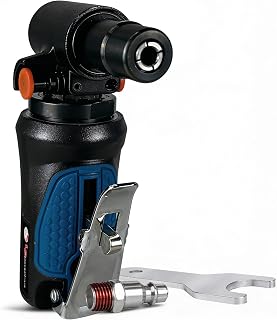


An advanced corded die grinder is best selected by matching the tool's motor performance, speed control, collet system, ergonomics and duty requirements to the work you actually expect it to perform. For Australian buyers, electrical compatibility, local warranty terms, replacement accessories and retailer support also deserve attention alongside headline specifications.
Corded models remain attractive for workshop users because they can provide continuous operation without waiting for batteries to recharge. They are particularly useful for extended grinding, deburring, polishing, sharpening, porting, rust removal and detailed metal finishing where consistent power availability matters.
Before comparing individual recommendations, separate genuinely useful specifications from marketing language. A higher wattage figure does not automatically mean a better die grinder, while a very high no-load speed may be unnecessary if most of your work involves heavier grinding rather than precision finishing.
The term “advanced” is not a universal technical classification. In buying guides, it is more useful to treat an advanced corded die grinder as a tool that offers a stronger combination of controllability, durability, accessory compatibility, user comfort and application flexibility than a basic workshop model.
Motor wattage is one of the first specifications shoppers notice, but it should not be considered in isolation. The useful performance of a die grinder depends on how the motor, gearing, spindle and electronics work together under load.
A grinder intended for occasional deburring may not need the same motor capacity as one used repeatedly for grinding welds or shaping metal. Conversely, selecting the most powerful model available can introduce additional weight and bulk without providing a meaningful benefit for precision-oriented work.
When comparing models from manufacturers such as Makita, Bosch, DeWalt, Milwaukee, Metabo and HiKOKI, examine the complete specification sheet rather than ranking tools by wattage alone.
Variable speed can significantly increase the usefulness of a corded die grinder. Different abrasive wheels, mounted points, carbide burrs, brushes and polishing accessories can have different operating requirements, so one fixed speed is not necessarily appropriate for every task.
Lower speeds can be useful for controlled finishing and applications where excessive heat is undesirable. Higher speeds can be appropriate for accessories and materials designed to operate at those speeds. The correct setting should always remain within the accessory manufacturer's rated limits.
When comparing variable-speed models, look at how the speed is controlled rather than simply noting that the product has multiple settings. A control that is easy to adjust can be more useful in practical work than a long list of nominal speed settings.
No-load RPM indicates how quickly the spindle rotates without a cutting or grinding load. It is useful for comparison, but it does not tell the entire performance story.
Under real working conditions, the motor experiences resistance from the accessory and material. A tool's ability to remain controllable and useful under load can matter more than its maximum unloaded speed.
High RPM can also increase the consequences of using an unsuitable accessory. Always match the accessory's maximum permitted speed to the grinder's operating speed. Never assume that an accessory is suitable merely because its shank fits the collet.
The collet is one of the most important compatibility points when choosing a die grinder. Common configurations may accommodate accessories with different shank diameters, but the exact sizes supplied and supported vary by model.
Australian shoppers should inspect the manufacturer's specification and included-accessory list before purchasing. If you already own a collection of mounted points or carbide burrs, buying a grinder with an incompatible collet can create an unnecessary additional expense.
The versatility of a die grinder comes largely from the accessories it can operate. Choosing the right accessory is just as important as choosing the machine itself.
Mounted points are commonly used for controlled grinding, shaping and finishing. Their shape and abrasive composition should be selected according to the material and application.
Carbide burrs are useful for material removal, shaping and detail work. Different profiles can produce very different cutting behaviour, so users should choose the burr shape according to the contour and access required.
Small abrasive accessories can be useful for grinding and finishing, provided they are specifically rated for the grinder and application. Maximum permitted RPM and accessory condition should always be checked.
Wire brushes can help remove rust, scale, paint and surface contamination. They can also throw wires during use, making appropriate eye, face and body protection particularly important.
Suitable polishing attachments can turn a die grinder into a finishing tool. Speed control becomes especially useful when working with materials or compounds that require controlled operating conditions.
These tools overlap in some applications but are designed around different handling characteristics.
If your typical jobs involve heavy cutting of large steel sections, an angle grinder may be the more appropriate tool category. If you need controlled access around castings, welds, edges, small components or intricate shapes, a die grinder can make more sense.
Choosing corded or cordless is largely a question of working environment and operating pattern.
For a fixed workshop, fabrication area or garage where suitable mains power is readily accessible, a corded model can be an efficient choice. For field maintenance and locations without convenient electrical access, cordless equipment may be more practical.
Australian buyers should pay close attention to the electrical specification of any corded power tool. A model intended for another market may have different voltage, frequency, plug or electrical compliance requirements.
For a tool purchased for use in Australia, verify the manufacturer's Australian specification and confirm that the model is intended for the Australian market. Do not rely solely on an overseas product listing or assume that a plug adapter makes an electrically incompatible tool suitable for Australian use.
A die grinder can be physically demanding even when the tool itself is relatively compact. Users frequently maintain a controlled grip while simultaneously managing vibration, accessory movement and workpiece resistance.
Weight should therefore be evaluated alongside balance. A lighter tool is not automatically better if its shape makes precise control difficult, while a heavier model may be acceptable if its mass distribution reduces strain during the intended operation.
Vibration is not simply a comfort issue. Excessive vibration can make precise work harder and may increase fatigue during extended operation. The accessory itself, its balance, installation and condition can substantially affect the vibration experienced by the operator.
A grinder should therefore be evaluated as a complete system. Even a well-designed tool can feel unpleasant if an accessory is damaged, incorrectly installed, poorly balanced or operated outside its intended conditions.
Heat is an important consideration for users who expect to operate a corded die grinder repeatedly. Motors, bearings and electronic components can become warm during demanding applications.
Good operating practice includes allowing the tool to work at an appropriate rate rather than continually forcing it into the material. If the manufacturer's instructions specify operating limitations, cooling periods or particular handling requirements, those instructions should take priority over generic workshop advice.
Do not select a grinder for continuous industrial-style work solely because its specification sheet contains a high power figure. Look for manufacturer information that corresponds to your intended duty cycle and application.
Construction quality should be assessed by looking at the parts that matter during repeated use rather than judging a tool purely by exterior appearance.
A die grinder is a high-speed rotating power tool, so safe operation should be treated as a fundamental purchasing consideration rather than an afterthought.
A high RPM figure can look impressive, but maximum speed is only one part of tool performance. Your accessories and applications should determine the useful speed range.
Buying a grinder without checking accessory shank sizes can make an apparently good deal less useful once it arrives.
Additional motor capacity can be beneficial for demanding work, but excessive weight or size can be counterproductive for detailed tasks.
A corded tool needs a practical power connection. Consider where the cable will run and whether it could interfere with the workpiece or operator.
Australian buyers should verify the exact electrical specification and market version before purchasing from an overseas seller.
A grinder is only as useful as the accessories it can safely operate. Include the cost and availability of suitable accessories when comparing total ownership value.
Different materials require different accessories, speeds and techniques. A grinder suitable for metal finishing should not automatically be treated as suitable for every other material or application.
When reviewing a shortlist of ten models, a structured comparison makes it easier to identify the right option instead of simply choosing the product with the highest specification.
A versatile model with a practical speed range, comfortable grip and common collet configuration is generally more useful than an extremely specialised tool.
Prioritise appropriate motor performance, durability, accessory compatibility and handling. Regular fabrication work can place greater demands on the grinder than occasional household use.
Focus on control, balance, manageable weight and variable speed. The ability to make small, controlled adjustments can be more important than maximum material-removal capability.
Accessory compatibility becomes particularly important because wire brushes and other surface-preparation attachments have their own operating requirements.
Compact dimensions and access around components can be valuable. A model that is comfortable to manipulate around confined areas may be preferable to a larger, more powerful alternative.
Look beyond headline power. Manufacturer guidance concerning operating conditions, durability, cooling and intended applications becomes especially important when a tool will be used frequently.
Australian shoppers may encounter established power-tool brands including Makita, Bosch, DeWalt, Milwaukee, Metabo and HiKOKI when comparing corded die grinders and related workshop equipment.
Brand familiarity should not replace model-level comparison. Different products within the same brand can have substantially different motors, speed controls, dimensions, collets, accessories and intended applications. Compare the exact model number and Australian specification before making a decision.
Customer reviews can provide useful information that specification sheets cannot, but they should be interpreted carefully.
Verified customer feedback is most useful when it complements, rather than replaces, the manufacturer's technical documentation.
The cheapest corded die grinder is not necessarily the lowest-cost option over its useful life. Total value can be affected by accessory compatibility, replacement components, consumables, warranty arrangements and how well the tool matches the workload.
For occasional users, a reasonably priced model with the necessary features may provide better value than a premium machine with capabilities that will rarely be used. Frequent workshop users may place greater value on durability, ergonomics and long-term support.
Routine care can help preserve performance and reduce avoidable problems. Always follow the maintenance instructions supplied with the specific model.
Storage matters more than many buyers expect. A die grinder should be protected from moisture, impacts and contamination when it is not being used.
Keeping compatible accessories organised also reduces the temptation to use an unsuitable attachment simply because it is readily available. Store abrasive products according to their manufacturer's instructions and inspect them before use.
There is no single best model for every Australian buyer. The right choice depends on the material being worked, frequency of use, required speed control, collet size, ergonomics, available accessories and budget. Compare the exact specifications of the shortlisted models rather than choosing solely on brand or maximum RPM.
Yes, particularly for workshop users who have convenient mains power and expect extended operation. A corded model can be practical when continuous availability is more important than cordless mobility.
Not necessarily. Higher speed can be useful for particular accessories and finishing applications, but the appropriate speed depends on the accessory, material and task. Always remain within the manufacturer's and accessory manufacturer's specified limits.
Variable speed is generally valuable when one grinder will be used with different accessories and applications. It gives the operator more control over operating conditions, although a single-speed model can still be suitable for a narrowly defined workload.
Choose a collet that matches the accessories you intend to use. If you already own mounted points or burrs, check their shank diameter before purchasing the grinder.
Not in every application. A die grinder is particularly useful for detailed work and restricted access, while an angle grinder is generally better suited to larger discs and broader cutting or grinding tasks.
They can be useful for suitable automotive grinding, deburring, cleaning and finishing applications. The specific accessory, speed and operating technique must match the material and manufacturer's instructions.
Weight matters when the tool is held for long periods or used for precision work. Balance and grip design are equally important, so compare the complete ergonomics rather than choosing purely by the lightest specification.
Compare exact models rather than brands as a whole. Examine motor specifications, speed control, collet configuration, weight, dimensions, accessories, Australian electrical compatibility, warranty terms and current retailer pricing.
Check voltage, frequency, plug configuration, electrical compliance information, instructions and warranty arrangements for the exact model. A model designed for another electrical market should not be assumed to be suitable for Australian use.
There is no universal operating time. It depends on the specific tool, workload, accessory, material and manufacturer's operating instructions. Follow the duty-cycle and cooling guidance provided for the exact model.
Price alone does not establish durability. Evaluate construction, manufacturer specifications, intended duty, warranty terms, replacement support and consistent customer feedback when assessing long-term value.
The strongest choice among advanced corded die grinders is the one that fits your actual workload rather than the model with the most impressive-looking specification. Start with your applications, then work through motor performance, useful speed range, collet compatibility, ergonomics, accessory requirements and Australian electrical suitability.
For occasional workshop use, prioritise versatility, comfortable handling and sensible accessory compatibility. For frequent metalworking, place greater emphasis on sustained performance, construction quality, thermal management and manufacturer support. For precision applications, controllability, balance and variable speed can be more important than maximum power.
Before purchasing, compare the exact model specifications, current retailer prices, included accessories and verified customer reviews. Product availability, pricing, warranty terms and retailer conditions can change, so confirm the latest information at the time you buy.
Specifications, pricing, included accessories and retailer conditions can change during 2026. Before completing a purchase, verify the exact model number, Australian electrical specification, current price, included collets and accessories, manufacturer warranty information, return conditions applicable to the seller, and the availability of compatible consumables.
This approach helps distinguish a genuinely suitable advanced corded die grinder from a product that simply has an attractive specification sheet. The best buying decision is ultimately the one that provides the right combination of performance, control, compatibility, durability and value for the work you actually perform.