

♥ Wishlist
Compare 23 Corded Planer for Precise Timber Surfacing products in Australia. Reviews, ratings, pros, cons and buying advice updated for October 2026.


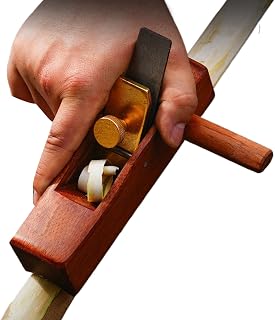


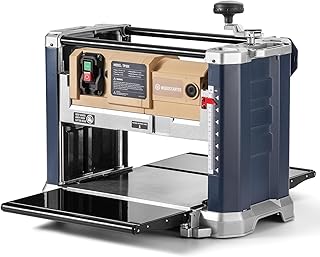




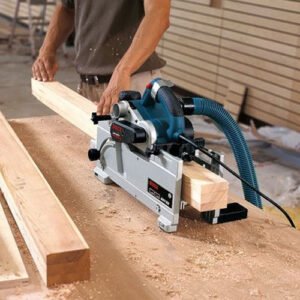
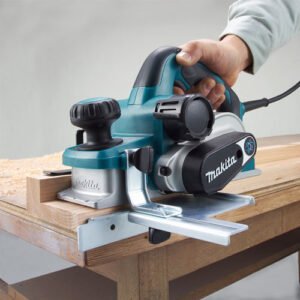
An advanced corded planer is best selected by matching the machine's cutting capacity, motor performance, blade system, adjustment mechanism, dust-management options and handling characteristics to the timber and work you actually plan to do. For Australian buyers, the electrical specification matters as well: confirm that the model is intended for the Australian 230–240V mains supply and that the exact model number and included accessories match the local listing before purchasing.
A corded planer can be particularly attractive for workshop users because it provides continuous mains power without battery changes or charging interruptions. That can be useful when flattening multiple boards, trimming doors, preparing rough timber or repeatedly making controlled passes across a large number of workpieces.
The following models and product families illustrate the specifications that deserve attention when comparing advanced corded planers available to Australian buyers. They should be treated as comparison candidates rather than an automatic ranking, because the right choice depends on the application, budget, availability and the exact local configuration.
Specifications can change by market, revision and package. A product appearing in a manufacturer's international catalogue does not automatically mean the same configuration is currently sold in Australia, so check the exact model number, voltage, accessories and current retailer listing before making a purchase.
The word "advanced" should not be interpreted simply as "highest wattage." A sophisticated planer is one that gives the operator predictable control over material removal and makes it easier to achieve a repeatable result. Important characteristics include fine depth adjustment, a stable base, accurately aligned blades, useful edge guides, controlled chip evacuation, accessible blade replacement and comfortable two-handed handling.
For demanding woodworking, the relationship between these features matters more than any individual specification. A very powerful motor is less useful if the depth mechanism is difficult to set accurately or if the base does not remain stable throughout the cut. Similarly, an exceptionally high no-load speed does not by itself guarantee a superior finish.
Corded planers commonly use universal motors designed to maintain high rotational speed while removing wood. Rated input power gives an indication of the electrical power consumed by the motor, but it should not be treated as a direct measurement of cutting performance.
For example, an 850 W machine such as the Makita KP0810 is specified differently from a 710 W Bosch GHO 26-82 D or a 620 W Metabo HO 26-82. Those numbers are useful for comparison, but the practical result also depends on cutter design, blade sharpness, feed rate, cutting depth, timber hardness and mechanical efficiency.
For occasional trimming, door fitting and edge work, moderate power can be entirely adequate. For repeated stock removal from hardwood or rough boards, a higher-capacity machine may provide more useful headroom.
An 82 mm planing width is one of the most common formats for portable electric planers. It works well for many boards, doors, trim components and general workshop tasks.
The width should be considered alongside the workpiece. If most of the timber you handle is narrower than 82 mm, a larger cutter may offer little practical advantage. If you frequently work across wide boards, remember that a handheld planer is not automatically a substitute for a thicknesser or jointer.
For wide surfaces, several overlapping passes can introduce subtle ridges if the operator does not maintain consistent technique. A planer is excellent for controlled material removal, but final surfacing may still require additional machining or sanding depending on the desired finish.
Maximum depth is one of the most important specifications to compare, particularly when removing substantial amounts of material. Examples in the Australian market include the Makita KP0810 at up to 4.0 mm, the RYOBI RPL780-G at up to 3 mm and the Bosch GHO 26-82 D and Metabo HO 26-82 at up to 2.6 mm.
A larger maximum setting does not mean you should routinely use the maximum depth. Heavy cuts increase resistance, can make the tool harder to control and may produce a rougher surface. In many finishing applications, shallow passes are preferable.
Think of maximum depth as available capacity rather than the recommended everyday setting.
Fine depth adjustment is essential when fitting doors, levelling edges, trimming components or gradually reducing a board to a target dimension. Look for a clearly marked adjustment mechanism that can be returned reliably to a known setting.
Small increments can make a meaningful difference during finishing work. Some modern planers provide adjustment mechanisms in fine increments, while others rely on a simpler indexed dial. Compare not only the stated increment but also how easy the control is to read and manipulate while wearing appropriate workshop gloves.
The cutter head and blades have a direct effect on surface quality, cutting behaviour and maintenance requirements. Many portable planers use reversible carbide blades, allowing the operator to use the second cutting edge after the first becomes dull, subject to the manufacturer's instructions.
Carbide blades are widely used in modern portable planers because they provide durable cutting edges and can be reversible. Some machines or accessory systems also support HSS blades.
When comparing a planer, check exactly which blade format it accepts. Blade dimensions may look similar across brands while the mounting arrangement, screw pattern or recommended replacement procedure differs.
Never assume that an inexpensive generic blade is compatible simply because its stated width matches the planer. Use blades specified for the particular tool and follow the manufacturer's replacement instructions.
Blade alignment is critical. If one blade sits higher, lower or at a different angle than its partner, the planer can produce inconsistent cuts or increased vibration.
For reversible blades, replace or reverse the complete matched set when the manufacturer's instructions require it. Correct clamping pressure and seating are just as important as blade sharpness.
Signs of a blade that needs attention can include increased resistance, degraded surface quality, tearing, visible damage or unusual vibration. Do not continue using damaged blades simply because the motor still operates.
Keep replacement blades stored clean and protected. A small amount of debris under a blade can affect alignment, so clean the cutter area according to the manufacturer's maintenance instructions before installing replacement blades.
A good portable planer can do much more than flatten timber. Rebating and chamfering capability can make the tool useful for joinery, fitting and finishing work.
Rebate depth and rebate width should be considered separately. A specification such as a 9 mm or 12 mm maximum rebate depth describes the depth the machine can potentially cut, while the guide arrangement determines how consistently the rebate can be positioned.
If you regularly make rebates for joinery, examine the supplied side fence, depth guide and adjustment mechanism rather than selecting a planer solely on maximum motor power.
V-grooves in the base can simplify consistent edge chamfering. They help locate the planer on the edge of a workpiece and provide a repeatable reference.
Multiple groove sizes can be useful for different chamfer profiles. The DEWALT DW680-XE, for example, is specified with three chamfering grooves in its front shoe.
Planing produces a large quantity of wood shavings. Efficient chip management improves visibility, reduces housekeeping and can make the work area more manageable.
Look for a planer that provides practical options for either a dust bag or connection to a suitable extraction system. Some machines allow chip discharge to be directed to the left or right, which can be particularly helpful when working close to a wall, guide fence or another obstruction.
A dust bag can be convenient for short jobs and outdoor work, but it has limited capacity. A workshop vacuum can be more appropriate for repeated planing, provided the hose and extraction adapter are compatible with the planer.
Do not judge dust management solely by whether a dust bag is included. Check how easily the bag or extraction connection attaches, whether the discharge direction can be changed and whether the port remains clear during sustained use.
Wood dust should not be treated as ordinary harmless household dust. Use appropriate respiratory protection, ventilation and extraction practices for the material and working environment, and follow the safety instructions supplied with the planer and extraction equipment.
The base is the primary reference surface between the planer and the timber. A stable, accurately machined base can make it easier to maintain a consistent cut.
Aluminium bases are common because they can provide a rigid and relatively lightweight platform. Some models include V-grooves for chamfering, while others use additional geometry to support edge work.
Inspect the front and rear portions of the base as separate functional areas. The front section controls how the planer enters the cut, while the rear section supports the machine as it leaves the workpiece. Maintaining appropriate pressure and body position throughout the pass helps prevent an uneven start or finish.
Planing is a hands-on operation, so weight, handle position and balance have a direct effect on usability.
A corded planer is not automatically better than a cordless model. The choice depends on the work environment.
Brands including RYOBI, DEWALT and Milwaukee offer cordless planer systems in Australia, demonstrating that battery-powered alternatives are well established. However, if the requirement is specifically for an advanced corded planer, battery runtime should not be allowed to distract from the more relevant corded criteria.
Door fitting usually rewards precise depth adjustment, good balance and controlled shallow passes. A planer with a clearly marked depth dial and manageable weight can be more useful than one selected solely for maximum stock-removal capacity.
Measure the amount that needs to be removed carefully before cutting. Several light passes can offer better control than attempting to remove a large amount in one pass.
Rough timber can place significantly more demand on a planer than clean, dimensioned boards. Inspect the workpiece for nails, screws, staples, embedded grit and other contaminants before planing.
For heavier material removal, consider motor capacity, maximum depth, blade durability and feed-rate control together. A machine with greater cutting capacity can be advantageous, but the operator should still use sensible incremental cuts.
For decorative or functional edge work, prioritise base grooves, guide stability and control. The largest motor available is not necessarily the best choice for producing repeatable chamfers.
When making rebates, compare maximum rebate depth, side-fence design, guide adjustment and base stability. The guide should remain securely positioned during the cut rather than requiring frequent correction.
Restoration projects often involve inconsistent timber, old coatings and unknown surface conditions. Remove metal fasteners and inspect the timber carefully before using a planer. If a surface contains paint, finishes or other substances, verify that the planer and blade manufacturer permits the intended application.
Australian buyers should pay close attention to voltage and product configuration. A planer designed for another electrical market may have a different voltage, plug configuration or certification status.
Do not assume that a product advertised by an overseas marketplace is automatically suitable for Australian mains electricity. Check the rating plate, manufacturer documentation and local model designation. Metabo's service documentation, for example, identifies an AU 240V technical variant for the HO 26-82.
When comparing marketplace listings, the exact model number is more reliable than a generic product title. Two listings can use similar names while supplying different accessories or electrical configurations.
A higher wattage figure does not automatically produce a better finish. Blade condition, cutter geometry, depth adjustment, feed control and base stability can be equally important.
A planer intended for light finishing may not be the best match for repeated heavy stock removal. Compare the stated cutting depth with the actual thickness of material you expect to remove.
This is one of the most important mistakes to avoid in Australia. Confirm that the exact model is designed for the local electrical supply before purchasing.
A planer is only useful over the long term if compatible replacement blades are reasonably practical to source. Before buying, investigate the manufacturer's blade specification and availability through reputable Australian channels.
A planer that produces substantial shavings without a practical collection or extraction arrangement can make routine work unnecessarily messy.
Low weight can improve manoeuvrability, but a very lightweight planer may feel less substantial during demanding cuts. Balance and ergonomics should be assessed alongside total weight.
A handheld planer and a thickness planer perform related but different jobs. A handheld planer is particularly useful for trimming, localised stock removal, edge work and fitting. A thicknesser is designed around repeatable thicknessing of boards through a machine bed.
When comparing the products on this page or checking current Australian retailer listings, record the following information rather than relying on marketing descriptions.
Product specifications are most useful when considered together. For example, a planer with a 4 mm maximum depth may appear substantially more powerful than a 2.6 mm model, but that distinction matters mainly when the intended work actually requires deep material removal.
Likewise, no-load speed should not be interpreted as cutting speed. A machine's rotational speed is measured without the same load imposed by real timber. Once the cutter engages the workpiece, the result depends on the motor, transmission, blade condition, timber characteristics and feed rate.
Weight is another specification that needs context. A 2.7 kg planer may be easier to hold for certain jobs, while a somewhat heavier design may provide a different feel and balance. The best specification depends on how the tool will be used.
Use a conservative depth setting when the surface finish matters. Increase the depth only when the machine and workpiece allow it comfortably.
Keep the planer base seated consistently against the timber. Avoid rocking the tool sideways during the pass.
Moving too quickly can reduce cutting quality, while excessive force can overload the machine and make control more difficult. A smooth, controlled feed is generally preferable.
The timber should be securely supported so it cannot shift during planing. Movement underneath the planer can affect accuracy and increase the risk of an uncontrolled cut.
Uneven pressure at the beginning or end of a pass can create an unwanted dip. Maintain controlled pressure and follow the operating technique specified in the tool's manual.
Planing against difficult grain can cause tear-out. Whenever practical, consider grain direction and make a test pass on scrap timber before working on a finished component.
An electric planer contains a rapidly rotating cutter head and should be treated as a serious woodworking machine. Read the complete manufacturer's instructions before first use.
Brand reputation can help narrow a shortlist, but it should not replace model-level comparison.
Makita is worth examining when cutting capacity is a major consideration. The KP0810 specification combines an 850 W motor with an 82 mm width and up to 4 mm depth.
Bosch Professional is worth comparing for compact professional designs and extraction integration. The GHO 26-82 D combines a 710 W motor, 82 mm width, 18,000 rpm no-load speed and 2.8 kg weight in its documented 240V configuration.
DEWALT offers multiple planer configurations in its Australian range. The DW680-XE focuses on a compact, balanced format with 0.1 mm depth markings, while the D26500K-XE is specified as a 4 mm planer.
RYOBI provides a more accessible corded 780 W option through the RPL780-G, with 82 mm width, 3 mm cutting depth and 12 mm rebate depth. This makes it a useful reference point when comparing general-purpose woodworking planers.
Metabo is particularly interesting for buyers who value workshop-oriented specifications. The HO 26-82 combines a 620 W motor with 82 mm width, 2.6 mm planing depth, 9 mm notch depth and a 4 m cable in the documented configuration.
Prioritise maximum planing depth, motor capacity, blade durability and stable handling. A model such as the Makita KP0810 is a specification-led candidate because of its stated 4 mm maximum planing depth and 850 W motor.
An 82 mm planer in the approximately 700–800 W class can provide a practical balance of cutting capacity, weight and cost. Compare models such as the Bosch GHO 26-82 D and RYOBI RPL780-G according to your preferred features.
Prioritise fine depth adjustment, predictable handling, a stable base and good visibility of the workpiece rather than maximum power.
Look closely at rebate depth, guide-fence design, adjustment range and blade accessibility. These features can matter more than headline motor specifications.
Choose a model with a practical extraction connection and confirm compatibility with the vacuum system you already use. A dust bag can be convenient, but a workshop extraction setup may be preferable for repeated work.
Before committing to any corded planer, open the full product specification rather than relying on the search-result title. Confirm the model number, voltage, power rating, planing width, cutting depth and included accessories.
Then compare the manufacturer's specification with the retailer's listing. If the two descriptions disagree, treat the discrepancy as a reason to investigate rather than assuming the more attractive specification is correct.
Also check whether the displayed price applies to the complete tool or to a tool-only package, whether blades are included and whether the listed accessories are actually part of that specific Australian SKU.
The cheapest planer is not necessarily the least expensive option over several years. Consider the complete ownership equation: initial purchase price, replacement blades, accessories, extraction equipment, maintenance requirements and the frequency with which the tool will be used.
For occasional DIY work, a straightforward corded planer may provide all the required functionality. A professional user who planes frequently may benefit from investing more in handling, durability, blade availability, extraction compatibility and precise adjustment.
When comparing today's prices, compare like-for-like packages. A lower advertised price can become less attractive if it excludes a required guide, case, extraction adapter or other accessory.
There is no single best planer for every Australian buyer. The best choice depends on the type of timber, required cutting depth, frequency of use, desired finish, dust-extraction setup and budget. Compare the exact specifications and local configuration of shortlisted models before choosing.
An 82 mm portable planer is a versatile format for many general woodworking tasks, including door trimming, edge work, surface correction and rebates. It is not a universal replacement for a jointer or thicknesser, particularly when accurately machining wide boards.
Not universally. Corded planers are particularly useful for continuous workshop work because they do not depend on battery capacity. Cordless planers are advantageous when mobility and freedom from a power cable are more important.
Use the shallowest practical setting when accuracy and surface quality are important. Deeper settings can be appropriate for rapid stock removal when the machine and material support the cut, but several controlled passes are often preferable to one unnecessarily aggressive pass.
Higher no-load speed can be one useful specification, but it should not be used alone to judge a planer. Blade design, motor behaviour under load, cutting depth, feed rate, blade sharpness and base stability all influence the actual result.
For many portable woodworking applications, 82 mm is a practical and widely available size. If your work routinely involves substantially wider surfaces, consider whether a different machine category, such as a thicknesser or jointer, would be more appropriate.
A rebate planer is used to remove material along an edge to create a recessed section. This can be useful for joinery, fitting components and creating specific edge profiles.
They can operate with a dust bag on compatible models, but extraction can make repeated workshop work cleaner and easier to manage. Always use an extraction arrangement compatible with the manufacturer's specifications.
There is no universal replacement interval. Blade life depends on timber hardness, contaminants, cutting depth and frequency of use. Replace or reverse blades when they become dull or damaged, following the manufacturer's instructions.
Some models have substantial maximum depth settings, but maximum capacity should not be confused with the ideal everyday setting. Heavy cuts can increase resistance and reduce control. Use an appropriate depth for the timber and task.
Many electric planers are designed for use on wood, including hardwood, but the correct cutting depth and feed rate depend on the machine and material. Check the manufacturer's operating instructions and avoid forcing the tool through the workpiece.
Check the exact voltage, plug configuration, model number, manufacturer documentation, included accessories and local support arrangements. A product designed for a different electrical market should not be assumed to be suitable for Australian mains power.
Before choosing from the available corded planer options, use this checklist to narrow the field:
The strongest advanced corded planer choice for an Australian buyer is the one that fits the actual woodworking task rather than the one with the most impressive single specification. An 82 mm machine can be an excellent all-purpose format, while differences in cutting depth, motor capacity, blade design, guide systems, extraction and ergonomics can significantly change how suitable each model is.
For buyers focused on maximum cutting capacity, the Makita KP0810 is an important model to compare. For a compact professional configuration, the Bosch Professional GHO 26-82 D is another useful benchmark. The DEWALT DW680-XE and D26500K-XE provide additional professional alternatives, while the RYOBI RPL780-G and Metabo HO 26-82 demonstrate how mainstream and workshop-focused specifications can differ.
Before purchasing, verify the exact Australian model, current specifications, included accessories, replacement blade compatibility and today's retailer pricing. Product availability and pricing can change during 2026, so the final purchase decision should always be based on the current Australian listing and manufacturer documentation for the exact SKU.