
♥ Wishlist
Compare 33 DeWalt Nail Guns Australia products in Australia. Reviews, ratings, pros, cons and buying advice updated for October 2026.


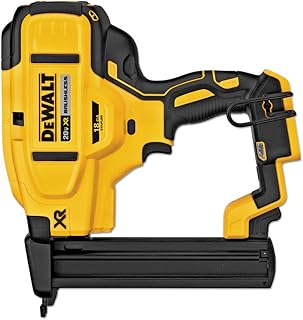

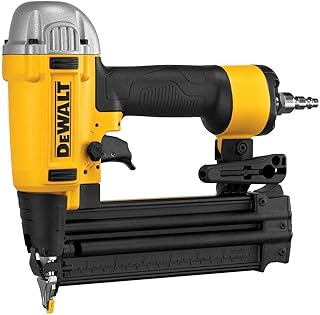

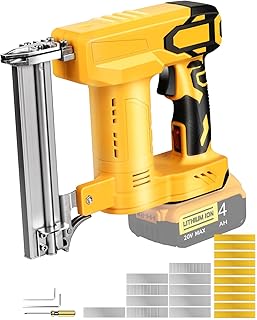

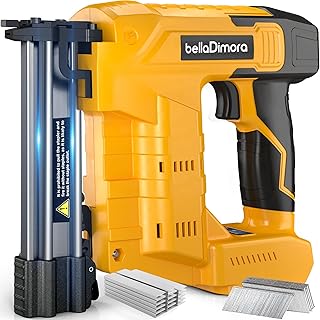


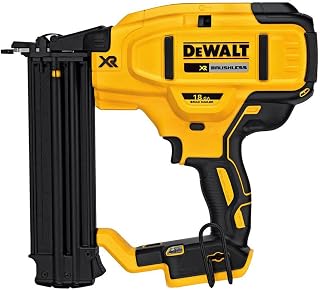


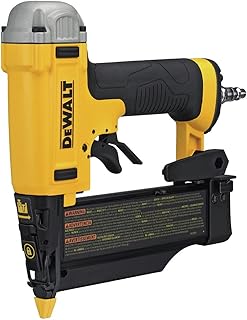


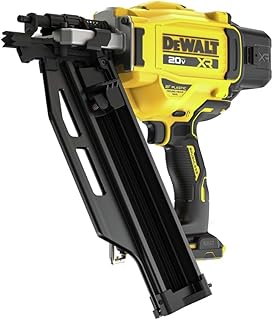
Choosing an advanced DEWALT nail gun is less about finding the most powerful model and more about matching the nailer to the fastening job, material, fastener size and working environment. A framing nailer designed for structural timber is built around very different requirements from a finish nailer intended for trim, cabinetry or detailed interior work.
For Australian buyers, the decision also involves platform compatibility, battery availability, pneumatic equipment, nail specifications, local electrical requirements and the type of work the tool will perform most frequently. DEWALT has several cordless and pneumatic fastening solutions, but not every nail gun is suitable for every application.
This guide focuses on the technical and practical factors that matter when comparing advanced DEWALT nail guns in 2026. Use it alongside current manufacturer specifications, retailer listings and verified customer feedback before purchasing.
The first step is identifying the category of nailer required. Buying a premium nail gun in the wrong category can be more frustrating than buying a less expensive tool that is correctly matched to the job.
Framing nailers are designed for larger fastening applications involving timber construction. They are commonly considered for wall framing, roof structures, subfloor work, decking-related construction and other projects where longer and heavier fasteners are appropriate.
When comparing DEWALT framing nailers, examine the permitted nail diameter, nail length range, magazine capacity, firing modes, tool weight and power source rather than judging the tool solely by its advertised power.
Finish nailers occupy the middle ground between heavy construction fastening and fine-detail work. They are commonly used for architraves, skirting boards, door trim, moulding and other applications where a relatively small nail head and controlled fastening are desirable.
A finish nailer can be a particularly versatile choice for renovation work because it offers considerably more holding power than a small brad nailer while producing a cleaner result than a framing nailer.
Brad nailers are intended for lighter fastening jobs. They are particularly useful when working with decorative trim, small mouldings, cabinetry components and other materials where minimising visible holes is important.
Specialised nailers exist for particular construction tasks, including roofing applications. These tools are designed around specific fastener formats and repetitive fastening requirements. A specialist nailer can be considerably more efficient for its intended task but may have little value outside that application.
Power source is one of the most important comparison points when choosing a nail gun. DEWALT offers fastening equipment across cordless and pneumatic categories, and each approach has meaningful advantages.
Cordless nailers eliminate the need for an air compressor and hose. This can make them attractive for renovation projects, remote jobs, maintenance work and construction environments where moving equipment frequently is unavoidable.
The trade-off is that cordless tools can be heavier than some pneumatic alternatives, particularly when a battery is attached. Battery runtime, recharge time, temperature, firing frequency and the availability of compatible batteries should therefore be considered before purchase.
Pneumatic nailers use compressed air supplied by a suitable compressor. They remain an important option for workshops, professional construction environments and users who already own compatible air equipment.
A pneumatic nailer is not automatically the better choice simply because it is lighter. The complete setup includes the compressor, hose, fittings and power supply, so compare the entire system rather than the weight of the nailer alone.
For cordless buyers, battery compatibility can have a significant impact on the overall value of a nail gun. Before choosing a cordless DEWALT nailer, confirm the exact battery platform specified for the Australian model and determine whether batteries and a charger are included.
Do not assume that every DEWALT battery fits every DEWALT cordless tool. Battery systems, voltage classes, physical interfaces and tool requirements can differ between product families and markets.
Fastener compatibility is just as important as the nail gun itself. A nailer should be selected according to the fasteners required for the project, not the other way around.
Gauge describes nail thickness, while nail length determines how deeply the fastener can penetrate the workpiece. Different nailer categories are designed around different fastener formats, so the permitted range must be checked in the manufacturer's specifications.
A larger fastener can provide greater holding capacity, but it can also create a larger hole and increase the possibility of damaging delicate materials. Smaller fasteners can produce a more discreet finish but are not appropriate where substantial structural fastening is required.
The correct length depends on the thickness and type of material being fastened. A fastener that is too short may provide inadequate holding power, while an excessively long nail can penetrate through the material or create an unintended hazard.
Always follow the nailer's approved fastener range and the requirements of the specific construction or woodworking application.
Advanced nail guns may provide different firing modes. Sequential actuation generally requires the user to position the nose of the tool against the work surface and then activate the trigger. This approach provides deliberate control over each fastening operation.
Contact or bump-style actuation can allow faster repetitive fastening where the tool is operated according to its designed firing sequence. The appropriate mode depends on the application, the user's experience and the requirements of the work.
Do not select a nailer solely because it offers a faster firing mode. Control, accuracy and safe operation are more important than maximum theoretical firing speed for many users.
Depth adjustment is an important feature when working with different materials. The ideal setting can vary according to timber density, fastener length, surface material and the desired finished appearance.
A nail driven too deeply can leave an unnecessarily large depression or damage a surface. A nail that sits too proud may interfere with finishing work or create an unsatisfactory appearance.
When comparing advanced DEWALT nail guns, look for practical depth-control mechanisms and determine how easily the adjustment can be made. Tool-free adjustment can be particularly convenient when switching between materials or fastening requirements.
The magazine determines how fasteners are loaded and how frequently the tool needs to be reloaded. Capacity is useful, but it should not be considered in isolation.
For occasional DIY work, a very large magazine may provide little practical benefit. For repetitive professional fastening, convenient reloading and reliable magazine operation can have a much greater impact on productivity.
Even a high-quality nailer can encounter a jam or misfire if the wrong fastener is used, the magazine is loaded incorrectly, the tool requires maintenance or operating conditions fall outside its intended use.
Before clearing a jam, follow the manufacturer's safety and service instructions and isolate the tool from its power source as specified. For cordless models, this can include removing the battery where the manufacturer's procedure calls for it. For pneumatic models, disconnect and depressurise the air supply according to the manufacturer's instructions.
Routine maintenance should be based on the specific model's documentation. Pneumatic nailers may require appropriate air-system maintenance, while cordless nailers require attention to battery condition, tool cleanliness and mechanical components.
Weight becomes increasingly important during repetitive overhead or extended fastening. A nail gun that feels manageable for ten minutes can become uncomfortable during several hours of work.
When comparing models, consider the complete operating weight rather than the bare-tool figure. For cordless models, include the battery. For pneumatic models, also consider the practical effect of the connected hose.
Advanced nail guns often differ in several smaller details that can have a large practical effect.
Feature count should not be confused with overall suitability. A simpler tool with the correct fastener system and ergonomics can be a better purchase than a feature-heavy model that does not match the job.
The construction of the tool influences durability, handling and long-term usability. Nail guns combine metal, engineered plastics, rubberised grip components and precision mechanical parts, with the exact construction varying by model.
For demanding construction work, pay particular attention to the manufacturer's stated design characteristics and the tool's intended application. For occasional woodworking, ergonomics and control may deserve greater emphasis than maximum-duty construction.
Inspect product specifications for information about the housing, magazine, nose assembly and other components where such information is provided. Avoid assuming that a heavier tool is necessarily more durable or that a lighter tool is necessarily less robust.
The best DEWALT nail gun for a professional builder may be very different from the best choice for an Australian homeowner completing occasional renovation work.
DEWALT is not the only established brand in the fastening-tool market. Depending on the application and power system, Australian buyers may also encounter products from brands such as Makita, Milwaukee, Paslode, Bostitch and Metabo HPT.
The purpose of comparing brands is not simply to determine which logo is best. A better approach is to compare equivalent nailer categories and specifications.
A direct comparison between a DEWALT cordless framing nailer and a pneumatic Bostitch framing nailer, for example, is meaningful only when the buyer accounts for the complete operating system, including batteries or compressor equipment.
Rather than choosing a tool based on popularity alone, create a shortlist based on the work you need to complete.
More power is not automatically better. A framing nailer can be unnecessarily aggressive for delicate trim, while a small brad nailer may be completely inadequate for heavy timber construction.
A nail gun is only useful if it accepts the fasteners required for the job. Confirm nail diameter, length, collation and other compatibility requirements before purchasing.
A cordless nailer sold without a battery and charger should not be compared directly with a kit that includes both. Calculate the complete cost of the operating setup.
If you already use cordless DEWALT equipment, battery compatibility may influence the total cost and convenience. If you do not own compatible batteries, include the required battery and charger in the purchase calculation.
A pneumatic nailer requires more than the nailer itself. Check the compressor's suitability, air requirements, hose, fittings and other necessary equipment before deciding that pneumatic operation is cheaper or more convenient.
Customer ratings can provide useful information, but they need context. A highly rated brad nailer may be unsuitable for someone who needs a framing tool. Read verified customer reviews for comments about the exact application you have in mind and compare those observations with the manufacturer's specifications.
Product specification tables can appear complicated, but a few fields usually deserve priority.
Always use the specification sheet for the exact model and Australian variant. Specifications can differ between closely named products and between international markets.
Australian buyers should verify that the exact nail gun variant is intended for the local market. International product names can look similar while package contents, batteries, chargers, electrical configurations and included accessories differ.
When shopping through Australian retailers, check the complete listing rather than relying on the product title alone. Confirm whether the listing represents a bare tool, a kit or a package containing batteries and a charger.
Nail guns are powerful fastening tools and should be treated as professional equipment even when used for home projects. Always read the model-specific operating and safety instructions before use.
Regular maintenance can help preserve reliable operation and identify problems before they become more serious. The correct maintenance procedure varies by model, so the manufacturer's instructions should always take priority.
Correct tool selection is only part of achieving clean and reliable fastening. Material preparation and technique also matter.
For most buyers, the most reliable selection process is to identify the application first and the tool second. Start with the material, determine the required fastener, select the appropriate nailer category and then compare power source, ergonomics, controls and total ownership requirements.
For heavy timber construction, investigate the appropriate DEWALT framing category. For trim and finishing, compare DEWALT finish nailers. For lightweight woodworking and detailed projects, investigate the appropriate brad-nailer category. If the work is repetitive and workshop-based, compare pneumatic options with cordless alternatives based on the equipment already available.
Once the category is established, compare equivalent models rather than comparing unrelated nailers simply because they carry the same brand name.
There is no single best DEWALT nail gun for every Australian buyer. The right choice depends on whether the primary work involves framing, finishing, brad nailing or another specialised application, along with the required fastener size and preferred power source.
Suitable cordless models can be useful for professional applications, particularly where portability and the elimination of compressor equipment are valuable. The correct choice depends on the workload, application, battery requirements and specifications of the particular model.
Generally, a framing nailer is not the first choice for delicate trim work. A finish or brad nailer may provide more appropriate fastening characteristics depending on the thickness, material and finish requirements.
Choose based on the complete working environment. Cordless models provide freedom from air hoses and compressors, while pneumatic models can make sense when a suitable compressor and air infrastructure are already available.
Not necessarily. Compatibility depends on the exact nailer and the fastener specifications approved by its manufacturer. Always match nail diameter, length, collation and other requirements to the specific tool rather than choosing fasteners based solely on brand.
DEWALT offers nailer categories that can be appropriate for DIY renovation and woodworking, but the correct model depends on the project. A homeowner should avoid selecting a heavy construction nailer when a smaller finish or brad nailer is sufficient.
Look beyond the overall rating. Pay attention to verified customer comments concerning the exact application, fastener compatibility, ergonomics, battery performance where relevant, ease of loading, depth adjustment, reliability and handling.
There is no universal single specification. Fastener compatibility and nailer type should normally be checked first because a tool that cannot perform the required fastening task is unsuitable regardless of its other features.
If you already own compatible batteries and a charger, a bare tool may be more practical. If you are entering the battery platform for the first time, compare the total cost of the tool, batteries and charger against complete kits.
Service requirements depend on the exact model and how intensively it is used. Follow the manufacturer's maintenance and service instructions rather than applying a universal service interval to every nailer.
The strongest approach to choosing an advanced DEWALT nail gun in 2026 is to treat the purchase as a complete fastening-system decision. Start with the job, identify the correct fastener and nailer category, then compare cordless versus pneumatic operation, ergonomics, controls, magazine design, adjustment features and total ownership requirements.
Do not assume that the newest, most powerful or most expensive model is automatically the best option. A correctly matched DEWALT brad nailer can be a better choice for detailed woodworking than a framing nailer, just as a pneumatic system can make more sense in an established workshop while a cordless system may be more convenient for mobile renovation work.
Before purchasing, compare the exact Australian model specifications, included accessories, compatible fasteners, current retailer pricing and verified customer feedback. Recheck product information at the time of purchase because model availability, package contents and pricing can change throughout 2026.