

♥ Wishlist
Compare 33 Makita Nail Guns Australia products in Australia. Reviews, ratings, pros, cons and buying advice updated for October 2026.


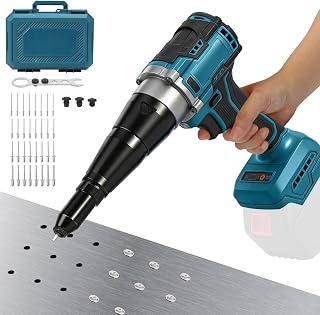


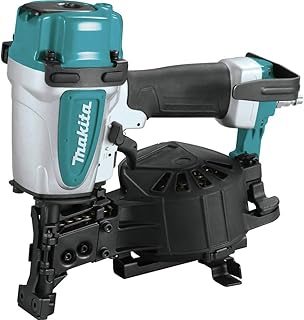


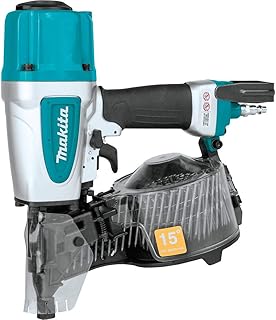


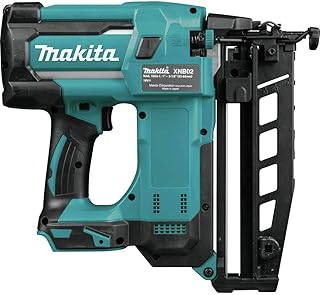


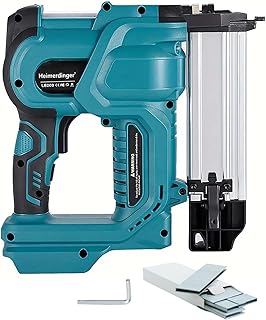
Choosing an advanced Makita nail gun is less about finding the most powerful-looking tool and more about matching the fastening system to the material, nail size, work environment and frequency of use. A finish carpenter, cabinetmaker, renovator, flooring installer and framing contractor can have very different requirements even when they all search for a Makita nail gun.
For Australian buyers, the first decision is usually between a pneumatic nailer and a cordless nailer. Pneumatic equipment can be attractive for workshop-based work where a suitable compressor and air infrastructure are already available. Cordless models are generally more convenient when working across renovation sites, roofs, rooms without convenient power or locations where dragging an air hose would slow the job down.
Makita's cordless ecosystem also matters if you already own compatible batteries. Before comparing tool prices, check whether the nailer is sold as a skin or as a complete kit, because a tool-only package normally requires a compatible battery and charger.
An advanced nail gun should be evaluated as a complete fastening system rather than by one specification. Useful features can include brushless motor technology, tool-free depth adjustment, selectable firing modes, dry-fire protection, anti-dry-fire mechanisms, sequential or contact actuation, narrow nose designs, magazine visibility, low-vibration operation and electronic control systems.
However, not every feature is equally valuable for every application. A cabinetmaker may place greater importance on precise depth control and a narrow nose than on maximum fastening speed. A framing professional may prioritise driving capacity, magazine capacity, battery efficiency and rapid repetitive firing. A homeowner completing occasional trim work may value compact dimensions and simple operation above advanced electronic controls.
If you already own Makita cordless tools, battery compatibility can have a major effect on the overall cost of ownership. Makita offers several cordless platforms, so do not assume that every Makita battery fits every Makita nailer.
Check the exact model number and manufacturer's compatibility information before buying. For an existing 18V LXT user, an 18V LXT-compatible nailer can potentially reduce the need for another battery ecosystem. Buyers entering a newer platform should evaluate the wider range of compatible tools they may eventually need rather than choosing a battery solely because one nailer is discounted.
A tool-only nailer can appear considerably cheaper than a kit, but the comparison is incomplete if you do not already have the required battery and charger. When comparing Australian listings, calculate the complete setup cost:
Existing Makita users should compare the skin price against the value of using batteries and chargers they already own. New users should compare the total kit investment instead.
The phrase "Makita nail gun" covers several specialised fastening categories. Selecting the wrong type can be a much bigger mistake than choosing the wrong battery capacity.
Finish nailers are designed for applications where the appearance of the finished surface matters. They are commonly considered for trim, moulding, cabinetry components, door and window surrounds, furniture work and other finishing applications where a relatively small nail is preferred.
The important specifications include nail diameter or gauge, supported nail length, magazine capacity, firing mode, depth adjustment and nose design. A finish nailer should not be selected simply because it is described as powerful. Excessive driving force or an unsuitable fastener can damage delicate timber or leave an unnecessarily large hole.
Brad nailers use smaller-gauge fasteners and are particularly useful for lightweight trim, decorative mouldings, cabinetry details and assembly tasks where minimal surface marking is desirable.
For delicate work, pay close attention to depth control. A nail driven too deeply can leave a noticeable depression, while insufficient penetration can reduce holding performance. The correct brad length also depends on the thickness and type of the materials being joined.
Pin nailers are intended for very fine fastening where the smallest practical hole is desirable. They are often useful for delicate trim, small mouldings, cabinetry and temporary positioning before adhesive reaches full strength.
Because pin nails are extremely small, they should not be treated as a universal replacement for brads or finish nails. The joint design, material thickness and required holding strength determine whether pin fastening is appropriate.
Framing nailers are intended for substantially heavier construction work. They are relevant to timber framing and other applications where larger nails and higher fastening capacity are required.
When evaluating a framing nailer, consider supported nail dimensions, firing mechanism, magazine capacity, tool weight, balance, battery runtime and the type of timber you routinely work with. A framing nailer can be unnecessarily large and cumbersome for fine interior work.
Specialised fastening tools can use completely different operating principles and fastener systems. These tools should be assessed against the manufacturer's stated application range rather than assuming that a conventional timber nailer can perform the same task.
For concrete, steel or other hard substrates, always verify that the exact tool and fastener combination is intended for that substrate. Using the wrong nailer or fastener can create poor fastening results and unnecessary safety risks.
Nail gauge is one of the most important specifications because it determines the type of fastening work the tool is suited to. Smaller-diameter nails are generally associated with delicate finishing applications, while larger fasteners are used where greater holding capacity is required.
Do not compare gauge numbers without checking the actual supported fastener specification. Different nailer categories can use different fastener standards, and two tools that look similar may accept completely different nail sizes.
The supported nail-length range should match your most common projects. A nailer designed around short finish fasteners is not a substitute for a framing nailer capable of accepting substantially longer construction nails.
Also consider the material thickness. The correct nail length needs to provide sufficient penetration into the receiving material without being unnecessarily long for the joint.
Magazine capacity affects how often you need to reload. High-capacity magazines can be valuable during repetitive production work, while a compact magazine may be perfectly adequate for occasional home renovation.
Do not treat magazine capacity as a standalone indicator of tool quality. A larger magazine can add size or weight, and the best balance depends on the application.
Depth adjustment is particularly important for finish and trim work. It allows the operator to tune how deeply the fastener enters the workpiece.
Look for a practical adjustment mechanism that can be accessed without unnecessary downtime. Fine control becomes especially valuable when moving between different timber species, thicknesses or material combinations.
Sequential firing provides greater control over individual fastener placement and is often preferable for precision work. Contact or rapid firing can be useful for repetitive fastening when the application and tool permit it.
For professional users, the choice should be based on the workflow rather than simply selecting the mode that sounds fastest. Control, accuracy and consistent placement can matter more than maximum firing speed.
Dry-fire protection can help prevent unnecessary firing when the magazine is empty or nearly empty, depending on the tool design. This feature can reduce interruptions and may help protect components from inappropriate operation.
Tool weight becomes increasingly important during overhead work, repetitive installation and long working sessions. A nailer that feels manageable for five minutes may feel very different after several hours of repeated fastening.
When comparing models, consider the weight with the battery installed rather than looking only at the bare tool specification. Battery size can materially affect the finished weight and balance.
A compact or carefully designed nose can improve visibility when positioning the fastener. This is particularly useful around narrow trim, corners, cabinet components and other areas where the operator needs to see the exact contact point.
Both systems can make sense in Australia. The right choice depends heavily on where and how you work.
For an Australian buyer already invested in Makita, platform compatibility deserves careful consideration. The 18V LXT system is widely established across many categories of cordless power tools, but Makita also offers other cordless platforms.
The sensible approach is to start with the exact nailer model you need and then confirm which battery system it belongs to. Do not buy a battery platform solely because it is marketed as more advanced if the tool category, available models and accessories do not fit your broader requirements.
Existing battery ownership can be a particularly strong deciding factor. If your workshop already contains several compatible batteries and chargers, staying within that ecosystem may simplify charging, storage and tool management.
Brushless motors can offer useful benefits in cordless power tools, including reduced brush wear and efficient electronic motor control. However, brushless technology should be treated as one part of the buying decision rather than a guarantee that a particular nailer is superior for every job.
For frequent professional use, the combination of motor design, electronic control, battery management, ergonomics and durability can be more meaningful than the word "brushless" by itself.
For occasional users, a simpler tool may provide sufficient capability if it matches the required fastener type and application.
A compact cordless finish or brad nailer can be attractive for renovation work involving skirting boards, architraves, decorative trim and cabinetry repairs. Prioritise manageable weight, simple controls and the correct nail range rather than buying a construction-oriented model that exceeds your requirements.
Professional carpenters should consider durability, ergonomics, fastener availability, battery workflow, magazine capacity and depth consistency. The fastest tool on paper is not necessarily the most productive if it causes fatigue or requires frequent adjustments.
Cabinetmaking often demands accurate placement and minimal surface damage. Smaller fasteners, good visibility and precise depth adjustment can therefore be more important than maximum driving force.
Trim installation benefits from a nailer that balances precision with enough driving capability for the chosen timber and fastener. The nose design and depth adjustment deserve particular attention because visible dents or proud fasteners can increase finishing work.
Framing applications require a completely different level of fastening capacity. Concentrate on supported framing nail specifications, driving performance, magazine design, tool balance, battery management and the manufacturer's intended applications.
Makita is an established power-tool brand, but brand recognition does not remove the need to match a specific nailer to the job. A high-quality brad nailer cannot replace a framing nailer simply because both carry the same brand name.
Before buying, check whether the required nails are readily available in the sizes and type specified by the tool. A nailer becomes much less useful if compatible fasteners are difficult to source.
Always compare like with like. A bare tool and a kit containing a battery and charger should not be treated as equivalent products when evaluating value.
A larger supported nail range is not automatically better. If your work consists primarily of delicate trim, a tool optimised for small finishing fasteners may be more practical than a larger construction nailer.
Repeated overhead fastening can expose weaknesses in balance and grip comfort. Consider how the nailer feels in realistic working positions, not just how impressive its specification sheet looks.
Different fastening jobs use different nail types, gauges and lengths. Professionals may achieve better results by using specialised nailers rather than trying to make one tool perform every task.
When reviewing a shortlist of ten Makita nailers, use the same criteria for every candidate. This prevents a low headline price or attractive feature from dominating the decision.
A nailer can only perform correctly when loaded with compatible fasteners. Always use the nail specification stated for the particular tool and application.
Consider nail material and finish as well as dimensions. Different environments and timber species can influence corrosion resistance and fastening suitability. For exposed, damp or chemically challenging environments, verify whether the selected fastener has the appropriate corrosion characteristics rather than assuming a standard nail is suitable.
For finish work, the fastener should be selected with the final appearance in mind. A nail that is mechanically adequate may still be inappropriate if its head size, length or surface finish creates excessive visible damage.
Australian projects can involve softwoods, hardwoods, engineered timber and composite materials. Material density can influence penetration, depth setting and the likelihood of surface marking.
When moving between materials, test the selected nailer and fastener combination on an offcut before starting visible work. Adjust depth gradually rather than immediately selecting a more aggressive setting.
Engineered wood products should be approached according to the manufacturer's recommendations for the material and fastening method. Do not assume that a setting suitable for ordinary softwood will produce the same result in a dense engineered board.
Battery performance is influenced by the tool, fastener, material, firing frequency, battery capacity, temperature and working conditions. Therefore, advertised runtime should not be interpreted as a universal number for every job.
For intensive professional use, having multiple compatible batteries can reduce downtime. For occasional projects, one suitable battery may be sufficient, particularly if other compatible Makita tools are already available.
Keep batteries in accordance with the manufacturer's storage and charging instructions. Inspect packs for visible damage and discontinue use if a battery shows signs of damage or abnormal behaviour.
Nail guns can cause serious injury when used incorrectly. Read the specific tool instructions before operation and understand the firing mechanism, adjustment controls and approved fasteners.
Routine maintenance helps preserve reliable operation and makes it easier to identify problems before they become more serious.
Check the depth adjustment, fastener specification, battery condition for cordless models and the material being fastened. A change in timber density can require a different setting. Avoid repeatedly increasing power without first confirming that the nail and tool are correctly matched.
Check whether the battery is correctly installed and adequately charged, whether the magazine contains compatible fasteners and whether any safety or contact mechanism is preventing operation. For pneumatic equipment, inspect the air supply and connections against the manufacturer's requirements.
Bent nails can indicate an unsuitable fastener, incorrect tool positioning, inappropriate material, insufficient driving capability for the application or a mechanical issue. Stop and identify the cause rather than repeatedly firing the tool.
Check depth adjustment and confirm that the fastener length and type are appropriate. If the problem occurs consistently across suitable settings, inspect the tool and consult the manufacturer's troubleshooting information.
Makita is not the only established manufacturer in the nailer market. Buyers may also encounter brands such as Milwaukee, DeWalt, Paslode, Bosch and Metabo HPT, depending on the nailer category and Australian market.
The most useful comparison is not simply brand versus brand. Compare the exact tool category, fastening system, battery platform, supported nails, ergonomics, availability of compatible fasteners and the broader tools you expect to use.
For someone already invested in Makita batteries, a compatible Makita nailer may offer practical ecosystem advantages. Conversely, a buyer starting from scratch should compare the complete cordless ecosystem and the specific fastening tools available within each platform.
Customer ratings can be useful, but they should not be treated as a substitute for technical specifications. A high rating may reflect satisfaction with a tool used for light DIY work, while a professional buyer may require capabilities that reviewers never tested.
When reading verified customer reviews, look for repeated comments about the same practical characteristics:
Give more weight to detailed reviews that explain the application, material and fasteners used than to very short comments that only state whether the purchaser liked the product.
Australian buyers should check that the exact model is intended for the local market and that the supplied charger, where applicable, is appropriate for Australian electrical requirements. Product names and model numbers can vary between markets, so verify the complete Australian model designation before purchasing.
Also compare local retailer listings carefully. Product packages can differ in battery inclusion, charger inclusion, accessories and warranty arrangements. The cheapest listing is not necessarily the lowest-cost complete setup.
Makita Australia provides product registration and warranty information for eligible products, so buyers should review the applicable terms for the exact model and purchase circumstances rather than assuming that every tool has identical coverage. Makita Australia currently states that selected new cordless skins can qualify for a five-year limited warranty when registered online within the specified period and subject to applicable terms. :contentReference[oaicite:0]{index=0}
A useful top-ten comparison should separate models by intended use instead of ranking every nailer against a single generic definition of "best." A practical shortlist can include categories such as:
This category-based approach is more useful than declaring one universal winner because the appropriate fastening system depends on the project.
Before ordering from an Australian retailer, compare the model number shown in the listing with the manufacturer's documentation. Confirm the included accessories and battery status, supported fasteners, voltage or platform, firing modes and intended application.
Check whether the listing describes a complete kit or a bare tool. Also examine the product photographs carefully, but rely on the written specification and manufacturer's documentation for compatibility decisions.
Where a product listing and manufacturer's specification appear to conflict, treat the discrepancy as a reason to investigate further rather than assuming the retailer's description is correct.
The long-term value of a nail gun includes much more than its purchase price. A tool that integrates with batteries you already own may cost less to deploy than a seemingly cheaper alternative requiring a new battery and charger.
Fastener costs also matter. If a nailer uses specialised or less readily available fasteners, ongoing operating costs and convenience may be affected.
For professionals, productivity and downtime can be even more important. A tool that is comfortable, predictable and well matched to the application may provide greater practical value than a cheaper model with specifications that do not suit the job.
The best advanced Makita nail gun for you in 2026 should be selected by application first, fastener compatibility second and cordless ecosystem third. After those fundamentals are established, compare ergonomics, depth adjustment, firing modes, magazine capacity, battery requirements, maintenance and overall value.
For precision finishing, focus on control and fastener compatibility. For repetitive construction work, prioritise appropriate driving capability, battery workflow and ergonomics. For occasional renovation, simplicity and compatibility with existing batteries can be more valuable than buying the most technically sophisticated model.
Before making a final purchase decision, compare current Australian specifications, verified customer feedback and today's retailer pricing for the exact model. Product packages and availability can change during 2026, so the model number and included accessories should always be checked at the point of purchase.
There is no single best Makita nail gun for every Australian buyer. The correct choice depends on whether you need a framing nailer, finish nailer, brad nailer, pin nailer or another specialised tool. Your required nail size, material, working frequency and battery platform should determine the choice.
Cordless nailers can be suitable for professional applications when the specific model is designed for the required fastening task and its battery platform, fastener range and operating characteristics match the workload. Professional suitability should be judged from the exact model specifications rather than the cordless label alone.
If you already own compatible Makita batteries and chargers, a tool-only package may be practical. If you are new to the relevant battery platform, compare the total cost of a complete kit against the cost of purchasing the battery and charger separately.
A finish or brad nailer may be appropriate depending on the skirting material, thickness, nail requirements and installation method. Check the required fastener specification before choosing the tool.
No. Different nailer categories are designed around different fastener sizes and applications. A pin nailer, brad nailer, finish nailer and framing nailer should be considered specialised tools rather than interchangeable versions of the same product.
No. Always verify the exact battery platform and model compatibility. Makita has multiple cordless systems, and voltage or brand alone is not sufficient to establish compatibility.
Prioritise accurate fastener placement, suitable small-gauge fasteners, depth control, nose visibility, manageable weight and compatibility with the materials being joined. The smallest available nailer is not automatically the correct choice; the fastener must provide adequate holding performance for the joint.
Brushless motor technology can provide useful efficiency and reduced brush wear, but it should not be the only selection criterion. The correct fastener range, application, ergonomics, battery platform and depth control remain fundamental.
Follow the maintenance schedule and procedures supplied for the exact model. Basic inspection and cleaning should be part of normal tool care, while lubrication and other service requirements depend on the nailer design.
Yes, particularly if you are not already committed to a battery platform. Compare exact nailer models rather than brands as a whole, paying attention to fasteners, battery systems, ergonomics, application range and total ownership cost.