
♥ Wishlist
Compare 42 DeWalt Power Tool Sets for Australian Trade & DIY Projects products in Australia. Reviews, ratings, pros, cons and buying advice updated for October 2026.


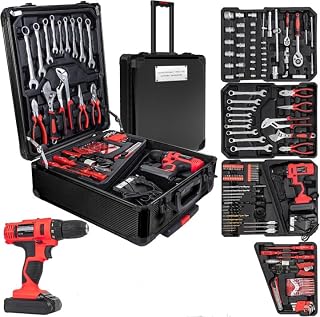


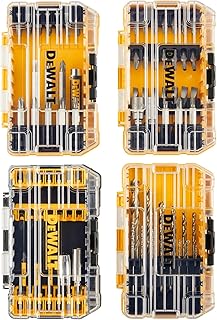
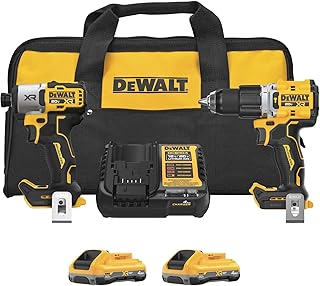


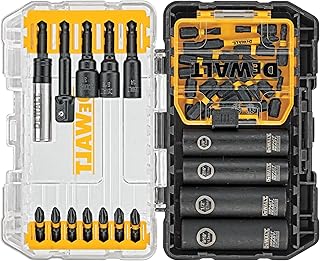


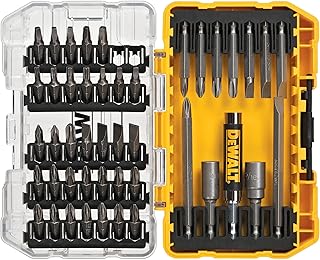


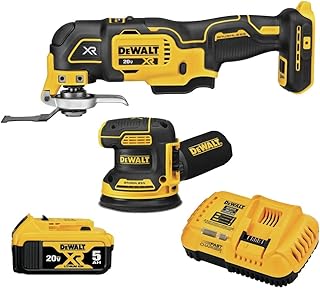


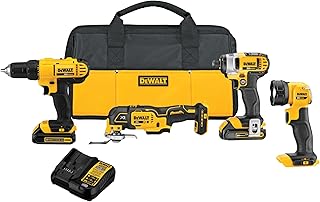
Choosing an advanced DEWALT power tool set is less about selecting the kit with the largest number of tools and more about building a practical system around the work you actually perform. For Australian tradespeople, serious DIY users, renovators and property-maintenance professionals, the most useful kit is usually the one that combines the right core tools, suitable battery capacity, sensible charger provision, compatible accessories and enough room to expand later.
DEWALT's Australian range includes 12V XR, 18V XR and 54V XR FLEXVOLT platforms, with combination kits ranging from compact twin-tool packages to large multi-tool sets. The Australian catalogue currently includes examples such as 18V XR brushless four-, five-, six-, eight-, nine-, ten-, twelve- and fourteen-piece kits, as well as kits incorporating FLEXVOLT batteries. This makes the platform flexible, but it also means specifications deserve close attention before purchase.
An advanced power tool set should provide more than a collection of cordless tools. It should function as a coordinated system in which batteries, chargers, tool types and accessories complement one another. A good kit can reduce the need to purchase duplicate batteries and chargers while giving you a useful starting point for future tool-only purchases.
One of the most important decisions is whether your work is better suited to the 18V XR platform or to the higher-power 54V XR FLEXVOLT ecosystem. They should not be treated as interchangeable categories simply because both are cordless.
DEWALT describes its 18V XR system as a broad cordless platform with more than 250 products. The range covers common construction and workshop applications, making an 18V kit particularly useful when you expect to expand your collection gradually.
For general carpentry, installation, maintenance, renovation, cabinetry, drilling, fastening and many everyday construction tasks, an 18V system can provide a strong balance between portability and capability. Compact 18V batteries can also be preferable when working overhead or in confined areas.
FLEXVOLT is intended for applications where additional power is valuable. DEWALT's Australian FLEXVOLT batteries can automatically switch between 18V and 54V depending on the compatible tool, allowing selected batteries to serve both parts of the ecosystem.
This can be particularly useful for users who need high-powered cordless equipment but still want access to the broader 18V XR system. A FLEXVOLT battery can therefore provide an expansion path rather than forcing every tool in a collection onto the higher-voltage platform.
Battery capacity should be considered in relation to the tool rather than treated as a simple “bigger is always better” specification. Higher-capacity batteries can provide longer operating periods between charges, but they may also add weight and change the balance of a compact tool.
Do not compare batteries only by amp-hour figures when different voltage platforms are involved. Voltage, watt-hours, application load, tool efficiency and operating conditions all affect the practical amount of work a battery can provide.
POWERSTACK is another battery consideration when comparing advanced DEWALT kits. DEWALT's Australian product information describes POWERSTACK batteries as using pouch-cell technology and positions them as an alternative to conventional cylindrical-cell batteries.
DEWALT states that its 18V POWERSTACK 5Ah battery delivers 50% more power than its DCB184 5Ah cylindrical-cell comparison battery and claims up to twice the lifespan under its specified comparison conditions. These figures are manufacturer claims and should be interpreted according to the stated test conditions rather than assumed to represent identical results in every tool or application.
The key buying question is therefore not simply whether POWERSTACK is “better”, but whether its performance, size, weight and price make sense for the tools you use most often.
For an advanced cordless kit, brushless tools are generally worth serious consideration. Brushless motor technology eliminates the traditional mechanical brushes used in brushed motors and can offer advantages in efficiency, durability and electronic control.
However, a brushless motor alone does not determine whether a tool is appropriate. Compare the complete specification, including torque or power characteristics, speed range, impact rate where relevant, cutting capacity, trigger control, safety features, dimensions, weight and battery requirements.
The ideal tool combination depends on the work you perform. A large fourteen-piece kit is not automatically better than a carefully selected four-piece kit if half of the included tools remain unused.
A drill driver is one of the most versatile tools in a cordless collection. Look for variable speed control, appropriate chuck capacity, multiple clutch settings, useful ergonomics and sufficient performance for the materials you commonly work with.
An impact driver is especially useful for repetitive fastening. It can complement rather than replace a drill driver, with the two tools serving different purposes. When evaluating an impact driver, consider compactness, torque characteristics, speed control, bit retention and how comfortably it can be used for long fastening sessions.
A cordless circular saw becomes particularly useful for sheet materials, timber and general site cutting. Important comparison points include blade diameter, cutting depth, bevel range, visibility of the cut line, guard movement, shoe construction, weight and battery requirements.
Reciprocating saws are valuable for demolition, rough cutting, renovation and applications where precision circular-saw cuts are not the primary requirement. Blade-change convenience, variable speed, stroke characteristics, vibration control and overall balance deserve attention.
An oscillating multi-tool can fill numerous specialist roles, including flush cutting, detail work, scraping and difficult-access applications. The accessory ecosystem is especially important because the usefulness of the tool depends heavily on the blades and attachments available for the material being cut.
A cordless grinder can be useful for metal cutting, grinding and surface preparation. Buyers should pay particular attention to disc size, guard adjustment, electronic controls, braking characteristics, side-handle positioning and the battery size recommended for demanding applications.
A work light may seem less important than a saw or drill, but it can become one of the most frequently used items in a professional kit. Consider beam coverage, mounting options, runtime, portability and whether the light can use the same batteries as the rest of the kit.
For many buyers, the most sensible approach is to identify the tools required for the next twelve months rather than buying according to the number printed on the box.
A common purchasing mistake is comparing a ten-piece kit with a five-piece kit and assuming the larger package provides twice the value. Kit definitions can include tools, batteries, chargers, accessories and other components, so the actual contents should always be checked line by line.
For example, two kits with the same number of tools can have very different practical value if one includes higher-capacity batteries, more useful tools or a more suitable charger configuration.
Battery management becomes increasingly important as the number of cordless tools grows. A user with eight or ten tools does not necessarily need a separate battery for every tool, but insufficient batteries can create downtime when several tools are being used simultaneously.
Consider the work sequence rather than the tool count. If a circular saw, grinder and impact driver are being used continuously on the same job, having only two batteries may create unnecessary interruptions even if the kit contains many tools.
Charger capacity also matters. DEWALT's Australian range includes compact chargers, dual-port options, fast chargers and multi-port charging solutions, giving buyers several ways to organise a larger cordless setup.
Once you own several compatible batteries and chargers, buying additional tool-only products can make more sense than repeatedly purchasing full kits. This is one of the major advantages of choosing a coherent battery platform.
However, always check compatibility before buying a bare tool. “DEWALT” branding does not mean every battery fits every tool. Voltage families, battery interfaces and platform-specific requirements must be verified against the individual model.
A professional power tool collection can become difficult to manage if storage is treated as an afterthought. Consider how the tools will be transported to jobsites, stored in a workshop and protected from dust and moisture.
Large combination kits can be attractive because they consolidate multiple tools, but the physical size of the storage solution should be considered alongside vehicle space and jobsite requirements.
Australian buyers should pay attention to the exact local model number and configuration rather than assuming an overseas kit is equivalent. Product names can look similar while included batteries, chargers, voltage specifications and suffixes differ between markets.
For cordless tools, also verify that the charger and battery configuration is appropriate for the Australian market. When comparing listings from different retailers, use the exact model number as the primary reference point.
Availability and pricing can change during sales periods, so it is sensible to compare current retailer listings rather than treating an older advertised price as a permanent benchmark.
Specifications should be evaluated according to the job rather than compared as isolated numbers.
Voltage helps identify the platform and general power category, but it should not be used as the sole measure of performance. Tool design, motor technology, electronics, battery capability and application all influence results.
Torque figures can be useful when comparing drills and impact drivers, but the measurement method and operating mode matter. A larger quoted number does not automatically make a tool better for delicate fastening or controlled installation work.
Variable speed can be valuable when working with different materials and accessories. High speed can be advantageous for some drilling or cutting tasks, while controlled low-speed operation may be preferable for precision work.
Weight becomes particularly important when tools are used overhead or continuously. A heavier battery may increase runtime but can also change the balance of a compact drill, impact driver or installation tool.
For saws, cutting capacity is usually more useful than a generic power claim. Compare maximum depth, bevel capability and the materials for which the tool is designed.
POWERSTACK deserves particular attention when portability and high-demand performance are priorities. DEWALT's Australian documentation states that POWERSTACK batteries are compatible with the 18V XR tool and charger ecosystem, while the pouch-cell construction is intended to reduce internal resistance and heat build-up compared with conventional cylindrical-cell designs.
For buyers, the important consideration is whether the battery's benefits justify the additional purchase cost for the tools being used. A compact battery can be especially appealing when a tool is used overhead, while a larger conventional or POWERSTACK battery may be more appropriate when runtime is the primary concern.
A FLEXVOLT battery becomes particularly interesting for buyers who expect to combine 18V XR equipment with compatible 54V XR FLEXVOLT tools. DEWALT states that its FLEXVOLT batteries can switch between 18V and 54V depending on the compatible tool, while remaining compatible with applicable XR chargers.
This creates a useful upgrade path for users who may eventually require higher-powered cordless equipment such as selected saws, outdoor equipment or other demanding applications.
Professionals should prioritise reliability, ergonomics, battery availability, charging logistics, service arrangements, tool compatibility and the ability to replace or expand individual tools. The best kit is often the one that fits a specific workflow rather than the one with the highest number of components.
Renovators may benefit from a broad combination containing drilling, fastening, cutting and demolition tools. A reciprocating saw and oscillating multi-tool can be particularly useful alongside the standard drill and impact driver combination.
DIY users should consider how frequently each tool will actually be used. A smaller kit with excellent core tools and a sensible battery arrangement can be preferable to a very large package containing specialist equipment that may spend most of its life in storage.
Good maintenance can help preserve tool performance and reduce avoidable wear. Always follow the individual manufacturer's instructions for cleaning, inspection, battery handling and storage because maintenance requirements can vary between models.
More powerful cordless tools should not be treated as automatically safer simply because they do not have a mains power cord. Saws, grinders, drills, impact tools and demolition equipment can create significant hazards if used incorrectly.
If two kits appear similar, create a simple comparison based on actual ownership value rather than marketing language.
Although this guide focuses on DEWALT, buyers may reasonably compare the ecosystem with other established professional brands such as Makita, Milwaukee, Bosch Professional and Metabo. The most useful comparison is not which brand is universally “best”, because each platform has different tool availability, battery strategies, ergonomics and product coverage.
Once you already own several batteries, chargers and tools from one ecosystem, staying within that platform can offer practical advantages. Starting from scratch, however, is an opportunity to compare the complete ecosystem rather than choosing solely on brand recognition.
Combination kits can change configuration over time, and retailer listings may use shortened names. Exact model numbers provide a more reliable way to compare products because they identify the specific tool, battery and regional configuration being offered.
For example, DEWALT's Australian combination-kit catalogue currently includes model numbers such as DCZ501P3-XE, DCZ601P2-XE, DCZ409P2-XE, DCZ801P3-XE, DCZ1001X2-XE, DCZ1201P3-XE and DCZ1401P2X2-XE, among others. The precise included tools and batteries should be checked against the current listing before purchase rather than inferred from the kit's piece count.
The number attached to a kit should never be interpreted without reading the contents. A fourteen-piece package may count individual tools and batteries separately, while another package may describe its contents differently. Always determine exactly what the manufacturer and retailer mean by the advertised piece count.
This is especially important when comparing large DEWALT kits containing multiple batteries. A kit with fewer tools but stronger battery provision may be more useful for intensive work than a larger package with minimal battery capacity.
A large combo kit can make sense for someone establishing a cordless workshop or professional tool collection from the ground up. It can also be useful for a contractor who needs several core tool categories immediately and values a unified battery platform.
It may be less attractive for someone who already owns several compatible tools, because purchasing another large package can create duplicate drills, chargers or batteries. In that situation, individual tool-only purchases may provide a more efficient route to expanding the collection.
A smaller kit is often the better choice when your work is specialised. A carpenter may prioritise drilling, fastening and cutting, while an installer may care more about compactness, precision and low-weight tools. A homeowner performing occasional maintenance may need only a drill driver and impact driver rather than a complete professional assortment.
The strongest buying decision is therefore based on workflow. Start with the jobs you perform most frequently and build the tool collection around them.
There is no single best kit for every buyer. An 18V XR combination is a strong starting point for many general construction, renovation, maintenance and DIY applications because the platform covers a broad range of tools. The right kit depends on which tools you need, how often you use them and how much battery capacity you require.
Many professional applications are covered by the 18V XR ecosystem. DEWALT's Australian range includes a large selection of professional-oriented 18V XR tools, including brushless models. More demanding applications may justify moving into compatible 54V XR FLEXVOLT equipment.
DEWALT states that applicable FLEXVOLT batteries can switch between 54V and 18V and are compatible with the relevant 18V XR and 54V XR FLEXVOLT tools. Always verify compatibility for the exact battery and tool model before purchase.
DEWALT's Australian POWERSTACK information states that its 18V POWERSTACK batteries are compatible with the 18V XR tool range and corresponding XR chargers. The exact battery and tool should still be checked before purchase.
Not necessarily. The best value comes from tools you will actually use. A smaller kit with the right core tools and adequate batteries can be more useful than a larger package containing several specialist tools that rarely leave the case.
For an advanced cordless collection, brushless models are worth considering because they are designed for efficient operation and durability. Compare the complete tool specification rather than selecting solely because the motor is brushless.
Choose according to the application. Compact batteries can improve portability and reduce fatigue, while larger batteries can provide additional runtime for demanding tools. A mixed battery collection can often be more practical than using the largest battery on every tool.
A combo kit can be attractive when you need several tools and batteries at once. Individual tool-only purchases can be preferable when you already own compatible batteries or only need one additional tool. Compare the complete contents and current prices rather than assuming either purchasing method is always cheaper.
Maintenance frequency depends on usage, environment and the individual model. Tools used heavily in dusty construction environments generally deserve more frequent inspection and cleaning than tools used occasionally in a clean workshop. Follow the manufacturer's instructions for the exact product.
Check the exact model number, included tools, battery capacities, charger configuration, voltage platform, Australian-market specifications, current retailer information and applicable warranty details. These checks help prevent purchasing a kit that looks similar to the intended product but has a different configuration.
The strongest advanced DEWALT power tool setup is not necessarily the largest or most expensive package. It is the system that gives you the right combination of tools, batteries, charging capacity and future expansion potential for your actual workload.
For many Australian buyers, 18V XR provides a versatile foundation, while POWERSTACK batteries offer another option for users who prioritise high-output battery performance and compact designs. FLEXVOLT can provide an upgrade path for applications where 54V cordless capability is appropriate. The most important step is to compare exact model numbers and complete kit contents before making a purchase.
Before choosing among the best DEWALT power tool sets for 2026, compare current Australian specifications, verify the battery and charger configuration, review the tools you genuinely need, check verified customer feedback and compare today's retailer pricing. That approach is more reliable than choosing solely from a headline tool count or a generic “best kit” ranking.