

♥ Wishlist
Compare 21 Power Tool Sets for Australian DIY & Trade Projects products in Australia. Reviews, ratings, pros, cons and buying advice updated for October 2026.
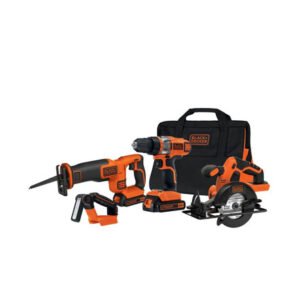
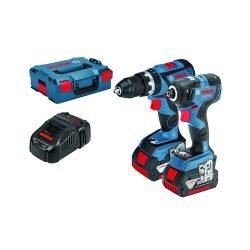
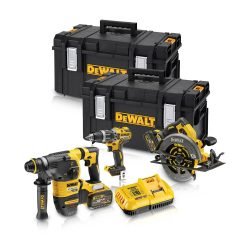
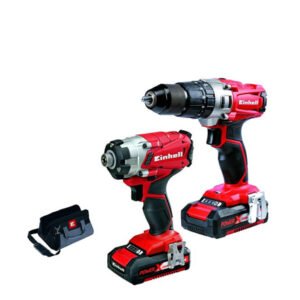
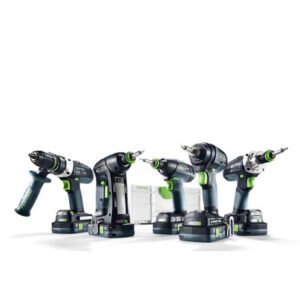
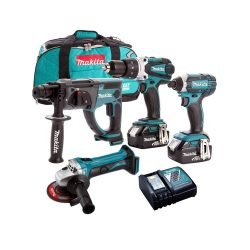
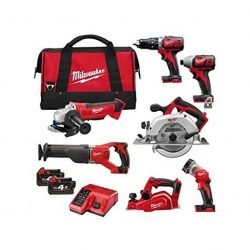
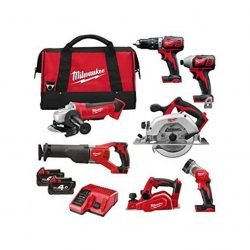


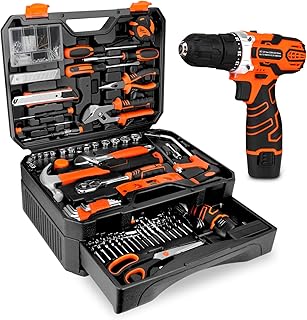




Choosing an advanced power tool set is less about buying the largest collection of tools and more about matching the platform, tool mix, battery system, performance requirements and included accessories to the work you actually do. For Australian homeowners, renovators, tradespeople and serious DIY users, a well-selected kit can reduce the need to purchase individual tools later while keeping batteries, chargers and accessories compatible across the collection.
The strongest buying decisions start with the type of work involved. A homeowner assembling furniture and completing occasional repairs has very different requirements from a carpenter, builder, electrician, landscaper or renovation professional. Before comparing individual kits, consider how frequently each tool will be used, whether cordless mobility matters, what materials you normally work with and whether you expect to expand the collection over time.
An advanced power tool set typically goes beyond a basic drill-and-driver combination. Depending on the manufacturer and kit configuration, an advanced collection may include an impact driver, hammer drill, circular saw, reciprocating saw, oscillating multi-tool, angle grinder, rotary hammer, jigsaw, work light or other specialist equipment.
However, the number of tools should not be the only consideration. A 10-piece kit is not automatically better than a carefully selected five-piece kit. The quality of the individual tools, battery capacity, motor technology, ergonomics, included accessories and compatibility of the platform can have a much greater effect on long-term value.
For cordless equipment, the battery ecosystem is one of the most important long-term purchasing decisions. Once several compatible tools have been accumulated, switching to another platform can mean purchasing additional batteries and chargers. This is why it is worth treating the first substantial cordless kit as the beginning of a tool system rather than simply a one-off purchase.
Major manufacturers such as Makita, DeWalt, Milwaukee, Bosch, Ryobi and Metabo HPT offer broad cordless ecosystems, although exact tool availability and platform compatibility can differ between markets and product generations. Always verify the precise battery family and model number before assuming that a battery will work with a particular tool.
Voltage alone does not determine how good a tool is. A compact drill on a lower-voltage platform can be highly suitable for light work, while a high-demand saw or rotary hammer may benefit from a larger battery system. Battery capacity, measured in amp-hours, primarily affects available runtime rather than directly defining the maximum capability of a tool.
Higher-capacity batteries can add substantial weight. For overhead drilling, installation work or repetitive fastening, a smaller battery may provide better balance even if it requires more frequent charging. For demanding cutting or grinding, additional capacity can be more useful.
Brushless motors are widely used in advanced cordless tools because they eliminate traditional carbon brushes and use electronic control instead. Depending on the design, this can support efficient operation, compact construction, improved runtime and reduced maintenance associated with brush replacement.
Brushed tools are not automatically unsuitable. They can still perform many household and workshop tasks effectively. The important question is whether the additional cost of a brushless platform makes sense for the frequency and intensity of your intended use.
The ideal tool combination depends on the work category. Instead of selecting a kit solely by its advertised tool count, identify the core tools you would otherwise purchase individually.
A cordless drill/driver is usually the foundation of a multi-tool collection. Look for adjustable clutch settings, variable-speed control, a dependable chuck, useful torque control and a comfortable grip. A compact drill can be particularly convenient for cabinetry, furniture assembly and installation work where access is restricted.
A hammer drill adds impact action for drilling into masonry and similar materials. It can be useful for common renovation and installation jobs involving brick or blockwork. For intensive concrete drilling, however, a dedicated rotary hammer is generally a more appropriate category than a conventional hammer drill.
An impact driver is designed primarily for driving fasteners and handling applications where a conventional drill/driver may struggle. Its compact body and impact mechanism can make it particularly useful for construction, decking, framing and long fasteners.
Impact drivers should not automatically replace drills. A drill offers more controlled torque and is generally better suited to delicate fastening and many drilling applications.
A circular saw is one of the most useful additions for woodworking, sheet materials and construction work. When comparing models, examine blade diameter, cutting depth, bevel range, visibility of the cut line, base construction and dust-management provisions.
A reciprocating saw is valuable for demolition, rough cutting and situations where precision is less important than access and versatility. Stroke length, variable-speed control, blade-change design and vibration management are useful comparison points.
An oscillating multi-tool can handle a wide range of detail tasks, including flush cutting, trimming, scraping and material removal. It is particularly useful during renovation work where access is restricted.
A jigsaw is appropriate when curved cuts and detailed woodworking are required. Consider pendulum-action settings, blade compatibility, variable speed, base adjustment and sightline visibility.
An angle grinder can cut, grind and prepare a variety of materials when paired with the correct accessory. Because grinding and cutting generate sparks, debris and potentially hazardous dust, protective equipment and correct operating procedures are essential.
For frequent concrete and masonry work, a rotary hammer can be substantially more appropriate than a standard hammer drill. SDS-style systems can provide efficient bit changes and are commonly associated with masonry drilling and demolition applications.
A practical comparison should consider more than price and tool count. Use the following criteria when evaluating competing kits.
Check the specifications of each individual tool rather than assuming that every item in a premium-looking kit has the same performance level. Manufacturers sometimes combine flagship equipment with simpler tools to create different kit configurations.
Look at how many batteries are included and their amp-hour ratings. A kit with several small batteries may suit installation work, while a smaller number of higher-capacity batteries may be more appropriate for high-load tools.
Charging speed can become important when a single battery platform is used throughout the day. Check whether the included charger is a standard, rapid or multi-battery model and consider how quickly batteries need to be returned to service.
Weight matters particularly for overhead work, repetitive fastening and prolonged cutting. Compare bare-tool weight and battery-equipped weight where the manufacturer provides both figures.
A powerful tool that is uncomfortable to hold can become frustrating during long sessions. Look for balanced weight distribution, a secure grip, accessible controls and a design that allows the tool to be positioned naturally.
Before buying, identify the blade, bit, disc and accessory standards used by the tools. Proprietary accessories can affect long-term running costs and availability, while widely supported formats can make consumable replacement easier.
An advanced kit should ideally provide a path for future expansion. If you expect to add a grinder, impact wrench, vacuum, blower, nailer or specialist saw later, investigate the manufacturer's compatible range before committing to a battery platform.
Cordless tools are attractive because they eliminate extension cords and provide excellent mobility around a property, workshop or construction site. They are especially convenient for outdoor work, installation jobs and locations where mains power is inconvenient.
Corded tools can still make sense for applications requiring sustained operation. A mains-powered tool does not depend on battery capacity and may be preferable for long-duration workshop tasks where portability is less important.
Australian buyers should pay attention to the exact local model rather than relying on specifications from another country's product listing. Product names can be similar across markets while included batteries, chargers, plugs, kits and model numbers differ.
Check that the product is intended for the Australian market, particularly when comparing marketplace listings or imported equipment. Examine the supplied charger, electrical specifications, documentation and applicable local warranty arrangements before purchasing.
For professional users, also consider how easily replacement batteries, chargers, blades and other consumables can be obtained within Australia. A cheaper initial purchase may become less attractive if commonly required components are difficult to source.
Battery care is an important part of maintaining a cordless tool collection. Avoid exposing batteries to unnecessary heat, moisture or physical damage. Store them according to the manufacturer's instructions and inspect packs for signs of damage before use.
Australian temperatures can vary substantially by region and season. Do not leave lithium-ion batteries in locations that become excessively hot, such as enclosed vehicles exposed to direct sunlight. Allow a battery or tool to reach an appropriate operating temperature when required by the manufacturer's instructions.
Safety should be considered alongside performance. Different tools have different risks, so compare the protective features relevant to the intended application rather than looking for one universal specification.
Always follow the manufacturer's instructions and use task-appropriate personal protective equipment. Eye protection, hearing protection, respiratory protection, gloves and suitable footwear may be necessary depending on the tool and material. Cutting, grinding and drilling can generate hazardous particles and debris, so dust control and appropriate ventilation are important.
More tools can look like better value, but unused equipment still represents money spent. Prioritise tools that match your actual workload.
A kit's headline tool count can distract from the battery configuration. Check how many batteries are included, their capacities and whether the combination is practical for simultaneous use.
A drill set may satisfy today's needs, but your requirements can change. Investigate compatible tools before establishing a battery ecosystem.
Maximum torque, speed or cutting capacity does not tell the entire story. Ergonomics, control, weight, runtime, accessories and application suitability can be equally important.
Blades, bits, discs and other consumables are recurring costs. A good buying decision considers the availability and price of the accessories required for your typical projects.
Read the specification for every included tool. Some collections are designed primarily for homeowners, while others target demanding trade applications.
A homeowner-friendly collection should prioritise versatility, manageable weight and tools that cover routine maintenance, furniture assembly, drilling, fastening and occasional woodworking. A compact drill, impact driver, saw and multi-tool can often cover more useful jobs than a large collection of specialist equipment.
Serious DIY users may benefit from stepping up to a more capable battery platform and brushless tools, particularly when undertaking renovations, decking, cabinetry or repeated woodworking projects. Expandability becomes especially valuable because tool requirements tend to grow with project complexity.
Focus on cutting accuracy, ergonomics, dust management, blade compatibility and repeatability. Circular saws, jigsaws, impact drivers, drills and oscillating tools can form a versatile foundation, while specialist saws and sanders can be added according to the workshop's needs.
Renovation work often benefits from a broad ecosystem. Drills, impact drivers, circular saws, reciprocating saws, oscillating tools and grinders can address many stages of construction and demolition. Higher-capacity batteries may become more useful when several tools are used continuously.
Compact equipment, good visibility and low weight can be more valuable than maximum power. Consider drills, impact drivers, oscillating tools and work lights that can be handled comfortably in restricted areas.
A cordless platform can extend beyond traditional workshop equipment into blowers, trimmers, outdoor lighting and other compatible equipment. If you expect to build a larger outdoor tool collection, platform breadth should be a major part of the decision.
Specifications are useful only when interpreted in context. Torque describes rotational force, while speed describes how quickly the tool or accessory rotates. A high torque rating can be advantageous for demanding fastening, but excessive torque can also increase the risk of damaging fasteners or materials when precise control is required.
For drills, compare speed ranges and clutch settings as well as maximum torque. For saws, cutting capacity and blade speed can be more relevant than a simple headline power figure. For grinders, accessory compatibility, disc size, speed control and safety features deserve close attention.
Power tools are often used repeatedly rather than for a single short operation. A tool's centre of gravity, handle position, trigger design and vibration characteristics can therefore influence productivity and fatigue.
When comparing specifications, do not overlook dimensions. A compact tool can be easier to position between studs, inside cabinets or around fixtures. Conversely, a larger tool may provide greater capacity for high-load applications. The right balance depends on the job rather than the tool's advertised performance alone.
A simple way to evaluate value is to divide the kit into tools you would definitely buy, tools you would probably use and tools that are unlikely to leave the case. Then consider the batteries, charger and accessories separately.
Customer reviews can reveal practical issues that are not obvious from specifications, but they should be interpreted carefully. Look for repeated comments about battery life, ergonomics, chuck performance, trigger control, durability, noise, balance and accessory compatibility rather than relying on a single enthusiastic or negative review.
Pay attention to whether reviews relate to the exact model and kit configuration being considered. Sellers sometimes group several related models under one listing, and feedback may therefore refer to a different version. Verified purchase information and detailed reviews that describe the actual application can provide more useful context than short ratings without explanation.
Brand selection can influence the size and longevity of a cordless ecosystem. Australian buyers commonly encounter established manufacturers including Makita, DeWalt, Milwaukee, Bosch, Ryobi, Metabo HPT, Hikoki, Festool and others. Each manufacturer has different platform structures, tool ranges and product positioning, so brand reputation alone should not determine the purchase.
Compare the specific battery ecosystem, tool range, local availability, accessory compatibility and specifications relevant to your work. A brand that is an excellent fit for one trade may not be the most practical choice for another.
Makita, DeWalt and Milwaukee are prominent names in cordless power tools, but choosing between them should be based on the specific platform and tools rather than brand popularity alone.
Do not assume that batteries from different voltage families within the same manufacturer's range are interchangeable. Always verify compatibility using the manufacturer's documentation and exact model numbers.
Battery capacity creates a trade-off between runtime and portability. Compact packs can keep drills and impact drivers relatively light, while larger packs can be advantageous for high-load tools such as circular saws, grinders and reciprocating saws.
If a kit includes only large batteries, consider whether their weight will make smaller tools uncomfortable. If it includes only compact packs, consider whether they provide enough runtime for your most demanding equipment. A mixed battery strategy can often be more practical when the platform supports it.
Storage becomes increasingly important as a tool collection grows. A well-organised case or modular storage system can make it easier to locate batteries, bits, blades and accessories and reduce the chance of leaving equipment exposed to unsuitable conditions.
Before buying a kit, check whether its storage solution accommodates the exact configuration. If you already own compatible tools, consider whether the new kit can integrate into your existing storage system.
Regular maintenance can help preserve performance and identify problems before they become more serious. Maintenance requirements vary by tool, so the manufacturer's instructions should take priority.
A kit can be attractive when several included tools are genuinely needed and the battery platform is suitable for future purchases. The convenience of receiving compatible batteries and a charger together can also simplify the transition to a cordless ecosystem.
Buying individually can be more sensible when you already own several compatible tools, need only one specialist product or want premium versions of selected tools rather than a mixed collection. Calculate the effective cost of the components you actually need before deciding.
A higher-end kit can make more sense for users who operate tools frequently, depend on consistent performance or expect to expand their collection. Professionals may place greater value on ergonomics, durability, serviceability, battery availability and platform depth than an occasional DIY user.
For occasional household work, however, the most expensive kit may offer capabilities that are rarely used. The best choice is the one whose specifications align with the workload rather than the one with the highest advertised performance.
There is no single best set for every Australian buyer. The right choice depends on the tools required, workload, battery platform, budget, ergonomics and future expansion plans. A homeowner may prioritise versatility and compact equipment, while a professional may prioritise runtime, durability and ecosystem depth.
Brushless tools can be particularly worthwhile for frequent or demanding users because of their efficient motor design and reduced brush-related maintenance. For occasional light work, a quality brushed tool can still be perfectly adequate. Compare the complete tool and platform rather than paying extra solely for the word “brushless”.
No. Larger batteries generally provide more capacity but also add weight. Compact batteries can be preferable for drills, impact drivers and overhead work, while higher-capacity packs can be useful for demanding saws, grinders and other high-load equipment.
There is no ideal number. A five-tool kit containing equipment you use regularly can be more valuable than a 10- or 12-tool collection containing several unnecessary products. Prioritise useful coverage rather than the advertised tool count.
Choose a platform that contains the tools you need now and the specialist tools you may realistically need later. Also consider battery availability, charger options, local Australian availability and the cost of expanding the ecosystem.
Generally, cordless battery systems are designed around specific manufacturers and platforms and should not be assumed to be cross-compatible. Use batteries approved for the exact tool and platform. Avoid improvised compatibility solutions that can create safety or equipment risks.
Many modern cordless platforms are designed for demanding professional applications, but suitability depends on the particular tool, battery and workload. High-demand applications should be evaluated using the manufacturer's specifications and the requirements of the job.
If your immediate needs centre on drilling and fastening, a drill-and-driver combination may provide better value. If you are renovating, building, woodworking or undertaking varied projects, a broader kit can reduce the number of individual tools you need to purchase.
Look beyond the tool count. Consider motor design, battery capacity, runtime, durability, ergonomics, vibration control, accessory compatibility, charging options, platform breadth and the availability of replacement components in Australia.
Ratings can be useful as one part of the buying process, but they should not replace specification checks. Detailed reviews that describe real applications, battery behaviour, ergonomics and long-term ownership can provide more useful information than a simple star rating.
The best advanced power tool set for an Australian buyer in 2026 is the one that creates a practical, expandable system around the work that actually needs to be completed. Start with the core tools, identify the battery ecosystem, compare the specifications of the individual products and then assess the batteries, charger, accessories and storage included in the package.
Before purchasing, compare current specifications and customer feedback for the exact model, verify Australian-market details, check compatible accessories and review the applicable warranty terms. Prices and kit configurations can change, so evaluate the complete package at the time of purchase rather than relying solely on an older advertised configuration.
Whether the goal is home maintenance, serious DIY, woodworking, renovation or professional trade work, careful platform selection can be more valuable over time than simply choosing the kit with the most tools. Focus on reliability, suitability, ergonomics, battery compatibility and future expansion to build a power-tool collection that remains useful well beyond the first project.