

♥ Wishlist
Compare 44 DIY Crafts Chisel Hand Tools products in Australia. Reviews, ratings, pros, cons and buying advice updated for October 2026.


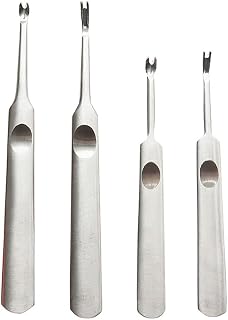


Choosing a chisel for advanced DIY work is less about finding the most expensive tool and more about matching the blade, handle, edge geometry, construction quality and intended technique to the material being worked. A chisel designed for fine woodworking is not necessarily the right choice for chopping mortises, paring joints, carving details or general workshop maintenance.
For Australian DIY users, the buying decision can also depend on how frequently the tool will be used, whether it will be stored in a home workshop or transported between jobs, and whether replacement or sharpening accessories are readily available. Before buying, compare the complete specification rather than relying only on a product name, star rating or attractive photograph.
An advanced DIY chisel should provide predictable cutting behaviour, a durable working edge and comfortable control. These characteristics become increasingly important when working accurately on hardwoods, joinery, furniture components, decorative projects and detailed craft work.
The most useful features to compare include blade steel, blade thickness, bevel configuration, cutting-edge geometry, handle construction, grip shape, overall balance and intended striking method. A well-matched combination of these characteristics can make a greater practical difference than brand reputation alone.
The steel used for a chisel influences how readily the edge can be sharpened, how well it resists wear and how it behaves during repeated cutting. Different manufacturers use different steel formulations and heat-treatment processes, so two chisels with similar dimensions can perform differently.
For general woodworking, look for clearly stated blade-steel information rather than vague descriptions such as “premium quality steel”. A useful specification should ideally identify the steel type or provide meaningful information about the blade's construction and intended application.
Edge retention should also be considered alongside sharpening convenience. A very wear-resistant edge may be useful for demanding work, but a DIY user who regularly sharpens tools may prefer a steel that responds predictably to commonly available sharpening systems.
Blade thickness affects how a chisel behaves under pressure. A relatively substantial blade can provide useful rigidity for chopping and heavier joinery, while a thinner blade may be easier to control for delicate paring and fitting operations.
Do not assume that thicker automatically means better. Excess material can add weight and may make precise hand positioning less comfortable. The appropriate thickness depends on the task, timber and cutting technique.
Bevel geometry influences how easily a chisel can enter a joint, how much clearance exists behind the cutting edge and how the tool behaves when removing material. Bench chisels, bevel-edge chisels, mortise chisels and carving chisels can have substantially different geometries because they are designed for different forms of work.
For furniture and joinery projects, a bevel-edge design can be particularly useful where access around a joint matters. For heavy chopping, a purpose-built mortise or robust bench chisel may be more appropriate.
Bench chisels are versatile woodworking tools suited to a wide range of workshop tasks. They can be used for trimming joints, cleaning corners, paring surfaces and controlled chopping, depending on their construction.
A versatile set of bench chisels can be a practical starting point for an advanced DIY workshop because several blade widths allow the user to select a tool appropriate to the amount of material being removed.
Bevel-edge chisels have bevelled sides that can make it easier to work into corners and around joints. They are commonly considered when precision joinery and furniture-making are priorities.
When comparing models, inspect how far the side bevel extends toward the cutting edge. The shape can affect access in narrow joints and recessed areas.
Mortise chisels are built specifically for cutting mortises and removing waste from deep, narrow recesses. Their heavier construction is intended to withstand controlled striking with a suitable mallet.
They are not necessarily the best all-purpose choice for fine paring. If your projects involve substantial mortise-and-tenon joinery, however, purpose-built mortise chisels can provide advantages over lighter general-purpose chisels.
Paring chisels are designed for controlled hand pressure and fine material removal. Their longer blades can provide useful reach and visual control when trimming joints or refining surfaces.
Because paring chisels are generally used differently from striking chisels, avoid treating every chisel as interchangeable. A tool designed for delicate paring should not automatically be used for heavy hammer blows.
Carving chisels and specialist carving tools are intended for shaping wood through controlled cuts rather than repeated heavy chopping. Blade profiles can include straight, skewed, curved and other specialised forms.
For advanced craft work, the blade profile is often more important than simply selecting the widest or strongest tool. Choose profiles based on the shapes and cuts your projects actually require.
Metalworking and masonry chisels should not be confused with fine woodworking chisels. Their materials, heat treatment, edge geometry and intended impact loads are different.
If the project involves brick, concrete, stone or metal, select a tool specifically designed for that material and application. Using a fine woodworking chisel for inappropriate impact work can damage the tool and create an avoidable safety risk.
Chisel width should be selected according to the work rather than simply choosing a large blade because it appears more capable. Narrow chisels can access smaller joints and corners, while wider chisels can remove material efficiently and provide useful support when flattening or trimming larger areas.
For an advanced DIY workshop, having several complementary sizes can be more useful than owning one premium chisel that is expected to perform every task. A sensible collection should cover the joints and woodworking operations you regularly perform.
The handle affects comfort, control and suitability for impact work. Traditional wooden handles can offer a familiar feel and can be particularly appealing to users who value traditional woodworking tools. Modern composite handles may prioritise durability, grip and resistance to workshop conditions.
Ergonomics become increasingly important during long sessions. A handle that feels comfortable for several minutes may feel very different after repeated paring, chopping or trimming. Consider diameter, contour, grip surface and how the handle sits in the palm.
Wooden handles are popular in traditional woodworking because they provide a natural grip and can complement a conventional workshop setup. However, handle design varies considerably between manufacturers and models.
Inspect the shape rather than selecting solely on appearance. A decorative handle is not necessarily the most comfortable handle for repetitive work.
Synthetic handles can provide useful resistance to moisture, workshop knocks and general wear. Some designs incorporate textured surfaces or ergonomic contours intended to improve grip.
When evaluating these tools, consider whether the grip remains comfortable when used with the hand position required for your particular work.
Even an excellent chisel will eventually require sharpening. For advanced DIY work, the ability to maintain a consistent cutting edge is one of the most important long-term considerations.
A practical sharpening setup may include a suitable abrasive system, a method for maintaining the desired bevel angle and a way to refine the edge. Depending on preference, users may choose water stones, oil stones, diamond plates, guided systems or other sharpening equipment.
A chisel that is technically sharp can still perform poorly if its bevel or back is not prepared appropriately. The cutting edge should be maintained consistently, while the back should be sufficiently flat and polished for the type of work being performed.
For precision joinery, small inconsistencies at the edge can affect how accurately a joint can be fitted. Regular light maintenance can therefore be preferable to allowing the edge to deteriorate significantly before sharpening.
Different chisel categories use different edge configurations. Before purchasing sharpening equipment or replacement accessories, identify the geometry of the chisel you are buying. A sharpening method suitable for one design may not be ideal for another.
Australian users should consider the environment in which the tools will be stored and used. Workshops, garages and sheds can experience changes in temperature and humidity, while tools transported to different locations may be exposed to dust and moisture.
Good storage is therefore part of tool selection. Keep cutting edges protected from contact with other metal tools, remove moisture after use and avoid leaving bare steel exposed unnecessarily in damp conditions.
When comparing products from brands such as Stanley, Irwin, Bahco, Narex, Kirschen, Robert Sorby, Two Cherries, Marples and other established tool manufacturers, compare the actual specification and intended application rather than assuming every chisel in a brand's range has the same characteristics.
Furniture projects often require accurate joint preparation, trimming and surface refinement. Bevel-edge and bench chisels can be useful for general joinery, while specialist tools may be appropriate for mortises, dovetails and other detailed joints.
Cabinet work rewards precision and control. Choose chisels that provide good access to corners and allow you to remove small amounts of material predictably. A selection of narrower and medium-width blades can be useful when working on compact joints.
Dovetail work can require access into tight corners and careful paring across end grain. A chisel with suitable side geometry and a controllable handle can be more useful than a heavy general-purpose tool.
Mortise-and-tenon projects place greater emphasis on controlled chopping and waste removal. Purpose-built mortise chisels should be considered when the project requires repeated impact work and deeper material removal.
Carving requires different blade profiles and cutting techniques from conventional joinery. Select tools according to the curves, recesses, grooves and decorative shapes you intend to create rather than purchasing a general-purpose set without considering the profiles.
A chisel set can be convenient when building a workshop because it may provide several commonly useful widths in one purchase. Sets can also simplify storage and ensure that the tools have a consistent design.
Individual chisels may be preferable when you already own a collection and only need a particular size or specialist profile. They can also make sense when your work has a narrow focus, such as carving, dovetail joinery or mortise work.
Before purchasing a set, check exactly which sizes are included. A set with many pieces is not necessarily better than a smaller collection containing the dimensions you actually use.
When comparing products in Australia, start with the manufacturer's stated specifications. Look for information about blade material, blade dimensions, handle material, intended application and whether the tool is designed for striking.
Customer feedback can then provide additional context about usability, packaging, comfort and long-term ownership, but reviews should be interpreted carefully. Individual experiences can vary because of different sharpening practices, timber species, working techniques and expectations.
It is also worth checking whether the specification refers to the complete tool or only the blade. Dimensions such as overall length and blade length can affect handling, particularly when comparing compact craft chisels with longer workshop chisels.
Quality is a combination of several details rather than a single feature. A good chisel should have a blade appropriate to its intended use, a secure blade-to-handle connection, sensible geometry and a handle that allows controlled work.
For striking tools, inspect the handle and impact components particularly carefully. For precision tools, pay greater attention to blade geometry, edge preparation and handling characteristics.
Chisels have sharp cutting edges and should be treated as cutting tools rather than ordinary hand tools. Keep both hands positioned so that the cutting path cannot move toward your fingers or body if the tool slips.
Secure the workpiece whenever practical. A stable workpiece provides better control and reduces the likelihood of an unexpected movement. Wear appropriate eye protection when the work involves striking, chips or flying fragments.
Do not use a damaged chisel simply because the project is nearly finished. A cracked handle, badly mushroomed striking area, damaged blade or loose component can compromise control. Replace or repair unsuitable tools according to the manufacturer's guidance.
Established manufacturers can offer broad ranges covering entry-level, professional and specialist woodworking tools. However, brand recognition should be the beginning of the comparison rather than the conclusion.
The best choice depends on what you actually plan to make. If your work consists mainly of general woodworking, prioritise versatile bench or bevel-edge chisels. If you regularly cut deep mortises, focus on robust mortise chisels. If detailed carving is the priority, concentrate on blade profiles and carving-specific ergonomics.
For an experienced DIY user, the most useful purchase is often the tool that fills a genuine gap in the workshop rather than the tool with the longest feature list. Identify the operations you perform most frequently, then compare tools specifically against those requirements.
Prioritise a sound basic design, usable blade geometry and a handle that feels secure. A smaller number of useful chisels is generally more practical than purchasing a large set containing sizes you will rarely use.
At this level, compare steel, edge retention, handle comfort, manufacturing consistency and sharpening requirements. A balanced selection of frequently used widths can provide broader utility than a collection of specialist tools that spend most of their time in storage.
Experienced users may benefit from building a task-specific collection. This can include general-purpose bench chisels alongside dedicated mortise, paring, carving or joinery tools. At this stage, small differences in geometry, balance and sharpening behaviour become more significant.
Customer reviews can be useful for identifying recurring practical observations, but they should not replace technical comparison. Look for patterns rather than relying on one unusually positive or negative comment.
Reviews that discuss handle comfort, sharpening behaviour, dimensions, blade condition and suitability for a particular type of work can be more useful than comments that simply describe the product as “great”. Also consider whether the reviewer is using the tool for the same application you have in mind.
When several sources disagree, return to the manufacturer's specification and assess which characteristics can be verified independently. This approach reduces the risk of choosing a tool based entirely on subjective impressions.
There is no single best chisel for every advanced DIY project. A versatile bevel-edge or bench chisel is a sensible choice for many general woodworking tasks, while mortise and carving work may require specialist designs. The right choice depends on the material, cutting technique and project requirements.
No. Price alone does not determine suitability. Compare blade steel, geometry, construction, handle comfort, sharpening requirements and intended use. A less expensive chisel that closely matches your work can be more useful than a premium tool designed for tasks you rarely perform.
A set can be useful when establishing a workshop and can provide several complementary widths. However, individual chisels can be better when you already own basic sizes or need a specialist profile. Check the exact contents of the set before purchasing.
A dedicated mortise chisel is generally the appropriate category when the work involves repeated chopping of mortises. Its construction is intended for controlled impact and waste removal. Always follow the manufacturer's instructions regarding striking tools and technique.
A paring chisel is used for controlled removal of small amounts of material, such as refining joints, trimming edges and fitting components. It is generally selected for precision rather than heavy impact work.
There is no universal schedule. Sharpen when the cutting edge no longer performs the task cleanly or when additional force is required. Frequent light sharpening can be preferable to allowing an edge to become severely dull.
One general-purpose chisel can handle many basic tasks, but specialist work benefits from specialist geometry. Advanced users often build a collection that combines versatile bench chisels with tools intended for specific operations.
Neither is universally better. Wooden handles appeal to users who prefer traditional materials and feel, while synthetic and composite handles can offer different durability and grip characteristics. Comfort, intended use and handle construction should guide the decision.
Check the complete dimensions, intended application, blade material, handle construction and included accessories. Also confirm that the model and specification correspond to the Australian listing you are considering and review current retailer information before making a purchase.
Before choosing from the leading advanced DIY chisel options available to Australian buyers, compare each candidate against the same criteria. Confirm the tool category, blade dimensions, steel information, handle construction, intended impact method and sharpening requirements.
A useful buying guide should distinguish between genuine product specifications and subjective claims. For this reason, compare the intended application, construction, blade characteristics, ergonomics and maintenance requirements before considering secondary factors such as appearance or promotional descriptions.
Product availability, retailer pricing, customer ratings and individual listings can change over time. Before purchasing in Australia, check the current product page and verify the latest specifications, seller information and delivery details supplied by the retailer. This is particularly important when several versions of a chisel share a similar product name.
The best advanced DIY crafts chisel is the one whose geometry, construction and handling characteristics align with the work you actually perform. For general woodworking, versatile bench or bevel-edge chisels can provide broad utility. For specialist work, purpose-built mortise, paring or carving chisels can offer more appropriate control.
Rather than choosing solely from a “top 10” ranking, compare the individual specifications and determine which tool best fits your projects, sharpening routine, workshop environment and budget. For Australian buyers, checking the latest local listing information before purchase is also essential because product specifications, sellers, ratings and availability can change during 2026.