

♥ Wishlist
Compare 42 Makita Battery And Charger products in Australia. Reviews, ratings, pros, cons and buying advice updated for October 2026.


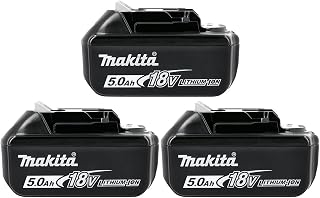


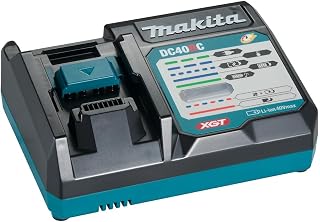


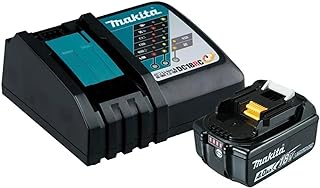
Choosing an advanced Makita battery and charger setup is less about selecting the battery with the largest capacity and more about matching the complete power system to the tools, workload and charging routine. For Australian users, a practical setup should balance runtime, charging speed, weight, heat management, compatibility and the type of work being performed.
Makita's cordless platform covers a broad range of power tools, outdoor equipment and professional applications. That means the ideal battery and charger combination for a homeowner using a drill occasionally can be very different from the setup required by a builder, electrician, landscaper, maintenance technician or trade professional working throughout the day.
This buying guide focuses on the factors worth checking before purchasing an advanced Makita battery and charger solution in 2026. Rather than relying on a single specification, compare the complete system: battery voltage platform, amp-hour capacity, physical size, charging requirements, tool compatibility and expected workload.
The first decision is the voltage platform. Makita offers cordless tools across different battery systems, and batteries are not automatically interchangeable simply because they carry the same brand name. Always confirm the exact battery platform specified by your tool before purchasing a replacement or additional battery.
For many current cordless applications, Makita's LXT and XGT ecosystems are particularly important considerations. LXT is a long-established platform with a very broad selection of compatible tools, while XGT is designed around higher-demand cordless applications. The appropriate system depends on the tools you already own and the type of equipment you expect to purchase in the future.
A battery should therefore be treated as part of an ecosystem rather than an isolated accessory. If you already own several compatible Makita tools, staying within that platform can simplify battery management and reduce the need to maintain multiple chargers and battery types.
Makita LXT batteries are associated with a large cordless tool ecosystem. For users who already have several LXT tools, adding batteries can be a convenient way to increase productivity without replacing existing equipment.
When comparing LXT batteries, consider amp-hour capacity alongside physical weight and the intended application. A larger-capacity battery can provide greater energy storage, but it may also add weight to a compact drill, impact driver or other handheld tool.
Makita XGT is aimed at higher-demand cordless equipment and applications where additional power capability can be important. If your tool specifically belongs to the XGT system, use only batteries and charging equipment intended for that platform.
Users moving from another Makita ecosystem should check compatibility carefully rather than assuming that a physically similar battery will operate every tool. Platform compatibility is one of the most important checks to make before purchasing.
Amp-hour capacity, commonly expressed as Ah, is one of the most visible battery specifications. It describes the battery's electrical charge capacity under specified conditions. In practical use, a higher Ah rating generally means more stored energy within the same voltage family, although actual runtime varies considerably according to the tool and workload.
A high-capacity battery can be useful for demanding applications such as cutting, grinding, drilling large holes, driving many fasteners or operating outdoor equipment for extended periods. However, maximum capacity is not automatically the best choice for every tool.
The best approach is often to maintain more than one battery size rather than purchasing the largest available battery for every tool. A compact battery can make a lightweight tool easier to handle, while a larger battery can be reserved for high-demand equipment.
Voltage and amp-hour capacity should not be evaluated independently. A simple way to compare nominal energy between battery configurations is to consider watt-hours, calculated approximately as voltage multiplied by amp-hours. Actual delivered energy can differ because of operating conditions, battery management and other factors.
For example, a battery rated at 18 V and 5 Ah represents approximately 90 Wh of nominal energy, while an 18 V and 6 Ah battery represents approximately 108 Wh. This does not mean the second battery will always provide exactly 20 percent more working time because tool load, temperature and operating conditions influence real-world runtime.
This distinction is useful when comparing batteries that appear similar but have different capacities. It also helps explain why comparing only Ah figures across different voltage platforms can be misleading.
Modern Makita cordless systems use lithium-ion battery technology. Lithium-ion packs provide a useful combination of energy density, rechargeable performance and relatively low self-discharge compared with older rechargeable battery technologies.
However, battery performance is influenced by more than chemistry alone. Cell configuration, electronics, thermal management, current demands, protection systems, charger design and tool electronics all contribute to the performance of a complete cordless system.
For buyers, this means that a battery's model specification and platform compatibility are more useful purchasing criteria than simply looking for the highest numerical capacity.
Advanced cordless batteries incorporate electronic controls that help manage charging, discharge and operating conditions. These systems can communicate with compatible tools and chargers, allowing the overall platform to respond to changing electrical and thermal conditions.
Protection features are particularly important because rechargeable lithium-ion packs require appropriate charging and operating conditions. Use the battery and charger combination specified by the manufacturer, and avoid attempting to modify battery packs or bypass their protective electronics.
The charger is just as important as the battery. An advanced charging setup should be selected according to the batteries you own, how quickly you need them ready and how many batteries need to be maintained during a typical workday.
Makita offers chargers designed for particular battery platforms and charging requirements. Before purchasing, verify the charger model's compatibility with the exact battery family rather than relying solely on photographs or marketplace descriptions.
A single-battery charger can be appropriate for occasional users, small workshops and people who normally operate one battery at a time. It can also be useful as a secondary charger when a primary charging station is already available.
The main limitation is workflow. If several batteries need to be recharged between jobs, a single charging point may become a bottleneck.
Rapid charging can be valuable for professionals who need to return batteries to service quickly. Faster charging should not be evaluated only by the headline charging claim. Consider the charger, battery capacity, charging conditions and the manufacturer's specified charging behaviour.
A fast charger is particularly useful when battery rotation is limited. If you own several batteries and can rotate them throughout the day, however, maximum charging speed may be less important than overall battery capacity and the number of packs available.
Users with multiple cordless tools may benefit from organising batteries into a charging rotation. The objective is to ensure that charged batteries are available before they are needed rather than waiting for an empty pack to recharge.
For a professional workshop, consider the physical location of the charger, access to suitable mains power, ventilation, storage conditions and the number of batteries that need to be ready at the start of each work period.
One of the most useful purchasing decisions is whether to spend more on charging speed or increase the number of batteries in your rotation. Neither approach is universally better.
If your work requires a tool continuously for long periods, having multiple compatible batteries can allow one pack to operate while another is charging. This can be more practical than depending on a single high-capacity battery and a fast charger.
On the other hand, users with limited storage or occasional workloads may prefer fewer batteries combined with an efficient charger.
Runtime varies with the application. A drill used for light fastening may consume considerably less energy than a grinder operating under sustained load. Likewise, a chainsaw, blower or mower can place very different demands on a battery depending on material, operating mode and conditions.
Factors that influence runtime include tool type, load, accessory choice, operating speed, material density, ambient temperature, battery condition and how continuously the tool is used.
For light work, prioritising low weight may make more sense than maximum capacity. For heavy work, runtime and sustained power capability can become more important.
Battery weight affects more than portability. It changes how a cordless tool feels during operation and can influence fatigue during repetitive work.
A large battery attached to a compact drill may make the tool feel unnecessarily bulky. Conversely, a high-demand saw or outdoor tool may benefit from a larger battery because additional runtime can outweigh the increase in weight.
When comparing options, think about how the complete tool feels rather than considering the battery as a separate component. For overhead drilling, cabinet installation, electrical work and other precision applications, balance can be particularly important.
Australia's varied climate makes thermal considerations especially relevant. Battery and charger performance can be affected by temperature, so users should follow the manufacturer's operating, charging and storage guidance.
Do not assume that a battery should be charged immediately after demanding use if it is hot. Allow it to reach an appropriate condition for charging according to the manufacturer's instructions. Likewise, avoid leaving batteries exposed unnecessarily to extreme heat, direct sunlight or other unsuitable storage conditions.
For workshops, vehicles and job sites, a sensible storage location should protect batteries from excessive heat, moisture, impact and other environmental hazards.
Compatibility should always be verified before purchasing a battery or charger. A battery that physically resembles another pack is not necessarily electrically or electronically compatible.
Check the exact tool model, battery model, voltage platform and charger specifications. If purchasing through Amazon Australia or another retailer, compare the retailer's listing with the manufacturer's product information and confirm the exact model number.
Battery packs are safety-critical electrical components, so buyers should be particularly cautious about products marketed as compatible replacements without clear manufacturer information.
Genuine Makita batteries are designed for the relevant Makita platform and its electronic management system. Unverified third-party packs can vary substantially in cell quality, protection electronics, construction and documentation.
For an expensive cordless tool collection, the apparent saving from an unknown battery should be weighed against compatibility uncertainty and the importance of reliable battery management.
When comparing alternatives, pay attention to the exact product identity, manufacturer information, electrical specifications, seller details and safety documentation rather than relying on generic claims such as “high performance” or “long runtime.”
Battery kits can sometimes make sense when you need a complete charging setup, but individual batteries may be more economical when you already own compatible chargers.
Compare the total contents rather than judging the package by its headline description. A kit might contain a battery and charger, multiple batteries, or accessories that you do not actually need.
A useful comparison should consider several specifications simultaneously instead of ranking products by one feature.
Drills and impact drivers often benefit from a balanced battery rather than simply the largest available pack. For extended fastening work, additional capacity can reduce battery changes. For overhead work, cabinetry, installation and general maintenance, a smaller and lighter battery can improve handling.
If your collection includes both compact and high-output tools, maintaining different battery sizes can provide a better overall solution than standardising on one capacity.
Circular saws, reciprocating saws, angle grinders and other cutting equipment can place substantially greater demands on a battery than intermittent fastening tools.
For these applications, compare capacity, tool requirements and the expected duty cycle. A battery suitable for occasional cuts may not be the most practical choice for sustained professional work.
Accessory selection also matters. A sharp, appropriate cutting accessory can reduce unnecessary resistance, while a worn or unsuitable accessory may increase the load placed on the cordless system.
Makita's cordless outdoor equipment creates different battery considerations because equipment such as blowers, trimmers, chainsaws and mowers may be used continuously or repeatedly across larger areas.
For landscaping and property maintenance, battery rotation can be especially useful. Consider how many tools will be used during one session, how frequently batteries can be charged and whether additional batteries are required to avoid downtime.
Weight also matters with handheld outdoor equipment. The largest battery is not necessarily the most comfortable choice when the tool is carried for extended periods.
Proper storage can help protect your investment and reduce avoidable battery problems. Always follow the current Makita instructions for storage temperature, charging, inspection and handling.
Do not continue using a battery simply because it still powers a tool if the pack shows signs of physical damage or abnormal operation.
Do not attempt to open, repair or rebuild a lithium-ion battery pack unless you are specifically qualified and equipped to perform such work. For damaged batteries, follow appropriate manufacturer and Australian disposal or recycling guidance.
A well-planned battery rotation can be more valuable than owning one exceptionally large battery. The idea is to keep charged batteries available while others are being used or recharged.
For occasional home use, one or two compatible batteries may be sufficient. A tradesperson using several cordless tools throughout the day may benefit from a larger pool of batteries with different capacities.
Professional users should think in terms of workflow: which tools are used most frequently, which consume the most energy, how often batteries can be charged and whether the charger can keep up with demand.
A higher Ah rating does not automatically make a battery the best option. Weight, compatibility and tool balance can be equally important.
Makita has multiple cordless platforms and generations. Confirm the exact compatibility requirements before ordering.
A battery purchase is incomplete if the charger does not support the battery platform or does not fit your workflow.
Large packs can add unnecessary weight to compact tools. Consider the application's actual runtime requirements.
Battery capacity should be considered alongside voltage, electronics, platform architecture, tool compatibility and charging technology.
Listings with incomplete model numbers, vague compatibility claims or unclear manufacturer information deserve additional scrutiny. Confirm the exact product identity before purchase.
Makita is not the only established cordless power-tool brand available in Australia. Buyers may also encounter systems from Bosch Professional, DeWalt, Milwaukee and Ryobi, among others.
The important comparison is not simply which brand has the “best battery.” Each manufacturer develops its own battery platforms, tool ranges, electronics and charging ecosystem. A battery investment becomes more valuable when it supports the tools you actually use and expect to buy later.
Makita is particularly relevant for buyers already invested in its cordless ecosystems. The breadth of compatible equipment means batteries can potentially serve multiple tool categories within the appropriate platform.
DeWalt offers established cordless platforms and a broad range of trade-oriented equipment. Buyers comparing DeWalt with Makita should compare the complete tool ecosystem rather than individual battery capacities.
Milwaukee's cordless systems are widely associated with professional trade applications. When comparing Milwaukee with Makita, consider the specific tools required, battery platform, ergonomics, charger options and long-term ecosystem plans.
Bosch Professional provides cordless tools and battery systems aimed at professional and trade users. Compatibility should be evaluated at the platform level because different Bosch battery systems are not necessarily interchangeable.
Ryobi is another major cordless ecosystem, particularly relevant to homeowners, DIY users and people looking for a broad selection of compatible equipment. Compare the intended workload and tool requirements rather than choosing solely on brand familiarity.
If you are starting from scratch, consider the tools you expect to own over the next several years rather than buying a battery system for a single tool.
Online listings can make batteries appear similar even when the included components differ. Before purchasing, read the complete listing and identify the exact model numbers.
When buying electrical equipment in Australia, consumers should distinguish between a manufacturer's warranty, a retailer's policies and rights that may apply under Australian Consumer Law. Exact warranty terms can change and should be confirmed from the current manufacturer or retailer documentation before purchase.
For an expensive battery collection, keep purchase records and product model information. This can make it easier to identify the exact product if warranty or service questions arise.
Battery efficiency depends heavily on how the tool is operated. Avoid forcing a tool continuously through a load that is beyond its intended application. Use appropriate accessories and operating modes, and maintain cutting or drilling accessories in suitable condition.
For buyers looking beyond basic battery capacity, several technical features deserve attention. These can include intelligent battery-to-tool communication, charging diagnostics, thermal monitoring, overload protection and platform-specific power management.
Not every feature is equally important for every buyer. A homeowner may prioritise simplicity and value, whereas a professional user may place greater emphasis on charging turnaround, battery rotation and consistent performance under demanding workloads.
Prioritise compatibility, reasonable weight and enough capacity for occasional DIY tasks. A compact battery can be more comfortable for drilling, fastening and small maintenance jobs.
A broader battery rotation may be worthwhile if you own several cordless tools. Consider how your collection is likely to expand and avoid purchasing chargers and batteries that will become redundant if you move to another platform.
Runtime, charging speed and battery rotation become more important when cordless tools are used throughout the working day. Consider keeping batteries dedicated to high-demand equipment while lighter packs are used on compact tools.
Evaluate the complete system around your highest-load tools. Battery capacity, charger turnaround, durability, tool compatibility and the ability to maintain a charged rotation can all affect productivity.
Outdoor equipment can consume substantial energy during extended operation. Compare the number of batteries required for a normal work session and consider whether your charging setup can support the required rotation.
When reviewing a shortlist of advanced Makita battery and charger solutions, use a consistent comparison framework. A product should not rank highly simply because it has the largest battery or fastest advertised charging capability.
Customer reviews can provide useful information, but they should be interpreted alongside technical specifications. A reviewer using a battery on a compact drill may report very different results from a professional using the same capacity on a high-load saw.
Look for recurring observations rather than relying on one unusually positive or negative comment. Pay particular attention to comments concerning compatibility, battery capacity, charger operation, physical size, heat and long-term use.
Verified customer reviews can be useful for identifying practical issues that are difficult to see in a specification sheet, but they should not replace manufacturer documentation when confirming technical compatibility or safety information.
The cheapest battery is not necessarily the most economical option over the life of a cordless tool collection. Consider how frequently the battery will be used, whether you need additional chargers, how many tools will share the platform and whether the battery capacity actually matches your workload.
A higher-capacity battery can be worthwhile for a frequently used high-demand tool, while a smaller battery can represent better value for occasional light work. The right purchase is the one that solves the actual runtime and workflow problem without adding unnecessary weight or cost.
The best battery depends on the professional tool and workload. High-demand applications may benefit from greater capacity and an appropriate high-output platform, while compact trade tools can benefit from lighter batteries. Compare the exact tool requirements before choosing.
No. Higher Ah generally means greater energy capacity within the same voltage platform, but it can also mean additional weight and size. Choose capacity according to the workload rather than automatically selecting the largest battery.
A battery can be shared among compatible tools within the same battery platform, but compatibility must be confirmed for each tool. Makita has multiple battery ecosystems, so brand matching alone is not enough.
A second charger can be useful if several batteries need to be prepared simultaneously or if you maintain separate charging locations. For occasional users with a small battery collection, one suitable charger may be sufficient.
Rapid charging can be valuable when battery turnaround is a limiting factor. If you already have enough batteries to maintain a rotation, additional battery capacity may sometimes provide greater practical value than faster charging.
Follow the current Makita storage instructions and keep batteries in an appropriate environment away from excessive heat, moisture, impact and other unsuitable conditions. Do not store damaged batteries.
Exercise caution. Battery packs are complex electrical products, and compatibility, cell quality, protective electronics and construction can vary between manufacturers. For important tools and professional workloads, verify the product's technical information and compatibility carefully.
Choose compact capacity when low weight and manoeuvrability are priorities. Choose greater capacity when runtime and reduced battery changes matter more. If you use several types of cordless tools, owning more than one battery capacity can be the most flexible approach.
Use the charger according to the manufacturer's current instructions rather than relying on general assumptions about lithium-ion batteries. Follow the recommended charging and storage procedures for the specific Makita battery and charger.
Check the exact model number, voltage, Ah capacity, platform compatibility and included components. Compare the listing with current manufacturer information and check reputable Australian retailers before making a purchase.
Before choosing from the best advanced Makita battery and charger solutions for 2026, make the decision based on your actual cordless-tool ecosystem rather than a single headline specification.
The strongest Makita battery and charger solution is the one that fits the complete way you work. A homeowner may value a compact battery and straightforward charger, while a professional tradesperson may prioritise battery rotation, higher capacity and rapid charging. Users operating demanding outdoor or construction equipment should pay particular attention to platform compatibility, energy requirements, weight and charging logistics.
Makita, DeWalt, Milwaukee, Bosch Professional and Ryobi all offer established cordless ecosystems, but switching between brands can mean investing in another battery and charger platform. If you already own several compatible Makita tools, expanding the appropriate Makita ecosystem can be a practical way to maximise the usefulness of your existing batteries and chargers.
Before ordering, verify the exact model numbers and specifications, compare current Australian listings, read verified customer feedback and check the latest manufacturer documentation. The most expensive or highest-capacity battery is not automatically the best choice; the right solution is the one that provides appropriate runtime, manageable weight, dependable charging and genuine compatibility with the tools you use.