

♥ Wishlist
Compare 43 Makita Cordless Chainsaws products in Australia. Reviews, ratings, pros, cons and buying advice updated for October 2026.
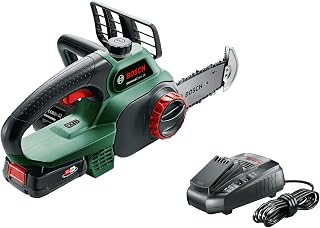


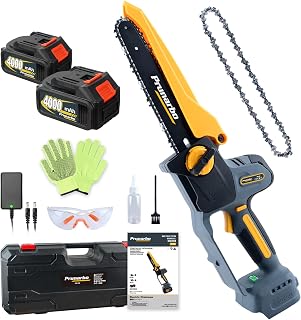


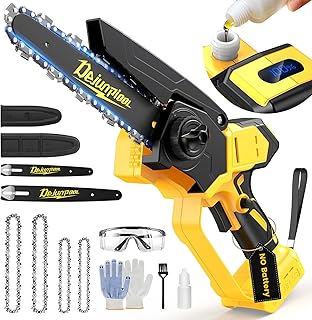


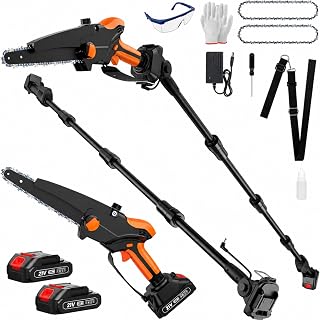


Makita cordless chainsaws cover a wide range of cutting requirements, from pruning and garden maintenance to firewood preparation and more demanding property work. The important distinction is that not every battery chainsaw is designed for the same workload. Bar length, battery platform, motor configuration, chain speed, chain pitch, oiling system, safety controls, ergonomics and the intended cutting diameter can all affect whether a particular model is genuinely suitable for your work.
For Australian buyers, battery compatibility is especially important. A chainsaw may look attractive on specifications alone, but the overall value can change considerably if you already own compatible Makita batteries and a charger or are starting a new battery platform from scratch. Before comparing individual models, consider the complete system rather than judging the saw in isolation.
The best advanced Makita cordless chainsaw is not necessarily the model with the longest bar or the highest advertised cutting performance. The right choice depends on the type, frequency and diameter of the timber you expect to cut.
Think about the largest piece of wood you realistically expect to cut rather than the largest piece you could theoretically encounter. Oversizing a chainsaw can add unnecessary weight, while choosing a model that is too small can make larger cuts slower and less convenient.
One of the strongest reasons to consider a Makita cordless chainsaw is the broader battery ecosystem. Buyers who already use compatible Makita cordless tools may be able to share batteries and charging equipment, depending on the specific chainsaw and battery platform.
Battery compatibility should always be checked against the exact model rather than assumed from the Makita name alone. Different generations and configurations can have different battery requirements, and a battery that fits one Makita tool is not automatically suitable for every cordless chainsaw.
A tool-only configuration can make financial sense when you already have the required batteries and charger. It can also be an efficient way to expand an existing workshop or garden-tool collection without purchasing duplicate charging equipment.
A complete kit may be more appropriate for a first-time buyer entering a particular battery system. Compare the included battery capacity, charger configuration and number of batteries rather than comparing kit prices alone.
A higher-capacity battery can provide greater energy storage, but additional battery mass also affects the balance and overall handling of a chainsaw. For pruning and short jobs, a lighter configuration may be easier to control. For repeated cutting, additional capacity may be more valuable.
Do not treat amp-hour capacity as a direct guarantee of runtime. Actual battery endurance varies with timber species, wood diameter, chain sharpness, cutting technique, temperature, battery condition and the amount of time the motor operates under load.
Guide bar length is one of the easiest specifications to notice, but it should not be used as the only indicator of chainsaw capability.
A shorter bar can improve manoeuvrability and reduce overall weight, making it useful for pruning, smaller branches and routine garden work. A longer bar can provide greater reach and accommodate larger cuts, but it may also increase weight and require more careful handling.
Compact chainsaws are generally easier to manoeuvre around branches and confined spaces. They can be particularly useful when the main objective is removing smaller limbs rather than processing large logs.
A medium-length guide bar can provide a useful compromise between handling and cutting capacity. For many homeowners and acreage users, this type of configuration can be more versatile than choosing an extreme compact or heavy-duty setup.
A longer guide bar can be appropriate when larger-diameter timber is a regular part of the workload. However, buyers should also consider the chainsaw's power, recommended bar range, battery configuration and physical balance. A longer bar is not automatically better if the rest of the system is not suited to the application.
Chain speed is an important specification when comparing advanced cordless chainsaws. In general terms, a higher chain speed can contribute to fast cutting when the motor, chain, bar and battery system are properly matched.
However, chain speed should never be interpreted in isolation. Actual cutting performance also depends on chain sharpness, chain pitch, depth-gauge condition, timber hardness, moisture, diameter and operator technique.
A chainsaw with impressive specifications can still perform poorly if its chain is dull or incorrectly tensioned. Conversely, a correctly maintained saw can feel considerably more responsive than its specification sheet might suggest.
Many modern Makita cordless chainsaws use brushless motor technology. Brushless motors eliminate the traditional brushes used in brushed motor designs and are widely used in contemporary cordless power tools because of their efficiency, electronic control and suitability for battery-powered equipment.
For buyers, the practical point is not simply whether a chainsaw is labelled brushless. Look at the complete system: motor performance, battery requirements, chain speed, electronic controls, thermal management, cutting capacity and intended workload.
Chain lubrication is essential because the cutting chain and guide bar operate under significant friction and load. An automatic oiling system can make normal operation more convenient by supplying chain oil during use.
Even with automatic oiling, the operator remains responsible for checking the oil reservoir and ensuring the correct chain lubricant is being used. Running a chainsaw without adequate lubrication can accelerate wear and may damage the chain, bar or drive components.
Correct chain tension is fundamental to safe and effective chainsaw operation. A chain that is too loose may move away from the guide bar or create poor cutting behaviour, while excessive tension can increase friction and component wear.
Follow the exact tensioning procedure supplied for the particular Makita model. The correct adjustment should be checked according to the manufacturer's instructions, particularly when the saw is new or when a chain has been replaced.
New chains can require more frequent tension checks during initial use because components settle as the chain operates. Always switch the saw off and follow the manufacturer's safety procedure before inspecting or adjusting the chain.
Cordless operation removes the need to manage a petrol fuel system and eliminates the need for an electrical extension cable, but a battery chainsaw remains a serious cutting tool. Safety features should therefore be part of the purchasing decision.
A chain brake is a critical safety mechanism designed to stop chain movement rapidly when activated. Buyers should understand how the brake operates and ensure it is functioning correctly before use.
Two-stage or lockout controls can help reduce the likelihood of unintended activation. The exact control arrangement varies between models, so examine the handle layout before choosing a chainsaw.
The front hand guard serves an important role in the chainsaw's safety system and is closely associated with chain-brake operation on many designs. It should never be removed, modified or obstructed.
Some chainsaws incorporate mechanisms intended to respond to sudden movement or kickback conditions. Because implementation varies by model, consult the specific owner's manual rather than assuming that every Makita chainsaw uses identical safety technology.
Kickback is one of the most important hazards associated with chainsaw operation. It can occur when the moving chain near the upper portion of the guide-bar nose contacts an object or becomes pinched in a particular way, causing the guide bar to move rapidly toward the operator.
Technical safety features can reduce risk, but they do not make kickback harmless. Safe operating technique remains essential. Buyers should read the manufacturer's safety instructions, understand the designated cutting zones and use appropriate protective equipment.
Avoid selecting a chainsaw purely because it appears powerful. Controllability, balance, operator familiarity and suitability for the intended work are equally important.
Chainsaw ergonomics become increasingly important as cutting sessions become longer. A specification that looks attractive on paper may not translate into comfortable operation if the machine is poorly balanced for the intended user or task.
Overall weight matters, but where that weight sits can be equally important. Battery placement, motor position, guide bar length and handle geometry all influence balance.
The front and rear handles should provide secure control while allowing the operator to maintain the recommended grip and working posture. A chainsaw that feels manageable during a short demonstration may feel different during repeated cutting.
Lower vibration can improve comfort during extended work. Nevertheless, vibration characteristics should be considered alongside weight, balance, cutting performance and the type of work being performed.
For many household and property applications, cordless chainsaws offer a convenient alternative to petrol equipment. They eliminate petrol mixing and engine warm-up routines and generally simplify starting.
| Consideration | Cordless Makita Chainsaw | Petrol Chainsaw |
|---|---|---|
| Starting | Generally simple battery-powered starting | Requires an engine-starting procedure |
| Fuel handling | No petrol required | Requires petrol and appropriate fuel management |
| Noise profile | Typically lower than comparable petrol equipment during operation | Engine noise is a significant consideration |
| Maintenance | Focuses on battery, chain, bar, oiling and electrical components | Includes engine, fuel and exhaust-related maintenance |
| Battery dependence | Yes | No traction battery required |
| Best fit | Garden, property maintenance and suitable cutting workloads | Users requiring petrol equipment for demanding or extended applications |
The correct choice depends on workload. A cordless chainsaw can be highly practical for many residential and property-maintenance tasks, while a petrol model may remain preferable for particular professional or prolonged applications.
Makita is not the only established manufacturer in the cordless chainsaw market. Buyers may also encounter products from brands such as DeWalt, EGO, Husqvarna and STIHL. Comparing the battery ecosystem and complete tool range can be more useful than comparing one chainsaw specification at a time.
Makita can be particularly attractive to buyers already invested in its cordless power-tool ecosystem. The major consideration is matching the chainsaw to the correct battery platform and workload.
DeWalt is another major cordless power-tool brand with battery-powered outdoor equipment. Buyers already using compatible DeWalt batteries may want to compare the total cost of ownership rather than comparing bare-tool prices alone.
EGO focuses heavily on battery-powered outdoor equipment, making its ecosystem relevant for buyers looking to build a broader cordless garden-tool collection.
Husqvarna has a long-established presence in chainsaws and outdoor power equipment. Its cordless range may be worth considering when chainsaw-specific features and broader outdoor equipment compatibility are priorities.
STIHL is another established outdoor power-equipment manufacturer with cordless chainsaw options. Buyers comparing Makita with STIHL should evaluate the complete system, including battery platform, cutting requirements, ergonomics and local servicing considerations.
When building a shortlist, record the following specifications for each exact model rather than relying on marketing descriptions.
Specification terminology can differ between retailers and product generations, so use the manufacturer's documentation for the exact model as the final reference.
The word “advanced” should not be treated as a technical specification. In a buying guide, an advanced cordless chainsaw should instead be evaluated according to the combination of technology, control, cutting performance, battery integration, safety systems and usability it provides.
Features that may distinguish a more sophisticated cordless chainsaw include electronically managed motor performance, brushless motor technology, automatic chain lubrication, tool-free or simplified chain adjustment, battery protection systems, variable-speed control and integrated safety mechanisms. The exact feature set depends on the model.
Battery runtime is one of the most common concerns when moving from petrol to cordless equipment. There is no single runtime figure that accurately represents every user's experience because cutting conditions vary substantially.
Runtime can be influenced by:
For occasional pruning, a smaller battery may be sufficient. For repeated firewood cutting or larger property-maintenance tasks, carrying a second compatible battery can be more useful than relying on one large battery alone.
A dull chain can make a capable cordless chainsaw appear underpowered. When the cutting teeth are no longer sharp, the motor may need to work harder while the operator applies more pressure to achieve the desired cut.
A properly sharpened chain should remove wood efficiently rather than requiring excessive force. If cutting performance declines noticeably, inspect chain sharpness, tension, lubrication and bar condition before assuming that the battery or motor is inadequate.
Chain sharpening should be performed using the correct file size, angle and depth-gauge procedure for the specific chain. Users who are inexperienced with chainsaw chain maintenance should follow the manufacturer's guidance or use a qualified service professional.
The guide bar deserves as much attention as the chain. The bar groove must remain clean and the chain must travel correctly around the bar and sprocket.
Regular maintenance should include checking the bar for excessive wear, cleaning debris from relevant areas, inspecting the nose and ensuring that the chain is correctly lubricated. If the bar becomes damaged or excessively worn, replacement may be necessary.
A straightforward maintenance routine can help preserve cutting performance and reduce avoidable wear.
A longer guide bar can increase potential cutting capacity, but it can also increase weight and affect manoeuvrability. Choose a bar appropriate to the timber you actually intend to cut.
Do not assume that every Makita battery works with every Makita cordless chainsaw. Check the exact model requirements before purchasing.
A tool-only chainsaw may appear inexpensive until the cost of batteries and charging equipment is included. Conversely, a kit can represent better overall value for someone starting a new battery platform.
Chain speed matters, but it does not replace proper chain maintenance, sufficient battery capacity, appropriate bar selection and suitable motor performance.
A large, powerful chainsaw can be unnecessary for routine pruning. Excess weight can also make overhead and extended work less comfortable.
A compact pruning saw may be an unsuitable choice for repeatedly processing large logs. Match the tool to the largest realistic workload.
Chains and guide bars are wear components. Before buying, check whether the appropriate replacement chain and bar specifications are readily identifiable for the exact model.
A useful comparison should begin with the job rather than the product name. Create a shortlist of two or three suitable models and score them against the factors that actually affect your workload.
| Comparison Factor | Why It Matters |
|---|---|
| Cutting diameter | Determines whether the saw is appropriate for your typical timber. |
| Bar length | Affects reach, cutting capacity, weight and manoeuvrability. |
| Battery system | Determines compatibility with existing batteries and chargers. |
| Battery capacity | Influences available energy and potentially the number of cuts between charges. |
| Weight | Important for control and fatigue, particularly during longer jobs. |
| Chain speed | Helps indicate cutting responsiveness when other components are appropriately matched. |
| Safety systems | Essential for responsible chainsaw operation. |
| Chain adjustment | Convenience factor during maintenance and chain servicing. |
| Replacement chain availability | Important for long-term ownership. |
| Total system cost | Provides a more realistic comparison than the bare-tool price. |
Look for a lightweight, easy-to-control configuration with a compact guide bar. There is little benefit in carrying a larger professional-style saw when most jobs involve small branches.
Battery compatibility becomes a major advantage. A tool-only model may provide a convenient addition to an existing Makita collection, provided your current batteries are approved for the selected chainsaw.
Prioritise versatility, battery capacity, cutting performance and ergonomics. Property users often encounter a mixture of branch sizes, making a balanced all-round configuration particularly useful.
Repeated cutting places greater emphasis on sustained battery capability, chain sharpness, oiling and operator comfort. A suitable bar length and enough spare battery capacity can make a substantial practical difference.
Buyers who use a chainsaw regularly should examine the manufacturer's intended application, service information, compatible consumables and battery ecosystem rather than selecting a model solely from headline specifications.
Australian buyers should consider more than the initial product specification. The operating environment, local retailer availability, replacement consumables, battery supply and applicable safety requirements can all affect long-term ownership.
Before ordering, verify the exact Australian-market model number and included accessories. Product configurations can differ between countries, and an overseas specification should not automatically be assumed to match the Australian version.
Also consider where replacement chains, guide bars, chain oil, batteries and other compatible accessories can be obtained. A chainsaw is a long-term tool purchase, so access to the correct consumables can be more important than a small difference in initial price.
Customer reviews can provide useful information, but they should be interpreted in context. A review from someone pruning small garden branches may tell you little about how the same chainsaw behaves during repeated hardwood cutting.
Look for reviews that explain the workload, timber type, battery configuration, frequency of use and maintenance routine. Reviews that simply say a product is “powerful” or “great” provide less useful information than a detailed account explaining what the tool was used for.
Price is important, but it should be considered alongside the complete ownership cost. A lower-priced chainsaw may require additional batteries, a charger or other equipment. A higher-priced configuration may include accessories that would otherwise need to be purchased separately.
For an existing Makita user, battery compatibility can substantially change the value equation. For a new cordless-tool buyer, the broader battery ecosystem may be more important than the chainsaw's initial price.
Compare the complete package rather than comparing one advertised number.
A cordless Makita chainsaw is not automatically the best solution for every cutting job. If your work involves very large timber, exceptionally long continuous cutting sessions or professional applications beyond the model's intended use, a different chainsaw category may be more appropriate.
Similarly, if you only need to remove very small branches, a compact pruning tool may be more convenient than a conventional chainsaw. The objective should be to select the safest and most suitable tool for the task, not simply the most powerful product available.
| Maintenance Area | When to Check | What to Look For |
|---|---|---|
| Chain condition | Before use and during extended work | Sharpness, damage and correct tension |
| Chain oil | Before and during use | Adequate oil supply and correct lubricant |
| Guide bar | Regularly | Wear, damage and debris |
| Chain brake | Before operation | Correct operation according to the manual |
| Battery | Before charging and use | Damage, contamination and correct storage condition |
| Safety controls | Before operation | Proper operation without sticking or damage |
| Fasteners and components | Periodically | Looseness, damage or abnormal wear |
Protective equipment should be treated as part of the chainsaw setup rather than an optional extra. The appropriate equipment depends on the task and applicable Australian safety guidance.
Protective equipment does not eliminate the hazards associated with chainsaw operation. Safe cutting technique, appropriate working conditions, correct maintenance and adherence to the manufacturer's instructions remain essential.
After use, allow the tool to be handled and stored according to the manufacturer's instructions. Keep the chainsaw clean, protect the guide bar and chain from unnecessary damage, and store batteries under the conditions specified for the battery system.
Before long-term storage, inspect the chain, bar and oiling system and remove accumulated debris. Batteries should be stored in a suitable dry environment and handled according to the applicable Makita battery guidance.
The best model depends on the user's cutting requirements, timber diameter, frequency of use, preferred bar length and existing battery platform. There is no single model that is ideal for every Australian buyer.
Suitable Makita cordless chainsaws can be used for appropriate firewood-cutting tasks when the model, bar, chain and battery configuration match the size and type of timber. Always stay within the manufacturer's stated operating limitations.
Compact Makita cordless chainsaws can be well suited to pruning and garden maintenance when their size and cutting capacity match the branches being removed. A lighter configuration can be easier to manoeuvre than a larger saw.
Yes. Chainsaw chains require appropriate lubrication during operation. Check the oil reservoir and follow the exact lubrication instructions for your model.
There is no universal number of hours or cuts. Sharpening frequency depends on the timber, cutting conditions, chain contact with dirt or foreign material, cutting technique and amount of use. Inspect the cutting performance and chain condition regularly.
No. Battery compatibility depends on the specific chainsaw and battery platform. Confirm compatibility using the exact model documentation before purchasing or attaching a battery.
Not necessarily. A longer bar can increase potential cutting capacity, but it can also add weight and affect manoeuvrability. Choose a bar appropriate to the size of timber you actually expect to cut.
Cordless chainsaws generally avoid the engine noise associated with petrol chainsaws, but they still produce significant cutting and mechanical noise. Appropriate hearing protection may still be necessary depending on the task and environment.
If you already own compatible Makita batteries and a charger, a tool-only configuration may be sufficient. If you are starting from scratch, compare the total cost of a complete kit against purchasing the components separately.
There is no single most important specification. Bar length, chain speed, battery platform, battery capacity, weight, cutting capacity, safety features and ergonomics should be evaluated together against your intended workload.
The strongest approach to choosing an advanced Makita cordless chainsaw in Australia is to start with the job and work backwards to the specification. Decide what you will cut, how often you will cut it, the largest realistic timber diameter and whether you already own compatible Makita batteries.
From there, compare guide-bar length, chain specifications, motor technology, battery requirements, weight, ergonomics, lubrication, safety systems and replacement consumables. Check the exact Australian model rather than relying on a product name shared across different markets or generations.
For buyers already invested in Makita cordless tools, battery compatibility can be a major practical advantage. For new buyers, the decision should include the broader battery ecosystem and the cost of building it. Either way, the best purchasing decision is the one that matches the chainsaw's capabilities to the actual work rather than simply choosing the biggest or most feature-heavy model.
Before making a final purchase, compare the exact specifications, current Australian retailer information, verified customer feedback and manufacturer's documentation for the model under consideration. Product configurations, included accessories and pricing can change, so the final decision should always be based on the current listing and current product documentation.