
♥ Wishlist
Compare 29 Makita Impact Wrench for Australian Workshop and Jobsite Tasks products in Australia. Reviews, ratings, pros, cons and buying advice updated for October 2026.


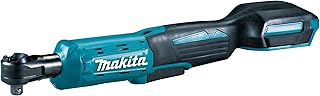


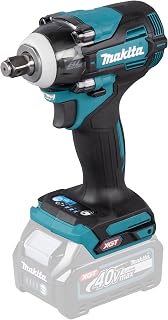

Choosing an advanced Makita impact wrench is less about selecting the highest torque figure and more about matching the tool's drive size, torque range, battery platform, physical dimensions and control system to the work you actually perform. A wrench designed for occasional automotive maintenance has different priorities from one used repeatedly on heavy machinery, structural fastening or demanding workshop applications.
For Australian buyers, it is also important to distinguish between the tool body and a complete kit. Makita model numbers ending in “Z” commonly identify tool-only configurations, so the cost of the battery and charger should be considered when comparing a cordless impact wrench with a complete kit or with another model from an existing battery platform.
Makita's cordless ecosystem is an important part of the buying decision. The 18V LXT platform can make considerable sense for users who already own compatible batteries and chargers, while the 40V Max XGT platform is aimed at applications where higher power and heavy-duty performance are priorities.
Platform compatibility should be checked before purchase rather than assuming that every Makita battery fits every cordless tool. Battery voltage, physical interface and the specific product platform all matter.
Torque is one of the most frequently misunderstood specifications in impact wrench buying guides. A manufacturer may provide separate figures for fastening torque and nut-busting or breakaway torque, and those figures should not be treated as interchangeable.
Maximum fastening torque describes the tool's stated capability during fastening under specified conditions. It can help establish the general performance class of an impact wrench, but it does not mean every fastener should be tightened to that value.
Nut-busting torque is intended to communicate the tool's ability to loosen a resistant fastener under specified test conditions. It is particularly relevant when comparing impact wrenches intended for seized or heavily tightened fasteners.
A larger headline torque number is not automatically better. Excessive torque can be unnecessary for smaller fasteners, while a very powerful wrench can make controlled fastening more difficult if the operator does not use appropriate power settings or a calibrated torque procedure.
For applications where the final tightening torque is safety-critical, an impact wrench should generally be regarded as a fastening tool rather than a substitute for an appropriately calibrated torque wrench unless the manufacturer's instructions and the specific application explicitly support that method.
The square drive determines which impact sockets can be used and provides an important indication of the tool's intended application.
Do not choose a drive size solely because it appears more powerful. Socket availability, fastener dimensions, clearance, tool weight and the frequency of heavy-duty work should all influence the decision.
The Makita TW007GZ illustrates why a specification sheet needs to be read as a complete set rather than reduced to a single torque number. Makita Australia lists it as a 40V Max brushless 1/2-inch mid-torque impact wrench, with a stated maximum fastening torque of 760 Nm and nut-busting torque of 1,100 Nm. Its specification sheet also lists multiple operating modes and four power-selection stages. :contentReference[oaicite:0]{index=0}
The same specification information lists a maximum no-load speed of 2,300 rpm and a tool-only weight of 2.3 kg, with a listed 3.3 kg weight when paired with a BL4040 battery. These figures demonstrate an important trade-off: higher-output cordless tools can provide substantial capability while still imposing a meaningful weight consideration during prolonged use. :contentReference[oaicite:1]{index=1}
Brushless motor technology is now common across advanced cordless power tools. In an impact wrench, the benefits of the overall brushless system are most useful when combined with electronic control, appropriate battery management and a tool design suited to the intended workload.
Brushless construction alone should not be used as proof that one model is automatically superior. Compare the complete specification, control system, ergonomics and intended application.
RPM indicates rotational speed, while impacts per minute indicate how frequently the hammer mechanism delivers impacts. Both specifications affect how an impact wrench behaves, but neither should be interpreted independently of torque.
A higher rotational speed can be useful for running fasteners down quickly after they have been started correctly. It can reduce the time spent on repetitive fastening tasks, although the appropriate speed depends on the fastener and application.
A high impact rate can contribute to the wrench's ability to work against resistance, but impact rate by itself does not establish the real-world loosening capability of a tool.
Advanced Makita impact wrenches can offer several operating settings. The advantage is greater control over different fastening situations, especially when working with fasteners that should not immediately receive maximum available power.
Variable power settings are particularly useful for users who work across different fastener sizes and materials. A controlled lower-power mode can be preferable for delicate work, while higher settings may be appropriate when greater resistance must be overcome.
The Makita TW007GZ, for example, is specified with four-stage power selection and an application selector offering six modes. Its specifications also distinguish between maximum, hard, medium and soft operating characteristics. :contentReference[oaicite:2]{index=2}
These settings should be treated as control aids rather than as a guarantee of a precise final torque value. Fastener condition, socket type, lubrication, joint design, battery state and many other variables can influence the resulting torque.
The socket-retention mechanism is another specification that deserves attention. A friction-ring system allows sockets to be changed relatively quickly and is convenient for many workshop tasks. A pin-detent arrangement can provide a more positive mechanical retention method in applications where socket security is a priority.
The best choice depends on how frequently sockets are changed and the working environment. Buyers should also verify that the sockets being used are impact-rated and match the wrench's drive size.
Battery capacity is normally expressed in ampere-hours (Ah). A higher Ah rating generally represents greater stored electrical capacity, but it can also increase battery weight and physical size.
Published runtime figures should always be interpreted as test-dependent information. Actual runtime varies according to fastening resistance, operating mode, battery condition, ambient temperature, fastener size and operator technique.
An impact wrench can have excellent specifications and still be inconvenient if its size and weight do not suit the job. Consider the tool from the operator's perspective rather than focusing exclusively on laboratory-style figures.
For professional users, a slightly less powerful wrench that is easier to position and control may be more useful than the largest available model.
Compact impact wrenches are generally easier to position around obstacles and can reduce fatigue during repetitive tasks. High-torque models prioritise greater fastening and loosening capability but can become physically larger and heavier.
Before choosing a heavy-duty wrench, identify the largest fastener you routinely encounter and the level of resistance you realistically need to overcome. Buying substantially more capacity than the application requires can add unnecessary weight and cost without improving the work.
For automotive maintenance, the ideal impact wrench depends heavily on whether the tool is intended for passenger vehicles, four-wheel drives, trailers, agricultural equipment or heavier commercial vehicles.
A 1/2-inch impact wrench is often a versatile format for general automotive work, but wheel nuts and other critical fasteners should always be handled according to the vehicle manufacturer's specifications. An impact wrench can be useful for removal and preliminary installation, while final tightening may require a suitable torque-controlled method.
When using an impact wrench around wheels, use the correct impact socket and avoid assuming that the wrench's maximum torque is an appropriate wheel-nut tightening value. Correct torque specifications vary by vehicle and wheel configuration.
Owners of 4WDs and trailers may encounter larger or more heavily loaded fasteners than typical passenger-car maintenance. In these situations, drive size, breakaway capability, battery capacity and tool clearance become more important selection criteria.
An advanced impact wrench deserves appropriately rated accessories. Standard chrome hand-tool sockets are not automatically suitable for impact applications. Impact sockets are designed for the repeated shock loading produced by impact tools.
Maximum torque is useful for comparison, but it should not be the sole purchasing criterion. A tool that is too powerful, heavy or large for the application may be less practical.
A tool-only purchase can appear inexpensive until the cost of the required battery and charger is added. Conversely, users already invested in a compatible Makita platform may benefit from buying a bare tool.
Speed does not tell the complete story. Compare torque, impact rate, operating modes, drive size and physical dimensions together.
Impact tools should be paired with accessories designed for impact use. Socket compatibility is part of safe tool selection.
Manufacturer torque figures are performance specifications, not a substitute for understanding the actual torque delivered to a particular fastener in a particular joint.
Extra capacity can mean extra weight. For occasional household or light automotive use, a smaller and more manageable impact wrench may be the more sensible choice.
A useful comparison should be based on a consistent checklist rather than whichever specification appears most impressive.
An 18V LXT model can be an attractive choice for buyers who already own LXT equipment and want to expand an existing cordless tool collection without introducing another battery platform.
The strongest argument for an LXT wrench is often system compatibility rather than a claim that it is universally better or worse than an XGT model. Existing batteries, chargers and other tools can materially affect the overall value of the purchase.
The XGT platform deserves closer consideration when the work is consistently demanding and the user values higher-output cordless equipment. Makita Australia's TW007GZ, for example, is a 40V Max XGT model with a 1/2-inch drive and a stated 1,100 Nm nut-busting rating. :contentReference[oaicite:3]{index=3}
An XGT purchase is most logical when the performance requirements justify entering or expanding the 40V Max system. Buyers should compare the complete cost of ownership rather than looking only at the wrench body.
Workshop users should consider workload frequency as carefully as maximum capability. A tool used for a few fasteners each week has very different requirements from one used continuously throughout the working day.
Construction users often value a combination of portability, speed and fastening control. An impact wrench can be particularly convenient where running power cables is impractical, but the correct torque setting and fastener procedure remain essential.
For repeated structural or engineered fastening, the tool should be selected according to the specifications of the fastening system rather than simply by purchasing the highest-output cordless model.
Farm machinery, trailers, fleet vehicles and heavy equipment can introduce larger fasteners, corrosion and high resistance. These applications may justify a larger drive size or higher-output impact wrench, but the correct choice depends on the actual fastener range and service environment.
For equipment exposed to dust, moisture and outdoor conditions, consider the manufacturer's stated protection features and operating limitations rather than assuming that a cordless tool is suitable for every environment.
Regular care helps preserve the tool and accessories and can also reveal developing problems before they affect work.
Battery maintenance is particularly important because the battery is both a significant part of the cordless system and a component with its own handling requirements. Use compatible batteries and chargers and follow the manufacturer's instructions for storage, charging and transportation.
Makita Australia also operates a battery recycling program for eligible Makita batteries, including XGT 40V Max, LXT 18V and CXT 12V batteries. Its published guidance recommends responsible battery disposal rather than placing used lithium-ion batteries in household rubbish or recycling bins. :contentReference[oaicite:4]{index=4}
Australian buyers should verify the exact model designation rather than relying on an overseas product name that appears similar. Regional model numbers, kit contents, accessories and electrical specifications can differ between markets.
Customer reviews can provide useful information about ergonomics, battery compatibility and everyday usability, but they should not replace manufacturer specifications. A review written by someone using an impact wrench for wheel changes may not be relevant to someone fastening heavy machinery.
When evaluating reviews, look for comments that identify the application, battery used, frequency of use and specific limitations. Give greater weight to repeated observations that are consistent with the published specifications rather than isolated statements about performance.
Impact wrenches are high-powered tools and should be used according to the manufacturer's instructions. Appropriate eye protection, suitable work clothing and correct handling practices are important, particularly when working around damaged fasteners or heavy equipment.
An advanced impact wrench is not simply one with a large torque rating. Useful advanced features can include brushless motor technology, multiple power levels, application-specific modes, electronic controls, improved battery management, compact mechanical design and systems intended to provide greater control over fastening behaviour.
For example, Makita's TW007GZ combines a brushless motor with multiple operating modes and four power-selection stages. Its published specifications also separate maximum, hard, medium and soft torque characteristics, illustrating how modern impact wrenches can offer more control than a simple variable-speed trigger alone. :contentReference[oaicite:5]{index=5}
Prioritise reasonable size, manageable weight, battery cost and sufficient torque for the tasks actually performed. Buying the most powerful professional model is rarely necessary simply because it has a higher specification.
A 1/2-inch impact wrench can provide a useful balance of versatility and capability. Battery compatibility becomes especially valuable if other Makita cordless tools are already owned.
Look closely at fastening control, repeated-use ergonomics, battery capacity, socket retention, access and the ability to switch between operating modes.
Focus on drive size, breakaway capability, battery platform, physical durability and the size range of the fasteners encountered regularly.
Consider the impact wrench as part of the larger battery ecosystem. A tool that shares batteries and chargers with other frequently used equipment can simplify equipment management.
A complete working setup can include more than the wrench itself. Before ordering, create a checklist covering the tool, batteries, charger, impact sockets and any extensions or adapters that are genuinely appropriate for the work.
The cheapest impact wrench is not necessarily the lowest-cost option over its useful life. Consider the total system cost, including batteries, charger, sockets, replacement accessories and the opportunity to share batteries with other cordless tools.
For an existing Makita owner, a tool-only purchase may provide a different value proposition from a complete kit. For a new cordless-tool buyer, the battery and charging equipment can represent a substantial portion of the initial investment.
There is no single best model for every Australian buyer. The right choice depends on the required torque, drive size, battery platform, physical dimensions, frequency of use and budget. A professional heavy-duty user may need a very different wrench from an occasional DIY user.
No. Higher torque can be useful for demanding fasteners, but excessive capacity can also mean greater weight and less suitability for smaller or more delicate work. Match the wrench to the application.
A 1/2-inch drive is a versatile format for many automotive applications, but the appropriate size depends on the vehicle, fastener dimensions and required torque. Heavy equipment may justify a larger drive.
Choose according to your workload and existing battery ecosystem. LXT can be convenient for an established 18V system, while XGT is designed around the higher-output 40V Max platform. The best option depends on the tools and batteries you already own.
No. Nut-busting torque is a manufacturer performance specification obtained under defined conditions. Corrosion, thread damage, joint condition, access, fastener size and other factors can prevent a real-world fastener from loosening.
Not automatically. An impact wrench is useful for rapidly removing and installing fasteners, but applications with specified final torque should follow the applicable manufacturer's procedure and use an appropriate torque-control method.
It depends on the exact product configuration. Tool-only models and complete kits are sold as different configurations, so always check the contents of the specific Australian listing before comparing prices.
Some models can be well suited to 4WD maintenance, but the appropriate choice depends on the vehicle and the fasteners involved. Consider drive size, torque capability, battery capacity, access and tool weight rather than selecting solely on the basis of the vehicle type.
Check the exact model number, drive size, battery platform, included accessories, tool-only or kit status, manufacturer specifications and the current retailer listing. Prices and stock can change, so current information should be checked immediately before purchase.
Before choosing an advanced Makita impact wrench, narrow the decision to the specifications that directly affect your work. Start with the largest and most demanding fasteners you routinely encounter, then select the appropriate drive size and torque class. Next, decide whether the Makita LXT or XGT platform fits your existing cordless equipment and future tool plans.
After that, compare weight, dimensions, battery requirements, operating modes, speed, impact rate and socket-retention design. Finally, check the exact Australian model configuration, kit contents and current specifications before purchasing.
The strongest buying decision is therefore not necessarily the impact wrench with the largest headline specification. It is the model that provides enough fastening and loosening capability for the intended work while remaining comfortable, controllable, compatible with the user's battery system and practical for the Australian working environment.