

♥ Wishlist
Compare 21 Makita Leaf Blowers for Australian Gardens products in Australia. Reviews, ratings, pros, cons and buying advice updated for October 2026.


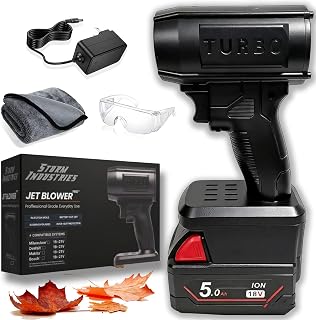


Choosing an advanced Makita leaf blower is less about finding the biggest number on a specification sheet and more about matching the blower's power system, airflow characteristics, control, runtime and physical design to the work you actually need to complete. A compact cordless blower can be ideal for patios, verandahs, garages and light garden cleanup, while a higher-output model may be more appropriate for large lawns, wet leaves, heavier debris and repeated professional use.
For Australian buyers, the battery platform deserves particular attention. Makita's cordless garden-tool range spans different battery systems, so an apparently inexpensive tool-only blower may become a less attractive purchase if you do not already own the compatible batteries and charger. Conversely, buyers who already have compatible Makita batteries may be able to reduce the total cost of adding a blower to their tool collection.
Makita Australia has offered cordless blower models across its LXT 18V, XGT 40V Max and other battery configurations, including models such as the DUB184Z and UB001GZ. Product codes, kits, specifications and availability can change, so always compare the exact Australian model number before purchasing.
An advanced leaf blower should be evaluated as a complete outdoor-cleanup system rather than simply as a motor attached to a tube. The useful combination is adequate air performance, controllability, efficient battery use, manageable weight and a design suited to the material being moved.
One of the most important decisions is choosing the appropriate Makita battery platform. LXT 18V and XGT 40V Max tools should not be treated as interchangeable simply because both are cordless Makita products.
LXT 18V can make considerable sense for households and tradespeople who already own a collection of compatible Makita LXT tools. A tool-only blower can be especially convenient when suitable batteries and a charger are already available.
The main advantage is ecosystem continuity. A buyer who already uses LXT batteries for drills, impact drivers, saws or garden equipment may prefer to remain within the same platform rather than maintain another battery system.
XGT 40V Max is aimed at applications where a higher-voltage cordless platform is desirable. For buyers dealing with larger areas or demanding outdoor cleanup, the XGT range is worth considering when the additional battery and charger investment makes sense for the rest of the user's tool collection.
However, choosing XGT solely because the voltage number is larger is not enough. Actual blower performance depends on the complete motor, electronics, airflow design, nozzle arrangement, battery and operating conditions.
Leaf-blower specifications can be confusing because air speed and air volume describe different aspects of performance. Air speed indicates how quickly air exits the nozzle, while air volume indicates how much air the blower can move over time.
A high air-speed figure can be useful for directing concentrated airflow at stubborn material, but air volume also matters when clearing a broad area. Conversely, a very high volume of air is not automatically better for delicate surfaces, garden beds or confined spaces.
For practical buying decisions, look at the complete specification set instead of choosing the model with the largest single airflow figure.
A powerful blower operating at full output is not always the most effective blower. Variable-speed control gives the operator the ability to adapt airflow to the surface and debris.
Lower settings can be useful around loose mulch, gravel, garden edging and delicate planting areas. Higher settings are better suited to heavier leaves, larger piles and stubborn debris. This control can also make the tool easier to use in confined spaces where excessive airflow would simply scatter material in every direction.
For advanced buyers, a useful question is not simply “How powerful is it?” but “How precisely can I control that power?”
Many current cordless power tools use brushless motor technology, and Makita has a substantial brushless cordless range. For a leaf blower, the value of brushless construction is primarily related to motor efficiency, electronic control and the ability to operate without conventional replaceable motor brushes.
Brushless technology should not be interpreted as a guarantee of longer battery runtime under every condition. Runtime still depends on battery capacity, selected speed, debris load, temperature, battery condition and how frequently maximum power is used.
Battery capacity is another specification that requires context. A larger-capacity battery can provide more stored energy, but it can also increase the weight carried by the operator.
For short cleanup tasks, a lighter battery may provide a better overall experience. For larger properties, professional landscaping or extended sessions, additional capacity can reduce interruptions for battery changes.
Makita blowers are commonly sold in different configurations, and the model suffix is therefore important. A tool-only product can be attractive for an existing Makita user, but it is not necessarily the best value for someone entering the battery platform for the first time.
Before comparing two prices, check whether each package includes a battery, charger, nozzle accessories and any other required components. A cheaper-looking tool can have a higher effective purchase cost once the required battery and charger are added.
Australian outdoor conditions vary considerably, from compact suburban gardens to large rural properties. The right blower therefore depends heavily on the environment.
A compact and controllable cordless blower can be preferable where storage space is limited and cleanup involves small quantities of leaves, dust and grass clippings. Excessive power can make confined cleanup less convenient by scattering debris beyond the intended area.
For a typical lawn, driveway and paved-area combination, variable speed and comfortable handling are often more useful than maximum output alone. A blower should allow the operator to create manageable piles rather than simply distribute debris across the property.
Large blocks can justify a higher-output blower and a larger battery strategy. Here, airflow performance, battery capacity and operator fatigue become increasingly important.
Professional users should evaluate the blower as a productivity tool. Battery interchangeability, charging logistics, durability, weight, operating controls and the ability to keep multiple batteries available may matter more than a small difference in a laboratory specification.
Different materials require different approaches. Dry leaves are generally easier to move than wet leaves because moisture adds weight and causes leaves to stick together. Grass clippings may also behave differently from loose leaves, particularly when they are damp.
Noise is an important consideration even when buying a cordless blower. Battery-powered does not mean silent. High-speed airflow and motor operation can still produce substantial sound.
Check applicable local council requirements and strata or neighbourhood rules before using a blower, particularly in densely populated Australian areas. Operating during considerate hours and avoiding unnecessarily high power can reduce disturbance.
Hearing protection may also be appropriate depending on the tool, duration and operating environment. Always follow the manufacturer's safety instructions and applicable Australian requirements.
Leaf blowing involves repetitive movement, and a blower that feels acceptable for five minutes can become uncomfortable during a long cleanup session. Weight distribution is therefore as important as total weight.
The nozzle is effectively the final stage of the airflow system. Its shape and length influence how concentrated the airflow feels and how easily it can be directed.
A narrow outlet can produce a more concentrated stream, which can be useful for stubborn debris. A broader airflow pattern can be more convenient for clearing larger areas. Buyers should therefore consider supplied nozzle options rather than evaluating the motor alone.
When comparing the products featured on this page, use a consistent checklist. This prevents a high specification in one category from overshadowing weaknesses in another.
Maximum air speed does not tell the entire story. A blower also needs sufficient air volume and controllability for efficient clearing.
A tool-only price may look attractive until the required battery and charger are added. Always calculate the complete system cost.
Do not assume that every Makita cordless tool uses the same battery. Check the exact platform and compatibility requirements.
A heavier high-performance blower can become tiring during extended use. For frequent cleanup, ergonomics should be part of the buying decision.
Excessive airflow can scatter leaves and mulch rather than creating an organised pile. Controlled power is often more useful than maximum output.
Two apparently similar products may include different batteries, chargers or accessories. Compare the complete contents of each package.
Good battery practices can make a cordless blower more convenient and help you get consistent performance from your equipment.
Cordless blowers generally require less routine maintenance than petrol-powered equipment, but they still need sensible care.
Technique can make a major difference. Instead of attempting to blow everything in one direction at maximum power, establish a destination for the debris and gradually move material toward it.
Read the specific instruction manual for the selected Makita model before operation. Wear appropriate eye protection, use hearing protection when appropriate, keep bystanders at a safe distance and avoid directing airflow toward people, animals or vehicles.
Do not use a blower to deliberately propel stones, sharp debris or other potentially dangerous objects. Take particular care around gravel, loose landscaping material and areas where small objects may be hidden under leaves.
Battery tools should also be inspected for damage before use. Stop using equipment if the battery, charger, cable, housing or controls appear damaged or behave abnormally.
Makita is not the only established brand in the cordless outdoor-power market. Buyers may also encounter products from Milwaukee, DeWalt, Bosch, Ryobi, EGO, STIHL and other manufacturers in Australia.
The most useful comparison is not brand reputation alone. Compare each brand's battery ecosystem, available garden tools, blower performance, battery pricing, charger options, weight, warranty terms, accessories and local availability.
Homeowners should generally prioritise manageable weight, sufficient airflow, variable control and battery convenience. There is little value in paying for extreme output if the blower will only be used occasionally on a small garden and driveway.
For larger properties, focus on battery capacity, charging strategy, airflow performance and ergonomic design. The ability to work continuously without excessive fatigue can be more important than a small difference in maximum output.
Tradespeople who already carry Makita cordless tools may benefit from selecting a blower that uses the same battery ecosystem. This can simplify charging, battery rotation and transport.
Professional landscapers should assess productivity, runtime, durability, operator comfort and fleet compatibility. A blower that integrates into an existing battery system may have a stronger practical value than an otherwise impressive standalone product.
Makita product codes can contain useful information about the tool and package configuration, but buyers should avoid assuming that every suffix has the same meaning across every market. The safest approach is to match the complete model number against the Australian specification and package description.
For example, a model ending with a suffix commonly associated with a tool-only configuration should not automatically be compared with a complete kit at the same price. Battery and charger inclusion can substantially alter the value proposition.
Before placing an order through an Australian retailer, check the product page carefully rather than relying only on the product title.
Customer reviews can provide useful information about everyday ownership, but they should not replace specification checking. A homeowner using a blower for five minutes per week has very different requirements from a landscaper using one repeatedly throughout the day.
When reading reviews, look for repeated observations concerning battery runtime, balance, controls, nozzle design, durability, charging and ease of use. Give less weight to comments that simply state that a product is “powerful” or “great” without explaining the conditions in which it was used.
Use this checklist when narrowing the products in a Makita leaf blower comparison.
The best advanced Makita leaf blower for an Australian buyer is the one that matches the workload, battery ecosystem and operating environment rather than simply the model with the highest headline specification.
For existing Makita users, battery compatibility can be the deciding factor. For first-time cordless buyers, the cost of batteries and chargers should be included in the comparison. For large properties and professional users, airflow performance, runtime, control and ergonomics deserve greater weight. For smaller gardens, compact size, low weight and controllability may provide more practical value.
Before buying, verify the exact Australian model number, current specifications, included accessories, battery requirements and package contents. Product ranges and retailer listings can change during 2026, so the information shown on a current Australian product listing should take precedence over an older comparison or archived specification.
There is no single best model for every Australian user. The right choice depends on property size, debris type, required airflow, battery platform, expected runtime, weight preference and budget. Existing Makita battery owners should first identify which compatible platform they already use.
Makita offers cordless blower options across different battery platforms and performance levels. Whether a particular model is suitable for a large garden depends on its published airflow specifications, battery setup, workload and the type of debris being moved.
Choose based on the complete tool ecosystem rather than voltage alone. LXT can be convenient for existing LXT owners, while XGT can be appropriate for users seeking the capabilities of that higher-voltage platform and willing to invest in its batteries and chargers.
Brushless motor technology can offer efficiency and electronic control advantages, but it should be evaluated alongside airflow, battery capacity, weight, controls and overall tool design.
Not necessarily. Battery capacity primarily relates to stored energy and potential runtime. Blower output depends on the complete electrical and mechanical system, including the motor and electronics.
A tool-only blower can be a sensible choice when you already own the correct compatible batteries and charger. If you are entering the battery platform for the first time, compare the cost of a complete kit before deciding.
They can be used for outdoor debris cleanup, but wet leaves are heavier and more difficult to move than dry leaves. Expect to use more controlled technique and potentially higher airflow, while following the individual model's operating instructions.
Start with air speed and air volume, then consider variable-speed control, battery platform, battery capacity, weight, noise, nozzle configuration and package contents. Comparing only one specification can produce a misleading result.
Battery compatibility depends on the specific Makita platform and tool. Check the manufacturer's compatibility information for the exact battery and tool models before assuming that two products can share a battery.
Some Makita cordless blowers are designed for demanding outdoor applications, but professional buyers should assess the exact model's performance, runtime, battery strategy, ergonomics and suitability for the daily workload rather than relying on the brand name alone.
Inspect the blower before use and clean away accumulated debris after operation. Follow the maintenance schedule and safety instructions supplied with the specific model. Damaged batteries, housings, controls or electrical components should not be used.
For most buyers, the most important factor is matching the blower to the intended workload. A balanced combination of adequate airflow, useful speed control, compatible batteries, reasonable runtime and manageable weight is usually more valuable than maximising one specification.