

♥ Wishlist
Compare 41 Milwaukee Impact Wrench products in Australia. Reviews, ratings, pros, cons and buying advice updated for October 2026.
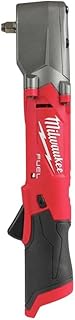


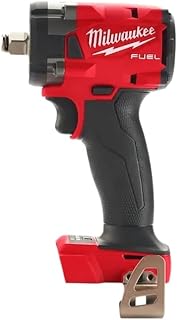


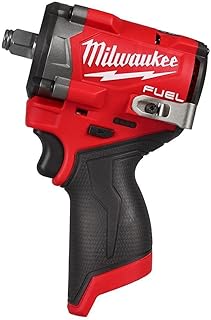


Choosing an advanced Milwaukee impact wrench is less about selecting the tool with the largest advertised torque figure and more about matching the wrench to the fasteners, working environment, access requirements and frequency of use. Milwaukee's cordless impact wrench range is built around its M18 battery platform, with different tool sizes, drive formats and performance levels intended for different applications.
For Australian buyers, the right choice can vary considerably between automotive servicing, wheel changes, trailer maintenance, agricultural work, construction, fabrication and heavy mechanical applications. A compact wrench that is ideal for confined engine-bay work is not necessarily the best option for stubborn suspension fasteners or larger industrial assemblies.
This guide focuses on the technical factors that matter when comparing advanced Milwaukee impact wrench solutions in 2026, including drive size, torque characteristics, speed control, battery selection, ergonomics, socket compatibility and application suitability.
An advanced impact wrench generally combines high fastening capability with electronic control, brushless motor technology, variable speed operation and battery management features. The goal is not simply maximum power. A sophisticated wrench should give the operator better control over how that power is delivered.
These features become particularly important when an impact wrench is used frequently. For occasional wheel changes, the differences between models may be less significant than they are for mechanics, tradespeople or workshop users who operate the tool throughout the day.
Torque is one of the most important specifications to compare, but it should not be treated as a single measurement that determines whether one impact wrench is automatically better than another. Manufacturers can publish different torque measurements for fastening and nut-busting or breakaway performance, and operating conditions can affect the result.
Fastening torque describes the tool's ability to tighten a fastener under specified conditions. Breakaway or nut-busting torque relates to the tool's ability to remove a fastener that is already tightened or difficult to release. These figures should not be interpreted as equivalent measurements.
When comparing Milwaukee impact wrench specifications, consider the entire torque profile rather than focusing exclusively on the largest number.
For critical automotive fasteners, an impact wrench should generally be treated as a removal and initial fastening tool unless the manufacturer's procedure specifically supports another method. Final tightening should follow the vehicle or equipment manufacturer's specified torque procedure, often using a suitable calibrated torque wrench.
The square drive determines which sockets can be fitted directly to the impact wrench and is one of the most practical specifications to evaluate before purchasing.
A 1/2-inch drive is a versatile choice for many automotive and general mechanical applications. It is commonly associated with wheel nuts, suspension work, machinery maintenance and everyday workshop fastening.
For many Australian home mechanics and automotive technicians, a 1/2-inch impact wrench offers a useful balance between portability, socket availability and torque capability.
A 3/4-inch drive is generally more appropriate when the work involves larger fasteners and heavier mechanical assemblies. The larger drive format is intended for applications where substantial torque and heavy-duty sockets are required.
Before choosing a 3/4-inch model, consider whether the additional size and weight are justified by the work you perform. A larger wrench can be unnecessary for routine passenger-vehicle maintenance.
One of the most important comparisons within Milwaukee's range is compact versus high-torque design. These categories serve different purposes rather than representing a simple good-versus-better hierarchy.
Compact impact wrenches are useful where physical access is restricted. Their shorter head length can make a meaningful difference around suspension components, engine bays, brackets and other areas where a conventional high-torque wrench may be difficult to position.
High-torque models are designed for demanding fastener removal and heavier mechanical applications. They can be especially useful when dealing with larger fasteners, rusted assemblies and jobs where a compact wrench does not provide sufficient capacity.
If most of your work involves ordinary vehicle servicing, buying the largest Milwaukee impact wrench available may provide more capability than you actually need. Conversely, choosing a compact model for frequent heavy-equipment maintenance can lead to frustration when fasteners exceed its practical operating range.
Battery compatibility is a major consideration when buying a cordless Milwaukee impact wrench. The M18 platform includes a broad selection of cordless tools and batteries, allowing users who already own compatible M18 equipment to potentially reduce the number of different battery systems required in their workshop.
However, battery capacity and physical size can affect the overall experience. A higher-capacity battery may provide greater runtime, while a compact battery can help keep the tool lighter and easier to manoeuvre.
Impact wrenches can draw substantial current during demanding fastening and removal tasks. Consequently, the battery is an important part of the complete tool system rather than an accessory that can be considered separately.
For occasional work, a smaller and lighter battery may be attractive. For extended workshop use, a higher-capacity battery can be more convenient because it may reduce interruptions for battery changes.
There is also a trade-off between runtime and tool weight. A heavier battery can change the balance of the wrench, particularly when working above shoulder height or holding the tool at an awkward angle.
Maximum speed is not the only performance specification worth considering. Controlled operation can be more valuable when working with smaller fasteners, delicate components or applications where over-tightening could cause damage.
Advanced Milwaukee impact wrenches may provide electronic modes or variable-speed control designed to make different fastening tasks easier to manage. The exact controls vary by model, so compare the individual specification sheet rather than assuming every M18 impact wrench offers the same settings.
Socket retention is a small specification that can have a significant effect on daily usability. Depending on the model, Milwaukee impact wrenches can use different socket-retention arrangements.
A friction ring is convenient when sockets need to be changed frequently. A pin-style retention system can provide a more secure mechanical connection in applications where socket retention is particularly important.
Neither system is universally superior. Consider how frequently you change sockets, whether you work in awkward positions and whether maximum socket retention is more important to you than rapid changes.
Never select sockets solely because they fit the square drive. Cordless impact wrenches should be paired with sockets specifically designed for impact-tool use. Impact sockets are manufactured to withstand the repeated shock loading generated by impact mechanisms.
Australian automotive users can encounter a wide variety of conditions, from routine passenger-car servicing to four-wheel-drive maintenance, trailer repairs and agricultural equipment work. The best Milwaukee impact wrench depends on the specific vehicle and fasteners involved.
A suitable 1/2-inch impact wrench can be convenient for removing wheel nuts quickly. However, removal capability should not be confused with final tightening accuracy. Wheel nuts should be tightened according to the vehicle manufacturer's specified procedure.
Suspension components can involve tight, corroded or difficult-to-access fasteners. A compact impact wrench can be advantageous for access, while a higher-torque model may be preferable when repeated heavy-duty removal is involved.
Four-wheel-drive servicing can involve larger fasteners and components exposed to dust, moisture, mud and corrosion. Buyers who regularly work on 4WDs should consider torque capability, tool size, battery endurance and access together rather than selecting solely by price.
Trailer and caravan work can involve wheel assemblies, chassis components and suspension hardware. Portability can be particularly useful when equipment is serviced away from a fully equipped workshop.
Farm and machinery maintenance can demand substantially more torque than ordinary automotive work. In these environments, drive size, battery capacity, socket strength and the wrench's intended duty level become increasingly important.
High-output cordless impact wrenches should be treated as serious mechanical tools. The tool's ability to generate substantial torque can damage fasteners, components or accessories if it is used incorrectly.
A common buying mistake is choosing an impact wrench solely because it has the highest advertised torque. This approach can overlook factors that have a greater effect on everyday productivity.
Milwaukee is not the only manufacturer worth considering when comparing cordless impact wrenches. Buyers may also encounter professional ranges from DeWalt, Makita, Bosch Professional and other established power-tool manufacturers.
The most useful comparison is normally between complete cordless ecosystems rather than isolated tools. If you already own several batteries and chargers from one platform, staying within that ecosystem may offer practical advantages.
Cordless impact wrenches have become an attractive alternative to pneumatic equipment for many mobile and workshop applications because they eliminate the need for an air hose and compressor during routine work.
An air impact wrench can still make sense in a workshop that already has suitable compressed-air infrastructure and uses pneumatic tools continuously. A cordless Milwaukee M18 solution can be particularly convenient where mobility, setup time and freedom from hoses are priorities.
Brushless motors are a major feature of modern professional cordless tools. Compared with traditional brushed motor designs, brushless systems eliminate physical motor brushes and use electronic control of the motor.
For an impact wrench, the practical benefits can include efficient operation, reduced mechanical wear associated with brushes and sophisticated electronic control. However, brushless technology alone does not tell you whether one particular impact wrench is suitable for your application.
Always evaluate the complete specification, including torque, speed, size, weight, battery system, controls and intended application.
An impact wrench can feel manageable for a few minutes but become tiring during repeated use. Weight distribution is therefore an important buying consideration, especially for professional users.
A useful way to narrow the Milwaukee range is to start with the job rather than the product.
More torque is not automatically better. Excess capacity can mean additional weight and size without providing a meaningful benefit for your normal workload.
A cordless tool purchase can become considerably more expensive if you need batteries and a compatible charger. Include the complete system in your comparison.
A wrench that does not match your existing impact socket collection may create unnecessary accessory costs. Check the drive size before ordering.
Breakaway capability describes removal performance and should not be interpreted as a recommended tightening torque for a vehicle fastener.
Standard chrome sockets are not a substitute for impact-rated sockets. Using inappropriate accessories can create avoidable safety and equipment risks.
A high-torque wrench is of little practical value if its head cannot fit between the components you need to reach.
M18 compatibility does not mean every M18 impact wrench has the same performance, dimensions, controls or intended use. Compare the exact model specification before buying.
Good maintenance can help keep a cordless impact wrench ready for work and makes it easier to identify developing problems before they become more serious.
When two models appear similar, compare them using a consistent checklist rather than relying on headline marketing terminology.
Customer reviews can provide useful information, but they should be interpreted alongside technical specifications. Look for reviews from people performing the same type of work you intend to perform.
The choice between a bare tool and a complete kit depends largely on whether you already own compatible Milwaukee M18 batteries and chargers.
A bare tool can be more economical for an existing M18 user who already has suitable batteries. A kit can be more convenient for someone entering the platform because it can provide the tool, battery and charger together.
Always check exactly what is included. A product title may describe a particular tool while the package contents determine whether it is actually ready to use.
A higher purchase price can be easier to justify when a feature directly improves the type of work you perform. For frequent users, useful electronic controls, a suitable torque range, compact dimensions, efficient battery use and a durable professional-oriented design can matter more than cosmetic features.
For occasional users, however, buying a top-tier high-torque model may offer limited practical benefit. A less powerful but appropriately sized Milwaukee impact wrench can be the more sensible choice when its capabilities comfortably cover the intended jobs.
An impact wrench is designed for fast mechanical fastening and removal, but it is not a universal replacement for every hand or power tool.
There is no single best model for every Australian driver. A versatile 1/2-inch M18 impact wrench can be a sensible category to investigate for general automotive maintenance, while compact models may be preferable when access is the main concern and high-torque models may be more appropriate for demanding mechanical work.
A suitable M18 impact wrench can be used for wheel-nut removal when paired with the correct impact-rated socket. Final tightening should follow the vehicle manufacturer's specified torque procedure rather than relying solely on the impact wrench's maximum output.
Only if your applications justify it. High-torque models are useful for difficult and larger fasteners, but a compact or mid-range wrench may be easier to handle for everyday automotive work.
M18 identifies Milwaukee's battery platform, but you should still confirm compatibility and the manufacturer's requirements for the exact tool and battery combination you intend to use.
A 1/2-inch drive is a versatile starting point for many automotive applications. Larger drive sizes become more relevant as fastener size and required torque increase.
Yes. Use sockets and accessories specifically designed for impact tools. Standard hand-tool sockets should not be treated as interchangeable with impact-rated equipment.
No. Torque should be matched to the application. Excessive capacity can add size, weight and cost without providing a meaningful benefit for routine work.
Not when precise final torque is required. An impact wrench is primarily valuable for rapid removal and fastening, while a calibrated torque wrench is designed for controlled final tightening.
It depends on the job. Choose torque capacity when stubborn or large fasteners are common, and prioritise compact dimensions when access and manoeuvrability are more important.
If you already own compatible M18 batteries and a charger, a bare tool may make more sense. If you are new to the platform, compare the complete cost of a kit against buying the components separately.
Compare the complete package rather than the headline tool price. Consider whether the listing includes a battery, charger, case or other accessories, and compare the exact model number across Australian retailers.
The best advanced Milwaukee impact wrench is the one that fits the work rather than the one with the most impressive specification on paper. Start with your applications, determine the drive size and torque range you genuinely need, then compare compactness, battery requirements, controls, ergonomics and accessories.
For Australian buyers, it is also worth checking the exact local model number, package contents, current specifications and retailer information before committing to a purchase. Milwaukee's M18 ecosystem can be particularly attractive to users who already have compatible cordless tools, but entering a battery platform should be evaluated as a complete system.
For automotive work, a versatile 1/2-inch impact wrench is often the most practical category to investigate. For restricted access, compact dimensions can outweigh maximum torque. For heavy-duty mechanical applications, higher torque and larger drive sizes become more important. The key is to avoid paying for capability you will rarely use while ensuring the tool is powerful enough for the fasteners you actually encounter.
Use this guide alongside the manufacturer's current specifications, recent verified customer reviews and Australian retailer information to compare the available Milwaukee impact wrench options and identify the model that best matches your workload, battery setup and budget.