

♥ Wishlist
Compare 6 Cordless Impact Wrench for Powerful Fastening products in Australia. Reviews, ratings, pros, cons and buying advice updated for October 2026.
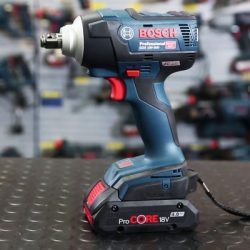
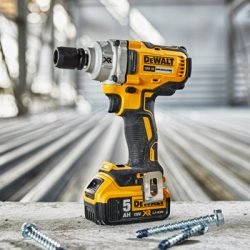
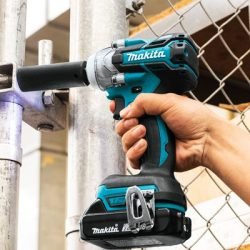
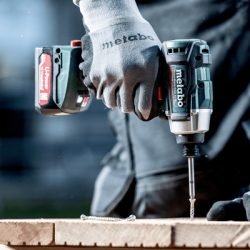
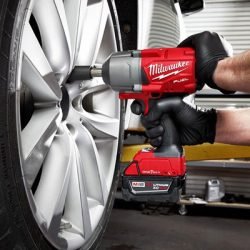


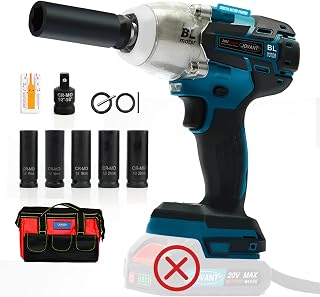

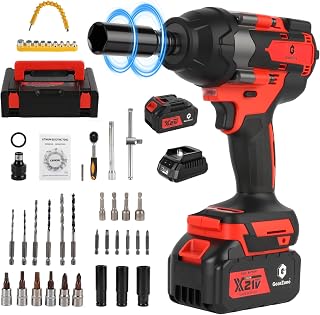
An advanced cordless impact wrench can save substantial time when removing or installing high-torque fasteners, but choosing the right model involves more than comparing the largest torque figure on a specification sheet. For Australian buyers, the most useful comparison considers drive size, torque control, battery platform, physical dimensions, impact mechanism, speed settings, protection features, socket compatibility and the type of work the tool will actually perform.
A compact impact wrench that is ideal for wheel changes and light mechanical work is not necessarily the right choice for heavy automotive repairs, agricultural equipment, construction work or frequent workshop use. Likewise, the highest-rated torque figure does not automatically make a tool the most practical option for everyday jobs.
Modern cordless impact wrenches can combine brushless motors, electronically controlled speed settings, selectable torque modes, compact impact mechanisms, LED work lights, battery protection systems and increasingly sophisticated fastening controls. These features can make a meaningful difference when the wrench is used frequently or when access, consistency and control matter as much as raw power.
Torque is one of the most important specifications for an impact wrench, but it is also one of the easiest to misunderstand. Product specifications can distinguish between fastening torque, breakaway torque, nut-busting torque, maximum torque and controlled torque. These figures should not automatically be treated as interchangeable.
A wrench advertised with a very high maximum torque figure may be excellent for loosening stubborn fasteners, while its practical fastening behaviour may depend heavily on the selected mode, battery, fastener, socket, material and duration of impact. The actual torque delivered to a fastener can also vary according to the condition of the joint.
Maximum fastening torque describes the manufacturer's specified output under its stated testing conditions. Breakaway or nut-busting torque refers to the tool's ability to overcome resistance when loosening a fastener. These measurements are useful for comparison, but they should not be interpreted as a guarantee that every fastener will loosen at exactly that value.
Rust, thread damage, corrosion, thread-locking compounds, joint design and the condition of the socket can all influence how much force is required to loosen a fastener.
Excessive torque can be undesirable when installing fasteners that have a specified tightening requirement. An impact wrench is primarily a power tool for driving and removing fasteners; it should not automatically be treated as a precision torque wrench.
For critical automotive, structural or machinery fasteners, use the manufacturer's specified procedure and a suitable calibrated torque wrench when final torque accuracy is required. An impact wrench can often be used for initial installation, followed by final verification with the appropriate torque-control equipment.
The square-drive size determines the socket system used with the wrench and is an important indicator of the type of work for which the tool is intended.
A 1/2-inch drive is one of the most versatile choices for automotive and general mechanical work. It offers a broad selection of sockets and accessories and can suit tasks ranging from passenger-vehicle wheel work to more demanding mechanical applications, depending on the wrench's output.
For many Australian DIY users, vehicle owners and mechanics, a 1/2-inch cordless impact wrench provides a useful balance between portability and capability.
A 3/8-inch drive is generally more compact and can be advantageous where access is restricted. It is particularly useful for smaller fasteners and mechanical work where a large 1/2-inch tool would be unnecessarily bulky.
A 3/4-inch drive is aimed at substantially heavier-duty applications. These tools can be relevant for trucks, agricultural equipment, industrial machinery and large fasteners, but they are typically larger and heavier than tools intended for ordinary automotive maintenance.
Brushless technology is common in premium cordless impact wrenches because it allows manufacturers to combine electronically controlled motors with modern battery systems. For users who regularly operate an impact wrench, the reduced need for brush replacement and the efficiency of modern brushless systems can be worthwhile.
Brushed tools can still be useful for occasional work, particularly when price and compatibility with an existing battery platform are more important than having the newest motor technology. However, buyers comparing advanced cordless models will commonly encounter brushless designs from brands such as Milwaukee, Makita, DeWalt, Bosch, HiKOKI, AEG and Ryobi.
If you already own cordless power tools, staying within the same battery ecosystem can substantially affect the overall value of an impact wrench. Purchasing a bare tool can be attractive when compatible batteries and chargers are already available.
On the other hand, a high-performance impact wrench can require a battery capable of delivering substantial current. A small battery may reduce the practical runtime or performance available from a tool compared with a higher-capacity or higher-output battery specified for that platform.
Australian shoppers will encounter both 18V and 20V Max-style terminology across different brands and markets. Voltage labels should therefore be interpreted within the manufacturer's battery system rather than used as the sole basis for deciding which wrench is more powerful.
When comparing tools, look at the complete system: motor design, battery technology, rated torque, operating modes, battery capacity, charger requirements and the manufacturer's specifications.
An impact wrench does not rely solely on continuous motor torque. Its impact mechanism repeatedly delivers rotational blows to the output shaft, allowing the tool to tackle fasteners that may be difficult for a conventional drill or driver.
Different manufacturers use different mechanical and electronic approaches to achieving high output while controlling size, vibration, heat and noise. Buyers should therefore consider the overall tool design rather than comparing one headline specification.
A compact head can be particularly valuable around suspension assemblies, engine compartments and other areas where there is limited clearance. A slightly less powerful tool that physically fits the fastener can be more useful than a larger model that cannot reach it comfortably.
Weight becomes increasingly important during repeated use. A powerful impact wrench may be excellent for occasional stubborn fasteners but tiring if it is held above shoulder height or used continuously throughout a workday.
Consider the complete operating weight with the battery attached rather than evaluating the tool body alone.
Advanced impact wrenches commonly provide several operating modes. These settings can allow the user to select a more controlled response for smaller fasteners and a more aggressive setting for stubborn bolts.
The exact operation of these modes varies by model, so buyers should read the manufacturer's instructions rather than assuming that similarly named modes behave identically across brands.
An impact wrench and an impact driver are related tools, but they are designed around different fastening applications.
An impact driver generally uses a hexagonal bit interface and is commonly selected for screws, construction fasteners and smaller bolts. An impact wrench normally uses a square drive for sockets and is designed around automotive and mechanical fastening tasks.
If your primary requirement is changing vehicle wheels, removing suspension fasteners or working on machinery with socket-based fasteners, an impact wrench is usually the more appropriate category to investigate.
Australian vehicle owners may use cordless impact wrenches for wheel removal, brake work, suspension maintenance, engine repairs and general mechanical tasks. The ideal specification depends on the vehicle and the work being performed.
A compact or mid-range 1/2-inch model can be practical for many passenger-car maintenance tasks. Portability and access may matter more than selecting the largest available torque rating.
For four-wheel drives and utes, buyers may place greater emphasis on breakaway capability, battery capacity and durability. Larger wheels, heavier suspension components and frequent off-road use can make a robust impact wrench particularly useful.
Trailer and caravan maintenance can involve awkward access and fasteners exposed to outdoor conditions. A cordless impact wrench can be convenient, but fastener condition and correct torque procedures remain important.
Motorcycle applications can favour compact tools because access around frames, engine components and suspension assemblies can be restricted. Extremely high torque is not necessarily desirable for smaller fasteners.
Impact wrenches are not limited to automotive use. They can also be relevant to construction, fabrication, equipment assembly and maintenance. In these environments, battery compatibility, durability, ergonomics and repeated-use performance can become more important than occasional maximum torque.
Tradespeople should consider whether the tool will be used indoors, outdoors, on elevated work platforms, in confined spaces or for long periods. A compact wrench with an appropriate battery may be more practical than the largest model available.
An impact wrench should be paired with sockets and accessories designed for impact use. Standard chrome sockets intended for hand tools are not automatically suitable for repeated impact-tool operation.
Look for appropriately rated impact sockets that match the square-drive size of the wrench. The correct socket can help reduce the risk of premature accessory failure and improve the reliability of the overall setup.
Australian conditions can influence which cordless impact wrench is most practical. Buyers may use power tools in workshops, garages, sheds, construction sites, rural properties or outdoor environments, so storage and environmental exposure deserve attention.
Before committing to a battery platform, check that the batteries, chargers and accessories you need are readily obtainable in Australia. A tool can look attractive on paper but become inconvenient if replacement batteries or compatible accessories are difficult to source.
Read the manufacturer's warranty terms and understand the consumer protections that apply to purchases in Australia. Warranty coverage, exclusions, registration requirements and service arrangements can vary between manufacturers and products.
When buying kits from overseas marketplaces or comparing imported versions, verify that the supplied charger and electrical equipment are appropriate for Australian use. Do not assume that an identically named model sold in another market has exactly the same included accessories or electrical specifications.
The biggest torque number is not automatically the best buying decision. Consider size, weight, battery system, speed control and the applications you actually perform.
A cordless tool is part of an ecosystem. If you need new batteries and a charger, the total ownership cost can be considerably different from the advertised bare-tool price.
A very powerful 3/4-inch model may be unnecessary for ordinary passenger-car work, while a small 3/8-inch wrench may be unsuitable for large, heavily seized fasteners. Match the drive size to the socket sizes and jobs you expect to encounter.
Overall length can determine whether the wrench can physically reach a fastener. Compact dimensions can be especially valuable around suspension and engine components.
Even sophisticated electronic modes should not be assumed to provide the same function as a calibrated torque wrench. For fasteners with specified final torque requirements, follow the relevant vehicle, equipment or component manufacturer's procedure.
A very high-output wrench can be unnecessarily heavy, expensive and cumbersome for light-duty work. Select the capability that matches the job rather than paying solely for maximum specifications.
When two models appear similar, compare their specifications systematically instead of focusing on a single marketing figure.
Well-established cordless-tool manufacturers offer impact wrenches across different performance levels and battery platforms. Brands frequently encountered by Australian buyers include Milwaukee, Makita, DeWalt, Bosch, HiKOKI, Ryobi, AEG and Metabo.
The best brand is not necessarily the one with the highest headline specification. Battery ownership, local accessory availability, ergonomics, service arrangements, tool range and the specific model's specifications should all be considered.
Milwaukee has a broad cordless professional-tool ecosystem and offers impact wrenches across compact and high-output categories. Buyers already invested in the brand's compatible battery system may find platform continuity particularly relevant.
Makita is another major cordless-tool manufacturer with an extensive battery ecosystem. When comparing Makita impact wrenches, pay attention to the particular model's drive size, torque ratings, operating modes and battery requirements rather than assuming all models have similar performance.
DeWalt offers cordless impact wrenches across different sizes and power levels. Its battery platform can be an important factor for buyers who already use compatible DeWalt cordless equipment.
Bosch provides cordless professional and consumer-oriented power tools. Buyers should check the specific battery family and regional model specification because product naming and configurations can differ between markets.
HiKOKI offers cordless power tools designed for professional and demanding applications. When comparing an impact wrench from this brand, evaluate the particular model's torque, compactness, battery compatibility and control functions.
Ryobi can be particularly relevant to DIY users who value a broad cordless platform. Buyers should compare the intended workload and output requirements carefully before selecting a model for demanding mechanical work.
Battery runtime depends on many factors, including battery capacity, fastener size, material, tool load, operating mode, temperature and how continuously the wrench is used. There is no single runtime figure that applies equally to every application.
For occasional wheel changes, a suitable battery may provide ample capacity. For workshop or trade use, keeping a charged spare battery available can reduce interruptions.
Higher-capacity batteries can increase runtime but also add weight. The ideal battery is therefore a compromise between operating duration, tool balance and the output required for the application.
High-torque cordless tools can generate heat during sustained heavy operation. Avoid assuming that a tool designed for high peak output should be operated continuously at maximum load without regard to the manufacturer's instructions.
Follow the manufacturer's guidance regarding duty cycle, battery temperature, storage and charging. If the tool or battery becomes unusually hot, stop and allow the equipment to cool according to the manufacturer's instructions rather than continuing to force the tool through a demanding task.
Proper maintenance can help keep an impact wrench operating reliably and can also reveal developing problems before they become more serious.
Impact wrenches can deliver substantial mechanical force, so appropriate protective equipment and working practices are important. Always read the manufacturer's operating instructions before use.
Customer feedback can complement specifications, but it should be evaluated critically. Look for recurring comments about battery life, balance, accessibility, trigger control, socket retention, durability and real-world suitability rather than relying on a single enthusiastic or negative review.
Reviews are most useful when they describe the application. A person using an impact wrench occasionally for vehicle maintenance has different requirements from a professional mechanic using one throughout the working day.
A practical way to narrow down the options is to start with the work rather than the brand.
Before selecting one of the advanced cordless impact wrench options under consideration, answer these questions:
Use this checklist when comparing the current options available to Australian buyers in 2026.
There is no single model that is best for every Australian buyer. The right choice depends on the vehicle or machinery involved, required torque, drive size, frequency of use, physical access, battery platform and budget. Compare the current specifications of the shortlisted models against your actual workload.
A 1/2-inch drive is a versatile format for many automotive and mechanical applications because it accommodates a broad range of socket sizes. However, users working mainly with smaller fasteners may prefer a compact 3/8-inch model, while heavy machinery may justify a larger drive.
Do not select an impact wrench solely from the torque required to remove a wheel fastener. Consider the manufacturer's vehicle-specific tightening procedure and use an appropriate torque wrench for final tightening where specified. An impact wrench's high breakaway capability is useful for removal, but controlled final tightening is a separate consideration.
A sufficiently capable impact wrench can help with stubborn fasteners, but no torque rating guarantees removal of a particular rusted bolt. Corrosion, thread condition, fastener size, joint design and penetrating treatment can all affect the outcome.
For frequent users, brushless models can be attractive because they combine modern electronic motor control with cordless battery technology and avoid conventional motor-brush replacement. For occasional users, the value depends on the price difference and the benefits offered by the particular model.
Choose a bare tool if you already have compatible batteries and a charger. A complete kit can make more sense when entering a new battery ecosystem, but compare the included battery capacity and charger because kit contents can vary.
Impact wrenches should generally be paired with sockets designed and rated for impact use. Check the manufacturer's recommendations for sockets, extensions, adapters and retaining accessories.
No. Voltage should be considered alongside motor design, battery technology, electronics, torque specifications and the complete tool system. Different manufacturers also use different voltage terminology for their cordless platforms.
No. Maximum output is only one factor. A smaller, lighter and more controllable wrench may be a better choice for routine automotive work, while a high-output model can be justified for heavy machinery and stubborn fasteners.
Battery capacity influences available runtime, but larger batteries can also increase weight. For intensive work, a higher-capacity battery or spare battery may be useful. For occasional jobs, a smaller battery may provide a more comfortable tool balance.
No. An impact wrench is designed primarily for powered fastening and removal. Where a component requires a specified final tightening torque, use the manufacturer's recommended torque procedure and appropriate calibrated equipment.
Many professional users rely on cordless impact tools, but suitability depends on the specific model and workload. Professional buyers should pay particular attention to durability, ergonomics, battery availability, charging options, control functions and the manufacturer's service provisions.
The strongest cordless impact wrench purchase is not necessarily the one with the most impressive specification sheet. It is the model whose torque range, drive size, dimensions, battery platform and control features align with the work you actually perform.
For Australian buyers, start by identifying the fasteners and applications you expect to encounter. Then compare compatible battery systems, tool weight, head length, torque figures, operating modes and available accessories. If you already own cordless tools, battery compatibility can be one of the most important factors in the overall decision.
Before purchasing, verify the current model number, Australian configuration, included accessories, manufacturer specifications, warranty information and today's retailer pricing. Product bundles and specifications can change during 2026, so the final purchase decision should always be based on the current listing rather than an older specification or review.
Most importantly, treat maximum torque as a capability rather than a target tightening value. Use appropriate impact-rated sockets, follow safe operating practices and use a suitable torque-control method whenever the vehicle, machine or component manufacturer specifies a precise final tightening requirement.