

♥ Wishlist
Compare 3 Cordless Line Laser Level for Accurate Levelling in Australia products in Australia. Reviews, ratings, pros, cons and buying advice updated for October 2026.
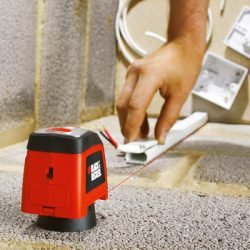
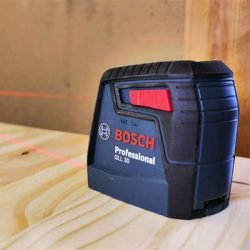
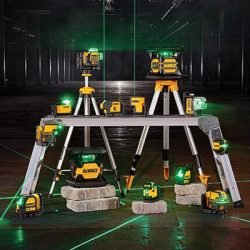
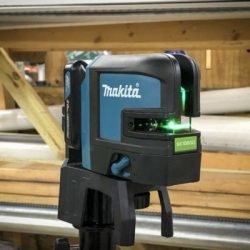
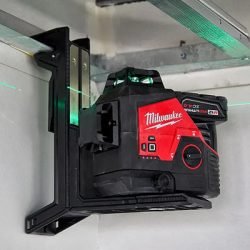


An advanced cordless line laser level is more than a simple levelling aid. For renovation, fit-out, cabinetry, framing, electrical work, tiling, suspended ceilings and general construction, the right laser can reduce repeated measurements and make horizontal, vertical and layout work easier to manage. The best choice depends on the type of projection required, working distance, visibility, accuracy, power system, mounting options, environmental protection and the conditions in which the tool will be used.
Australian buyers should also consider whether a laser is intended for occasional DIY work, professional interior fit-outs, building and renovation projects, or demanding construction environments. A model designed primarily for indoor layout work may not be the most practical option on a bright outdoor site, while a highly specialised professional laser may offer features that a homeowner rarely needs.
This guide focuses on the technical and purchasing considerations behind advanced cordless line laser levels so you can compare specifications more intelligently, identify misleading feature claims and choose a model appropriate to the job.
The phrase “advanced” does not describe one universal specification. In practice, an advanced cordless line laser generally combines several useful characteristics: multiple laser lines, automatic self-levelling, strong visibility, rechargeable or interchangeable battery power, robust construction, flexible mounting, useful working range and accuracy suitable for the intended application.
A professional-grade unit may also include features such as selectable laser planes, pulse or detector compatibility, fine adjustment mechanisms, pendulum locking, remote operation, multiple projection modes and integration with an existing power-tool battery platform.
A basic cross-line laser normally projects one horizontal and one vertical reference. More advanced models may provide additional vertical planes or a full 360-degree horizontal plane. This can be particularly useful when laying out several walls or working around a room without repeatedly repositioning the tool.
For cabinetry, partitions, wall lining and ceiling work, multiple planes can make alignment more efficient because the reference remains available across a larger portion of the workspace.
A 360-degree horizontal line projects around the room rather than stopping at the front of the tool. Some advanced models also provide one or more 360-degree vertical planes.
This configuration is valuable for room-wide layout work, particularly when establishing consistent heights for cabinetry, electrical fittings, wall framing, ceilings or other installations. It can also reduce the need to transfer measurements from one wall to another.
Automatic self-levelling is one of the most useful features to compare. A self-levelling mechanism compensates for small positioning errors within its specified operating range and establishes the projected reference automatically.
Buyers should check the actual self-levelling range in the manufacturer's specifications rather than assuming every model behaves identically. A tool that is outside its permitted range may indicate that it cannot establish a level reference and may provide an alert or flashing projection instead.
A pendulum lock is useful when the laser needs to be transported, stored or used to project lines at a deliberate angle. Locking the internal mechanism helps protect it during movement and allows applications where a manually positioned angled reference is required.
Laser levels are often marketed using a long list of specifications. The most useful approach is to separate specifications that directly affect measurement and layout performance from features that are convenient but secondary.
Accuracy is one of the most important specifications because a laser level is fundamentally a reference tool. Manufacturers may express accuracy as a deviation over a defined distance, such as millimetres per metre or millimetres over a specified number of metres.
Do not compare two accuracy figures without checking the measurement conditions and units. A smaller allowable deviation generally indicates a tighter specification, but the practical importance depends on the application and working distance.
For precision installation work, buyers should give accuracy considerably more weight than cosmetic features or a large feature list.
Working range indicates how far the projected line can be used effectively under specified conditions. The visible range can vary considerably depending on ambient lighting, surface colour, surface reflectivity and the type of laser receiver being used.
A claimed range should therefore not automatically be interpreted as the distance at which the line will remain equally easy to see in every Australian environment.
When a laser is intended for longer-distance work or bright conditions, compatibility with an appropriate laser detector can be extremely valuable. A detector can identify the laser reference when the line is difficult to see with the naked eye.
Before buying, confirm that the laser and receiver are designed to work together. Not every line laser supports detector operation, and compatible accessories may differ between manufacturers.
Laser colour can affect perceived visibility. Green laser projections are commonly chosen for improved visual recognition in many indoor conditions, while red lasers remain widely used and can be practical for general layout work.
Visibility is not determined by colour alone. Ambient light, beam intensity, surface finish, projection distance and the user's viewing angle all influence how easily a line can be identified.
Laser levels should always be used according to the manufacturer's safety instructions and applicable requirements. Buyers should check the stated laser classification, warnings and operating instructions before purchase.
Never intentionally look directly into a laser beam or point the tool at people, vehicles or aircraft. A professional appearance does not make a laser projection harmless to eyesight.
Cordless operation is one of the major advantages of modern line laser levels. Eliminating a mains cable can make setup faster and reduce cable management around ladders, workbenches and unfinished construction areas.
Some laser levels use an integrated rechargeable battery. This can create a compact system with fewer separate components, making it attractive for users who want a dedicated laser rather than another tool on a shared battery platform.
The main consideration is replacement and charging. Check how the battery is charged, whether charging accessories are included, whether the battery is user-replaceable and what the manufacturer specifies for long-term battery servicing.
Other advanced lasers are designed around established cordless tool battery platforms. This can be particularly attractive to tradespeople who already own compatible batteries and chargers.
Brands such as Bosch Professional, DeWalt, Makita and Milwaukee offer cordless tool ecosystems that can include layout and measuring equipment. However, battery compatibility should never be assumed simply because two products carry the same brand name. Check the exact battery platform and model requirements before purchasing.
Runtime is more important for professional users who may operate the laser throughout a working day. A laser that requires frequent charging can become inconvenient even if its projection performance is excellent.
When comparing runtime claims, check the operating mode used to produce the quoted figure. A laser projecting multiple planes simultaneously may consume more power than one operating in a single-line mode.
For general renovation, a self-levelling cross-line laser is often sufficient. Useful applications include installing shelves, aligning wall cabinets, setting tile reference lines, positioning lights and checking consistent heights.
A compact model can be preferable if it is easy to position and transport around an occupied home.
Cabinet installation benefits from accurate horizontal references and clear vertical lines. A 360-degree horizontal plane can be especially useful when multiple cabinets or fixtures need to follow the same elevation.
Fine adjustment capability is also worth considering because small positional changes can be important when aligning cabinetry precisely.
Laser levels can simplify long reference lines for tiling and installation work. A vertical plane can help maintain alignment between floor and wall features, while a horizontal line can establish a consistent starting or transition reference.
For wet or dusty environments, check the tool's stated ingress-protection rating and operating limitations rather than assuming that a professional-looking housing is automatically suitable for harsh conditions.
For framing and partition installation, vertical references become particularly important. Multiple vertical planes can help establish wall positions and maintain alignment across a larger area.
For larger construction spaces, detector compatibility can be more important than simply choosing the laser with the highest advertised visual range.
Suspended ceilings, bulkheads and ceiling fixtures often benefit from a reliable horizontal reference. A 360-degree horizontal line can save time when transferring a consistent height around a room.
A ceiling mounting solution should also be considered. Magnetic mounts, brackets and tripod compatibility can make a significant difference to setup speed.
Electricians and plumbers can use laser references to align fixtures, outlets, switches, pipe routes and equipment. Multiple planes are particularly useful when horizontal and vertical alignment must be maintained simultaneously.
For trade use, durability, battery availability and mounting flexibility may be more important than having every possible projection mode.
Laser colour is one of the most visible differences between models, but it should not be the only purchasing criterion.
Australian working conditions can vary from enclosed residential renovations to bright outdoor construction sites. A laser selected for indoor work should not automatically be considered suitable for outdoor layout tasks.
Indoor environments are generally more favourable for visual laser lines. White or lightly coloured walls can provide strong contrast, although glossy or highly reflective surfaces can create their own challenges.
Direct sunlight can dramatically reduce the visibility of a projected laser line. For outdoor applications, receiver compatibility and an appropriate detection system can be more important than simply choosing a model with a powerful-looking specification.
Buyers should also consider temperature limitations, dust exposure, moisture resistance and the manufacturer's stated operating environment.
Construction equipment can be exposed to substantial heat, dust and sudden weather changes. Check the manufacturer's operating-temperature range and environmental specifications when selecting a laser for professional site use.
A tool that will spend most of its life inside a workshop has different environmental requirements from one routinely transported between outdoor construction sites.
Ingress-protection ratings can help buyers understand resistance to dust and water under defined testing conditions. If a model provides an IP rating, read the manufacturer's explanation rather than treating the rating as a general guarantee that the tool can be exposed to any weather.
For professional use, examine the overall design as well. Recessed controls, protected optical components, durable housing materials and secure battery interfaces can all influence how well a tool handles everyday transport and site work.
A laser level is a precision instrument, so physical shock matters. A durable outer housing may protect the tool from routine knocks, but it does not mean calibration cannot be affected by a significant impact.
After a substantial drop or suspected impact, users should follow the manufacturer's calibration-check recommendations rather than assuming the laser remains accurate.
Even a highly accurate laser is difficult to use efficiently if it cannot be positioned securely. Mounting flexibility should therefore be part of the initial comparison.
A tripod provides a stable platform and can make repeatable positioning easier. When comparing a laser, check the mounting thread specification and consider whether the tripod needs to support a particular working height.
A compact tripod may be convenient for indoor work, while a heavier construction tripod can provide additional stability for larger setups. The best combination depends on portability, floor conditions and the required projection height.
Professional tools often provide several operating modes. The controls should make it easy to activate only the required laser planes rather than forcing every line to operate simultaneously.
Look for clearly identifiable buttons, logical mode selection, battery-status information and a pendulum-lock control that can be operated without unnecessary complexity.
Some advanced laser levels support remote operation. This can be useful when the tool is positioned across a room, mounted at height or placed in a location where repeatedly walking back to the laser would disturb the setup.
Remote functionality is a convenience feature rather than a substitute for accuracy, stability or appropriate mounting.
A large advertised range can look impressive, but maximum range is not necessarily the most important specification. For many indoor jobs, accuracy, visibility and mounting convenience will matter more than extreme distance.
Green visibility can be advantageous, but colour alone does not determine overall performance. Compare accuracy, projection configuration, power system, detector compatibility and environmental specifications as well.
A cordless tool can become less convenient if its battery requires a separate charging ecosystem that you do not already use. Conversely, a compatible battery-platform laser may be particularly attractive to someone who already owns several batteries from the same system.
Customer ratings can provide useful signals about usability and ownership experience, but ratings should be interpreted alongside technical specifications. A compact DIY laser may receive excellent feedback from homeowners while being unsuitable for a professional who needs multiple planes, detector support and high-duty-cycle operation.
Check what is included in the package. Depending on the model, a case, target plate, mounting bracket, charger, battery, tripod adapter or detector may be supplied separately.
Outdoor operation requires more than a high range number. Consider visibility, detector compatibility, environmental protection, temperature limits and mounting stability before selecting a laser for outdoor work.
Established power-tool manufacturers can be useful starting points because their professional ranges may provide documented specifications, compatible accessories and established battery ecosystems.
Brand reputation should not replace specification comparison. The best model for a particular project is the one whose accuracy, projection pattern, visibility, battery system, mounting options and environmental capabilities match the work.
Not every premium feature has equal value. Buyers should prioritise features that directly reduce setup time or improve reliability for their particular tasks.
More features do not automatically mean better value. If your primary tasks involve hanging cabinets, installing shelves, aligning pictures, setting tile references or carrying out occasional renovation work, a straightforward self-levelling cross-line laser may be all you need.
Buying a 360-degree multi-plane professional model can add cost and complexity without providing meaningful benefits for simple tasks.
A 360-degree laser becomes more compelling when the same reference needs to be transferred around a room. It can be particularly useful for kitchen installations, wall framing, ceilings, electrical layouts, commercial fit-outs and other projects where repeatedly moving a conventional cross-line laser would slow the workflow.
A detector becomes particularly useful when the working distance is greater than practical visual visibility or when ambient light makes the beam difficult to see. Construction sites, outdoor work and large open areas can create these conditions.
If detector operation is important, confirm compatibility before buying. Look at the complete laser-and-detector system rather than evaluating the laser's visual range in isolation.
Laser levels are precision measuring references, and accuracy should be protected throughout their service life. Calibration can be affected by impacts, temperature extremes, rough transportation and general wear.
Users should follow the manufacturer's recommended calibration procedures. If a line appears inconsistent with known references or the tool has suffered a significant impact, do not simply compensate manually and continue using it for precision work.
A basic field check can compare the laser reference against a known stable reference over a suitable distance, following the manufacturer's instructions where available. The purpose is to identify a possible accuracy problem rather than replace professional calibration procedures.
For critical construction, installation or compliance-sensitive work, use the calibration and verification approach specified by the tool manufacturer or applicable workplace procedures.
Good maintenance starts with protecting the optical components. Keep the laser windows clean and use the cleaning method recommended by the manufacturer. Avoid abrasive materials or aggressive chemicals that could damage optical surfaces.
Battery longevity depends on the battery chemistry, charger, temperature and usage pattern. Modern lithium-ion systems generally benefit from appropriate charging and storage practices rather than being subjected to unnecessary extreme temperatures.
Always use the charger and battery combination specified by the manufacturer. Do not substitute incompatible packs simply because the physical connection appears similar.
When comparing models from Australian retailers, check the complete package rather than comparing the headline tool price alone. Two otherwise similar laser levels may have significantly different accessory bundles.
Online listings can use different terminology for similar capabilities. Before purchasing, compare the manufacturer's technical specification rather than relying entirely on retailer bullet points.
Pay particular attention to whether the stated range is visual or detector-assisted, whether batteries are included, whether a charger is included, which projection modes are available simultaneously and whether accessories shown in product images are actually included.
Range is one of the easiest specifications to misunderstand. A product may provide one figure for visible operation and another when used with a compatible receiver. These figures describe different working scenarios.
For an indoor renovation, visual range may be sufficient. For a large commercial space or outdoor construction site, receiver-assisted operation may be the more meaningful specification.
Self-levelling range refers to how far the internal mechanism can compensate for the tool being slightly out of level. It does not mean the laser can be placed at any angle and still automatically produce a correct horizontal reference.
If the tool is positioned outside its self-levelling range, the manufacturer may specify an alert or warning behaviour. Always follow the operating instructions supplied with the particular model.
A small angular error becomes more noticeable as the reference travels farther from the laser. This is why the manufacturer's accuracy specification should always be interpreted together with the working distance.
For short indoor applications, modest differences between two professional models may not have a meaningful practical effect. For long layout distances, accuracy can become substantially more important.
Laser levels are generally quieter than many power tools, but cordless electronics can still generate heat during extended operation. Professional users should check the manufacturer's operating limitations and battery guidance when using multiple laser planes for long periods.
A model that performs well for occasional setup may have different practical considerations from one intended for continuous daily trade use.
Compact lasers are easier to carry between rooms and can be convenient for maintenance and renovation work. Heavier professional units may provide a more substantial housing, larger mounting systems or additional features.
The ideal balance depends on how often the tool is transported. A tradesperson moving between several jobs each week may value compactness differently from a contractor who keeps the laser on a dedicated site.
Prioritise simple controls, dependable self-levelling, clear visibility, compact dimensions and reasonable accessory support. There is usually little reason to pay for advanced projection modes that will rarely be used.
A cross-line or 360-degree laser can be useful depending on the size of the renovation. Consider cabinetry, wall alignment, tile work and ceiling layouts when deciding how many projection planes you need.
Professional users should place greater emphasis on accuracy, durability, battery availability, mounting flexibility and efficient operation. Existing battery ecosystems can also have significant practical value.
For larger sites, detector compatibility, environmental protection, robust mounting and multiple planes can become more important. A protective case and dependable accessory ecosystem may also be worthwhile for frequent transportation.
When two models appear similar, use a structured comparison rather than focusing on one headline specification.
For most buyers, the following hierarchy provides a useful starting point.
The best value is not necessarily the cheapest laser. It is the model that provides the capabilities you will actually use without paying for unnecessary specifications.
For example, someone installing shelves and cabinets may benefit more from a reliable cross-line model with an excellent mounting system than from an expensive multi-plane laser designed for large construction layouts.
Conversely, a professional installer who regularly works across complete rooms may save significant setup time with a 360-degree model, making the additional investment easier to justify.
If you already use a cordless platform, adding a compatible laser can reduce the number of chargers, battery types and accessories required in your kit. This can be particularly useful for professional users who maintain several cordless tools.
However, buying a laser solely because it shares a battery platform is not advisable if the laser itself does not meet your accuracy, projection or environmental requirements. The measurement tool should still be evaluated on its own specifications.
A previous-generation laser can still be useful when its core specifications match the job. Newer models may introduce improved battery systems, visibility, projection options, controls or connectivity, but those additions are not automatically necessary for every buyer.
When considering an older model, verify that batteries, chargers, mounting accessories and replacement components remain appropriate for your intended period of ownership.
Customer feedback can provide useful information about practical usability, but it should be separated from technical specifications. Look for recurring comments concerning visibility, mounting, battery behaviour, setup convenience and durability rather than relying only on an overall star rating.
Also consider whether the reviewer used the product for the same type of work you intend to perform. Feedback from a homeowner installing shelves may not answer the questions of a builder working outdoors every day.
A laser level should be treated as precision optical equipment rather than as an ordinary visual pointer. Follow the safety information supplied with the specific product and applicable Australian workplace requirements.
There is no single best model for every Australian buyer. The appropriate choice depends on accuracy requirements, laser configuration, indoor or outdoor use, working distance, battery platform, mounting needs and budget. Compare specifications and current product availability rather than selecting solely on brand or rating.
Cordless models provide greater mobility and eliminate the need for a mains cable during setup. Their suitability depends on battery runtime, charging arrangements and the availability of spare batteries. For mobile trade work, cordless operation can be particularly convenient.
Green laser lines are often easier for people to see in many conditions, but colour is only one part of the specification. Accuracy, projection design, range, environmental conditions and detector compatibility can have a greater effect on suitability for a particular task.
You may benefit from a 360-degree laser if you frequently need to establish the same horizontal or vertical reference around an entire room. For simple point-to-point layout work, a conventional cross-line laser may provide better value.
Some models are designed for outdoor applications, but bright sunlight can make laser lines difficult to see. A compatible detector may be required for longer-distance outdoor work. Always check the manufacturer's stated operating conditions.
Self-levelling means the internal mechanism automatically compensates for small positioning deviations within its specified range so the projected reference can be established without manually levelling the entire tool.
The tool generally provides an indication that it cannot establish its intended level reference, such as a flashing beam or other warning specified by the manufacturer. The exact behaviour varies by model.
Precision laser levels should be checked and maintained according to the manufacturer's recommendations. Calibration can be affected by impact, transportation and other conditions. Professional users should take accuracy verification particularly seriously when measurements affect critical installations.
A detector can be worthwhile when working outdoors, across long distances or in bright environments where the projected line is difficult to see. It is less essential for many small indoor renovation tasks.
No. Check the mounting-thread specification and physical compatibility of both the laser and tripod. Some applications may also benefit from a tripod with a suitable height range and fine adjustment capability.
Customer ratings are useful as one source of practical feedback, but they should not replace technical comparison. Review the accuracy, projection pattern, battery system, range, environmental rating and included accessories as well.
For most precision applications, accuracy is among the most important specifications. However, the best overall choice also depends on the required projection pattern, working range, visibility, mounting system, battery platform and environmental conditions.
They can be when the additional accuracy, projection options, durability, battery integration or accessory compatibility directly improves the work. Occasional DIY users may obtain better value from a simpler model.
The strongest buying decision comes from matching the laser to the job rather than choosing the longest range, most expensive model or highest number of features. A reliable self-levelling cross-line laser can be ideal for everyday renovation work, while a multi-plane 360-degree system can provide substantial advantages for professional room-wide layout.
For Australian buyers, pay particular attention to accuracy, visibility, detector compatibility, environmental protection, battery availability and mounting flexibility. If you already use a cordless platform from a brand such as Bosch Professional, DeWalt, Makita or Milwaukee, battery compatibility may also influence the overall value of a suitable model.
Before purchasing, compare the exact model specifications, package contents, current Australian pricing and verified customer feedback. The goal is not to buy the laser with the longest specification sheet; it is to select a dependable layout tool whose accuracy, projection system and power source genuinely fit the work you need to complete.