

♥ Wishlist
Compare 12 Makita Line Laser Level for Accurate Levelling and Alignment products in Australia. Reviews, ratings, pros, cons and buying advice updated for October 2026.

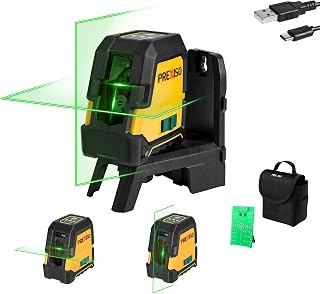


Choosing an advanced Makita line laser level is less about selecting the most feature-heavy model and more about matching the laser configuration, visibility, working range, mounting system, power source and intended application to the work being performed. A laser that is excellent for indoor cabinetry or partition installation may not be the most practical choice for larger construction work, while a model designed around longer working distances may offer capabilities that a homeowner rarely needs.
For Australian buyers, the comparison should also account for the conditions in which the tool will be used. Bright outdoor light can make a visible laser line difficult to see, uneven job sites can make mounting and positioning more important, and frequent trade use can place greater emphasis on durability, battery compatibility and ease of calibration checks.
An advanced line laser generally combines several capabilities rather than relying on a single headline specification. Depending on the particular model, useful characteristics can include multiple horizontal and vertical lines, self-levelling, manual or locked modes, pendulum protection, selectable laser planes, fine positioning, robust mounting options and compatibility with a detector for applications where the visible beam is difficult to identify.
Makita also produces different types of laser equipment, so buyers should distinguish a compact line laser from a rotary laser. A rotary laser is intended for a different class of levelling and alignment work and should not automatically be treated as an alternative to a multi-line construction laser. Makita's Australian product literature, for example, separately identifies self-levelling rotary laser equipment such as the SKR200.
Multiple projected planes can make an advanced line laser particularly useful for interior construction. Horizontal and vertical references can be used together when positioning cabinets, doors, windows, partitions, ceilings, wall framing, electrical points and other installations where several surfaces need to remain aligned.
However, more lines do not automatically mean a better purchase. Additional projection options are valuable only when they correspond to the work you regularly perform. A tradesperson completing mostly single-wall alignment may gain little from paying for capabilities designed for full-room layout.
Self-levelling reduces the amount of manual adjustment required when establishing a reference plane. This is particularly useful when the tool needs to be repositioned frequently during a job. Buyers should examine the manufacturer's stated self-levelling range rather than assuming that every laser behaves identically.
It is also important to understand the difference between a self-levelling mode and a locked or manual mode. Manual operation can be useful when intentionally projecting a line at an angle, such as for stair layouts or other non-level references. The ability to switch between these modes can therefore be more useful than simply having self-levelling.
Laser colour deserves careful consideration. Green beams are generally easier for the human eye to perceive than red beams under many viewing conditions, particularly when working at greater distances or in brighter environments. That does not mean a green laser is automatically superior for every user.
Beam visibility depends on ambient light, surface colour, viewing distance, beam quality and the position of the operator. In a relatively dim interior room, a quality red laser can be entirely adequate. In bright Australian working environments, improved visibility can become a much more significant consideration.
Laser specifications can look very similar between competing products, but the practical meaning of each specification varies. Instead of comparing a single headline number, assess the entire specification set against the job.
For precision layout work, accuracy should be one of the first specifications examined. A laser with numerous projection modes is not a good choice if its accuracy does not meet the requirements of the installation.
When comparing models, read how the manufacturer expresses accuracy. A specification stated over a particular distance should be evaluated using that same distance when comparing another product. Small differences in wording can otherwise make two apparently similar figures misleading.
It is also useful to distinguish the laser's stated factory specification from the condition of an individual tool after transport, heavy use or accidental impact. A precision instrument can be mechanically robust and still require periodic verification. Professional users should establish a sensible calibration-check procedure appropriate to the consequences of inaccurate layout.
Working range is frequently misunderstood in laser-level comparisons. A visible beam may be suitable for relatively short indoor distances while a detector can extend the practical usefulness of the laser in brighter or longer-range conditions, provided the particular laser and detector are designed to work together.
Before choosing a model for outdoor construction, verify whether the claimed range is a visual range, detector-assisted range or another manufacturer-defined measurement. Do not compare those numbers as though they represented the same operating condition.
For interior work, visibility, line completeness and mounting flexibility often matter more than extreme range. Cabinet installers, carpenters, electricians, ceiling installers and renovators may benefit from a laser that can quickly establish references across multiple walls and planes.
Outdoor use introduces stronger ambient light and longer working distances. A visible beam can become difficult to identify, particularly on light-coloured surfaces under direct sunlight. If outdoor layout is a major part of the intended application, investigate detector compatibility and the complete operating system rather than buying solely on visible-line performance.
Makita's broader cordless ecosystem can be an important consideration for existing Makita users, but buyers should never assume that every Makita tool uses the same battery platform. Before purchasing a laser advertised as a tool-only or skin configuration, check the exact model's required battery system and what is included in the package.
This distinction is particularly important when comparing a bare tool against a kit. A lower-looking tool price can become less attractive if a suitable battery, charger or required accessory must be purchased separately.
A laser level is only useful when it can be positioned accurately and held securely. For many trades, mounting flexibility is therefore a practical specification rather than a minor convenience.
When comparing advanced Makita line laser level solutions, look beyond the laser housing itself and examine how the complete setup will be positioned on a real Australian job site.
Line lasers can simplify the process of establishing consistent horizontal and vertical references for cabinetry, shelving, wall components, doors and other timber installations. Multiple vertical lines can be particularly useful where several components need to share the same alignment.
Cabinet installation is an application where a clear horizontal reference can substantially simplify positioning. An appropriate laser can help establish consistent installation lines across a room without repeatedly relying on a spirit level and manual measurements.
Electricians can use laser references when positioning fittings, switches, outlets and other components that need consistent alignment. The most suitable configuration depends on whether the work involves a single horizontal reference, vertical alignment or multiple intersecting planes.
Interior framing and ceiling work can benefit from multiple reference lines, especially where alignment must be transferred across walls or around a room. The ability to project vertical and horizontal references can reduce the number of separate manual measurements required.
A line laser can assist with maintaining consistent horizontal and vertical references during renovation and tiling projects. However, the laser should be treated as a precision layout aid rather than a replacement for correct surface preparation, measurement and installation technique.
Some purchasing mistakes happen because buyers focus on marketing language rather than measurable specifications. Be cautious when a listing emphasises phrases such as “professional grade,” “extreme accuracy” or “long range” without clearly explaining the conditions under which those claims apply.
A useful comparison table should evaluate more than model names and prices. For each candidate, consider the following criteria before deciding which option deserves a place near the top of your shortlist.
Makita is not the only established manufacturer in the professional laser-measuring and layout-tool market. Buyers may also encounter products from Bosch, DeWalt, Milwaukee, Hilti, Leica and other specialist brands.
The right comparison is not necessarily brand versus brand. Compare the specific model's accuracy, projection pattern, visibility, power system, mounting options, detector ecosystem, environmental protection and package contents.
For an existing Makita user, ecosystem compatibility can make a Makita option more convenient. For someone starting from scratch, the strongest choice may depend more heavily on the actual job requirements and the availability of compatible accessories.
There is no universal answer because working conditions vary considerably. Green projection is often attractive where line visibility is a priority, while red projection can remain a practical option for many indoor applications.
Think about the surfaces and lighting conditions where the laser will be used most frequently. A workshop, renovated house interior and open construction site present very different visibility challenges. If the laser will regularly move between indoor and outdoor environments, detector compatibility can become more important than colour alone.
Construction tools can encounter dust, vibration, transport impacts and changing temperatures. A laser level should therefore be selected according to the environment in which it will actually be used rather than the environment in which it looks best on a product page.
Check the manufacturer's published protection ratings and operating conditions for the exact model. A protective case can also be valuable because transporting a precision optical instrument loosely with heavier tools can increase the risk of accidental damage.
Even a high-quality laser level should be treated as a precision instrument. Before relying on it for critical layout, users should understand the manufacturer's instructions for checking accuracy and recognise situations that may justify professional inspection or calibration.
A practical verification routine can include checking a known reference, rotating or repositioning the laser according to an appropriate test procedure and looking for a meaningful change in the projected reference. The exact method should follow the manufacturer's instructions because an incorrect test can create a false impression of accuracy.
If the tool has suffered a significant fall, impact or other event that could affect its optical or mechanical alignment, do not assume that it remains within specification simply because the laser still powers on and projects a visible line.
Two listings for apparently identical laser levels can represent different purchasing propositions because one may contain the bare tool while another includes batteries, a charger, a case, mounting equipment or other accessories.
Always inspect the exact package description. For cordless products, confirm whether a battery and charger are included. Also check whether a detector, tripod or specialised bracket shown in product photography is actually part of the package.
This approach produces a more meaningful comparison than simply sorting listings by the lowest headline price.
Customer feedback can be useful, but it should be interpreted alongside technical specifications. A five-star review may reflect ease of use for a homeowner, while a professional buyer may care much more about calibration, mounting stability, runtime or repeated job-site performance.
Look for reviews that explain the application, working environment and reason for the purchase. Reviews that discuss the exact model, package contents and practical limitations generally provide more useful information than short comments focused only on delivery or packaging.
It is also worth checking whether reviews refer to different model variants or kits. Product listings can sometimes combine related configurations, so make sure the feedback corresponds to the exact model being considered.
Australian buyers should distinguish a manufacturer's warranty from their rights under Australian Consumer Law. Makita Australia's published warranty information states that its laser category has a specified limited warranty period and separately notes that Australian consumers retain statutory rights and remedies that cannot be excluded. Buyers should check the current warranty terms applicable to the exact product and purchase circumstances before relying on any warranty statement.
For an independent buying guide, warranty information should be treated as one factor in purchase research rather than a promise about how a retailer or manufacturer will handle a particular claim.
An advanced Makita line laser can make sense for tradespeople and serious DIY users who repeatedly need accurate horizontal and vertical references. It can be especially useful when manual levelling would require repeated measurements across multiple surfaces.
The investment is less compelling for occasional users who only need to hang a few pictures or complete simple household tasks. In those situations, a simpler level may provide sufficient functionality without paying for professional-oriented capabilities.
If the primary requirement is establishing long-distance level references across larger outdoor areas, a rotary laser may be more appropriate than a compact line laser. Rotary systems are designed around a different operating principle and application set.
Makita's Australian range includes self-levelling rotary laser equipment, demonstrating why buyers should first define the measurement task before selecting the tool category. If the job involves large-site elevations, longer outdoor references or detector-based levelling over substantial distances, investigate rotary laser specifications separately from multi-line laser comparisons.
The best option depends on the work rather than a universal ranking. Compare the required projection pattern, accuracy, laser colour, range, mounting system, battery configuration and environmental protection with the conditions in which you will use the tool.
Green laser lines are generally easier for the human eye to perceive in many conditions, but visibility still depends on ambient light, distance and the surface being projected onto. A red laser can be entirely suitable for many indoor applications.
Yes, where the specific model is designed for the intended conditions. Outdoor users should pay particular attention to visibility, working range and detector compatibility because bright ambient light can make a visible beam difficult to see.
No assumption should be made that all Makita laser products share one battery configuration. Check the exact model specification and package contents before buying.
Only if those additional lines improve the work you perform. Extra projection planes can be valuable for room layouts, cabinetry, framing and alignment, but they can be unnecessary for simpler jobs.
A quality laser level can provide a consistent reference over longer distances and across multiple surfaces, but accuracy depends on the instrument's specification, condition, setup and correct use. A laser should not be assumed to be accurate simply because it is a professional model.
The appropriate interval depends on the manufacturer's instructions, frequency of use and consequences of measurement errors. Users should also perform appropriate accuracy checks after significant impacts or whenever the instrument's behaviour appears questionable.
A line laser projects one or more visible lines or planes and is commonly suited to interior alignment and layout. A rotary laser creates a rotating reference and is commonly selected for longer-distance levelling applications. The right category depends on the job.
Confirm the exact model number, laser colour, projection pattern, accuracy, self-levelling range, operating range, battery requirements, included accessories, mounting options and applicable Australian warranty information. Also make sure customer reviews relate to the exact model and not a different variant.
The strongest choice among advanced Makita line laser level solutions is the model that delivers the right combination of accuracy, visibility, projection coverage, mounting flexibility, power management and durability for the work you actually perform. A more expensive or more feature-rich laser is not automatically the better purchase.
For Australian buyers, the most useful comparison is therefore application-led: identify the surfaces and distances you need to reference, determine whether the work is primarily indoor or outdoor, establish whether detector operation is important, check the required battery ecosystem and then compare the exact technical specifications and package contents.
Before purchasing, verify the latest model information, Australian package configuration, current retailer pricing, included accessories, customer feedback and applicable warranty terms. Product availability and specifications can change during 2026, so the exact model and package should always be confirmed at the time of purchase.