

♥ Wishlist
Compare 45 Cordless Pruning Shears products in Australia. Reviews, ratings, pros, cons and buying advice updated for October 2026.


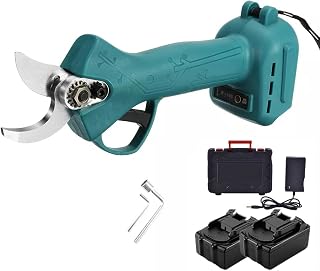


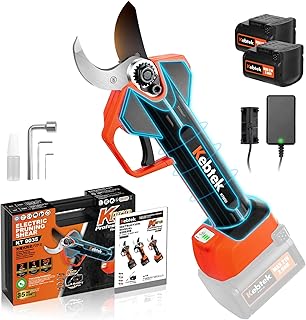


Advanced cordless pruning shears can make repetitive garden cutting considerably easier, particularly when you are dealing with fruit trees, ornamental shrubs, vines, hedges, roses and established woody growth. Unlike conventional secateurs, battery-powered models use a motor to drive the cutting mechanism, reducing the hand force required for each cut. The right model can therefore be useful for long pruning sessions where fatigue, grip strength and cutting consistency matter.
For Australian buyers, however, the best cordless pruning shears are not necessarily the model with the highest advertised cutting diameter or the largest battery. Garden conditions vary substantially between regions, and the ideal tool for occasional backyard pruning may be very different from one intended for orchard maintenance or professional horticultural work.
This guide focuses on the technical and practical factors that deserve attention when comparing advanced cordless pruning shears in 2026. Rather than choosing solely by headline specifications, consider cutting capacity, battery architecture, blade design, ergonomics, trigger behaviour, safety systems, replacement parts, charging arrangements and the type of timber you actually prune.
The term advanced does not describe one universally defined technical standard. In product listings, it generally refers to cordless pruning shears that incorporate features beyond a basic battery-powered cutting mechanism.
Maximum cutting diameter is one of the first specifications shoppers notice, but it can also be one of the easiest to misunderstand. A stated maximum diameter does not mean that every branch of that size will cut with the same speed or ease.
Fresh, relatively soft growth may be considerably easier to cut than dry, dense or exceptionally hard timber. Branch shape also matters. A perfectly positioned straight branch can behave differently from an awkwardly angled piece that places additional load on the blade.
When comparing cordless pruning shears, consider the maximum diameter as a reference point rather than the sole measure of performance. If most of your pruning involves branches around 10 to 15 mm, buying an extremely high-capacity model may add unnecessary weight and cost. Conversely, if your garden regularly involves thicker woody growth, a compact lightweight shear designed primarily for fine pruning may become frustrating.
The blade is the working component that directly determines the quality of the cut. A cordless pruning shear can have a powerful motor, but poor blade geometry or a poorly maintained cutting edge can still produce disappointing results.
Bypass-style cutting systems are common in pruning tools because the moving blade passes against a counter blade, producing a shearing action. This differs from anvil-style cutting, where the material is forced against a comparatively flat surface. For live plant pruning, a clean shearing action is generally desirable because crushing and tearing can damage the remaining plant tissue.
Battery specifications can make cordless pruning shears appear more powerful than they actually are if the figures are viewed in isolation. Voltage indicates the electrical potential of the battery system, while capacity is commonly expressed in ampere-hours. Neither number alone provides a reliable prediction of how many cuts a tool will make in a real garden.
A useful way to compare batteries is to consider watt-hours, calculated approximately as voltage multiplied by ampere-hours. For example, a nominal 21.6 V battery rated at 2.0 Ah represents approximately 43.2 Wh of stored energy under the stated nominal specifications. Actual usable energy and runtime can differ because of operating conditions, battery-management systems, temperature, tool efficiency and load.
Battery runtime depends heavily on the work being performed. Cutting small fresh stems requires much less energy than repeatedly cutting thick hardwood. A tool used continuously in an orchard may therefore produce very different results from the same tool used for occasional backyard pruning.
A compact pruning shear supplied with one integrated battery can be convenient for occasional users because there are fewer separate components to manage. However, users who spend several hours pruning may benefit from a replaceable battery system or a kit that includes more than one battery.
Before buying, check whether the battery is integrated into the tool or removable. Also determine whether replacement batteries are sold separately and whether the charger is included. A low purchase price can become less attractive if a replacement battery is difficult to obtain.
For users already invested in a cordless outdoor-power-tool platform, battery compatibility can also be an important consideration. Systems from brands such as Makita, Milwaukee, DeWalt, Bosch, Ryobi and STIHL may offer broader battery ecosystems, although compatibility is generally limited to the manufacturer's specified platform and model range.
A battery platform can influence the total ownership cost of a cordless pruning shear. If you already own compatible garden tools, a bare-tool option may potentially reduce duplication of batteries and chargers. If you are starting from scratch, the battery ecosystem itself becomes part of the buying decision.
Weight matters because pruning often involves hundreds or thousands of repeated movements. A tool that feels manageable for five minutes may become uncomfortable after an extended session.
Do not assess weight alone. The position of the battery and motor determines how the tool balances in the hand. A slightly heavier shear can sometimes feel more controllable than a lighter design with poor weight distribution, while a front-heavy tool can increase wrist and forearm fatigue.
Advanced cordless pruning shears may use electronic triggers that allow the operator to control blade movement with relatively little physical force. The quality of that interaction matters because pruning involves precise positioning around stems and branches.
A trigger that responds predictably can make it easier to position the blade before completing a cut. Some tools also offer progressive or electronically controlled operation, while others use a simpler open-and-close action.
When comparing models, look for information about trigger response, blade opening modes and whether the tool allows the operator to control partial blade movement. These features can be particularly useful for precision pruning where speed is less important than accurate placement.
Battery-powered pruning shears contain a motorised cutting mechanism capable of producing substantial force. Safe operation therefore depends on both the tool's design and the operator's working practices.
Always read the manufacturer's operating instructions before using a powered pruning shear. Never place fingers near the blade while the battery is connected, and disconnect or secure the tool according to the manufacturer's instructions before cleaning, adjusting or servicing it.
Australian gardens can range from small urban courtyards to large rural properties, orchards and acreage. Climate and plant selection therefore have a major influence on which cordless pruning shear is appropriate.
In subtropical and tropical areas, rapid plant growth can create a high volume of relatively frequent pruning. In cooler regions, deciduous fruit trees may create seasonal periods of concentrated pruning activity. Dry conditions can also result in harder, more brittle woody material that places greater demands on the cutting mechanism.
Before selecting a model, think about the plants you actually maintain. Roses, grapevines, fruit trees, ornamental shrubs and native plants can present different combinations of stem thickness, density and accessibility.
Fruit-tree pruning requires a balance between cutting capacity, precision and comfort. A tool that is unnecessarily large can become cumbersome when making numerous small cuts, while an undersized model may struggle with older branches.
For orchard-style work, battery endurance and ergonomics deserve particular attention because pruning can involve repeated cuts over extended periods. A replaceable battery system can also be advantageous if the tool is expected to remain in operation throughout a long working session.
Clean cutting is particularly important when pruning living plants. Keep the blade sharp and follow appropriate horticultural practices for the specific fruit species rather than assuming that a more powerful tool automatically produces better pruning results.
For roses and ornamental shrubs, precision may be more important than maximum cutting diameter. A compact shear with a controllable blade opening can make it easier to work among closely spaced stems without repeatedly opening the blades to their maximum position.
Consider tool size carefully if you frequently work inside dense foliage. A large motor housing or bulky battery arrangement can make precise positioning more difficult, even if the tool offers impressive cutting power.
Grapevine pruning can involve a high number of repetitive cuts, making weight, trigger comfort and battery endurance especially relevant. The ideal tool should allow the operator to work quickly without sacrificing cut placement.
When comparing pruning shears for vines, pay attention to blade-opening control and the tool's ability to make repeated smaller cuts efficiently. A model designed around very large branches may provide more capacity than necessary for routine cane and spur pruning.
Professional users should evaluate cordless pruning shears differently from occasional home gardeners. A homeowner may use the tool for a few pruning sessions each year, whereas a horticultural worker may depend on it for repeated daily operation.
Brushless motors are increasingly common in higher-end cordless power tools. They eliminate physical brushes used in conventional brushed motors, which can reduce one source of mechanical wear and allow electronic control of the motor.
That does not mean every brushless pruning shear will outperform every brushed model in every application. Blade design, gearing, battery quality, control electronics and overall construction remain important. A brushless motor is best treated as one component of a broader engineering package rather than a guarantee of superior performance.
The motor does not simply transfer its rotational speed directly to the blade. A mechanical transmission converts motor output into the controlled movement required by the cutting mechanism. Gear reduction can help generate the force necessary to cut thicker material.
For buyers, the practical question is less about the exact internal gear ratio and more about how effectively the complete drive system handles the intended branch sizes. Manufacturer specifications, operating instructions and credible customer feedback can help identify whether a model is suited to your workload.
Charging convenience becomes increasingly important as the amount of pruning increases. A compact battery that charges quickly can be useful for occasional work, while professional users may prefer multiple batteries or a larger-capacity platform that reduces interruptions.
Good storage practices can help protect both the pruning shear and its battery. Store the tool clean and dry, keep the blade secured according to the manufacturer's instructions and avoid leaving a removable battery exposed to extreme heat.
Battery chemistry and storage recommendations differ between systems, so follow the instructions supplied with the specific battery rather than applying generic charging rules. Avoid using damaged batteries, chargers or cables.
Sharp blades reduce the amount of force required to make a clean cut. As the cutting edge becomes dull, the motor and mechanical system may have to work harder, and the resulting cut can become less precise.
After pruning, remove plant residue from the cutting area according to the manufacturer's cleaning instructions. If the tool requires lubrication, use only the lubricant and method specified by the manufacturer. Do not spray liquids into electrical components or immerse a battery-powered tool unless the manufacturer explicitly states that it is designed for such use.
When sharpening a blade, preserve its original cutting geometry. Excessive material removal or an incorrect sharpening angle can reduce cutting performance and may compromise the intended blade engagement.
One of the most useful questions to ask before buying is whether the pruning shear can be maintained over several seasons. Blades are wear components, so their availability can matter more than a small difference in advertised cutting speed.
A useful comparison should evaluate each model against the same criteria rather than simply ranking products by one headline specification. When reviewing a shortlist, create a consistent comparison framework.
A larger stated capacity is not automatically better. If your normal work involves thin branches, a high-capacity professional-style shear may add weight and expense without delivering a meaningful advantage.
Battery pruning is repetitive work. A tool that is uncomfortable after prolonged use can undermine the benefits of cordless operation. Compare total working weight, not just the weight of the bare tool.
Amp-hours alone do not describe total stored energy. Compare battery systems using voltage and capacity together, while remembering that real-world runtime depends on workload.
Even when batteries appear physically similar, electrical and mechanical compatibility can differ. Use only batteries and chargers approved for the specific tool.
Cutting performance depends on the motor, gearing, electronics, blade design and overall mechanism. A single motor specification cannot capture the complete cutting system.
A cordless shear can remain useful for years only if its wear components can be maintained appropriately. Check replacement-part availability before committing to an unfamiliar model.
Listings can differ in whether they include the battery, charger, carrying case, sharpening equipment, spare blade or maintenance accessories. Compare complete kits rather than headline tool prices alone.
Product specifications can contain useful information, but they need to be interpreted in context. The following terms are particularly important when comparing models in Australia.
Some pruning-shear manufacturers provide an estimated number of cuts per charge. Such figures can be useful for comparison but should not be treated as a universal runtime guarantee.
The number of cuts depends on branch diameter, material hardness, cutting frequency, blade condition, battery temperature and other operating conditions. A claimed figure measured using small, relatively easy-to-cut material can differ substantially from the number of cuts produced during heavy pruning.
When comparing two models, use cut-count claims as supporting information rather than the only basis for a buying decision.
Traditional secateurs remain practical for light pruning and occasional gardening. They are compact, quiet, inexpensive to maintain and do not require charging. Cordless pruning shears become more attractive when the number of cuts increases or when reducing hand effort is a priority.
Corded electric pruning tools can provide continuous access to electrical power, but the cable can restrict movement and become inconvenient around plants, ladders and garden structures. Cordless tools eliminate the physical cable but introduce battery management as another consideration.
For gardens with no convenient outdoor power connection, cordless operation is generally more flexible. For fixed or workshop-style applications, corded equipment can still have practical advantages.
Petrol-powered garden equipment remains relevant for some high-demand applications, but battery-powered pruning tools offer a different operating experience. Cordless shears generally avoid fuel mixing, exhaust emissions at the point of use and engine starting procedures.
Battery equipment is particularly convenient for residential gardens where noise, fumes and ease of starting matter. Professional users should assess battery logistics carefully when the tool must operate for long periods away from charging facilities.
Brand reputation can be useful when comparing cordless pruning shears, particularly because batteries, chargers, replacement blades and service support can influence long-term ownership. Well-known power-tool and outdoor-power-equipment manufacturers include Makita, Milwaukee, DeWalt, Bosch, Ryobi and STIHL. Specialist horticultural brands may also be worth considering where professional pruning is a major part of the intended workload.
Do not select a brand solely because it is familiar. Compare the exact model, battery platform, included equipment, cutting specifications, replacement parts and manufacturer documentation. A respected brand can produce several tools aimed at very different levels of use.
Customer reviews can provide useful information that specifications do not always reveal, but they should be interpreted carefully. Focus on reviews that describe the actual use case rather than comments that simply praise packaging or delivery.
The cheapest model is not necessarily the best value, and the most expensive model is not necessarily the best choice for every gardener. Value should be assessed against the amount and type of work the tool will perform.
For occasional users, paying more for a large professional battery system may not provide enough practical benefit. For heavy users, spending more on a robust ecosystem, replaceable components and ergonomic design may reduce inconvenience over the longer term.
When comparing today's prices, compare the complete package: tool, battery, charger, accessories and likely replacement components. A bare tool may appear inexpensive because the battery and charger are sold separately.
Australian shoppers should check the exact local specification rather than assuming that an overseas product listing represents the same package sold domestically. Battery configuration, charger type, included accessories, model numbers and warranty arrangements can vary by market.
Before purchasing, verify the model number, included battery and charger, Australian electrical requirements for the supplied charging equipment, manufacturer documentation and availability of replacement components. Also check current retailer listings because product bundles and prices can change during the year.
For an affiliate buying guide, it is particularly important to distinguish between the product itself and the retailer offering it. The same model can be listed by multiple retailers with different bundles, prices and delivery terms. Compare the exact specification rather than assuming every listing is identical.
Even an advanced cordless pruning shear will perform poorly if it is used incorrectly. Position the blade so that the branch is properly seated within the intended cutting area rather than forcing oversized material into an awkward position.
Avoid twisting the tool while the blade is under load. Make sure the branch is within the model's recommended cutting capacity and keep the blade clean and sharp. For living plants, use appropriate pruning techniques for the species and make cuts in the locations recommended by established horticultural practice.
Powered pruning shears are not a universal replacement for every garden cutting tool. Very large branches may require a pruning saw or lopper designed for the task. High branches may require a pole-mounted pruning tool, while dense vegetation may call for a hedge trimmer or other purpose-built equipment.
Using a pruning shear outside its intended capacity can increase mechanical stress and create unnecessary safety risks. Choose the tool according to the material, diameter, height and accessibility of the work rather than attempting to make one device handle every pruning job.
If you are narrowing a list of ten advanced cordless pruning shears, begin by removing models that do not meet your minimum cutting capacity or battery requirements. Next, compare weight and ergonomics. After that, examine blade replacement, battery availability and safety features.
The final shortlist should contain tools that genuinely match your workload rather than ten products that merely have similar marketing claims. For example, a compact model may be the stronger choice for precision pruning, while a larger battery-platform model may be more suitable for demanding orchard work.
They can be worthwhile when pruning involves a large number of repetitive cuts or when reducing hand effort is important. For very occasional light pruning, conventional secateurs may remain simpler and more economical.
There is no single ideal diameter. Choose according to the branches you actually encounter. Buying substantially more cutting capacity than required can increase tool size and weight without providing a useful advantage.
A brushless motor can offer advantages in efficiency, electronic control and mechanical wear characteristics, but motor type should be considered alongside blade design, gearing, battery performance, ergonomics and overall construction.
Battery longevity depends on the battery chemistry, charging practices, storage conditions, temperature, usage frequency and overall care. Follow the battery manufacturer's charging and storage recommendations.
Some models are designed to handle relatively hard woody material within their specified cutting capacity. However, maximum diameter should not be interpreted as unlimited capability. Dry, dense or unusually hard branches can impose greater loads than smaller fresh growth.
A removable battery can be advantageous if you need longer working sessions, want to keep a spare battery available or already own compatible tools. Integrated batteries can be convenient for occasional use and compact tool designs.
No. The best choice depends on the workload. Professional-grade specifications can be unnecessary for light domestic pruning, while a budget model may not be appropriate for intensive daily use.
Voltage is useful when comparing battery systems, but it should not be treated as a direct measure of cutting performance. Motor efficiency, gearing, electronics, blade design and battery capacity all influence practical performance.
Clean and secure the tool according to the manufacturer's instructions, keep the cutting mechanism protected and store batteries under the conditions specified for that battery system. Keep electrical components dry and inspect the tool before its next use.
No. Every powered shear has an intended operating range. Larger branches may require loppers or a pruning saw, while high branches may be better handled with a suitable pole pruner.
The strongest cordless pruning shear for your garden is the one that matches the actual workload rather than the most impressive specification on the product page. Start with branch diameter and pruning frequency, then consider battery capacity, tool weight, blade design, trigger control, safety features and replacement-part availability.
For occasional Australian home gardeners, a compact and easy-to-use model may provide the best overall balance. For frequent orchard, vineyard or professional horticultural work, battery endurance, ergonomics, serviceability and a dependable battery ecosystem deserve considerably more attention.
When comparing the top 10 options, verify the exact model number and current package contents, read recent customer feedback critically, compare manufacturer specifications and check today's retailer pricing before making a final decision. Most importantly, choose a tool designed for the material you actually intend to cut. The right combination of cutting capacity, battery strategy, blade quality and operator comfort can make cordless pruning substantially more efficient without paying for capabilities you are unlikely to use.