
♥ Wishlist
Compare 14 Cordless Reciprocating Saws for Cutting Jobs in Australia products in Australia. Reviews, ratings, pros, cons and buying advice updated for October 2026.
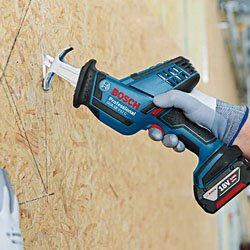
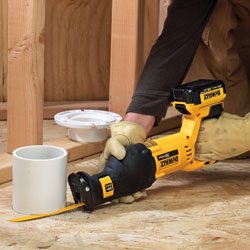
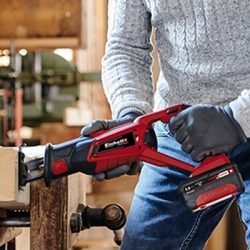
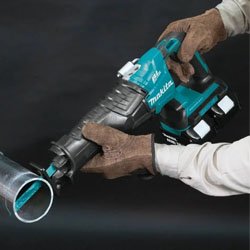
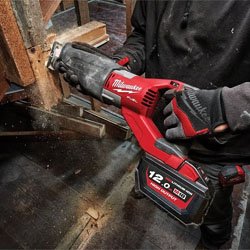
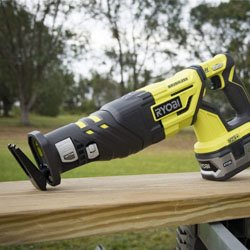


An advanced cordless reciprocating saw is more than a compact alternative to a corded saw. For Australian tradespeople, renovators, landscapers, maintenance workers and serious DIY users, the right model needs to balance cutting performance, battery efficiency, vibration control, durability, ergonomics and compatibility with the batteries already in your workshop.
The strongest buying decision is therefore not necessarily the saw with the highest advertised speed or the largest battery. A better approach is to match the saw's mechanical design, stroke characteristics, blade system and power delivery to the materials and cutting jobs you actually perform.
When comparing models from established manufacturers such as DeWalt, Milwaukee, Makita, Bosch Professional, Metabo HPT, Hikoki, Ryobi and other reputable power-tool brands, consider the complete tool system rather than looking at the saw body in isolation. Battery platform, charger availability, replacement blades and the wider range of compatible tools can have a major effect on long-term value.
Basic reciprocating saws are designed to provide straightforward back-and-forth blade movement for cutting timber, metal, plastic and other materials. Advanced models add engineering features intended to improve control, cutting efficiency, durability and operator comfort.
Depending on the model, advanced features can include brushless motors, variable-speed triggers, selectable speed controls, electronic overload protection, adjustable or pivoting shoes, tool-free blade clamps, orbital action, improved counterbalancing, anti-vibration systems, LED work lights and intelligent battery communication.
Brushless motors are particularly relevant when shopping for an advanced cordless reciprocating saw. A brushless motor eliminates conventional motor brushes and uses electronic commutation instead.
For users who regularly cut construction timber, demolition materials, metal pipe or branches, brushless technology can be attractive because modern brushless systems are designed around efficient electronic motor control and can work closely with the tool's battery management system.
That does not mean every brushed saw is unsuitable. A homeowner who performs occasional light cutting may obtain better overall value from a simpler model. The important consideration is whether the additional cost of brushless technology corresponds to your expected workload.
Stroke length describes how far the blade travels during one reciprocating cycle. Stroke rate describes how many cycles the mechanism makes per minute. Both specifications matter, but neither should be assessed independently.
A longer stroke can provide substantial blade travel and may improve cutting progress in suitable applications. A higher stroke rate can be beneficial for fast cutting, particularly where the blade and material are well matched. However, pushing a blade rapidly through a resistant material can increase heat, vibration and blade wear.
For an Australian buyer comparing technical specifications, look for a sensible balance between stroke length, maximum stroke rate, trigger control and the manufacturer's intended application range.
A variable-speed trigger gives the operator greater control than a simple on-off switch. Starting a cut slowly can help position the blade accurately and reduce the likelihood of the blade skating across the workpiece.
Once the blade is established in the cut, speed can be increased when appropriate. Lower speeds can also be useful when cutting metal, while timber and demolition work may benefit from more aggressive blade movement when the blade design permits it.
Some advanced models also include selectable speed modes or electronic controls. These can be useful when repeatability is more important than simply having access to the highest possible speed.
Battery voltage is one of the most visible specifications when comparing cordless power tools, but it should not be treated as a direct measurement of cutting performance. Motor design, electronic controls, gearing, battery current capability, blade condition and the material being cut all influence practical results.
The battery platform is often more important for existing tool owners. If you already use a compatible battery ecosystem, buying a bare tool may be considerably more practical than starting a second platform.
Amp-hours, commonly written as Ah, describe battery capacity rather than directly describing cutting power. In general terms, a larger-capacity battery can provide more stored energy, although actual runtime depends heavily on the workload and tool electronics.
For demanding reciprocating-saw applications, a higher-capacity battery can reduce the frequency of battery changes. The trade-off is increased weight and potentially greater tool fatigue, particularly when making overhead cuts.
A compact cordless reciprocating saw can be easier to position in confined areas, while a full-size design may offer a more substantial cutting mechanism and handling characteristics for demanding work.
Compact tools can be particularly useful for plumbers, electricians, cabinet installers, renovators and maintenance workers who frequently encounter restricted access. Full-size tools may appeal to users performing demolition, framing, landscaping and heavy construction tasks.
Do not automatically assume that a physically larger saw is the better choice. Tool length and weight can become significant disadvantages when working inside wall cavities, under sinks, between structural members or above shoulder height.
Weight matters because reciprocating saws are frequently used away from a stable workbench. The operator may need to support the saw while simultaneously controlling the cut, stabilising the workpiece or working from an awkward position.
When comparing specifications, consider the weight of the complete operating setup rather than only the bare tool. A saw fitted with a large battery can feel substantially different from the same tool fitted with a compact pack.
Reciprocating cutting inherently creates movement, so vibration management is an important distinction between tool designs. Advanced saws may use counterbalanced mechanisms or other engineering approaches to reduce transmitted vibration.
Reduced vibration can improve comfort and make it easier to maintain control during longer cutting sessions. However, vibration performance should be considered alongside grip design, trigger placement, tool weight and cutting technique rather than treated as a single specification.
The shoe provides a contact point between the saw and the workpiece. It helps stabilise the tool and controls how much blade is exposed during a cut.
An adjustable or pivoting shoe can be particularly useful when cutting different materials and shapes because the operator can maintain better contact with irregular surfaces. A fixed shoe can still be perfectly functional for straightforward applications.
When evaluating an advanced model, check how securely the shoe locks into position and whether its design makes sense for the type of work you perform.
A tool-free blade clamp is an important convenience feature for anyone who regularly switches between timber, metal and specialist blades. A good blade-change mechanism should make it possible to release and install blades without requiring a separate wrench or complicated adjustment procedure.
Always follow the manufacturer's instructions for blade installation. Before changing a blade, isolate the power source as directed by the manufacturer and allow a recently used blade to cool if it has become hot.
Some reciprocating saws provide orbital action, while others use a straight reciprocating movement. Orbital action introduces additional blade movement that can make certain timber cuts more aggressive.
It is not automatically better for every application. Aggressive movement can be undesirable when cutting metal or when a smoother, more controlled cut is required. If a saw provides selectable orbital action, that flexibility can be more useful than having orbital movement permanently engaged.
The saw is only one part of the cutting system. Blade selection has a major influence on speed, finish, durability and safety. A powerful saw fitted with an inappropriate blade can perform poorly, while a correctly selected blade can substantially improve the effectiveness of a less aggressive tool.
Blades are available for timber, metal, demolition, pruning, plastics, mixed materials and specialist applications. Tooth configuration, tooth density, blade length, blade thickness and material construction all influence performance.
Longer blades can provide additional reach and cutting depth, but longer does not always mean better. Excess blade length can increase flex and make the tool harder to control in some applications.
Choose blade length according to the material thickness and access requirements. For a thick timber section, a blade with sufficient working length can be important. For a confined cut, a shorter blade may provide better control.
Teeth per inch, or TPI, is commonly used to describe blade tooth density. Lower tooth counts are generally associated with faster cutting through softer materials, while higher tooth counts can provide a more controlled cutting action for materials such as metal.
The ideal TPI depends on the material, thickness, blade design and desired result. There is no universal TPI that is best for every reciprocating-saw application.
For timber work, choose a blade designed for the wood type and thickness involved. Coarser blades can be useful for rapid demolition and rough cutting, while finer blades may be preferable where a cleaner cut is required.
When cutting structural timber, reclaimed wood or demolition material, inspect the workpiece for nails, screws and other embedded objects before selecting a blade. Specialist demolition blades are often designed with these demanding conditions in mind, but no blade should be treated as indestructible.
Metal cutting requires a different approach from timber cutting. A suitable fine-tooth blade, controlled speed and stable workpiece can help reduce unnecessary heat and blade wear.
When cutting pipe, secure the material properly and avoid allowing the blade to bind as the cut progresses. Thin sheet material may require additional support because unsupported metal can vibrate and make cutting less controlled.
For stainless steel and other difficult metals, use blades specifically intended for the material and follow the blade manufacturer's recommendations.
A reciprocating saw can be useful for pruning larger branches when fitted with a suitable pruning blade. However, a general-purpose construction blade is not necessarily the right choice for green timber.
Choose a pruning blade designed for branches and use appropriate cutting technique. Avoid forcing the saw when the blade becomes pinched, and inspect branches for movement or tension before cutting.
Demolition is one of the applications where advanced cordless reciprocating saws can provide significant versatility. The same tool can potentially cut timber, metal fasteners, plastic pipe and other construction materials when the correct blade is fitted.
For renovation work, however, the operator must consider what lies behind the visible surface. Before cutting into walls, ceilings, floors or other concealed areas, identify potential electrical wiring, plumbing, structural components and other hazards.
Power and speed should never be the only buying criteria. A quality cordless reciprocating saw should provide controls and mechanical features that help the operator maintain safe control of the tool.
Always read the manufacturer's operating instructions and use appropriate personal protective equipment for the material and environment. Eye protection is particularly important when cutting materials that can produce chips or fragments.
Reciprocating saws are commonly used in environments where dust, chips, moisture and debris are present. A tool intended for demanding site work should therefore be assessed for its overall construction and the manufacturer's stated operating limitations.
Do not assume that a tool is waterproof simply because it is marketed for professional or outdoor use. Follow the manufacturer's environmental guidance and keep batteries, chargers and electrical components away from conditions outside their specified operating range.
Australian buyers should compare the exact model designation offered in the local market rather than relying solely on specifications from overseas listings. Model names can differ between markets, and battery kits, chargers, included accessories and regional configurations may not be identical.
For buyers building a broader cordless workshop, ecosystem compatibility can be one of the most important purchasing decisions. DeWalt, Milwaukee, Makita, Bosch Professional, Hikoki, Metabo HPT and other established manufacturers offer cordless platforms covering multiple categories of power tools.
The best platform is not necessarily the brand with the most powerful reciprocating saw. Instead, consider which ecosystem offers the combination of tools, batteries, chargers and accessories that matches your future needs.
When two models appear similar, compare their specifications in a structured way rather than relying on one headline number.
Reciprocating saws are not judged effectively by maximum speed alone. A high stroke rate can be useful, but cutting performance also depends on stroke length, motor control, blade geometry and material.
Buying a saw on its own specification can create unnecessary expense if you later need several batteries and a separate charger. Existing battery ownership should be one of the first considerations.
A large professional saw can be unnecessary for occasional household tasks. If the majority of your work involves short cuts and limited workloads, a lighter model may be easier to handle.
The opposite mistake is choosing a compact tool when frequent structural cutting or demanding demolition is expected. Compact dimensions are valuable, but they should not override the requirements of the job.
Reciprocating saw blades are application-specific. Using a timber blade for metal or a general construction blade for specialised pruning can compromise cutting quality and blade life.
A low advertised price may represent a bare tool without batteries or a charger. Always compare complete system costs rather than comparing headline prices from different package configurations.
Battery runtime varies substantially with material, blade condition, cutting technique, battery capacity and the tool's operating mode. There is no single runtime figure that applies to every job.
Routine maintenance can help keep a reciprocating saw operating reliably. Always follow the manufacturer's maintenance instructions because construction and service requirements differ between models.
Home users generally benefit from a lightweight, controllable saw with a practical battery system. Unless major demolition is expected, extreme cutting specifications may offer less value than good ergonomics and battery compatibility.
Renovators should prioritise versatility. A saw with variable speed, convenient blade changes, suitable vibration control and compatibility with multiple blade types can handle a wider range of jobs.
Frequent professional use places greater emphasis on durability, battery availability, motor efficiency, ergonomics and serviceability. A professional battery ecosystem can also reduce the need to maintain several incompatible charging systems.
Plumbing applications often involve pipe, timber, plastic and restricted access. A compact design, controlled cutting and appropriate metal and plastic blades can be more valuable than maximum physical size.
Electricians may benefit from compact dimensions, good visibility, controlled speed and easy blade changes when working in framing, cabinets and service spaces. Always identify electrical hazards before cutting into concealed areas.
For pruning applications, focus on compatible pruning blades, manageable weight, battery runtime and outdoor operating requirements. A general demolition saw is not automatically the ideal pruning tool.
A reciprocating saw and circular saw serve very different purposes. Circular saws are generally better suited to long, straight cuts through sheet goods and timber. Reciprocating saws are more versatile when cutting in confined locations, performing demolition or making irregular cuts.
A jigsaw is usually better suited to controlled curved cuts and applications where cut-line accuracy and surface finish matter. A reciprocating saw is generally more oriented toward rapid, versatile cutting and demolition.
For furniture, cabinetry and decorative work, a jigsaw may be the more appropriate tool. For removing old framing, cutting pipe or dismantling construction materials, a reciprocating saw is usually the more versatile category.
An oscillating multi-tool is valuable for precision work, flush cuts and small-scale material removal. A reciprocating saw is typically better suited to larger and more aggressive cuts.
For a cordless workshop, these tools can complement rather than replace one another. Users undertaking renovation work may find both useful because they address different cutting problems.
Specifications should be interpreted as a complete set rather than as isolated selling points. A saw with a long stroke and high maximum speed may be excellent for aggressive timber cutting but less suitable for controlled metal work if it lacks appropriate speed adjustment.
Similarly, a high-capacity battery may provide useful endurance but can increase the weight of a compact saw. An advanced electronic system may provide useful protection and control, but the overall value depends on how frequently those features matter to your work.
Before choosing a product, compare the manufacturer's specifications for the exact model, then examine verified customer feedback for recurring comments about ergonomics, battery behaviour, blade changes and practical usability. Avoid treating isolated reviews as definitive evidence.
Customer reviews can provide useful information that is difficult to understand from a specification sheet, but they should be interpreted carefully. Focus on repeated observations rather than individual opinions.
The cheapest reciprocating saw can become expensive if it requires a new battery ecosystem, frequent replacement batteries or specialised accessories. Conversely, the most expensive professional model may offer little additional value to someone who only cuts a few pieces of timber each year.
Calculate the total system cost, including the saw, batteries, charger, blades and any other equipment required for your intended work. Existing battery ownership can materially change the economics of a purchase.
For regular power-tool users, a shared battery system can simplify a workshop. One battery family may support multiple tool categories, allowing future purchases to be made as bare tools when appropriate.
Before choosing an ecosystem, consider the tools you are likely to need over several years rather than choosing solely on today's reciprocating saw. A platform that works for your drill, impact driver, grinder, circular saw, blower and other equipment may provide greater long-term utility.
Professional-grade models typically place greater emphasis on durability, ergonomics, power delivery, electronics and demanding work cycles. DIY-focused models may prioritise affordability, simplicity and compatibility with a broader homeowner-oriented tool range.
Neither category is automatically superior for every user. The appropriate choice depends on workload. A homeowner completing occasional renovation work may not benefit from paying for features designed around continuous professional use.
Battery-powered tools should be stored according to the manufacturer's recommendations. Avoid leaving batteries exposed to excessive heat, moisture or other unsuitable conditions. Chargers and batteries should be used only as specified for the relevant platform.
For Australian conditions, pay particular attention to storage environments that can become very hot, especially enclosed vehicles, sheds or areas exposed to direct sunlight. Follow the battery manufacturer's temperature, charging and storage instructions.
A useful shortlist should include more than one type of product. Rather than ranking every saw on maximum performance alone, compare models according to their intended user and application.
Before committing to an advanced cordless reciprocating saw, use this checklist to compare the shortlisted models objectively:
There is no single best model for every Australian buyer. The right choice depends on the material being cut, frequency of use, required access, battery platform, desired weight and budget. Professional users may prioritise durability and battery ecosystem compatibility, while DIY users may place greater emphasis on value and simplicity.
Brushless models can be worthwhile for frequent users who value efficient motor technology, electronic control and reduced brush wear. For occasional light work, a less expensive brushed model may be sufficient.
Choose battery capacity according to the workload. Smaller batteries reduce weight and can improve manoeuvrability, while larger batteries can provide more stored energy for demanding work. The best compromise depends on how long you use the saw and how much weight you are comfortable carrying.
Yes, when the saw and blade are suitable for the application. Use an appropriate metal-cutting blade and follow the tool and blade manufacturer's recommendations for speed, material thickness and operating technique.
Many reciprocating saws can be used for pruning when equipped with a suitable pruning blade. The saw should be selected and operated according to the manufacturer's instructions, and the branch should be assessed for stability and tension before cutting.
No. A longer blade can provide greater reach, but it can also flex more and may be less convenient in confined spaces. Select blade length according to the material thickness, access and desired control.
Not necessarily. Cutting speed depends on stroke rate, stroke length, motor performance, blade design, tooth configuration, material and technique. Maximum stroke rate should therefore be compared with the rest of the tool's specifications.
If you already own compatible batteries and a charger, a bare tool may be the more practical configuration. If you are starting a new battery platform, compare the complete kit cost against the cost of buying the components separately.
Depending on your budget and intended workload, established brands worth researching include DeWalt, Milwaukee, Makita, Bosch Professional, Hikoki, Metabo HPT and Ryobi. Compare exact models rather than assuming every tool from a particular brand is designed for the same application.
There is no universal replacement interval. Blade life depends on the material, cutting frequency, technique and blade construction. Replace a blade when it becomes damaged, excessively worn or no longer cuts effectively, following the blade manufacturer's guidance.
Many are designed for demanding renovation and demolition applications, but suitability depends on the exact model, blade and material. Before demolition cutting, identify hidden services and structural hazards and use appropriate protective equipment.
Choosing a tool based on one specification, such as maximum stroke rate, without considering the complete system is a common mistake. Battery compatibility, ergonomics, blade selection, tool weight, intended application and total cost are equally important.
A useful independent buying guide should distinguish between specifications, intended applications and actual ownership considerations. Product selection should be based on information that can be checked, including manufacturer specifications, model configuration, battery compatibility and relevant customer feedback.
When comparing the options featured in this guide, consider the complete package rather than treating a single ranking as universally applicable. A compact saw may be preferable for restricted spaces, while a heavier professional model may be more appropriate for frequent demolition. Similarly, a buyer already invested in one battery ecosystem may have a compelling reason to choose a compatible tool even when another model has a different specification advantage.
The best advanced cordless reciprocating saw is the one that fits the work rather than simply the one with the most impressive specification sheet. Start by identifying your most common cutting materials and working conditions. Then narrow the choice using battery compatibility, tool size, stroke characteristics, speed control, blade system, vibration management and total ownership cost.
For Australian buyers, confirm the exact local model and package before purchasing. Compare current specifications, battery requirements, included accessories and verified customer feedback, and check today's retailer pricing separately because these details can change.
Most importantly, invest in the right blades for the materials you actually cut. A well-matched blade, controlled cutting technique and suitable battery can have as much practical importance as the headline specifications of the saw itself.