

♥ Wishlist
Compare 15 Cordless Metal Cutting Saw products in Australia. Reviews, ratings, pros, cons and buying advice updated for October 2026.
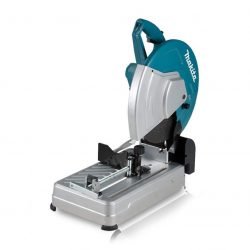
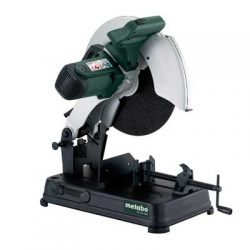
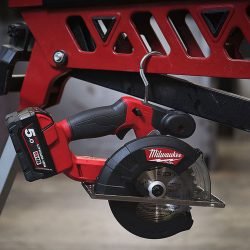


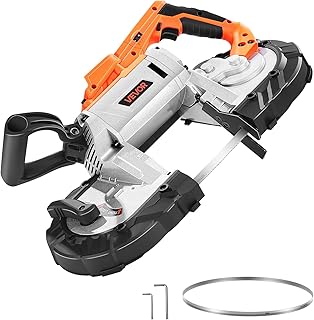


Choosing an advanced cordless metal cutting saw is less about selecting the most powerful motor on a specification sheet and more about matching the saw's cutting system, battery platform, blade design, ergonomics and intended material to the work you actually perform. For Australian workshops, construction sites, fabrication environments and maintenance applications, portability can be particularly valuable when mains power is inconvenient or when work needs to be completed away from a fixed workshop.
A modern cordless metal cutting saw can be suitable for tasks such as cutting steel tube, angle iron, sheet sections, threaded rod, conduit, pipe and other compatible metal stock. However, cordless saws differ substantially in cutting method and intended application. Some use abrasive wheels, while others use toothed metal-cutting blades. Those technologies produce different cutting characteristics, consumable costs, heat levels, sparks, burr formation and material compatibility.
Before comparing individual models, consider the type and thickness of metal you regularly cut, how frequently you make cuts, whether portability is important, which battery platform you already own, and whether your workplace has restrictions concerning sparks, hot work or airborne particles.
Abrasive saws use a reinforced abrasive disc to remove material through friction. They can be useful for demanding cutting applications and a broad range of ferrous materials when the correct wheel is fitted. Their cutting action is different from a toothed blade, and the process can generate considerable heat and sparks.
When considering an abrasive cordless saw, pay close attention to the permitted wheel specification, spindle arrangement, guard design and manufacturer's material recommendations. The correct disc is essential because abrasive wheels are consumable components with specific operating requirements.
Toothed metal-cutting saws use a dedicated blade with cutting teeth designed for metal applications. Depending on the blade and saw design, this approach can provide a relatively controlled cut with less heat generation than abrasive cutting. It can be particularly attractive for repetitive fabrication work where clean, consistent cuts matter.
Blade construction is an important consideration. Carbide-tipped blades, for example, are engineered differently from general-purpose abrasive discs and should only be used where the saw and blade specifications permit them. A high tooth count does not automatically mean a blade is better for every application; tooth geometry and the material being cut are equally important.
The term "cold cutting" generally refers to cutting methods that minimise heat transfer compared with conventional abrasive cutting. This can help reduce heat-affected areas and may leave the workpiece easier to handle immediately after cutting. Nevertheless, no metal-cutting process should be treated as completely heat-free. Cutting speed, material thickness, blade condition and technique all influence the temperature produced.
Blade or wheel diameter affects the maximum cutting capacity and the overall physical size of the saw. A larger diameter can provide greater theoretical cutting depth, but it may also increase tool size and weight.
Do not compare diameter in isolation. A saw's actual cutting capacity depends on the guard, blade design, arbor arrangement, cutting geometry and manufacturer's stated specifications for different shapes of stock.
Brushless motors are common in higher-end cordless power tools because they can provide efficient power delivery without conventional carbon brushes. However, "brushless" should not be treated as a guarantee of superior cutting performance. The complete powertrain, electronic control system, gearing, battery and blade all contribute to how effectively a saw handles a load.
For demanding applications, look for specifications describing electronic overload protection, thermal management, variable speed or speed control where applicable, and systems designed to maintain performance under load.
Battery voltage is one of the easiest specifications to notice, but it does not by itself determine cutting performance or runtime. Battery capacity, expressed in amp-hours, influences the amount of stored energy available, while the motor and electronic system determine how that energy is converted into useful work.
For many buyers, battery-platform compatibility can be more important than the headline voltage. If you already own compatible batteries and chargers from Makita, Milwaukee, DeWalt, Bosch, HiKOKI or another established platform, staying within that ecosystem may reduce the need to purchase additional charging equipment and batteries.
A higher amp-hour battery generally provides more stored energy within the same battery family, although actual runtime varies according to the tool, material, blade condition, cutting technique and workload. A larger battery can also increase the overall weight of the saw.
For occasional cutting, a compact battery may offer a more convenient balance. For continuous fabrication or construction work, carrying additional charged batteries can be more practical than relying on one very large pack.
No-load speed indicates how quickly the blade or wheel rotates when the saw is not cutting. It is useful as a comparison specification, but it should not be interpreted as a direct measurement of cutting performance. A saw that maintains appropriate speed under load can be more useful than one with a high unloaded speed but poor load management.
Always examine cutting capacity for the specific shapes you intend to cut. Manufacturers may list separate capacities for round bar, square tube, rectangular material, pipe, angle, channel or other profiles.
This matters because a saw capable of cutting one large dimension does not necessarily have the same capacity across every shape. When shopping for a metal cutting saw, identify your most common stock dimensions and compare them directly against the manufacturer's specifications.
The blade is a critical part of the cutting system. Even a high-quality cordless saw can perform poorly if fitted with an inappropriate, worn or damaged blade.
Tooth count influences how the blade interacts with the workpiece. Blades designed for thinner material may use a different tooth arrangement from blades intended for heavier sections. The ideal configuration depends on the stock profile, thickness and cutting application.
More teeth are not automatically better. A blade must maintain appropriate tooth engagement during the cut. Selecting solely on tooth count can therefore lead to an unsuitable combination of blade and material.
The purchase price of the saw is only part of the ownership equation. Consider the ongoing cost and availability of compatible blades, abrasive discs or other consumables.
A lower-priced saw that requires frequent replacement consumables may have a different long-term cost profile from a higher-priced system with a blade designed for extended service in the intended application. Compare the complete cutting system rather than focusing exclusively on the initial tool price.
Metal cutting involves rotating cutting components, sharp workpieces, sparks or hot particles in some applications, and potentially significant noise and airborne debris. A suitable saw should therefore be evaluated partly on its control and protection features.
Personal protective equipment should be selected according to the application and workplace requirements. Eye and face protection, hearing protection, suitable work clothing and appropriate hand protection may be necessary. Metal-cutting debris can be sharp, and some operations can produce hot particles.
Weight becomes increasingly important when a cordless metal cutting saw is carried between locations or used repeatedly throughout a working day. A technically powerful saw may not be the most practical option if its weight, balance or grip becomes tiring during extended use.
Balance affects how easily the operator can position the blade accurately. Consider where the battery sits, where the primary handle is located and how the tool feels when the blade is aligned with the workpiece.
A well-positioned handle can make it easier to maintain control during the cut. Look for a grip that allows a natural wrist position and provides secure access to the trigger or control mechanism.
The battery location can influence balance, clearance and access to the workpiece. Large battery packs may extend the overall footprint of the tool, which can matter when cutting inside confined spaces.
Good visibility can improve positioning and consistency. Guard geometry, handle placement, lighting and the physical design around the blade can all influence how easily the operator sees the intended cut.
Brushless technology is a useful feature to consider when comparing modern cordless tools. Brushless motors eliminate the traditional mechanical brushes used in brushed motor designs and can support efficient electronic control.
For buyers who regularly use their saw, a brushless model may offer an attractive combination of power delivery, efficiency and compatibility with a manufacturer's premium cordless ecosystem. However, the value depends on the workload. An occasional DIY user may place greater importance on total purchase cost, while a professional user may prioritise durability, battery availability and long-term platform compatibility.
If you already use cordless tools, choosing a metal cutting saw from the same battery family can simplify ownership. This is particularly relevant for professionals who carry several cordless tools to a job site.
Established cordless platforms from brands such as Makita, Milwaukee, DeWalt, Bosch and HiKOKI can be attractive when a buyer already has several compatible tools. The best choice depends on the battery ecosystem already used in your workshop or workplace rather than on brand recognition alone.
A home workshop user may not need the largest battery, maximum cutting capacity or highest-duty construction. Ease of handling, reasonable consumable costs, straightforward blade changes and compatibility with existing batteries can be more important.
Fabrication users should focus on repeatability, cutting accuracy, blade availability, cutting capacity and the ability to handle the materials used most frequently. If many identical cuts are required, ergonomics and consumable life can have a significant impact on productivity.
Construction users often benefit from cordless portability because work may take place in locations where extension cords are inconvenient. Battery availability, durability, dust and debris considerations, cutting speed and compatibility with other site tools can therefore influence the buying decision.
Maintenance and installation work can place a premium on portability and compact handling. A saw that is easy to transport and position may be more useful than a larger high-capacity machine when cuts are occasional and performed in varied locations.
The main advantage of cordless equipment is mobility. There is no power lead to route around the work area, and the tool can be used in locations where mains electricity is unavailable or inconvenient.
A corded saw can still be an excellent choice for a fixed workshop where continuous access to mains power is available. It may make more sense when the tool is used for long periods without interruption and battery charging or battery replacement would otherwise interrupt the workflow.
An angle grinder can be extremely versatile, but a dedicated metal cutting saw may provide a more specialised cutting experience. The right choice depends on the job rather than on which tool is universally superior.
An angle grinder can perform multiple tasks with compatible accessories, including cutting, grinding and surface preparation. A dedicated metal cutting saw is generally designed around controlled cutting and may be preferable when repeated straight cuts are the primary requirement.
When comparing the two, consider cutting accuracy, portability, consumable costs, material thickness, spark production, workpiece stability and the amount of finishing required after cutting.
When reviewing a shortlist of ten cordless metal cutting saws, avoid ranking them solely by star ratings or headline power. A structured comparison provides a more useful buying decision.
Voltage alone does not tell you whether a saw is appropriate. Look at cutting capacity, motor design, battery compatibility and manufacturer specifications as a complete package.
A tool-only listing can appear substantially less expensive than a complete kit, but a buyer entering a new battery ecosystem may need to purchase batteries and a charger separately.
A blade that physically fits is not necessarily a blade that is suitable. Check diameter, arbor size, speed rating, material compatibility and the manufacturer's instructions before use.
Heavy-duty specifications can be valuable for frequent professional use, but they may add unnecessary weight and expense for occasional cutting. Match the tool to actual workload rather than purchasing specifications you are unlikely to use.
Even an advanced saw cannot compensate for unstable material. Properly supporting and securing the workpiece is essential for controlled cutting and safe operation.
Purchase price is only one component of value. Blade costs, battery requirements, replacement parts, accessories and the expected frequency of use should also be considered.
Australian buyers should confirm that the exact model and configuration are intended for the Australian market. Product names can be shared across regions while kit contents, battery configurations, plugs, included accessories and model numbers differ.
Cordless tools are often sold in different configurations. A tool-only package can make sense when you already own the required battery and charger. A starter kit may be more economical for buyers entering a battery platform for the first time.
Some buyers may prefer a larger multi-battery setup when the saw forms part of a broader cordless workshop. Before comparing prices, normalise the packages so you are comparing like with like.
Regular maintenance can help keep a metal cutting saw operating correctly. Always follow the manufacturer's maintenance instructions for the exact model.
Lithium-ion batteries should be handled and stored according to the battery manufacturer's instructions. Avoid exposing batteries to conditions outside their specified operating and storage ranges, and use the designated charger for the battery platform.
For professionals, having more than one battery can be useful because it allows a charged pack to be exchanged while another is being charged. However, buying additional batteries only makes sense if the expected workload justifies the investment.
Mild steel is commonly encountered in fabrication, construction and general workshop work. Compare the saw's stated capacity with the actual thickness and profile of your mild-steel stock, and select a compatible blade or wheel.
Stainless steel can require different cutting considerations from ordinary mild steel. Blade suitability, cutting technique and heat management become particularly important. Never assume that a blade marketed generally for metal is automatically ideal for every stainless-steel application.
Tube and rectangular hollow section require attention to the changing geometry as the blade passes through the material. The manufacturer's specified capacities for tube and rectangular profiles are more useful than relying on a single maximum cutting-depth figure.
Non-ferrous metals can have different cutting characteristics from steel. Confirm that the saw and blade system are explicitly suitable for the material before attempting a cut.
Cutting speed is only one measure of performance. A good metal cutting system should also provide controllable operation, predictable cutting behaviour and suitable ergonomics for the intended workload.
For repetitive work, consistency can be more important than achieving the fastest possible individual cut. For installation work, portability and accessibility may matter more. For workshop fabrication, cutting capacity and consumable economics can dominate the decision.
Metal cutting can produce significant noise and debris. Abrasive cutting commonly produces sparks, while toothed cutting systems may have different debris and heat characteristics. The specific material, blade and cutting method all influence the result.
Workplace conditions should therefore be considered before choosing a saw. Where sparks or hot particles could create an unacceptable hazard, the cutting method and work area should be evaluated carefully. Follow applicable Australian workplace safety requirements and the manufacturer's instructions for the specific tool and consumable.
Higher-priced models may include features that are valuable to frequent users even when they are unnecessary for occasional DIY work. Potential advantages can include brushless motors, advanced electronic protection, improved ergonomics, higher-capacity battery compatibility, stronger workpiece support and more refined blade-change systems.
The important question is whether a particular feature solves a real problem in your workflow. Spending more for a feature that you will rarely use does not necessarily produce better overall value.
The best-value cordless metal cutting saw is not necessarily the cheapest model. Value should be assessed against the complete ownership experience.
A buyer who already owns several compatible batteries may rationally select a tool-only model, while someone starting from scratch may find a complete kit easier to evaluate. Always compare equivalent package contents before deciding which listing represents the better value.
There is no single best model for every Australian buyer. The most suitable option depends on material type, cutting capacity, workload, battery platform, portability and budget. Compare the specifications of the exact models on your shortlist against the work you actually perform.
Many modern cordless metal cutting saws are designed specifically for metal applications, including compatible steel products. Suitability depends on the exact saw, blade, battery and material thickness. Always use the manufacturer's stated cutting capacities rather than assuming that a cordless model can handle every type or thickness of steel.
A brushless motor can offer advantages in efficiency, electronic control and cordless tool design, but it is not the only factor determining performance. Cutting capacity, blade quality, battery system, ergonomics and intended duty should also be considered.
Choose a bare tool when you already have compatible batteries and a charger. A kit can be more practical when entering a new battery platform. Compare the total cost of the complete setup rather than the advertised tool price alone.
Yes. The appropriate blade or wheel depends on the cutting technology, material and exact saw specification. Never select a consumable based solely on whether it physically fits the tool.
Some saw and blade combinations are designed for non-ferrous metals, while others are not. Check the manufacturer's approved material list and the blade manufacturer's specifications before cutting aluminium.
Neither technology is universally better. Toothed blades and abrasive discs have different cutting characteristics, consumable requirements and suitable applications. Repetitive fabrication work may favour one approach, while other heavy-duty applications may favour another.
Battery capacity affects available stored energy and therefore can influence runtime, but actual runtime varies considerably with the workload. Larger batteries can also add weight. Choose battery capacity according to the frequency and intensity of your cutting work.
Confirm the exact model number, included accessories, battery and charger configuration, Australian electrical configuration where applicable, compatible consumables and current manufacturer specifications. Customer feedback can provide useful additional context, but technical suitability should be established from the official product documentation.
Before choosing from the top cordless metal cutting saw options, use this final checklist to narrow the field to models that genuinely fit your requirements.
The strongest cordless metal cutting saw choice is the one that matches your material, cutting volume, required capacity and existing cordless ecosystem. A professional fabricator may prioritise repeatability, blade economics and sustained productivity, while a homeowner may value compact handling and compatibility with batteries already in the workshop.
Brands such as Makita, Milwaukee, DeWalt, Bosch and HiKOKI offer established cordless tool ecosystems, but brand familiarity should not replace specification-based comparison. Evaluate the exact model, battery configuration, cutting technology, blade compatibility, ergonomics and intended workload before making a purchase.
For Australian buyers in 2026, the most useful approach is to compare the complete system rather than a single headline specification. Check the latest product specifications, current retailer pricing, verified customer feedback and available consumables before deciding which cordless metal cutting saw provides the best fit for your workshop or job site.