

♥ Wishlist
Compare 45 Makita Reciprocating Saws products in Australia. Reviews, ratings, pros, cons and buying advice updated for October 2026.


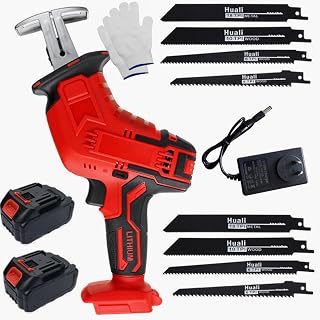


Choosing an advanced Makita reciprocating saw is less about finding the most powerful model on paper and more about matching the saw's drive system, battery platform, stroke characteristics, handling, and intended material to the work you actually perform. A demolition specialist may prioritise cutting speed and vibration control, while a plumber, electrician, renovator, arborist, or general tradesperson may value compact dimensions, blade-change convenience, and battery compatibility.
For Australian buyers, the decision is also influenced by the Makita platform already used in a workshop or on a job site. An 18V LXT user may prefer to remain within that ecosystem, whereas someone building a newer high-performance cordless collection may consider the 40V XGT range. Corded Makita reciprocating saws remain relevant where continuous power is more important than portability.
This guide focuses on the technical and practical factors that matter when comparing advanced Makita reciprocating saw solutions in 2026. Product availability, specifications, kits, batteries, accessories, and pricing can change between Australian retailers, so always check the current product listing before purchasing.
A reciprocating saw is a deliberately aggressive cutting tool. Unlike a circular saw, it does not require a flat cutting surface or a large cutting shoe. The blade moves rapidly back and forth, allowing the tool to cut through timber, metal, plastics, pipework, plasterboard, and many demolition materials when the correct blade is installed.
The best choice depends on several interacting specifications rather than one headline figure. When comparing Makita reciprocating saws, pay particular attention to:
One of the most important decisions for a cordless Makita reciprocating saw is the battery platform. Makita's 18V LXT and 40V XGT systems serve different priorities, and neither should automatically be considered the right choice for every buyer.
The 18V LXT platform is particularly attractive to tradespeople who already own compatible Makita batteries and chargers. Staying within an established battery ecosystem can reduce the need to purchase additional batteries and charging equipment.
For renovation, maintenance, plumbing, electrical work, general construction, and occasional demolition, an advanced 18V LXT reciprocating saw can provide a useful combination of portability and cutting capability. Compact models can also be easier to control when working between studs, inside cabinets, around pipework, or in other restricted areas.
Models associated with the Makita LXT reciprocating-saw family include examples such as the DJR186, DJR187 and compact DJR189. Exact configurations, included accessories and Australian availability should be confirmed against the current listing.
Makita's 40V XGT platform is aimed at applications where higher cordless performance is a priority. The platform can be particularly appealing to users carrying out demanding cutting and demolition work who want cordless mobility without moving to a petrol-powered cutting solution.
The additional battery-system capability does not mean an XGT saw is automatically better for every application. A heavier-duty tool may be less convenient than a compact LXT model for overhead work, repetitive trimming, or confined spaces. The correct choice should therefore be based on the work pattern rather than the voltage number alone.
Corded reciprocating saws remain worth considering for workshop users and contractors who have reliable access to mains electricity. A corded tool eliminates battery charging and reduces the need to manage multiple battery packs during extended cutting sessions.
The trade-off is mobility. Cords can become inconvenient around construction sites, ladders, scaffolding, vehicles, roof spaces, gardens, and outdoor renovation work. For users who regularly move between cutting locations, cordless equipment can offer a substantially simpler workflow.
Brushless motors are an important consideration when comparing advanced cordless reciprocating saws. A brushless motor eliminates the conventional mechanical brushes used in brushed motor designs and can provide an efficient electronically controlled drive system.
For demanding users, the benefits can include improved efficiency, reduced mechanical wear associated with brushes, and better electronic control of the motor. These advantages become more relevant when the tool is used frequently rather than occasionally.
However, brushless construction should not be treated as a substitute for evaluating the complete saw. Cutting performance is also influenced by stroke length, blade selection, speed control, gear mechanism, battery condition, material thickness, and the way the operator loads the blade.
Stroke length describes how far the reciprocating blade travels during each cutting cycle. It is one of the most useful specifications when comparing reciprocating saws.
A longer stroke can move more of the blade through the material during each cycle and can be advantageous for aggressive cutting applications. This can make a longer-stroke tool attractive for demolition work, structural timber, thick materials, and applications where rapid material removal is important.
A shorter stroke can be beneficial where control and manoeuvrability are more important. It can suit lighter cutting tasks, smaller workpieces, and situations where the operator needs to work carefully around adjacent materials.
Do not assess stroke length in isolation. A saw with a long stroke and aggressive cutting action may not be the easiest option for delicate or confined work.
Strokes per minute, commonly abbreviated as SPM, describes how many reciprocating movements the blade can make in a minute. Higher maximum SPM can contribute to fast cutting, but maximum speed is not necessarily the ideal speed for every material.
Metal cutting often benefits from controlled speed and an appropriate metal-cutting blade. Timber and demolition applications may tolerate or benefit from more aggressive operation. The ability to vary speed is therefore often more useful than simply choosing the highest published SPM figure.
When comparing two Makita reciprocating saws, consider stroke length and maximum SPM together. The combination gives a more useful indication of how aggressively the saw is designed to operate than either specification by itself.
Variable-speed control can make a reciprocating saw considerably more versatile. Instead of operating continuously at maximum speed, the user can adjust blade movement to suit the application.
Reciprocating saws naturally generate substantial movement because the blade continuously changes direction. Advanced Makita models may incorporate engineering intended to reduce vibration transferred to the user, depending on the model.
Vibration control matters most for people who use a reciprocating saw for extended periods. Lower perceived vibration can make a tool easier to handle and may help the operator maintain more consistent control.
Weight distribution is equally important. A saw can have impressive specifications yet feel awkward if the centre of gravity does not suit the user's cutting position. Before buying, consider whether the saw will commonly be used horizontally, vertically, overhead, at ground level, or at arm's length.
Weight can have a significant effect on practical productivity. A heavier reciprocating saw may be advantageous when aggressive cutting requires a substantial tool platform, but it can become tiring during overhead or repetitive work.
Remember that the advertised tool weight may not represent the complete working weight of a cordless saw. A battery adds mass, and larger-capacity battery packs can change the balance and feel of the tool.
For occasional demolition, a heavier model may be perfectly reasonable. For electricians, plumbers, installers, maintenance workers, or renovators who carry the tool throughout the day, compact dimensions and balanced handling may be more valuable than maximum cutting aggression.
A reciprocating saw is only as effective as the blade being used for the job. Different blades are designed for different materials and cutting conditions, so buying a powerful saw without budgeting for appropriate blades can lead to disappointing results.
Makita is not the only source of compatible reciprocating-saw blades. Buyers can compare suitable blades from Makita, Bosch, Milwaukee, DeWalt and other established accessory manufacturers, provided the blade specification and application are appropriate.
If a reciprocating saw appears underpowered, the problem may not be the saw itself. A worn, inappropriate, overheated, or poorly matched blade can dramatically reduce cutting efficiency.
For timber, tooth geometry and blade length should match the size and type of material. For metal, tooth count and blade construction become especially important. When cutting demolition material, a robust blade designed for mixed materials can be preferable to a fine finishing blade.
Using a fresh blade can also make a significant practical difference. Forcing a dull blade into material increases operator effort and can generate unnecessary heat and vibration.
Some reciprocating saw designs incorporate orbital action, where the blade follows a more elliptical movement rather than moving purely back and forth. This can increase aggressiveness when cutting suitable materials.
Orbital action can be particularly useful for fast timber cutting and demolition applications, but it is not universally desirable. A straight action can provide better control for many metal-cutting tasks and other applications where aggressive material removal is not the priority.
If comparing models with different cutting actions, look for a design that suits your primary materials rather than choosing based solely on the presence of an additional mode.
The shoe supports the tool against the workpiece and helps stabilise the saw during cutting. A well-designed shoe can improve control and help the operator maintain consistent contact with the material.
An adjustable shoe can offer additional flexibility by allowing the operator to change the exposed portion of the blade. This can help distribute blade wear and adapt the cutting setup to different material thicknesses.
When comparing advanced Makita models, inspect how the shoe is adjusted, how securely it locks into position, and whether the mechanism is convenient enough for the type of work you perform.
Tool-free or quick blade-change systems are particularly valuable for professional users who regularly switch between timber and metal blades. The less time spent handling accessories, the more efficient the overall workflow can become.
However, convenience should not replace attention to blade security. Always ensure the blade is correctly seated and locked before starting a cut. The exact blade-change mechanism varies by model, so check the manufacturer's instructions for the specific saw.
Demolition places unusual demands on a reciprocating saw. The tool may encounter nails, screws, timber, plasterboard, thin metal, brackets and other mixed materials within the same project.
For this type of work, prioritise a robust drive system, useful stroke characteristics, good vibration management, durable blade compatibility, secure shoe support and comfortable handling. A demolition-focused buyer should also budget for purpose-designed demolition blades rather than relying on a single general-purpose blade.
Battery capacity is another consideration for cordless demolition. Higher-capacity packs can extend working time but also increase tool weight. Users who already own several compatible batteries may find it more practical to rotate packs rather than selecting the largest battery available.
Plumbers frequently work in restricted spaces where compact dimensions and precise control can be more valuable than maximum cutting aggression. Cutting pipe can require awkward angles and careful positioning around existing installations.
A compact Makita reciprocating saw with variable-speed control can therefore be attractive for plumbing and maintenance applications. Blade choice is particularly important when switching between plastic, copper, steel and other pipe materials.
Electricians may use reciprocating saws for cutting timber, opening access points, trimming construction materials and performing renovation-related work. A relatively compact cordless model can be convenient because there may be limited space around walls, frames and service areas.
Control should take priority over maximum cutting speed when working close to installed services. Always identify hidden electrical, plumbing and structural hazards before cutting into an existing building.
For timber cutting, an aggressive blade combined with an appropriate stroke and speed can provide rapid progress. If the main purpose is cutting framing timber or performing demolition, a more aggressive saw can make sense.
For trimming and occasional woodworking-related tasks, however, a lighter and more controllable model may be preferable. A reciprocating saw is not normally the first choice when a clean, highly accurate finish is required; other saw types may be more appropriate for precision cuts.
Metal cutting requires a different approach from timber cutting. Select a blade designed for the particular metal and thickness, use suitable speed control, and avoid excessive feed pressure.
A powerful reciprocating saw can cut metal effectively when paired with the correct blade, but the blade is often the limiting component. Fine-tooth or metal-specific bi-metal blades are commonly considered for this type of work, subject to the manufacturer's recommendations for the material.
Reciprocating saws can be useful for pruning when fitted with an appropriate pruning blade. The cordless format can be convenient in gardens and outdoor areas where mains power is unavailable or inconvenient.
Users should distinguish between occasional branch cutting and professional arboricultural work. A reciprocating saw is not automatically an appropriate replacement for a dedicated chainsaw or pruning saw, particularly for large branches or specialised tree work.
Battery capacity is usually expressed in ampere-hours, or Ah. Higher capacity generally means more stored energy, although actual runtime depends on the tool, material, blade, workload, battery condition and operating conditions.
Do not buy a battery solely because it has the highest Ah rating. Consider how long the saw is normally used between charging opportunities and whether the additional weight will affect comfort.
Australian buyers will often encounter cordless tools sold either as a bare tool, sometimes called a skin, or as a kit containing a battery and charger.
A bare tool can make financial and practical sense when you already own compatible batteries and chargers. It also prevents duplicate charging equipment from accumulating in the workshop.
A complete kit can be more convenient for a new user entering the relevant battery platform. Compare the included battery capacity, charger type, case or storage solution, and accessories rather than comparing kit prices alone.
When several models appear similar, create a simple comparison using the specifications that actually affect your work.
For an objective comparison, write down the specifications from the current Australian product listings rather than relying on an old review or retailer description. Product generations can change, and similarly named models can have different configurations.
Makita is one of several established brands competing in the professional power-tool market. Buyers may also compare reciprocating saws from Bosch, DeWalt, Milwaukee and other manufacturers.
The most meaningful comparison is usually ecosystem-specific. If you already own several batteries from one platform, staying with that platform can reduce equipment duplication and simplify charging. If you are starting from scratch, compare the complete ecosystem rather than one saw.
Consider the range of compatible tools, battery choices, chargers, accessories, local retailer support, current model availability and the specifications of the particular saw. A brand-level comparison is less useful than comparing two models that are genuinely suited to the same application.
For Australian tradespeople, a cordless tool ecosystem can be more important than the price of an individual saw. A battery platform may eventually power drills, impact drivers, grinders, circular saws, sanders, lighting equipment and other tools.
If you already own Makita batteries, an additional compatible tool can potentially provide greater value because the battery and charger infrastructure is already available. New buyers should calculate the cost of entering the platform, including the required batteries and charger, rather than looking only at the advertised tool-only price.
Regular maintenance helps preserve cutting performance and makes problems easier to identify before they become serious.
Good technique can make a major difference. Start by selecting the correct blade for the material. Position the shoe securely against the workpiece when the application allows. Allow the blade to perform the cutting rather than applying excessive force.
For long cuts, monitor blade heat and cutting progress. If a blade begins cutting poorly, inspect it rather than automatically increasing pressure. A fresh, correctly selected blade can often restore performance more effectively than pushing the tool harder.
When beginning a cut, use a controlled speed and establish the cutting path before increasing aggression where appropriate. This is especially important around finished surfaces and existing structures.
Reciprocating saws should be treated as high-energy cutting tools. Wear appropriate eye protection and hearing protection, and use suitable respiratory protection where the material and work environment require it. Gloves should be selected appropriately for the task without compromising control of the tool.
Before cutting, inspect the workpiece for hidden electrical cables, plumbing, fasteners and structural elements. Secure loose workpieces whenever practical. Keep bystanders away from the cutting area and make sure the blade cannot contact unintended surfaces.
When cutting metal, be aware of hot fragments and sparks. When cutting treated, coated or unknown materials, determine whether the material presents additional dust or fume hazards before beginning work.
Always follow the specific Makita operating and safety instructions supplied with the model you purchase. Australian workplace requirements may also apply in professional environments.
A compact saw is generally the more sensible choice for users who frequently work in tight spaces, perform maintenance tasks, install services, trim materials or need to carry the tool around a job site.
The advantage is not simply lower weight. Compact dimensions can make it easier to position the blade and maintain visibility of the cutting area. This can be especially useful during renovation work where access is restricted.
A heavy-duty model makes more sense when cutting speed, durability and aggressive demolition performance are recurring requirements. Construction professionals, renovators and demolition users may benefit from a more substantial tool when the additional size and weight are acceptable.
The key is frequency. If demanding cutting is only an occasional task, paying for maximum performance may provide less practical benefit than choosing a lighter general-purpose model.
A reciprocating saw is highly versatile, but versatility does not mean it is the best tool for every cut.
Customer reviews can provide useful information about ergonomics, battery expectations, handling and common ownership issues, but reviews should be interpreted in context. A reviewer cutting occasional timber is testing a tool under very different conditions from a professional performing repeated demolition.
When reading verified customer feedback, look for recurring observations rather than isolated comments. Pay particular attention to comments concerning balance, vibration, blade changes, battery compatibility, durability, cutting control and the actual application for which the tool was purchased.
Also compare the review date and exact model number. Older reviews may refer to previous generations or different kit configurations.
Prices for Makita power tools can vary according to the tool-only configuration, battery inclusion, charger, kit contents, retailer promotions and model generation. For that reason, a single historical price should not be treated as a permanent benchmark.
When comparing today's prices, check whether each listing contains the same items. A bare tool can appear substantially cheaper than a complete kit simply because the battery and charger are excluded.
Australian buyers should also verify the exact model number, included accessories, current retailer terms and whether the product is intended for the Australian market before making a purchase decision.
The best investment is not necessarily the model with the longest specification list. A well-matched reciprocating saw should make your normal work faster, easier and more controllable without adding unnecessary weight or cost.
For a professional, that can mean choosing a brushless cordless model within an established battery ecosystem. For a renovator, it may mean a compact saw with excellent blade control. For demolition, a heavier-duty platform with aggressive cutting characteristics can make more sense. For workshop use, a corded model may remain a practical alternative.
Think of the purchase as a complete cutting system: saw, battery, charger, blades and application. This approach gives a more realistic picture of value than comparing tool prices or motor specifications in isolation.
There is no single best model for every Australian buyer. The right choice depends on the required cutting performance, battery platform, material, working environment, tool weight and budget. Compare the current Makita models available in Australia against your primary application rather than selecting solely from a generic ranking.
A brushless model can be particularly attractive to frequent users who value efficient motor operation, electronic control and reduced brush-related maintenance. For occasional users, the additional cost may be less important than choosing a model with the right size, battery compatibility and blade performance.
Many demolition tasks can be handled by capable 18V reciprocating saws when the correct blade is used. However, the suitability depends on the material, cutting frequency and workload. For consistently demanding applications, compare the higher-output options in the Makita range as well.
Not universally. XGT is designed for a different level of cordless performance, while LXT offers a broad established ecosystem and can be highly practical for users who already own compatible batteries. Choose according to the application and existing tools.
Yes, appropriate Makita reciprocating saws can be used for metal cutting when fitted with a blade designed for the material. Select the correct tooth configuration and cutting approach, and follow the saw and blade manufacturer's instructions.
Yes. Timber is one of the common applications for reciprocating saws. Use a suitable wood or demolition blade and select the cutting speed and technique according to the material.
It can be used for suitable pruning applications with an appropriate pruning blade. The tool should not automatically be considered a substitute for specialist arboricultural equipment, particularly when working on large branches or demanding tree work.
Reciprocating saws generally use a common style of blade interface, but buyers should still verify compatibility with the specific saw and blade. Blade length, tooth configuration and intended application are separate considerations from physical fit.
If you already own compatible Makita batteries and a charger, a bare tool may be sufficient. If you are new to the relevant battery platform, a kit containing a battery and charger can be more convenient. Compare the complete contents of each option.
Stroke length is important because it influences how aggressively the blade travels through the material. Longer stroke designs can favour rapid, aggressive cutting, while shorter-stroke designs may offer advantages where control and compact operation are more important.
SPM is useful for comparing cutting characteristics, but maximum SPM should not be considered alone. Stroke length, motor behaviour, blade design, material and speed control all influence practical cutting performance.
A common mistake is choosing a saw based entirely on maximum power or headline specifications. The better approach is to match the saw to the material, frequency of use, battery platform, working position, required control and available blades.
Makita offers reciprocating saws across cordless and corded categories aimed at different levels of use. Professional suitability depends on selecting the appropriate model for the workload rather than assuming that every saw in the range is designed for identical applications.
There is no universal replacement interval. Replace a blade when it becomes excessively worn, damaged, overheated, bent or ineffective for the intended cut. Cutting conditions and material have a major influence on blade life.
The strongest Makita reciprocating saw choice is the one that fits your working environment, not simply the one with the most impressive specification. Start with your materials and workload, then narrow the decision using battery platform, stroke characteristics, variable-speed control, vibration management, weight, blade compatibility and kit contents.
For buyers already invested in Makita, battery compatibility can be one of the most important practical advantages. For new buyers, compare the complete ecosystem and long-term accessory requirements before choosing a platform. Finally, verify the current Australian model specification, retailer listing, kit contents, price and recent customer feedback before purchasing.