
♥ Wishlist
Compare 44 Makita Power Tool Sets products in Australia. Reviews, ratings, pros, cons and buying advice updated for October 2026.


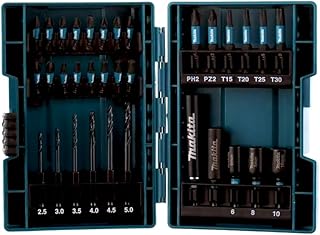


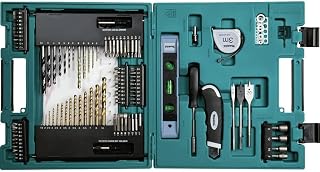


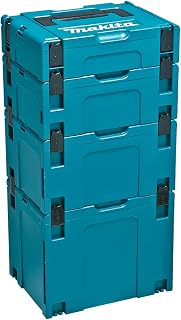


Choosing an advanced Makita power tool set is less about finding the kit with the largest number of tools and more about selecting a battery platform, tool combination and specification level that match the work you actually perform. For Australian buyers, that distinction matters because a professional building site, a workshop, a renovation project and serious DIY maintenance can require very different combinations of drills, impact drivers, saws, grinders, lights and other cordless equipment.
Makita's Australian range includes both 18V LXT and 40V Max XGT systems, with some applications also using two 18V batteries together. Official Australian product material includes examples such as the 18V Brushless DLX2412G two-piece combo kit and the 40V Max Brushless DK0191G601 six-piece combo kit. The exact contents, battery capacity and charger configuration should always be checked against the current Australian model listing before purchase.
A particularly important point is that a combo kit should be evaluated as a complete working system rather than simply counted by tool quantity. Six mediocre-to-irrelevant tools can be less useful than three tools that cover the majority of your regular jobs.
The word “advanced” can mean several different things in the power-tool market. It may refer to brushless motors, a higher-voltage battery platform, multiple professional-grade tools, larger battery capacities, faster charging, improved ergonomics, electronic controls or simply a more comprehensive selection of equipment.
For a serious buyer, the most useful definition is a kit that provides enough capability and compatibility to form the foundation of a long-term cordless tool system.
One of the biggest decisions when comparing advanced Makita kits is whether to build around the established 18V LXT ecosystem or move into the 40V Max XGT platform.
18V LXT is an extensive cordless platform and can make particular sense for buyers who already own compatible Makita 18V equipment. The major advantage of staying within an existing platform is ecosystem efficiency: batteries and chargers can potentially serve multiple tools instead of creating another battery family.
Some higher-demand Makita equipment uses two 18V batteries together, effectively drawing power from two packs for applications that require more output. This can be a useful middle ground for someone who wants to expand capability without immediately changing to a separate high-voltage platform.
40V Max XGT is aimed at applications where greater power capability and a dedicated high-voltage cordless architecture are important. Makita Australia has published Australian-market XGT combo-kit material, including six-piece brushless configurations.
XGT can be particularly interesting for users purchasing a new professional system who expect to add demanding equipment over time. However, the higher-voltage platform should not automatically be considered better for every buyer. The best choice depends on the applications, tools and batteries required.
There is little benefit in choosing a platform simply because its voltage number is larger. Think about your complete tool inventory instead.
Brushless motors are one of the most important features to consider when comparing premium cordless kits. Traditional brushed motors use physical brushes and a commutator, while brushless designs use electronic control to manage motor operation.
For the buyer, the practical question is not whether “brushless” sounds premium but whether the specific tool provides meaningful advantages for the work being performed. Frequent professional users may place greater value on brushless equipment because their tools experience much heavier and more sustained workloads than occasional DIY equipment.
Brushless technology should nevertheless be evaluated alongside torque, speed, cutting capacity, impact performance, ergonomics, thermal management, battery compatibility and intended application. A brushless drill with unsuitable specifications is still the wrong drill for a particular job.
The ideal combination depends on the buyer, but several tools frequently form the core of a versatile cordless system.
A drill driver is often the foundation of a general-purpose kit. It should be assessed for chuck type, speed range, torque settings, physical size, weight, clutch behaviour and suitability for the materials you regularly drill or fasten.
For cabinetry, interior work and general maintenance, compact dimensions can be more useful than maximum torque. For construction and heavier drilling, higher capability may matter more.
An impact driver complements a drill rather than replacing it. Its impact mechanism makes it particularly useful for driving screws, structural fasteners and other applications where rotational impact can reduce the amount of force transferred back through the user's wrist.
When comparing impact drivers, examine fastening control, speed settings, length, trigger response, bit retention and maximum intended fastener size. More torque is not automatically better when working with smaller screws or delicate materials.
A cordless circular saw can turn a general combo kit into a much more capable construction system. Compare blade diameter, maximum cutting depth, bevel range, guide compatibility, visibility of the cut line and overall balance.
Battery capacity becomes especially relevant for saws because repeated cutting can consume considerably more energy than intermittent drilling.
A reciprocating saw is useful for demolition, cutting timber, pipe and other materials when a controlled finish is less important than versatility and access. It can be especially valuable during renovation work.
Blade selection is critical. The performance of the saw depends not only on its motor but also on selecting an appropriate blade for timber, metal, plastics or demolition work.
An angle grinder can significantly expand the usefulness of a cordless tool system for cutting, grinding and surface preparation. Because grinders operate at high rotational speeds, safety features and correct accessory selection deserve more attention than simply comparing motor output.
Buyers should confirm the disc size, spindle configuration, guard arrangement, electronic controls and compatibility with the intended accessories before purchasing.
A work light may appear less important than a drill or saw, but it can be one of the most useful pieces in a professional kit. Good lighting improves visibility in roof spaces, cupboards, workshops, construction interiors and other poorly illuminated areas.
Its value becomes even greater when it uses the same battery system as the rest of the kit.
Battery capacity is commonly expressed in ampere-hours, or Ah. In simplified terms, a higher Ah rating represents greater stored electrical capacity within the same battery family, although actual runtime varies with the tool, workload, operating conditions and battery design.
Do not assume the largest battery is always the best choice.
A useful way to compare a kit is to ask how many batteries are included, what capacity they have, whether the batteries are compatible with your existing tools, and whether the supplied charger can support your expected daily workload.
A kit advertised with multiple batteries may appear attractive, but battery quantity should always be considered together with capacity and charging speed.
For example, two high-capacity batteries may be more useful for a professional workflow than several smaller packs, while smaller batteries can be preferable for users who value low weight.
Also check whether the listed batteries are genuine full-size packs or whether some advertised “pieces” are accessories, cases, lights or other equipment. The phrase “X-piece kit” does not by itself tell you how much working equipment is included.
A cordless tool system is only as practical as its charging setup. If a kit contains several batteries but provides a slow or limited charging arrangement, users working continuously may still need additional batteries or chargers.
When comparing Australian Makita combo kits, examine:
Makita Australia also provides product-registration functionality through MyMakita, where registered tool information can include model and serial details and warranty information. Current warranty terms and registration requirements should be checked directly before relying on any specific warranty period.
One of the easiest ways to make a costly mistake is to compare a bare-tool price against a complete kit price without accounting for the batteries and charger required.
A tool-only package can be excellent value for an existing Makita user who already has several compatible batteries and chargers. For a first-time buyer, however, purchasing several skins separately can become expensive once batteries and charging equipment are added.
Before choosing a tool-only model, calculate the complete system cost:
This approach gives a much more realistic comparison than looking at the headline price of the bare tool.
The largest kit is not necessarily the best kit. If you rarely use a reciprocating saw, grinder or multi-tool, paying extra for those pieces may deliver less value than investing in additional batteries or a better primary drill and impact driver.
Buying a kit without considering future purchases can lead to unnecessary battery duplication. Before committing, list the tools you are likely to buy next and identify which battery platform supports them.
Voltage alone does not describe overall tool performance. Motor design, electronics, gearing, mechanical construction, battery technology and application-specific engineering all influence how a cordless tool performs.
A powerful tool can become tiring when used overhead or for extended periods. Compare the complete tool with its battery attached rather than relying solely on the bare-tool weight.
A saw without the right blade, a grinder without suitable discs or a drill without appropriate bits may not be immediately useful. Accessories should be considered part of the working system.
Makita's cordless systems include different battery platforms and tool generations. Never assume that two batteries are interchangeable merely because they carry the Makita name. Confirm compatibility using the exact model numbers.
When two kits look similar, use a structured comparison rather than relying on the number of tools.
| Comparison factor | What to check | Why it matters |
|---|---|---|
| Battery platform | 18V LXT, dual 18V configuration or 40V Max XGT | Determines ecosystem compatibility and future expansion |
| Motor type | Brushless or brushed | Relevant to design, maintenance and professional use |
| Battery capacity | Ah rating and number of packs | Affects runtime, weight and workflow |
| Tool selection | Drill, impact driver, saw, grinder and other included tools | Determines practical usefulness |
| Charger | Type and charging configuration | Influences battery turnaround |
| Tool weight | Complete operating weight | Important for overhead and prolonged use |
| Accessories | Blades, bits, discs and attachments | Determines immediate usability |
| Storage | Case, bag or other storage arrangement | Useful for transport and organisation |
| Future compatibility | Tools you may add later | Can reduce long-term battery and charger duplication |
A home renovator generally benefits from a balanced set rather than an extreme specialist kit. A drill driver, impact driver and circular saw can cover a broad range of renovation tasks, while a reciprocating saw or multi-tool becomes valuable when demolition and modification work are frequent.
Professional builders should prioritise durability, battery availability, charging speed, ergonomics and compatibility with tools used every day. A kit that supports an expanding collection of saws, drills, impact tools and lighting equipment can be more valuable than a one-time purchase focused purely on the initial piece count.
Precision, balance and ergonomics can become more important than maximum output. Compact drills, impact drivers, circular saws, trim-oriented tools and other woodworking equipment should be selected around the materials and fastening methods used most often.
Portability and battery management deserve special attention. A consistent cordless platform can simplify transport because multiple tools can share compatible battery packs and charging equipment.
A high-quality mid-range cordless ecosystem can often make more sense than immediately purchasing the most powerful platform. Start with the tools you actually use, then expand as your projects become more demanding.
There is no universal winner. The appropriate system depends on the work.
For drilling, fastening, cabinetry, general maintenance and many common renovation applications, an 18V ecosystem can provide a practical foundation. For higher-demand cutting, outdoor equipment and other applications designed around higher power levels, XGT can be a compelling alternative.
It is also worth considering whether your future tool list contains equipment available in both ecosystems. If the tools you expect to purchase are concentrated within one platform, that can be more important than the voltage designation itself.
Combo-kit marketing can make a six-piece package sound substantially better than a three-piece package, but piece counts can include different types of equipment. A battery, charger, tool and storage component may all be counted depending on the manufacturer's presentation.
For meaningful comparisons, separate the package into:
Then compare the actual working capability of each package. This makes it easier to identify whether the second kit genuinely adds useful equipment or simply has a larger numerical piece count.
Power tools are frequently used in awkward positions, on ladders, overhead, inside cabinets and in confined spaces. For these applications, a compact and well-balanced tool can be preferable to a larger model with higher theoretical output.
Check handle shape, trigger position, balance around the battery, visibility of controls, grip texture and access to mode switches. Users who work for several hours at a time should give ergonomics serious consideration.
Battery tools can experience significant thermal load during demanding work. Cutting thick material, drilling large holes, driving many fasteners or grinding continuously can place greater demands on the motor, electronics and battery than intermittent household use.
When comparing professional-grade equipment, look for manufacturer-described electronic protection and thermal-management features, but avoid assuming that any tool can operate indefinitely under maximum load. The correct accessory, operating technique and workload remain important.
A high-quality cordless tool cannot compensate for an unsuitable accessory.
Accessory quality can influence cutting speed, finish, battery consumption, vibration and user control, so accessory selection belongs in any serious power-tool buying decision.
Regular maintenance helps preserve the condition and usability of a cordless tool collection.
Remove dust, chips and debris after use, particularly around ventilation openings, switches and moving components. Follow the manufacturer's cleaning instructions and avoid methods that could force contaminants deeper into the tool.
Check battery housings and terminals for visible damage or contamination. Do not use a battery that appears damaged or behaves abnormally. Store and charge batteries according to the manufacturer's instructions.
Damaged blades, discs and bits should be replaced. Continuing to use a compromised accessory can reduce control and may create additional safety risks.
Keep charging equipment clean, dry and adequately ventilated. Inspect cables and connections periodically and follow the manufacturer's instructions for safe charging.
Makita Australia's MyMakita service provides product-registration functionality, and current Australian warranty offers can have specific registration deadlines and eligibility conditions. Check the applicable terms for the exact product rather than assuming every tool or battery receives the same warranty treatment.
Before purchasing any advanced Makita combo kit in Australia, work through this checklist:
Online marketplace listings can sometimes make it difficult to determine exactly what is included. A careful buyer should look beyond the primary product photograph.
Pay particular attention to phrases such as “skin”, “tool only”, “bare tool”, “body only”, “kit”, “combo”, and “with battery”. These terms can describe substantially different packages.
Always compare the written contents against the model number and manufacturer documentation. Do not assume that batteries visible in a promotional image are necessarily included in the package.
Makita uses detailed model-number systems, and seemingly minor differences can represent substantially different packages or specifications. Before buying, copy the complete model number and compare it against the manufacturer's Australian information.
This is especially important when several listings use similar product names but include different batteries, chargers, quantities or accessories.
Makita is not the only established professional power-tool brand available to Australian buyers. Depending on the user's existing equipment and preferred ecosystem, alternatives can include Milwaukee, DeWalt, Bosch Professional and HiKOKI.
The most sensible comparison is not simply “which brand is strongest?” Instead, compare the specific cordless ecosystems.
Brand comparisons should be based on the exact tools, batteries, chargers, accessories, local availability, warranty conditions and long-term expansion plans rather than brand reputation alone.
A combo kit is not automatically the most economical purchase. If you only need one drill and one impact driver, purchasing a large package can leave you paying for equipment that sits unused.
Likewise, an experienced Makita user with several batteries may obtain better value by buying individual tool-only products rather than another complete kit containing batteries and chargers they do not need.
Conversely, someone starting from scratch may find a complete kit substantially easier to justify because batteries and chargers are already included.
For buyers who do not need every tool immediately, gradual expansion can be a sensible strategy.
This approach can reduce redundant chargers and batteries while allowing the tool collection to evolve with your work.
Advanced cordless tools can deliver substantial mechanical power and should be treated accordingly. Read the manufacturer's instructions for every tool and accessory before use.
Australian buyers should pay attention to the exact local specification rather than relying on overseas listings. Battery packages, chargers, included accessories, warranty terms and retailer availability can vary by market.
Current promotions can also change quickly. For example, Makita Australia's current MyMakita information shows promotional periods during 2026 for selected cordless products and registration-based warranty information. Promotional eligibility, participating retailers, dates and product exclusions should always be verified at the time of purchase.
Do not treat an old promotion, overseas specification or historical price as evidence of today's Australian deal. Check the current listing and applicable terms before buying.
The best value usually comes from matching the kit to your workload rather than buying based on the highest specification.
There is no single best set for every Australian buyer. The right choice depends on the tools required, battery platform, workload, budget, ergonomics and whether you already own compatible Makita batteries. A professional user may prioritise a larger ecosystem and higher-capacity batteries, while a homeowner may prefer a smaller, more balanced package.
Yes. Makita continues to support 18V LXT equipment, and the platform remains relevant for buyers who already own compatible tools or want a broad cordless ecosystem. The correct choice should be based on the specific applications and tools you need rather than the age of the platform name.
Not universally. XGT is designed for higher-demand applications and provides a different cordless platform, while LXT offers a broad 18V ecosystem. Compare the specific tools required for your work before choosing.
They can be, particularly for users who need several of the included tools and are starting a cordless system from scratch. Existing Makita users should calculate whether they actually need the included batteries and charger before choosing a complete kit.
For frequent or professional use, brushless models are often worth considering. However, brushless construction should be evaluated together with tool specifications, ergonomics, battery requirements and application suitability.
Choose according to the tool and workload. Smaller batteries can reduce weight, while larger batteries can provide greater stored capacity for demanding applications. A combination of battery capacities may be more useful than purchasing only the largest available pack.
No. Compatibility depends on the specific battery and tool platform. Always verify compatibility using the exact model information before purchasing or attaching a battery.
They can be excellent value for existing Makita users who already have suitable batteries and chargers. They are less straightforward for first-time cordless-tool buyers because the additional cost of batteries and charging equipment must be included.
There is no ideal number. A three-tool package containing equipment you use constantly can be more useful than a ten-piece package containing several rarely used tools. Focus on practical coverage rather than the advertised piece count.
Check the exact model number, package contents, battery quantity and capacity, charger, included accessories, Australian-market specification, current warranty terms, retailer conditions and current price. Also verify whether the listing is for a complete kit or a tool-only product.
The strongest buying decision is the one that creates a useful cordless system rather than simply producing the biggest tool collection. Start by identifying the work you perform, then choose the battery platform that supports that work and the tools you are likely to add later.
For existing Makita owners, compatibility and battery utilisation should be major priorities. For first-time buyers, the complete system cost—including batteries, chargers and accessories—is more important than the advertised bare-tool price. For professional users, durability, ergonomics, charging logistics and sustained-work capability deserve particular attention.
Before purchasing in Australia, verify the current model number and package contents, compare specifications from reliable sources, check current retailer pricing and read recent verified customer feedback. Manufacturer promotions, warranty requirements and product availability can change, so information that was accurate earlier in 2026 should not automatically be treated as current in August 2026.
The best advanced Makita power tool set is ultimately the one that gives you the right combination of capability, battery compatibility, ergonomics and long-term expandability for the work you actually do.