
♥ Wishlist
Compare 45 Milwaukee Power Tool Sets products in Australia. Reviews, ratings, pros, cons and buying advice updated for October 2026.




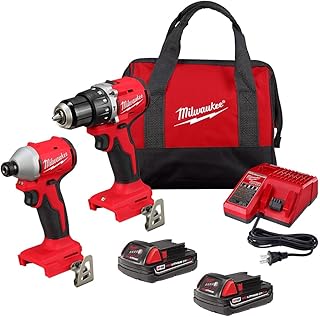


Choosing an advanced Milwaukee power tool set is less about finding the largest box and more about selecting a combination of tools, batteries, chargers and accessories that genuinely fits the work you expect to do. For Australian tradespeople, serious DIY users, renovators and property-maintenance professionals, the most useful kit is usually the one that provides the right balance of performance, portability, battery capacity and long-term compatibility.
Milwaukee has a broad cordless ecosystem, including M12 and M18 platforms, compact tools, high-performance FUEL models and connected ONE-KEY products. Because different kits can be configured for very different jobs, buyers should compare the individual tools and included battery equipment rather than choosing solely by the number of pieces advertised in a kit.
This guide focuses on the factors that matter when comparing advanced Milwaukee power tool sets in Australia during 2026, including platform selection, brushless motor technology, battery capacity, charging, ergonomics, tool combinations, application-specific performance, maintenance and common purchasing mistakes.
An advanced power tool set generally goes beyond supplying a basic drill and impact driver. Depending on the particular package, a more comprehensive system may combine several specialist tools around one battery platform. The objective is to reduce the need for separate battery ecosystems while giving the user a broader range of capabilities.
For example, a well-planned cordless system can cover drilling, fastening, cutting, grinding, oscillating-tool work, reciprocating cuts, lighting and other site tasks without requiring a separate charger and battery family for every tool. The exact contents vary between kits, so specifications should always be checked before purchase.
A kit containing more tools is not automatically better. A seven-piece package can be less useful than a four-piece package if several of the included tools rarely get used.
Consider the work you actually perform. A carpenter may place greater value on a drill driver, impact driver, circular saw, reciprocating saw and compact work light, while an electrical contractor may prioritise drilling, fastening, cutting, inspection and compact access. A renovation-focused buyer may benefit from an oscillating multi-tool, grinder, rotary hammer or other specialist equipment.
One of the most important decisions is choosing the appropriate Milwaukee battery platform. M12 and M18 tools are designed around different size and power requirements, so platform selection should happen before comparing individual kits.
M12 tools are particularly relevant where compact dimensions, low weight and access to confined spaces are important. They can be attractive for service work, installation tasks, cabinetry, maintenance and other applications where a smaller tool can make positioning easier.
The major advantage of a compact platform is not simply portability. Smaller tools can also be easier to manoeuvre when working overhead, inside cabinets, between framing members or in other restricted areas. The trade-off is that buyers should select the M12 range only when its capabilities match their workload.
M18 is the more appropriate starting point for many users who need a broader selection of full-size cordless equipment and higher-demand tools. The platform includes numerous categories intended for professional and heavy-duty applications.
M18 can make particular sense for users building a substantial cordless workshop or trade setup because one battery ecosystem can potentially support numerous different tool categories. However, the batteries and tools can be larger than compact alternatives, so portability and ergonomics still deserve attention.
No. M12 and M18 are separate battery platforms. Buyers should not assume that a battery from one platform can simply be used with a tool designed for the other.
If you already own Milwaukee tools, identify the exact platform before purchasing a multi-tool kit. Staying within an existing ecosystem can be considerably more convenient because compatible batteries and chargers can be shared among appropriate tools.
Milwaukee FUEL products are positioned within the brand's higher-performance cordless range and commonly combine brushless motor technology with electronic controls and battery technology. For buyers considering advanced kits, understanding the distinction between a standard tool and a higher-performance model can help prevent paying for capabilities that are unnecessary for the intended application.
Brushless motors use electronic control rather than traditional mechanical brushes. In cordless tools, this architecture can contribute to efficiency, durability and controlled power delivery.
However, brushless does not mean every brushless tool performs identically. Motor design, gearing, electronics, battery capability, tool size and intended application all affect real-world performance.
Not necessarily. A homeowner who occasionally drills into timber or assembles furniture may not need the highest-performance model in the range. A professional who uses a tool for extended periods or regularly encounters demanding materials may have a stronger reason to prioritise higher-performance equipment.
The correct choice depends on workload, frequency, required power, tool weight, budget and the expected service life of the equipment.
Battery capacity is commonly expressed in amp-hours, or Ah. A higher Ah rating generally indicates greater stored electrical capacity, but it can also mean additional battery size and weight.
When comparing Milwaukee tool sets, do not evaluate batteries solely by their Ah number. Think about how the battery changes the balance of the complete tool.
Smaller batteries can be advantageous for drilling, overhead work, installation and situations where tool weight matters. They can make a full-size cordless tool feel more manageable and reduce fatigue during repetitive work.
Larger-capacity batteries can be useful for demanding tools and applications where longer runtime between battery changes is important. They can be particularly relevant when a tool draws substantial power under load.
More capacity is not automatically better. A heavier battery may make a compact drill or impact driver less comfortable during repetitive fastening. Conversely, using an undersized battery for a high-demand application may require more frequent changes.
The best advanced kit therefore provides a sensible battery mix rather than simply the largest batteries available.
When comparing two apparently similar Milwaukee kits, inspect the battery configuration carefully. The difference between one compact battery and several higher-capacity batteries can materially affect the practical value of the package.
The best kit depends heavily on the type of work. Instead of asking which package is universally best, divide the purchase according to your primary applications.
A construction-oriented kit may need to cover drilling, fastening, cutting and demolition. A practical combination could include a drill or hammer drill, impact driver, circular saw, reciprocating saw and suitable lighting, although the exact tools should be selected according to the trade.
Users working with masonry should pay particular attention to whether a dedicated rotary hammer is more appropriate than relying on a conventional drill. The material being drilled and the diameter and frequency of holes can significantly change the tool requirements.
Carpenters often benefit from fast, controlled fastening and clean cutting. A drill driver and impact driver can cover different fastening requirements, while a circular saw can handle many general cutting applications.
For repetitive framing or decking work, ergonomics and battery management can be just as important as maximum advertised performance.
Electrical work can place a premium on compact dimensions, controlled drilling and access. M12 tools can be attractive for some installation environments because of their compact form factor, while M18 tools can provide a wider range of higher-demand options.
For trades working in finished spaces, the ability to control speed, avoid overdriving fasteners and position a tool accurately can be more useful than simply selecting the highest-power model.
Plumbing and mechanical applications often involve confined spaces, metal, fittings and repetitive fastening. Tool selection should therefore consider access, torque control, head length, grip, lighting and battery size.
Compact tools can be particularly useful where a full-size tool becomes difficult to position. For heavier mechanical work, a higher-performance impact or specialised tool may be more appropriate.
Renovators often need versatility rather than maximum performance from every tool. A balanced kit can provide greater practical value if it covers drilling, fastening, cutting and preparation without adding multiple rarely used specialist tools.
A drill driver is designed for general drilling and fastening, while a hammer drill adds a hammering action intended to assist with certain masonry drilling tasks.
If your projects mainly involve timber, plastics, metal and general assembly, a drill driver may be sufficient. If masonry drilling is a regular requirement, a hammer drill can provide additional functionality.
For frequent or demanding work in concrete and similar materials, buyers should investigate dedicated rotary hammer equipment rather than assuming every hammer drill is equivalent to a specialist masonry tool.
These tools overlap but serve different purposes. A drill driver provides a chuck and versatile drilling and fastening control. An impact driver uses an impact mechanism designed to deliver rotational force efficiently for many fastening applications.
Torque is important, but a single maximum-torque figure does not describe the complete user experience. Speed, control, gearing, impact mechanism, battery capability, electronic controls, tool balance and the fastener itself all influence performance.
For precision work, excessive torque can actually make a tool harder to control. For heavy fastening, insufficient torque can result in repeated stalls or slower progress. The best specification is therefore the one that matches the job rather than the largest number in a comparison table.
When a circular saw is included in a cordless kit, compare blade size, cutting capacity, ergonomics, visibility of the cutting line, adjustment mechanisms and compatibility with the materials you normally cut.
Battery-powered circular saws can be especially convenient for mobile work because they avoid dependence on a nearby power outlet. Nevertheless, cutting demanding material places a greater load on the battery and motor than many light drilling tasks, making battery selection more important.
Reciprocating saws are useful for rough cutting, demolition and applications where access is more important than a perfectly finished edge. They can be used across a variety of materials when fitted with the appropriate blade.
When comparing a reciprocating saw in a kit, examine stroke characteristics, variable-speed control, shoe design, blade-change mechanism, vibration management and overall handling.
Blade selection is critical. A saw's performance cannot be separated from the blade designed for the material being cut.
An oscillating multi-tool can perform a wide variety of detailed cutting, scraping, trimming and preparation tasks. It is particularly useful when access is restricted or when a conventional circular or reciprocating saw would be difficult to position.
Because accessories determine much of its usefulness, buyers should investigate the accessory ecosystem as carefully as the bare tool. A kit that includes the tool but little useful accessory coverage may require additional purchases before it becomes practical for a specific project.
Angle grinders are powerful and versatile tools, but they deserve more careful consideration than ordinary drilling and fastening equipment. Buyers should consider disc compatibility, guard arrangements, control features, ergonomics, battery demands and the intended cutting or grinding application.
Grinding and cutting can place substantial demands on a cordless battery. If an advanced kit includes a grinder, examine whether its battery configuration is suitable for the workload rather than assuming every supplied battery will provide the same practical experience.
Appropriate personal protective equipment and safe operating procedures are essential when using grinders. The correct disc, guard and operating technique should always be selected for the material and task.
Some Milwaukee tools support ONE-KEY functionality, which can provide connected tool-management and control capabilities. This type of feature can be more relevant to professional users managing multiple tools than to occasional DIY users.
For a tradesperson or business with a larger cordless inventory, connected management can potentially make tool identification, organisation and certain configurable functions more useful. However, buyers should determine whether they will actually use these features before paying a premium for them.
Advanced power tools can be used for hours at a time, making ergonomics an important part of the buying decision. Weight, grip shape, trigger placement, balance and battery position can affect fatigue and control.
A cordless system is only as useful as its battery-management strategy. Users with several tools should consider how many batteries are required to keep the most frequently used equipment operational.
A practical setup can combine smaller batteries for compact tools with higher-capacity batteries for tools that consume more energy. Keeping batteries appropriately charged before a major workday can also reduce interruptions.
Battery storage and charging should follow the manufacturer's instructions. Extreme temperatures, physical damage, moisture and unsuitable charging practices can affect battery performance and safety.
The charger included in a kit is easy to overlook, yet it becomes increasingly important as the number of batteries grows. Buyers should check whether the supplied charger meets their workflow requirements and whether additional compatible charging equipment may eventually be necessary.
If multiple tools are used continuously, calculate how many batteries you expect to consume during a typical working period and how quickly your charger can replenish them. A kit with several tools but insufficient battery capacity may not deliver the expected productivity.
Storage can influence the practical value of a multi-tool set. A compact bag may be convenient for mobile service work, while a structured case or organised workshop storage can be preferable for users who frequently transport a larger collection of tools.
Before buying, consider whether the supplied storage accommodates batteries, charger, accessories and the tools without excessive compression. Also think about whether your existing Milwaukee equipment can be organised alongside the new kit.
The purchase price of a cordless kit is only part of the long-term cost. Blades, drill bits, driver bits, sanding accessories, grinding discs and other consumables can become significant expenses depending on the work performed.
When comparing two kits, identify which accessories are included and which will need to be purchased separately. A seemingly inexpensive kit may require a substantial accessory investment before it covers the intended applications.
For a meaningful comparison, create a simple checklist rather than relying on headline marketing claims.
If you are comparing a shortlist of ten Milwaukee power tool sets, score each package against the same criteria. This produces a more useful comparison than simply ranking them by the number of tools included.
A large collection can look attractive, but unused tools do not provide much value. Start with the tasks you perform most often.
Two kits may contain similar tools but have substantially different battery configurations. Always inspect the capacity and quantity of the batteries.
Milwaukee offers tools across different categories and performance tiers. Model identification matters. Compare the exact tool rather than relying on the brand name alone.
More power can come with additional weight and size. For repetitive overhead work or confined spaces, a compact tool can sometimes be more appropriate.
A saw without suitable blades or an impact driver without appropriate bits may not be immediately useful for the intended project. Include consumables in the purchasing calculation.
If you already have several compatible Milwaukee batteries and chargers, a kit from the same platform can offer greater practical value than beginning another battery system without a clear reason.
Consider the complete package, including tools, batteries, charger, storage and accessories. Also check the current retailer listing because kit configurations can change.
Milwaukee should also be evaluated against competing professional tool ecosystems rather than considered in isolation. Depending on the application, buyers may also encounter brands such as Makita, DeWalt, Bosch Professional and Metabo HPT.
The most useful comparison is not simply which brand has the highest specification. Examine the complete cordless ecosystem available to you, including the tools you expect to add over several years.
Compare the specific cordless platforms, tool availability, ergonomics, battery options and accessory ecosystem relevant to your trade. Existing ownership can be a major factor because staying within one compatible platform can simplify battery management.
Both brands offer extensive cordless tool ecosystems. When comparing a kit, focus on the exact models and included battery configuration rather than judging by brand reputation alone.
Bosch Professional is another established option for users comparing professional cordless systems. Look at tool availability for your particular trade, platform compatibility, ergonomics and the accessories you already own.
Metabo HPT can also be relevant when comparing cordless professional tools. Buyers should compare equivalent tool categories and complete kit configurations because headline specifications can vary significantly between models.
Buying a kit is not always the best option. If you already own several compatible tools, adding a bare tool may make more sense than purchasing another complete package containing duplicate batteries and chargers.
Likewise, if you need one highly specialised tool for a particular project, purchasing that individual tool can avoid paying for equipment that will sit unused.
A multi-tool kit is most compelling when several included tools match your actual workload and the batteries and charger add meaningful value to the system.
Bare tools can be useful for existing Milwaukee users who already have compatible batteries and charging equipment. They allow the collection to expand without accumulating duplicate charging hardware.
Complete kits can be attractive for someone entering the platform or expanding from a very small collection. They can provide several tools and the supporting battery equipment in one purchase.
If you already own Milwaukee equipment, begin by taking inventory. Write down every battery, charger and frequently used tool, then identify gaps in your current setup.
This prevents a common purchasing mistake: buying a new kit for its headline combination while unintentionally duplicating equipment you already own.
Australian buyers should check the local product listing carefully because model numbers, kit combinations and included accessories can vary by market. Do not assume that a kit shown in an overseas video or article has exactly the same contents as an Australian listing.
For corded equipment and chargers, verify that the product is appropriate for the Australian market. For cordless tools, pay particular attention to the battery and charger combination supplied with the Australian package.
Before completing a purchase, check the current product specifications, retailer information, included components and applicable manufacturer documentation.
When comparing current Australian prices, separate the value of the individual components instead of judging the advertised discount percentage.
Good maintenance can help keep cordless tools in useful working condition. Follow the manufacturer's instructions for each specific model because cleaning, lubrication and service requirements can differ between tools.
Remove dust, debris and material residue after use. Pay particular attention to ventilation openings and moving areas where accumulated debris could interfere with operation.
Blades, discs, drill bits and driver bits should be inspected regularly. Damaged or inappropriate accessories can reduce performance and may create additional safety risks.
Check batteries for visible damage before use. Do not continue using a battery that appears damaged or behaves abnormally. Follow the manufacturer's storage, charging and handling instructions.
Battery and tool interfaces should remain clean and free from contamination. Avoid introducing moisture or unsuitable cleaning substances into electrical components.
Battery care should follow the manufacturer's instructions for the specific battery generation and model. Store batteries appropriately, protect them from physical damage and avoid conditions outside the manufacturer's recommended operating or storage range.
Do not treat a cordless battery as an ordinary disposable accessory. It is an important component of the complete tool system, and its condition can influence runtime, reliability and overall ownership value.
Advanced cordless tools can deliver substantial power, so safety remains important regardless of whether the tool is battery powered. Use the correct accessory for the material and application and follow the instructions supplied with the tool.
You do not necessarily need to buy every tool at once. A staged approach can be more economical and easier to manage.
Start with the tools that solve the greatest number of your current problems. For many users, this could mean beginning with drilling and fastening equipment, then adding cutting and specialist tools as the workload develops.
Once you have established a platform, future purchases become easier because compatible tools can potentially use the batteries you already own.
Begin with the primary drill or driver and fastening equipment appropriate to your work.
Add a circular saw, reciprocating saw or other cutting tool based on your actual applications.
Consider grinders, oscillating multi-tools, rotary hammers, specialty drivers or other equipment only when your projects justify them.
Add additional batteries, charging capacity, lighting and storage once the collection becomes large enough that organisation starts affecting productivity.
An advanced Milwaukee kit can make sense for tradespeople, contractors, serious renovators, maintenance professionals and experienced DIY users who need several cordless tools and value platform compatibility.
It may be less appropriate for someone who performs only occasional light tasks and needs just one or two tools. In that situation, buying only the equipment required for the immediate workload can be more sensible.
M12 is worth considering when compact size, low weight and access are major priorities. It can be particularly relevant to users who perform installation, service, maintenance or other tasks where full-size equipment is unnecessarily bulky.
M18 is a logical starting point for users who expect to build a broad professional cordless collection and regularly perform demanding drilling, fastening, cutting or other high-load applications.
However, platform selection should still be based on the tools you actually need rather than assumptions that a larger battery platform is automatically better.
Customer ratings can be useful, but they should not replace technical comparison. When reading verified customer feedback, look for comments relevant to your actual use case.
Give greater weight to reviews that describe the application, frequency of use and exact model rather than generic comments about the brand.
Product pages and kit configurations can change, so verify the information displayed at the time of purchase. This is particularly important for multi-tool bundles where batteries, chargers and accessories may differ between listings.
The strongest buying strategy is to choose the system around your work rather than choosing your work around the kit. Start with the applications you perform most often, identify the tools required, select the appropriate M12 or M18 platform and then compare complete kit configurations.
For demanding professional use, pay close attention to performance tier, brushless technology, battery capacity, ergonomics and long-term platform expansion. For occasional DIY use, prioritise versatility, manageable weight and avoiding unnecessary tools.
When comparing the top Milwaukee options available to Australian buyers in 2026, the most useful package is ultimately the one that provides the right tools, suitable batteries and practical accessories for your workload. Check exact specifications, current retailer information and verified customer feedback before making a final purchasing decision.
There is no single best kit for every Australian buyer. The right choice depends on your trade, required tools, battery platform, workload, budget and whether you already own compatible Milwaukee equipment.
Neither platform is universally better. M12 prioritises a compact cordless format, while M18 provides a broad platform for full-size tools and demanding applications. Choose according to the tools and workload you expect to use.
FUEL models can be worth considering for users who regularly demand strong performance from their cordless tools. Occasional users may not benefit enough from the additional performance to justify choosing the highest-performance model for every application.
No. More batteries can improve workflow, but the ideal quantity and capacity depend on how frequently your tools are used and how quickly the batteries can be recharged. Smaller batteries can also be preferable when tool weight matters.
Buy a kit when several included tools match your needs and you require the batteries and charger. Buy individual or bare tools when you already have compatible batteries or only need one particular tool.
M12 and M18 are separate battery platforms. Always verify platform compatibility before purchasing or attempting to use a battery with a tool.
Compare exact tool models, battery quantity and capacity, charger configuration, included accessories, storage, performance tier and compatibility with your existing equipment. Do not compare kits only by tool count or headline price.
Milwaukee offers cordless tools across a broad range of professional applications. Whether a particular model is appropriate depends on its design, specifications and the demands of your specific trade.
Choose according to the application. Compact batteries can reduce tool weight, while higher-capacity batteries can be useful where longer runtime or demanding workloads are priorities.
There is no universal replacement interval that applies to every battery. Battery condition depends on usage, storage, charging practices, age and other factors. Follow the manufacturer's guidance and replace batteries when their condition or performance indicates that replacement is appropriate.
The most important factor is whether the complete combination matches your actual workload. A balanced kit with the right tools and batteries is generally more useful than a larger package containing equipment you rarely need.