

♥ Wishlist
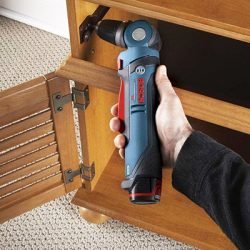
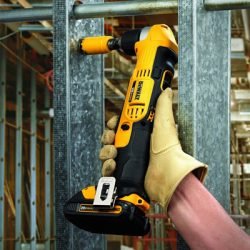
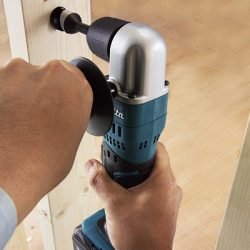
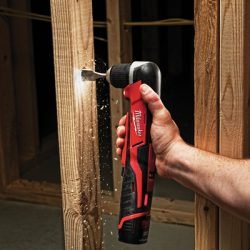

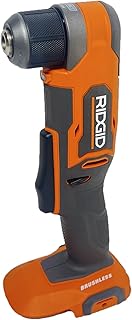

A cordless angle drill gives you greater access when a conventional drill cannot fit comfortably. Its angled head helps you work between studs, inside cabinets, beneath fixtures and around other obstacles where space is limited. Because there is no power cord to manage, you can move easily around a job site, workshop or home renovation project.
For Australian tradespeople and DIY users, choosing the right cordless angle drill starts with understanding the work you need to complete. Consider the available torque, speed control, battery system, chuck capacity, head size, weight and overall ergonomics. A compact model can improve control in restricted spaces, while a higher-output option may suit more demanding drilling and fastening applications.
A cordless angle drill is a battery-powered drill designed with an angled or right-angle head. This configuration allows the bit or driver to reach areas that are difficult to access with a standard drill. It can be useful for carpentry, electrical installation, plumbing, cabinetry, maintenance and general construction tasks.
Many models are designed for both drilling and screwdriving. Depending on the individual tool, features may include variable speed, adjustable settings, keyless chucks, ergonomic handles, LED work lights and compatibility with interchangeable battery platforms. Always check the specifications of the particular model before purchasing.
The main advantage of an angle drill is access. A shorter head can make it easier to work between framing members, behind fittings and inside narrow spaces. Compare the overall head length and tool dimensions when access is your primary requirement.
Torque affects how effectively the drill handles resistance during drilling and fastening. Variable speed control can provide better control when working with different materials and fasteners. Match the tool's performance specifications to your intended applications rather than choosing based on voltage alone.
Battery capacity and platform compatibility can affect working time and convenience. If you already use cordless tools, staying within the same battery platform may simplify charging and spare-battery management. Check whether a product is sold as a skin only or with a battery and charger.
Confined-space drilling often requires unusual hand positions, so balance and grip comfort matter. A lighter tool may be easier to control during extended work, while a robust design may be appropriate for demanding trade applications. Look for an ergonomic grip and controls that are easy to reach.
Cordless right angle drills are particularly useful where clearance is limited. Carpenters can use them for drilling through framing and other timber components. Electricians may find the angled design useful when working around services and structures. Plumbers and maintenance professionals can also benefit when standard drill bodies are difficult to position.
For home projects, an angle drill can help with cabinetry, furniture assembly, renovation work and general repairs. The cordless format also makes it convenient for locations without an accessible power outlet. Select the drill, bit and operating speed according to the material and task.
When comparing models, look beyond the headline specification. Check the drill's chuck or bit interface, maximum speed, torque information, battery voltage, included accessories and dimensions. A compact tool may be preferable for restricted areas, whereas a higher-performance model may provide more capacity for demanding work.
Brand and battery compatibility can also influence your decision. The category includes models associated with brands such as Bosch, DEWALT, Makita and Milwaukee, while availability can vary between products and markets. Check the individual product listing for current specifications, included equipment and compatibility details.
Cordless tools can be sold in different configurations. Some are supplied as tool-only units, while others include batteries and chargers. If you already own compatible batteries, a tool-only model may help you expand an existing collection without purchasing duplicate charging equipment.
Australian buyers should also check the supplied charging equipment and product specifications before use. Use batteries and chargers recommended for the specific tool platform, and follow the manufacturer's operating, charging and storage instructions.
A cordless angle drill can be a practical addition to a professional toolkit or home workshop when access is the main challenge. The angled design helps you reach restricted areas while battery operation provides freedom from a mains power cable. Compare size, torque, speed, battery configuration and ergonomics to identify a model that matches your work.
Whether you are completing a renovation, installing fittings, working on cabinetry or handling maintenance tasks, choosing the right specifications can make drilling and fastening more convenient. Review each available cordless angle drill carefully and select the configuration that fits your tools, workspace and project requirements.
Find a cordless angle drill designed for better access in confined areas. Explore compact and high-performance right angle drill options for professional trades, maintenance work, renovations and DIY projects across Australia.