

♥ Wishlist
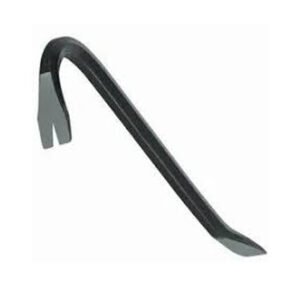
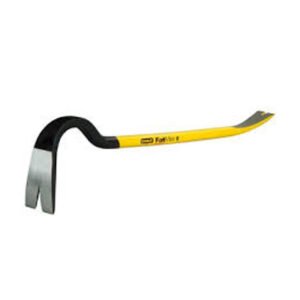
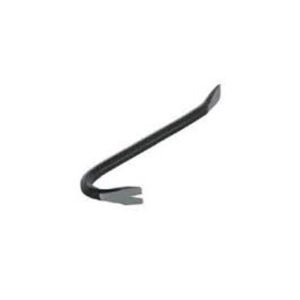


A crowbar hand tool is designed to make demanding manual tasks easier by using leverage. It can help separate materials, lift objects, remove nails, dismantle timber structures and assist with renovation or demolition work. Unlike powered equipment, a crowbar is simple to carry, easy to store and ready to use whenever a suitable manual tool is needed. The best option depends on the job, available working space and amount of leverage required.
For Australian homeowners, renovators and tradespeople, choosing the correct crowbar can make a noticeable difference to control and efficiency. A longer bar can provide greater leverage, while a shorter model may offer better handling in confined spaces. The working ends also matter because different designs suit different applications.
Construction is one of the first factors to consider. A crowbar needs to withstand repeated force, so a robust metal construction is important for demanding work. Look for a design that feels solid and appropriate for the intended application. A durable surface can also help the tool remain useful through regular workshop, construction or maintenance tasks.
Length affects both leverage and manoeuvrability. Longer crowbars can help when you need more leverage to shift or separate resistant materials. However, they can be less convenient when working inside cupboards, between framing or in other restricted areas. Compact crowbars are often easier to control where working room is limited.
The shape of the working ends is another useful consideration. A flat end can help with separating or lifting materials, while a curved or angled end may provide a practical position for pulling nails or gaining leverage. Some designs combine different working ends to support several common tasks with one hand tool.
Crowbars are widely associated with demolition, but their uses extend beyond major building work. They can assist with removing old boards, dismantling pallets, lifting flooring, separating joined materials and extracting nails. They may also be useful during garden construction, fencing projects, property maintenance and general workshop tasks.
For renovation work, a crowbar can help remove materials that are difficult to separate by hand. When replacing flooring, dismantling timber structures or taking apart unwanted fixtures, controlled leverage can reduce the amount of manual effort required. The tool can also be useful for reclaiming timber or breaking apart components before disposal.
For maintenance and DIY projects, a smaller crowbar may provide a convenient solution for jobs where a full-size demolition bar would be unnecessarily bulky. Consider the material you are working with and choose a tool that provides enough strength and leverage without making precise handling difficult.
Leverage is a major reason people choose a crowbar. In general, a longer bar gives you more mechanical advantage when the working conditions allow you to use its full length. This can be helpful when lifting or separating heavy or tightly joined materials. However, maximum length is not always the most practical choice.
A shorter crowbar can be easier to position and control. It can work well for indoor maintenance, smaller demolition tasks and areas where there is limited room to move. When selecting a crowbar, balance leverage against portability, access and the level of control you need.
Use a crowbar only for tasks appropriate to its design and construction. Before starting, inspect the bar for visible damage, excessive wear or deformation. Make sure your footing is stable and keep other people away from the immediate working area.
Wear suitable protective equipment for the task. Safety glasses can help protect your eyes from flying fragments, while gloves and appropriate footwear may provide additional protection. Apply force in a controlled manner rather than using sudden movements. Be particularly careful when a material may shift unexpectedly or release stored tension.
Never position your hands where they could become trapped between the crowbar and another surface. If a material does not move with reasonable controlled force, reassess the job instead of simply applying excessive pressure. A different tool or method may be more appropriate.
Good maintenance can help keep a crowbar ready for future jobs. After use, remove dirt, dust and other residues from the tool. If the surface becomes wet, dry it before storage to reduce the risk of corrosion. Check the working ends periodically for damage or deformation.
Store the crowbar somewhere dry where it will not create a trip hazard or become difficult to retrieve. Keeping hand tools organised also makes it easier to select the correct tool when starting a project. If a crowbar develops significant damage, replace it rather than continuing to use it for demanding work.
Choosing a crowbar starts with understanding the task. Think about whether you need a compact tool for maintenance or a longer, heavier option for demanding demolition and lifting work. Consider the construction, length, working-end design and available workspace before making your selection.
A suitable crowbar hand tool can become a useful addition to a home workshop, renovation kit or professional toolbox. With the right design and careful technique, it can provide practical leverage for a wide range of manual jobs. Browse the available category options and select a crowbar that matches the requirements of your project in Australia.
A crowbar hand tool is a practical choice for jobs that require controlled prying, lifting, separating or dismantling. Whether you are working on a renovation, removing timber, pulling nails or handling general maintenance, the right crowbar can provide useful leverage without relying on powered equipment. Australian DIY enthusiasts, tradespeople and property maintenance workers can choose a suitable crowbar based on length, construction, working end and the type of material being handled.