

♥ Wishlist


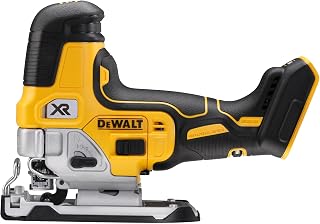


DeWalt plunge saws are designed for users who need more control than a conventional circular saw can provide for certain cutting applications. The plunge mechanism lets you position the saw at a selected point before lowering the blade into the material. This approach can be particularly useful when making internal cuts, trimming panels or following a marked cutting line with greater control.
For Australian workshops, building sites and renovation projects, a plunge saw can be a practical addition to a professional tool collection. It can help with common tasks involving timber boards, worktops, flooring materials and large sheet goods. When paired with an appropriate guide rail, the saw can also support long, straight cuts with a more predictable cutting path.
One of the main reasons to consider a DeWalt plunge saw is controlled cutting. Sheet materials can be difficult to handle with handheld tools, particularly when a straight and clean edge is important. A plunge saw gives you a defined cutting action and can be used with suitable accessories to improve alignment and repeatability.
Plunge cutting can also help when a cut needs to begin away from the edge of a workpiece. Instead of starting from an exposed edge, the operator can position the saw at the required location and lower the blade into the material. Always follow the specific tool instructions and use the correct blade for the material being cut.
Check the saw's maximum cutting depth and consider the thickness of the materials you commonly work with. If your projects involve different material thicknesses, an adjustable cutting depth can provide useful flexibility.
A compatible guide rail can help support long, straight cuts. If you regularly cut large panels, worktops or flooring materials, consider how the saw and guide system will fit into your existing workflow.
Consider whether a corded or cordless setup better suits your work environment. Cordless equipment can provide greater freedom of movement around a site, while corded tools can be useful where continuous mains power is readily available. Choose according to your workload, access to power and preferred working method.
The correct blade can affect cutting performance and finish, so match the blade to the material and application. Dust extraction is another important consideration when working indoors or in enclosed areas. A suitable extraction setup can help manage cutting dust and keep the immediate work area cleaner.
Australian tradespeople may use plunge saws across residential construction, cabinetry, joinery, renovation and general woodworking projects. A compact setup can be convenient for smaller jobs, while a more capable configuration may suit regular professional use. Think about the materials, cutting lengths and working conditions you encounter most often before selecting a model.
It is also worth considering the complete cutting system rather than the saw alone. Guide rails, suitable blades, clamps and dust-extraction equipment can all influence how efficiently you complete a job. Checking compatibility before purchasing accessories helps create a practical setup without unnecessary replacements.
Start by identifying the materials and typical cut types involved in your projects. Next, compare cutting depth, power source, guide-rail compatibility, ergonomics and accessory requirements. If portability is important, consider the advantages of a cordless configuration. If you primarily work in a fixed workshop, a corded solution may fit your workflow.
For frequent professional use, durability, handling and serviceability can be important alongside basic cutting specifications. For occasional renovation or DIY projects, ease of setup and versatility may carry more weight. Reading the manufacturer's specifications and operating instructions can help confirm whether a particular saw is suitable for your intended application.
Explore the DeWalt plunge saws category to find cutting equipment suited to precision woodworking, renovation and construction tasks. Compare the available options according to cutting requirements, power source and accessory compatibility. Selecting a saw that matches your materials and workflow can help you approach straight cuts, panel work and controlled plunge cuts with greater confidence.
Always use the appropriate personal protective equipment, inspect the workpiece before cutting and follow the manufacturer's safety instructions. Secure materials properly and make sure the blade, guide system and extraction equipment are suitable for the task before operating the saw.
Achieve controlled, accurate cuts with DeWalt plunge saws designed for demanding woodworking and construction applications. A plunge saw allows the blade to enter a workpiece at a controlled point, making it useful for cutting sheet materials, timber panels, doors and other materials where clean, precise results matter. For Australian tradespeople, renovators and serious DIY users, choosing the right plunge saw can make repetitive cutting tasks more manageable while helping maintain a consistent finish.