

♥ Wishlist
Compare 8 Trimmers and Hedge Cutters for Australian Gardens products in Australia. Reviews, ratings, pros, cons and buying advice updated for October 2026.
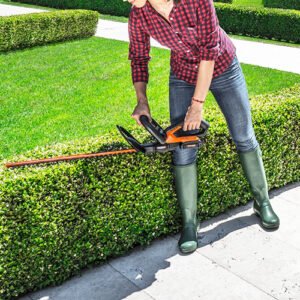


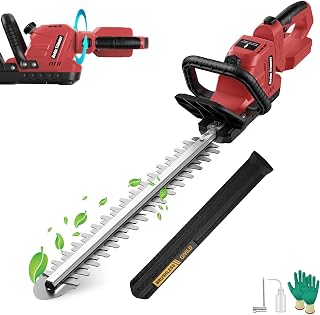


Choosing an advanced hedge trimmer is less about selecting the most powerful motor and more about matching the machine to the type, height and density of the vegetation you regularly maintain. Australian gardens can range from small suburban hedges to large established boundaries with thick woody growth, so the right specification depends heavily on the job.
Before comparing individual models, consider hedge size, branch thickness, cutting frequency, access to mains power, battery compatibility, operator reach and the amount of maintenance you are prepared to perform. A compact cordless hedge trimmer can be an excellent choice for routine residential trimming, while a long-reach or articulating model may be more appropriate for tall hedges. For particularly thick growth, a purpose-designed brush cutter, pruning saw or chainsaw may be more suitable than attempting to force a hedge trimmer beyond its intended application.
Battery-powered hedge trimmers are increasingly attractive for Australian homeowners because they eliminate extension leads and provide considerable freedom of movement. They are particularly convenient when trimming along fences, around garden beds or across larger residential blocks.
The most important specification is not battery capacity alone. Check the battery platform, voltage, compatible batteries, charger arrangements, operating time claims and whether the battery is included. A bare-tool product can appear less expensive because it may exclude the battery and charger.
Corded electric models can make sense for users who have convenient access to an outdoor power outlet and primarily maintain hedges close to a house or workshop. Their major advantage is continuous operation without waiting for a battery to recharge.
The limitation is the power cable. It must be managed carefully to prevent accidental cutting, snagging or damage. An extension lead also introduces additional equipment that needs to be positioned safely throughout the job.
Petrol hedge trimmers can be useful where extended operation, mobility and high workload are priorities. They are more commonly associated with demanding maintenance work than occasional light trimming.
However, petrol equipment generally requires more attention to fuel, starting, engine maintenance, storage and servicing than electric alternatives. Noise and exhaust emissions may also make petrol equipment less appealing for residential environments.
Long-reach hedge trimmers are designed to make tall or difficult-to-access hedges easier to maintain from ground level. Depending on the design, the cutting head may be adjustable to different angles, allowing the operator to trim hedge faces and upper surfaces without repeatedly using a ladder.
Reach should not be considered in isolation. A longer shaft increases leverage and can make the tool feel heavier during extended use. For this reason, balance, harness compatibility, grip position and overall weight can be just as important as the advertised maximum reach.
An articulating cutting head provides additional flexibility when shaping the sides and tops of hedges. Multiple angle positions can reduce awkward wrist and shoulder positions, particularly when working on long hedge sections.
When comparing these designs, examine how easily the head angle can be changed, whether the adjustment mechanism locks securely and how the machine feels when the cutting assembly is positioned at its furthest angle.
Blade length affects how much hedge can be covered with each pass. A longer blade can improve productivity on broad, straight hedge faces, while a shorter blade may provide better control when shaping smaller plants or working around obstacles.
A longer blade does not automatically mean a better hedge trimmer. Consider the relationship between blade length, tool weight, balance and the physical size of the hedge.
Tooth spacing is an important specification when dealing with thicker stems. A wider tooth gap can accommodate larger material, while a smaller gap is often well suited to fine, regular hedge growth.
Do not confuse advertised cutting capacity with an instruction to cut branches of that diameter routinely. A hedge trimmer should be used within the manufacturer's stated application and cutting limits.
Electric hedge trimmers are commonly evaluated by their motor design, operating voltage and overall drive efficiency. Brushless motors are particularly relevant when comparing modern cordless tools because they can offer an efficient motor architecture with fewer wear components than traditional brushed designs.
Motor technology should still be evaluated alongside blade performance, battery system, weight and ergonomics. A specification that looks impressive on paper does not necessarily make a tool more comfortable or productive for every garden.
Blade speed can influence cutting behaviour and perceived responsiveness, but it should not be treated as a standalone performance score. A hedge trimmer with an aggressive blade action may behave differently depending on vegetation density, tooth geometry and the condition of the blades.
Weight becomes increasingly important as trimming sessions become longer. A tool that feels manageable for five minutes can become tiring when used continuously across a large hedge.
Look beyond the listed net weight and consider where the battery, motor and cutting head are positioned. Good balance can make a heavier tool feel easier to control than a lighter but poorly balanced alternative.
Rotating or adjustable rear handles can be useful when changing between vertical and horizontal cutting positions. Soft-grip surfaces and appropriately positioned controls can also improve comfort during repetitive trimming.
Before choosing a model, consider whether you can comfortably reach the trigger and safety controls while maintaining a secure two-handed grip.
If you already own cordless power tools, staying within the same battery ecosystem can be one of the most practical purchasing decisions. Brands such as Makita, DeWalt, Milwaukee, Bosch, Ryobi and STIHL offer cordless outdoor equipment ranges, although compatibility is specific to each manufacturer's battery platform.
Never assume that batteries from different brands or different voltage families are interchangeable. Check the exact platform and model compatibility before purchasing a bare tool.
Battery capacity is normally expressed in ampere-hours, or Ah. A higher Ah rating generally represents greater stored energy within the same battery platform, although actual runtime varies with the tool, operating conditions and workload.
For occasional trimming, a smaller compatible battery may offer a useful balance between runtime and weight. For large hedges or prolonged sessions, a higher-capacity battery can reduce interruptions, although it may add weight to the tool.
Runtime figures should therefore be treated as manufacturer guidance rather than a guaranteed duration for every garden. Dense vegetation, repeated cutting of thick stems and continuous full-load operation can increase energy consumption.
Double-sided blades are common on consumer hedge trimmers and can be convenient for working across both directions of a hedge face. Single-sided designs may have advantages in certain professional applications where directional cutting is preferred.
Blade material and surface treatment influence durability and resistance to corrosion. Look for clear manufacturer information about blade construction rather than relying solely on phrases such as heavy duty or professional grade.
If the primary objective is precise shaping, a shorter or moderately sized blade can be easier to control. For long, uniform hedge faces, a longer blade can cover more area per movement.
A conventional hedge trimmer may become impractical when a hedge is tall enough that the operator must stretch, climb or work from an unstable position. A pole hedge trimmer can provide additional reach while allowing the operator to remain on the ground.
However, advertised reach should be interpreted carefully. Manufacturers may measure total reach using a particular operator height or tool configuration. The practical working height for a particular person can therefore differ considerably.
Safety should be considered before cutting performance. Modern hedge trimmers commonly incorporate mechanisms intended to reduce accidental activation and improve control, but no safety feature replaces correct operating technique.
Always read the manufacturer's instructions and use the personal protective equipment recommended for the specific tool and task. Keep other people and pets away from the immediate work area, inspect the hedge for hidden objects and never defeat a safety mechanism.
A longer blade can appear attractive because it suggests greater productivity. In reality, additional length can increase weight and reduce manoeuvrability. Select a blade length based on hedge dimensions and the type of trimming you perform.
A low advertised tool price may represent a bare-tool package. If you do not already own the required battery and charger, calculate the complete system cost before comparing products.
Over-specifying equipment can make a hedge trimmer unnecessarily heavy or expensive. A compact cordless model can be more convenient for routine maintenance, while demanding vegetation may justify a more substantial machine.
Hedge trimmers are designed for hedge maintenance, not unlimited branch removal. If a hedge contains substantial woody stems that exceed the specified cutting capacity, use an appropriate pruning tool instead of forcing the hedge trimmer through unsuitable material.
Specifications rarely communicate how a machine feels after sustained use. Consider total weight, handle position, grip comfort, balance and the position of the cutting head.
For small gardens with regularly maintained hedges, compact cordless or corded electric models can provide a practical combination of convenience and control. Lower weight may be more valuable than maximum cutting capacity.
For larger residential gardens, battery runtime and blade length become increasingly relevant. A compatible spare battery can also reduce interruptions when several hedge sections need attention.
Large properties may justify a higher-capacity cordless platform, petrol equipment or professional-grade outdoor power equipment, depending on workload. Long-reach equipment can also be useful where tall boundaries need regular maintenance.
Brand selection can help narrow a large market, but the best brand depends on the specific tool ecosystem, intended workload and support requirements. Makita and DeWalt have broad cordless tool ecosystems that may appeal to users already invested in their battery platforms. Milwaukee is another major cordless power tool brand with outdoor equipment offerings. Bosch and Ryobi provide extensive consumer-oriented cordless ranges, while STIHL is strongly associated with outdoor power equipment and professional landscaping applications.
Rather than choosing solely by brand reputation, compare the exact hedge trimmer model, blade specifications, battery platform, included accessories, weight, warranty terms stated by the manufacturer and intended application.
Frequent users should place greater emphasis on durability, serviceability and operator fatigue than occasional users. A tool used regularly across substantial hedge runs needs to be comfortable as well as capable.
Plant debris can accumulate around the blades and drive area. After following the manufacturer's shutdown and isolation procedure, remove debris using the method specified in the operating instructions.
Dull or damaged blades can reduce cutting efficiency and make the operator work harder. Follow the manufacturer's instructions for sharpening, lubrication and blade replacement rather than using an unsuitable sharpening method.
Check the cutting teeth, guards, handles, switches, battery connection and visible fasteners before operating the machine. Do not use equipment with damaged safety components or compromised electrical parts.
Battery packs should be stored, charged and transported according to the manufacturer's instructions. Avoid exposing batteries to unsuitable temperatures, moisture or physical damage, and use only compatible charging equipment.
Clean and isolate the tool before storage. A blade guard can help protect the cutting assembly and reduce accidental contact when the machine is not being used.
A simple comparison framework can prevent an impressive specification sheet from overshadowing practical requirements.
Customer ratings can provide useful buying information, but they should not be treated as a substitute for specifications or independent judgement. Look for recurring comments about characteristics that matter to your particular application.
For example, a homeowner maintaining a small hedge may value light weight and easy starting more than maximum cutting capacity. A property owner maintaining several long boundaries may place greater importance on battery endurance, blade length and ergonomics.
Tool selection is only part of the result. Trimming technique also affects finish quality, operator fatigue and blade workload.
For many formal hedges, keeping the lower portion slightly wider than the upper portion can help maintain better light exposure across the plant. Work methodically along the hedge rather than repeatedly attacking the same section from different angles. Use controlled movements and avoid forcing the blade into material beyond the tool's intended capacity.
Inspect the hedge before starting and identify thicker branches that should be removed using an appropriate pruning tool. This can prevent unnecessary strain on the hedge trimmer and produce a cleaner overall result.
One of the most important buying decisions is knowing when not to buy a hedge trimmer. If your primary task involves removing large branches, cutting fallen timber, clearing dense grass or processing substantial woody vegetation, another category of outdoor power equipment may be more appropriate.
When comparing cordless hedge trimmers, always check exactly what is included. A tool-only package normally targets customers who already own the compatible battery ecosystem, while a kit can include one or more batteries and a charger.
Comparing only the headline price can therefore produce a misleading result. Calculate the equipment needed to make the tool operational and compare like-for-like packages.
Long hedge trimmers and pole models can require considerably more storage space than compact garden tools. If storage is limited, check whether the shaft can be shortened or whether the cutting head folds or adjusts for transport.
Battery-powered models should also be stored according to the battery manufacturer's instructions. Keep cutting assemblies protected and avoid leaving equipment where children or unauthorised users can access it.
Australian buyers should consider the environment in which the tool will be used, including garden size, seasonal growth, storage conditions and access to power. Regional conditions can differ substantially, so a specification that works well for a small suburban garden may not be the best fit for a large rural property.
When comparing products available in Australia, verify the exact model number, included accessories, electrical specifications for corded equipment, battery configuration and manufacturer documentation. Retailer listings can change, so check the current specification and package contents immediately before purchasing.
The cheapest hedge trimmer is not necessarily the lowest-cost option over its useful life. A suitable battery platform, durable cutting assembly, comfortable ergonomics and readily available manufacturer-supported accessories can influence the overall value of a purchase.
At the same time, spending more does not guarantee that a model is appropriate for your garden. A premium professional-oriented machine can be unnecessary for occasional light trimming, while an entry-level model may become frustrating if it is regularly used for extensive hedging.
There is no single best type for every Australian garden. Cordless models suit users who value mobility, corded electric models can work well near a convenient power source, petrol models may suit demanding workloads, and long-reach models are useful for tall hedges. The best choice depends on hedge size, vegetation, workload and personal preferences.
Not necessarily. Longer blades can cover more hedge area with each pass, but they can also increase weight and make precise shaping more difficult. Choose a blade length that matches the hedge rather than simply selecting the longest option.
Choose tooth spacing according to the type and thickness of growth you normally maintain. Smaller gaps can be suitable for finer hedge growth, while larger gaps can accommodate thicker material within the manufacturer's stated cutting limits.
Many modern cordless hedge trimmers are designed for substantial residential hedge maintenance, but capability varies by model. Check the manufacturer's specified cutting capacity and intended application rather than assuming that every high-voltage battery tool is suitable for thick woody branches.
If you already own compatible batteries and a charger, a bare tool may be convenient. If you are entering a battery platform for the first time, compare the complete cost of the tool, battery and charger and evaluate the wider usefulness of that battery ecosystem.
A long-reach hedge trimmer can allow certain tall-hedge tasks to be performed from ground level, which may reduce the need to work at height. However, it does not remove all risks. Extended tools can be difficult to control, and operators should follow the manufacturer's instructions and use appropriate safety practices.
There is no universal sharpening interval because it depends on usage, vegetation and blade condition. Inspect the cutting assembly regularly and follow the manufacturer's maintenance recommendations. Replace damaged components when required rather than continuing to use compromised blades.
Hedge trimmers can cut stems within their specified cutting capacity, but they are not a replacement for dedicated pruning equipment. For branches that exceed the manufacturer's stated limits, use an appropriate pruning tool.
Neither specification should be considered in isolation. Voltage relates to the electrical system and tool platform, while amp-hours indicate battery capacity. Practical performance also depends on motor efficiency, cutting conditions, battery technology and the design of the tool.
Choose a model with suitable weight and balance, maintain a comfortable two-handed grip, avoid excessive reaching and use an appropriate cutting angle. For long-reach equipment, make sure the tool remains controllable throughout the working position rather than judging it only by its unloaded weight.
They can be worthwhile for frequent or demanding use where durability, ergonomics, serviceability and sustained performance matter. For occasional residential trimming, a simpler model may provide better value if its specifications comfortably meet the workload.
The strongest hedge trimmer choice is the one that fits the job rather than the one with the longest feature list. Start with the hedge itself: measure its height, estimate its length, identify the typical thickness of the growth and decide whether you need ground-level long reach. Then compare power source, blade design, cutting capacity, weight, balance, battery compatibility and maintenance requirements.
For cordless equipment, compare the complete battery ecosystem rather than the bare-tool price. For tall hedges, prioritise reach and control. For frequent maintenance, give greater weight to ergonomics, durability and serviceability. For occasional light work, avoid paying for capability you are unlikely to use.
Before purchasing, verify the exact model number, current package contents, manufacturer specifications, warranty information and current Australian retailer pricing. Product availability and pricing can change during 2026, so treat retailer listings as time-sensitive information and compare the complete specification rather than relying on a headline deal.
Editorial note: Product specifications, package contents, prices and availability can change. Always verify the latest manufacturer and retailer information before making a purchase.